

Dog gut health: the signs and how to improve it

At a glance
- A healthy gut shows in firm, regular poos, little wind and a dog who's keen at mealtimes
- Food is one of the biggest things you can change: a complete, easily digested diet with natural prebiotic fibre, like Marleybones Pantry Fresh®, suits most dogs
- Change food slowly, over 7 to 10 days, so the gut bacteria have time to adjust
- A gut supplement helps most for a dog whose poo is often soft, once your vet has ruled out illness; a healthy dog on a good diet is usually covered by the food
- Call your vet if loose poos last more than a couple of days, or straight away for blood, repeated vomiting, weight loss or a puppy
What is gut health in dogs, and why does it matter?
Gut health in dogs means a digestive system that breaks food down well, takes in its nutrients and keeps the bacteria living in the gut in a healthy balance. You can see it from the outside: firm, regular poos, not much wind, a settled tummy and a dog who's keen on dinner. Diet is one of the biggest things an owner can change, because what goes in the bowl decides which of those bacteria thrive.
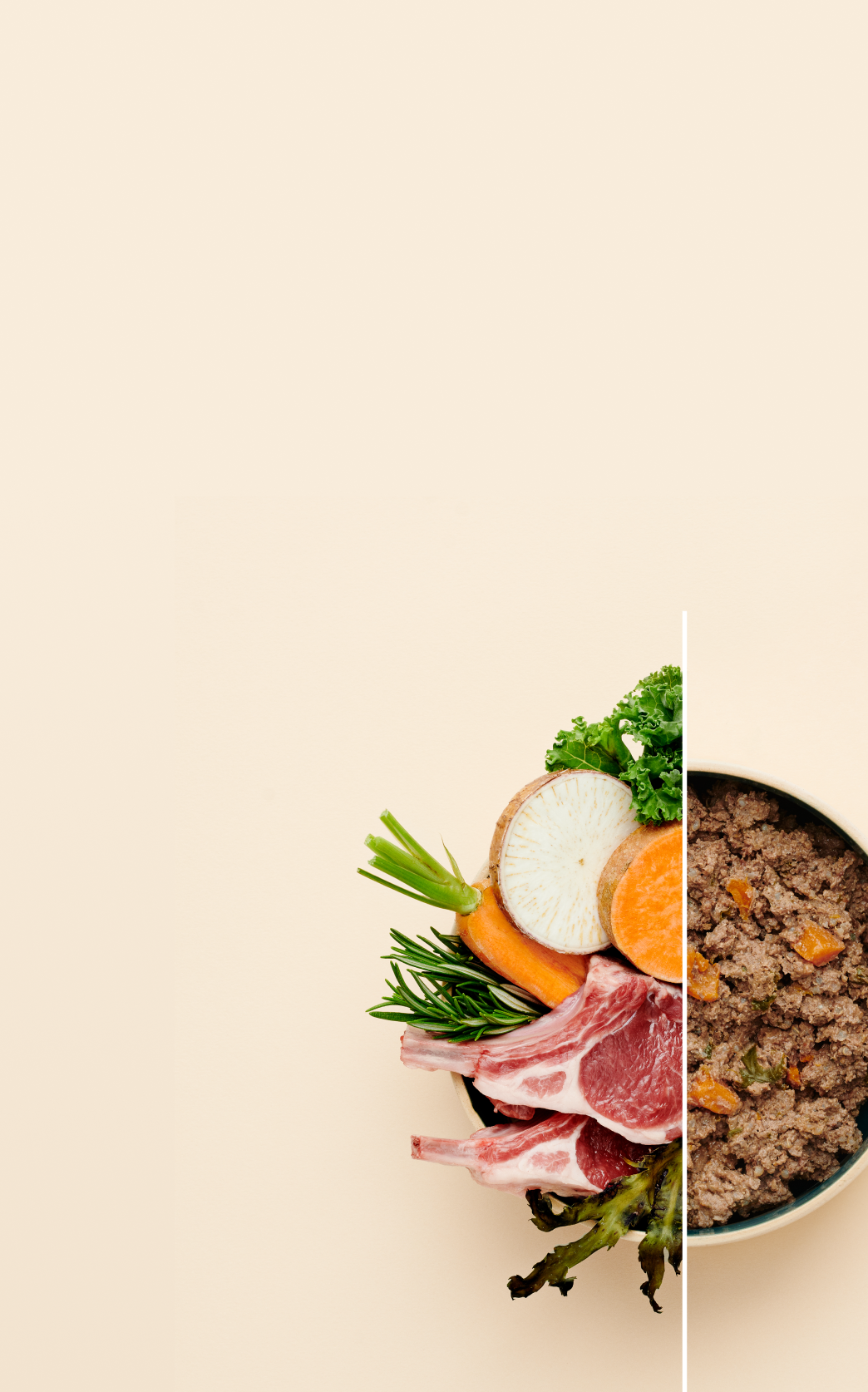
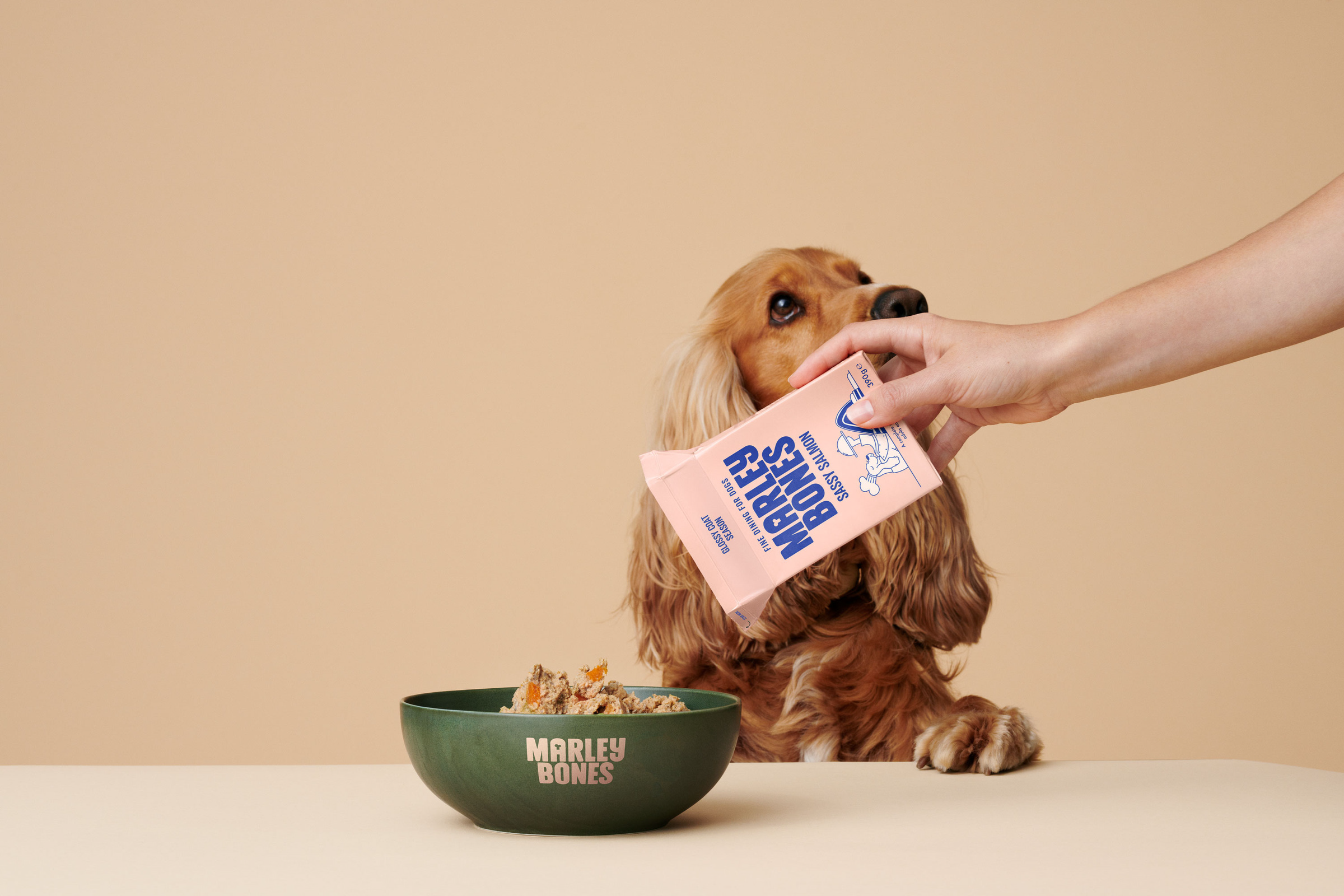
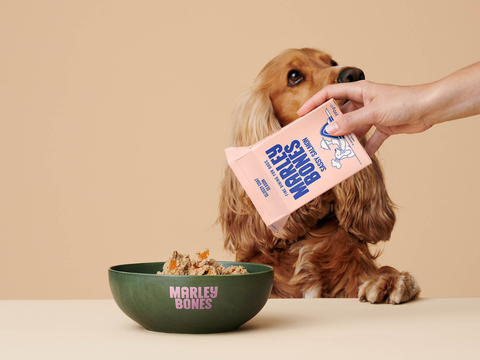
To improve a dog's gut health, feed a complete food that's easy to digest and contains natural prebiotic fibre, keep mealtimes regular, and make any change slowly. Gently cooked fresh food, like Marleybones Pantry Fresh, is made that way. It's easy on the stomach, and every recipe includes chicory root, a natural prebiotic.
The gut microbiome is the community of bacteria, along with a few yeasts and other microbes, living in your dog's digestive tract, most of them in the large intestine. Hundreds of species share the space. The friendly ones feed on fibre your dog can't digest, and in return they help break down food, keep less welcome bacteria in check and look after the gut lining. When vets talk about a dog's intestinal health, that balance is a big part of what they mean.
A dog whose gut is easily upset by new food or rich treats has what most owners call a sensitive stomach. Puppies and senior dogs need a little extra care too, because a change of food or routine unsettles their digestion more easily.
What are the signs of poor gut health in dogs?
The most common signs of poor gut health in dogs are loose or irregular poos, a lot of wind, a gurgling tummy, vomiting now and then, and a patchy appetite. Some dogs also eat more grass than usual or lose the shine on their coat. One soft poo after a bin raid isn't a worry; symptoms that keep coming back, week after week, are what point to a gut that's out of balance.
Bad breath is more often about teeth than the gut, so a dental check is the place to start if that's the main thing you've noticed.
When the balance of gut bacteria tips the wrong way, vets call it dysbiosis. The usual triggers are a sudden change of food, scavenging or rich scraps, stress, worms and other parasites, and tummy infections. Antibiotics can tip it too, because they cause a quick drop in the variety of bacteria in the gut.
See your vet if loose poos last more than a couple of days, or straight away if there's blood in the poo, repeated vomiting, weight loss, a dog who seems flat, or a puppy with diarrhoea. Anything persistent, severe or getting worse needs checking before you change your dog's food.
How can I improve my dog's gut health?
The best way to improve your dog's gut health is to start with the food: a complete diet that's easy to digest, with natural prebiotic fibre and good-quality protein, fed at regular times and changed slowly.
Digestion matters because poorly digested protein travels on to the large intestine, where it feeds the less helpful bacteria. In feeding trials, fresh cooked diets were more digestible than kibble, and in a 2021 study, dogs fed kibble passed 1.5 to 1.7 times more poo than dogs fed fresh food. Moving from kibble to fresh food changes the mix of gut bacteria too.
| Format | How it's made | Moisture | For the gut | Storage |
|---|---|---|---|---|
| Fresh (Marleybones Pantry Fresh) | Sealed raw and slow-cooked in-pack | 65–75% | Soft and easy to digest, with prebiotic fibre in every recipe | Cupboard, up to 18 months unopened |
| Fresh frozen | Gently cooked, then frozen | 65–75% | Soft and easy to digest; fibre varies by recipe | Freezer; defrost before serving |
| Wet (tins, trays and pouches) | Cooked in the sealed tin or pouch | High | Soft and easy to eat; quality varies, so look for a named meat first | Cupboard until opened |
| Dry kibble | Cooked at high heat, then dried | Around 10% | Less digestible than fresh cooked food in trials, so more poo | Cupboard |
Prebiotic fibre is food for the friendly bacteria. Chicory root is one of the best-studied sources: in dog trials, inulin, the fibre in chicory, raised the short-chain fatty acids that gut bacteria make as they ferment fibre, and those help keep the gut lining healthy. Plain cooked pumpkin and ground linseed add gentle fibre too.
For a dog whose tummy is easily upset, a single protein and a short ingredient list make it easier to see what suits them. Every recipe in the Marleybones range of fresh food for sensitive stomachs is built around one protein, so a dog raised on chicken can move to Lush Lamb instead.
Owners see the difference in the garden. In a January 2026 survey of 1,056 of our subscribers, 71% reported better digestion and stools after switching.
Whatever you feed, move onto it over 7 to 10 days, mixing in a little more of the new food each day, because a sudden switch is one of the quickest ways to upset the gut.
Plain chicken and rice is fine for a few days to settle a tummy upset, and chicken itself is an easily digested protein for most dogs. A home-made bland meal isn't complete, though, so go back to a complete food once the poo firms up.
Rich, fatty scraps and a constant stream of new treats and chews are the things that most often unsettle a dog's gut. Regular exercise keeps digestion moving, and omega-3 fats from oily fish, such as salmon, help keep skin and coat healthy. No detox or gut cleanse is needed: a steady, complete diet is what keeps the gut working well.
What is the link between gut health and immunity in dogs?
A dog's gut and immune system are closely linked. The bacteria living in the gut help train the immune system, teaching it what to react to and what to leave alone, and when their balance is upset, the immune system is affected too. Researchers call this two-way connection the gut-immune axis.
A large part of the immune system also sits in the gut wall itself, in patches of immune tissue called gut-associated lymphoid tissue. With every meal bringing in something new from the outside world, the gut lining is one of the body's main barriers against germs.
A dog who keeps getting tummy upsets, ear infections or skin flare-ups is worth a proper look with your vet, rather than treating each one on its own.
Scientists are also looking at links between gut bacteria and other parts of the body, including the joints (the gut-joint axis), though that work is at an early stage.
Can poor gut health make a dog itchy?
Itchy skin and tummy trouble can share a cause: a food reaction can show up in the skin and the gut at the same time. So a dog who scratches, licks their paws or keeps getting ear trouble, and also has loose poos or a lot of wind, is worth a closer look. Vets often suggest a diet trial for a dog with year-round itching, or itching alongside tummy trouble, once fleas and infections have been ruled out.
A diet trial means feeding one new protein and little else for several weeks, so a reaction is easier to spot. Plenty of itchy skin in dogs has nothing to do with food, from fleas to pollen allergies, and a dull coat or flaky skin can simply mean a diet short of good fats.
How does the gut-brain axis work in dogs?
The gut-brain axis is the two-way link between a dog's gut and their brain. The two talk through nerves, including the vagus nerve, which runs between the brain and the gut, and through chemical messengers made in the gut, such as serotonin, which is linked to mood. Stress shows the link most clearly: a stay in kennels, a house move or a night of fireworks can bring on loose poos or a skipped meal.
In dogs, the research is still early. A 2026 review of 35 studies found that the link between gut bacteria and behaviour in dogs is still poorly understood, and called for larger studies.
For an anxious or reactive dog, food is one part of looking after their wellbeing, alongside training, routine and vet care, and it never replaces them. If tummy upsets seem to follow stressful days, or your dog's behaviour changes along with their digestion, mention both to your vet, because a sore tummy can leave any dog on edge.
Do dogs need probiotic or prebiotic supplements?
A gut supplement is most useful for a dog whose poo is often soft even when they're otherwise well, once your vet has ruled out anything else. A healthy dog on a complete diet with natural prebiotic fibre is usually well covered by the food alone.
The Marleybones Gut Health Supplement is a prebiotic daily chew, with MOS (a prebiotic fibre from yeast), chicory root, psyllium and pumpkin to support stool consistency. As a chew there's nothing to mix in, and each of its ingredients has its own job, from the soluble fibre in psyllium to the gentle bulk of pumpkin.
Probiotics for dogs add live bacteria, while prebiotics feed the bacteria already in the gut. Probiotic bacteria usually don't settle in a dog's gut and work only while they pass through, so there's no need to give a healthy dog probiotics every day. If your dog has had antibiotics or a bad bout of diarrhoea, ask your vet whether a probiotic made for dogs is worth a try. Gut and immune health are linked, but a supplement adds to a good daily diet rather than replacing it.
Every dog is different — build your personalised Marleybones feeding and health plan tailored to your dog's age, size, and health requirements.
Keep a short note of your dog's poos, appetite and energy for a few weeks after any change. It's the simplest way to see what's working.

“Such a relief to see her enjoying her food”
FAQs
How long does it take to improve a dog's gut health?
Changes in the poo often show within days of a steady new diet, but the gut bacteria keep adjusting for weeks after a change of food. Give a new food about four weeks before you judge it, and keep treats and extras the same in that time.
Is yogurt good for a dog's gut?
A teaspoon of plain, unsweetened yogurt, Greek or regular, is fine for most dogs as an occasional extra, but it isn't a reliable way to improve gut health. Many dogs don't digest dairy well, and flavoured or "light" yogurts can contain xylitol, a sweetener that's poisonous to dogs.
Do dogs have the same gut bacteria as humans?
No, though the two are similar in many ways. A dog's gut bacteria are their own mix, shaped largely by what they eat, so human probiotics and supplements aren't made with dogs in mind. Ask your vet before giving your dog anything from your own cupboard.
Can you test a dog's gut microbiome?
Yes. Vets can send a poo sample for a test called the Dysbiosis Index, which measures the balance of gut bacteria in dogs with gut disease and tracks how treatment is going. Home test kits are sold to owners too, but their results are hard to act on for a healthy dog, whose poo, appetite and energy tell you more day to day.
Is Marleybones Pantry Fresh good for a dog's gut health?
Yes, for most dogs. Marleybones Pantry Fresh is gently cooked at an average temperature of 89°C, so it's soft and easy to digest, and the chicory root in every recipe feeds the friendly gut bacteria. A dog on a vet-prescribed or low-fat diet should stay on that diet until the vet says otherwise.
“A complete game changer!!”
Sources
- Do S, Phungviwatnikul T, de Godoy MRC, Swanson KS (2021). Nutrient digestibility and fecal characteristics, microbiota, and metabolites in dogs fed human-grade foods. Journal of Animal Science, 99(2), skab028.
- Propst EL, Flickinger EA, Bauer LL, Merchen NR, Fahey GC (2003). A dose-response experiment evaluating the effects of oligofructose and inulin on nutrient digestibility, stool quality, and fecal protein catabolites in healthy adult dogs. Journal of Animal Science, 81(12), 3057-3066.
- Pilla R, Suchodolski JS (2020). The role of the canine gut microbiome and metabolome in health and gastrointestinal disease. Frontiers in Veterinary Science, 6, 498.
- Del Treste A et al. (2026). Intestinal dysbiosis relating to gut-brain axis and behavior in dogs: a systematic review with text mining approach. Animals, 16(6), 986.


 Give your dog the quality nutrition they deserve
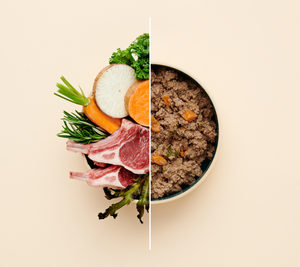
Real meat, wholesome veggies and functional superfoods.
Get 40% OFF today