
What should I do if my dog has diarrhoea but is acting fine?

At a glance
- Diarrhoea in a dog who's still bright, eating and playing is usually a mild upset that settles in a day or two
- Keep feeding small meals little and often, using a gentle, complete food like Marleybones Pantry Fresh or plain chicken and rice, and never take their water away
- Hold off on new foods, treats and human medicines until the poo firms up
- Call your vet after 48 hours, or straight away for a puppy, blood in the poo or repeated vomiting
- If it only happens at night, look at timing first: a late or large dinner is the usual cause
What should you do if your dog has diarrhoea but is acting fine?
If your dog has diarrhoea but is acting fine, it's most likely a mild upset you can look after at home while it settles. Keep fresh water down and feed small meals little and often, using a gentle, complete food, like Marleybones Pantry Fresh®, or plain boiled chicken with a little white rice. Call your vet if it lasts more than 48 hours.
Acting fine means bright, keen for a walk, interested in food and drinking normally. While your dog stays like that, home care is simple.
- Keep fresh water down all the time and never take it away, topping the bowl up often.
- Stick with familiar food: no new food now, and no treats, chews or scraps until the poo firms up.
- Skip human medicines such as Imodium or Pepto-Bismol unless your vet tells you to use them.
- Note how often your dog goes and whether there's any blood, in case you need to call your vet.
Diarrhoea that keeps coming back has a longer list of possible causes, from food intolerance to an underlying health problem, and is worth working through with your vet.
Why is my dog having diarrhea but not acting sick?
A dog can have diarrhoea and still act completely normal because most bouts stay in the gut. Something your dog ate, a sudden change of food or a stressful few days irritates the bowel, while the rest of the body carries on as usual. Energy, appetite and thirst tell you whether it's staying that way.
Scavenging, rich food and stress are the everyday triggers: a bin raid, fatty scraps, a new chew, or a few unsettled days in kennels or during fireworks. In puppies, worms are worth ruling out too.
Sudden diarrhoea is very common, and most cases are simple. About 1 in 12 UK dogs is diagnosed with it in a year, according to a 2025 Royal Veterinary College study of vet records, and over 80% of cases needed only one vet visit. Where vets noted a trigger, scavenging came up most often. Most bouts are mild and clear up within 24 to 48 hours, according to the PDSA.
A sudden change of food is the easiest trigger to avoid, because a dog's gut bacteria need time to adjust. Switching gradually over 7 to 10 days keeps most dogs' poo steady.
What should you feed a dog with diarrhoea who's still eating?
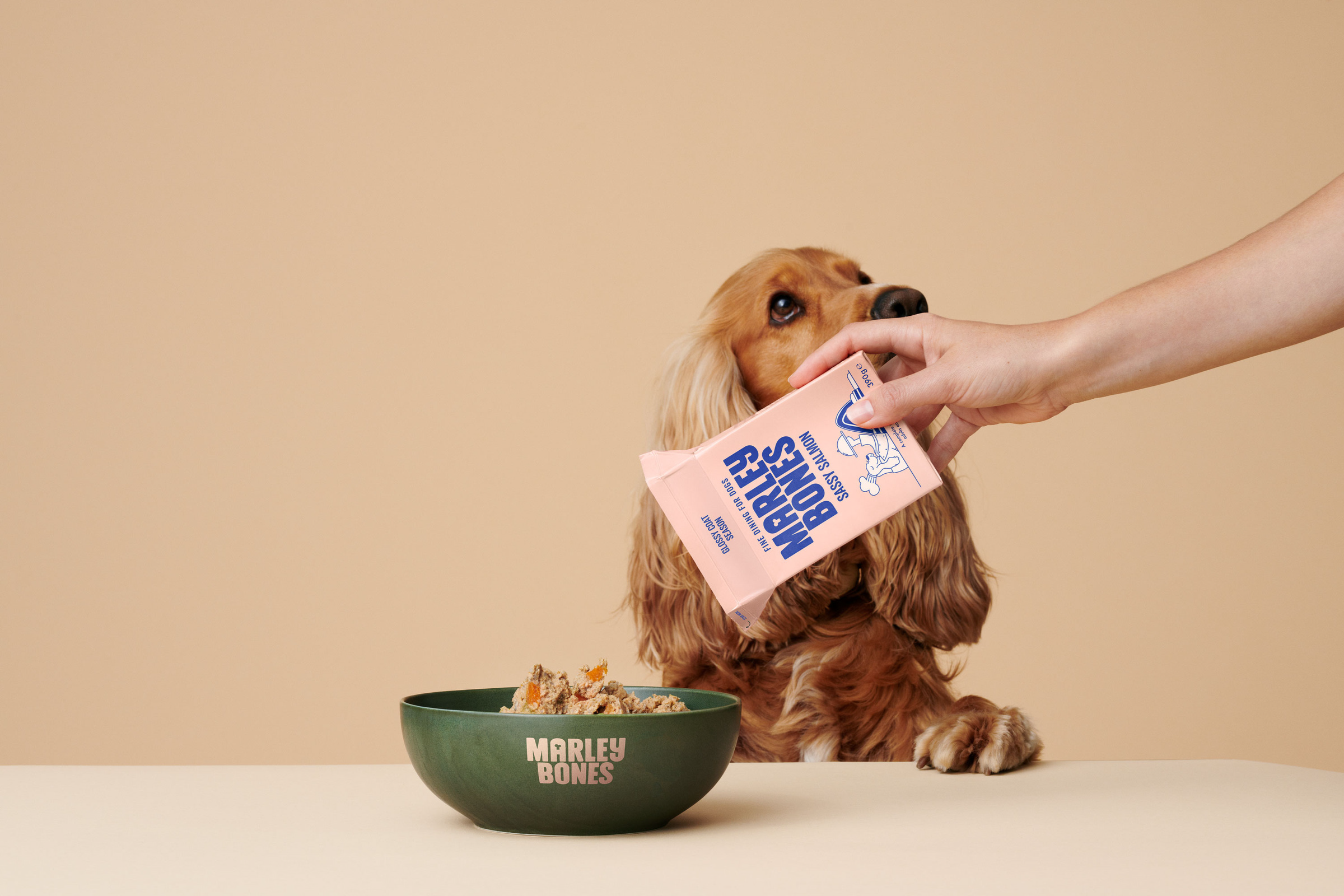
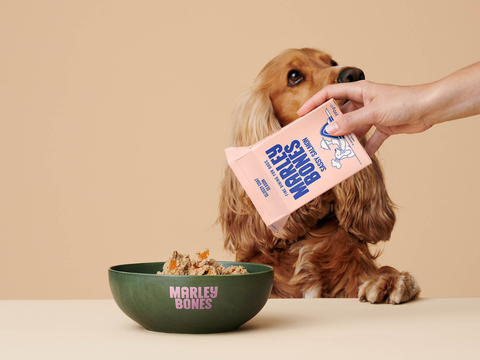
A dog with diarrhoea who is still eating doesn't need to be starved. Keep feeding three or four small meals a day of the food their gut already knows. A complete, gently cooked food, like Marleybones Pantry Fresh, works well in smaller portions. If your dog's usual food is rich, or they've gone off it, a plain, bland meal will see them through a few days.
You'll still see advice to fast a dog for 12 to 24 hours. A bright, hungry dog doesn't need that: small, regular meals give an upset gut less to handle at once. Start with about a third of a normal portion and build back up over a few days as the poo firms.
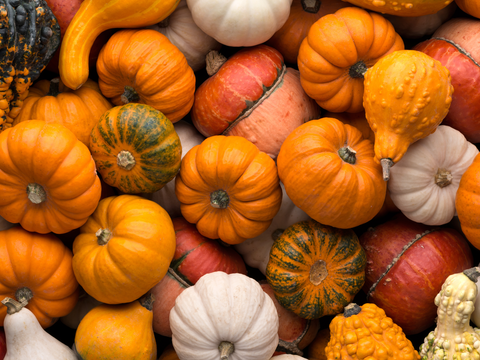
Plain boiled chicken or white fish, with no skin, bones or seasoning, and a little white rice is the classic bland meal. Plain scrambled egg works too, as does a teaspoon of plain tinned pumpkin (not pie filling) stirred in. A bland diet isn't complete, so use it for a few days only, then mix your dog's usual food back in over three to five days.
A complete, gently cooked food is soft, moist and easy to eat, and unlike a bland meal it can stay in the bowl for as long as your dog needs. In a small feeding trial, fresh cooked diets were more digestible than dry kibble.
Owners often notice firmer, more regular poos once their dog has settled on a gently cooked food: in a January 2026 survey of 1,056 Marleybones subscribers, 71% reported better digestion and stools after switching.
"Marleybones is great! Meal times are always more exciting and empty bowls every time, plus no more runny poos!!" Flora, Trustpilot, October 2026
If you've been meaning to try a fresh food, wait until your dog's poo has been normal for a few days, then switch gradually. Starting mid-bout makes it hard to tell the food from the upset.
For dogs whose poo is often soft even when they're well, the Marleybones Gut Health Supplement, a prebiotic blend with psyllium, pumpkin and chicory root, supports stool consistency. Add it once a bout is over, not during it.
How long can a dog have diarrhoea before you call the vet?
Watch a healthy adult dog with diarrhoea at home for up to 48 hours, as long as they stay bright, keep eating and keep water down. Call your vet if it goes on longer, or straight away for blood or black poo, repeated vomiting, lethargy, a swollen tummy, or a puppy, elderly or unwell dog.
Diarrhoea for three days is past that line, even in a dog acting completely normal. Book a vet appointment rather than waiting to see if it settles.
Check for dehydration twice a day. Gums should feel wet and slippery, not sticky. Lift the skin at the back of the neck and let go: it should spring straight back, and if it settles slowly, your dog needs a vet now.
| What to do | Signs |
|---|---|
| Watch at home | Bright, eating and drinking normally, a few soft or loose poos with no blood, and less than 48 hours so far |
| Call your vet today | Diarrhoea for more than 48 hours; constant, watery diarrhoea; a streak of blood or mucus; vomiting more than once; eating less than usual; a puppy, an elderly dog or a dog with a health condition |
| Go to the vet now | Can't keep water down; flat, weak or wobbly; a swollen, tight or painful tummy; a lot of blood, or black, tarry poo; sticky gums or skin that's slow to spring back; you think they've eaten something poisonous |
If something feels wrong, even without a warning sign, ring your vet: anything persistent, severe or getting worse needs to be seen.
Why does my dog have diarrhoea at night but seem fine in the day?
Diarrhoea that only happens at night in an otherwise happy dog is most often about timing: a large or late dinner, a rich chew, or a recent change of food. Moving dinner earlier and keeping evening treats plain often settles it. Repeated night-time bouts, or several urgent trips a night, need a vet check.
Give dinner at least three hours before bed, or split the day's food into smaller meals so the evening one is lighter. A last wee walk before bed helps, and anything rich or new is best kept to the morning.
Diarrhoea that wakes a dog night after night is rarely just about dinner. Straining, mucus or fresh red blood alongside urgent trips points to the large bowel, the last stretch of the gut, so mention them when you call your vet, even if your dog is bright by morning.
A note of what your dog ate and when each bout happened usually shows the pattern within a few days, and it's the first thing your vet will ask for.
Every dog is different — build your personalised Marleybones feeding and health plan tailored to your dog's age, size, and health requirements.

“Such a relief to see her enjoying her food”
FAQs
My puppy has diarrhoea but is acting fine. Should I wait?
No, call your vet the same day, even if your puppy seems full of beans: puppies can dehydrate quickly. Keep feeding small meals and keep water down in the meantime. A puppy who isn't fully vaccinated and is also vomiting needs the vet now, because parvovirus is the worry.
My dog has bloody diarrhoea but is acting fine. Is it an emergency?
The amount of blood decides how urgent bloody diarrhoea is. A small streak of red, often with some mucus, in a dog who is otherwise bright means calling your vet today. A lot of blood, poo that looks like raspberry jam, or black, tarry poo means going to the vet now, however well your dog seems.
Is Marleybones Pantry Fresh OK for a dog with diarrhoea?
Yes, if your dog already eats it: keep feeding Marleybones Pantry Fresh in smaller portions, little and often, until the poo firms up. If it's new to your dog, save the switch until the bout is over. Every recipe is gently cooked at an average temperature of 89°C. The soft, moist texture is easy to eat when a tummy is upset.
My dog has been sick and has diarrhoea but is acting normal. What should I do?
One vomit with soft poo, in a dog who is bright and drinking, can be watched at home like diarrhoea alone. Vomiting more than once means calling your vet today, and a dog who can't keep water down needs to be seen now, because losing fluid from both ends dehydrates a dog fast.
“A complete game changer!!”
Sources
- O'Neill DG, Prisk LJ, Brodbelt DC, Church DB, Allerton F (2025). Epidemiology and clinical management of acute diarrhoea in dogs under primary veterinary care in the UK. PLoS One 20(6): e0324203
- PDSA Pet Health Hub: Dog diarrhoea
- Tanprasertsuk J, Perry LM, Tate DE, Honaker RW, Shmalberg J (2021). Apparent total tract nutrient digestibility and metabolizable energy estimation in commercial fresh and extruded dry kibble dog foods. Translational Animal Science 5(3): txab071
Last updated: 29 October 2026


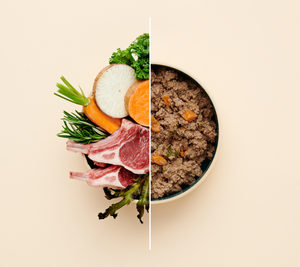 Give your dog the quality nutrition they deserve
Real meat, wholesome veggies and functional superfoods.
Get 40% OFF today