



 Vet-Written
Fresh Dog Food vs Wet Dog Food – Which is Better for Your Dog?

At a glance
- Wet dog food, whether canned (tinned) or pouched, is sterilised at high temperatures, typically above 120°C, to make it shelf-stable
- Pantry Fresh® meals are gently cooked at an average temperature of 89°C, making them shelf-stable without any preservatives or the high-heat sterilisation that affects standard wet food
- Fresh dog food and wet food share similar moisture content (Marleybones Chic Chicken is 72% moisture; wet food is 70–80%), giving both a hydration advantage over kibble
- Canned food usually comes as a loaf or chunks in jelly or gravy and commonly contains ground proteins, gelling agents and fillers; fresh dog food uses whole, identifiable ingredients
- Both formats are more suitable than dry kibble for fussy eaters, puppies, seniors, and dogs with dental issues
Fresh dog food vs wet dog food: how do they compare?
|
|
Fresh dog food (Marleybones Pantry Fresh®) |
Wet dog food (canned, tinned or pouched) |
|
Format |
Moist, complete fresh meal |
Canned (tinned) or pouched moist meal |
|
Moisture content |
Marleybones Chic Chicken is 72% moisture, supports hydration and digestion |
70–80%, comparable hydration benefit |
|
Cooking temperature |
Gently cooked at an average temperature of 89°C |
Typically 120°C+, high-heat sterilisation |
|
Main ingredients |
60%+ real meat, whole vegetables, superfoods: chicory root, chia seeds, quinoa, hemp seeds |
Ground meat proteins, gravy or jelly, gelling agents; quality varies widely by brand |
|
Preservatives |
None |
Typically none in canned format; some pouches use preservatives |
|
Storage |
Room temperature, up to 18 months unopened |
Room temperature unopened; refrigerate after opening |
|
Texture |
Soft, blended pieces cooked in their own juices, no added gravy or jelly; well suited to puppies, seniors, and dogs with dental issues |
A soft loaf, or chunks in jelly or gravy; texture and palatability vary significantly by brand |
|
Digestibility |
High: whole ingredients, gentle cooking, natural prebiotics |
Higher than kibble; varies by brand and product |
|
Nutritional completeness |
Complete and balanced, vet-developed, for all life stages |
Varies by brand and product; check nutritional adequacy statement |
What is wet dog food made of, and how is canned food made?
Wet dog food, sold in cans (tins) and pouches, is produced by blending meat proteins, vegetables, grains, and additives into a mixture, sealing it in a tin or pouch, and sterilising it at high temperatures, typically above 120°C, to achieve shelf stability. A 2023 study of canned cat food found that this processing cut thiamin (vitamin B1) by 30.4%, while niacin, biotin and cobalamin were unaffected. The process is effective for preservation but the temperatures involved are significantly higher than those used in gently cooked fresh food, which affects the nutritional integrity of the finished product.
The ingredient list on wet food often includes ground or minced meat proteins rather than whole cuts, along with gravy or jelly made from starch or gelling agents. Some brands use high-quality ingredients; others lean heavily on fillers and flavour enhancers to make the product palatable. The format ranges from budget supermarket tins to premium pouched recipes, and ingredient quality varies considerably across that range.
How is Pantry Fresh® different from wet dog food?
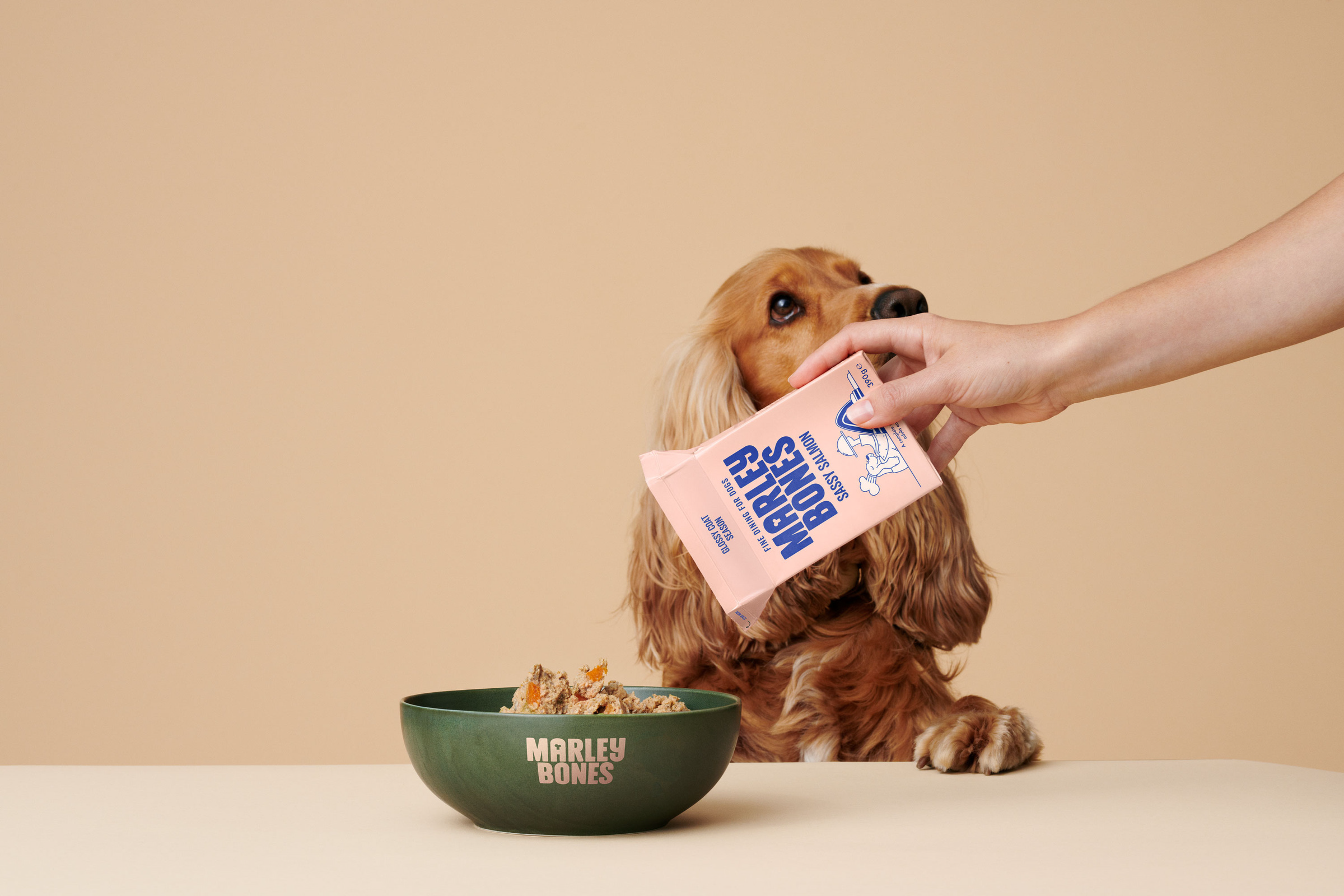
Pantry Fresh® is cooked at a much lower temperature than wet food and built on whole ingredients. Meals are sealed raw and slow-cooked in-pack, making them shelf-stable without any preservatives and ready to serve straight from the carton. Pantry Fresh® meals are gently cooked at an average temperature of 89°C, a gentler process than the high-heat sterilisation used in standard wet food production. This lower temperature preserves more of the natural nutrient structure in the ingredients, and the result retains the character of the whole ingredients it started with. Canned food and Pantry Fresh® both stay in the cupboard until opened, which puts them on the same shortlist of dog food that doesn't need freezing.
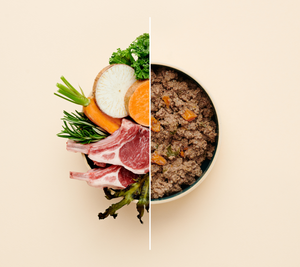
Marleybones Pantry Fresh® meals are built on 60%+ real meat with whole vegetables and a range of functional superfoods, including chicory root, chia seeds, and hemp seeds. Chicory root acts as a natural prebiotic, supporting gut bacteria balance and stool consistency. Many standard wet foods do not include functional ingredients of this kind.

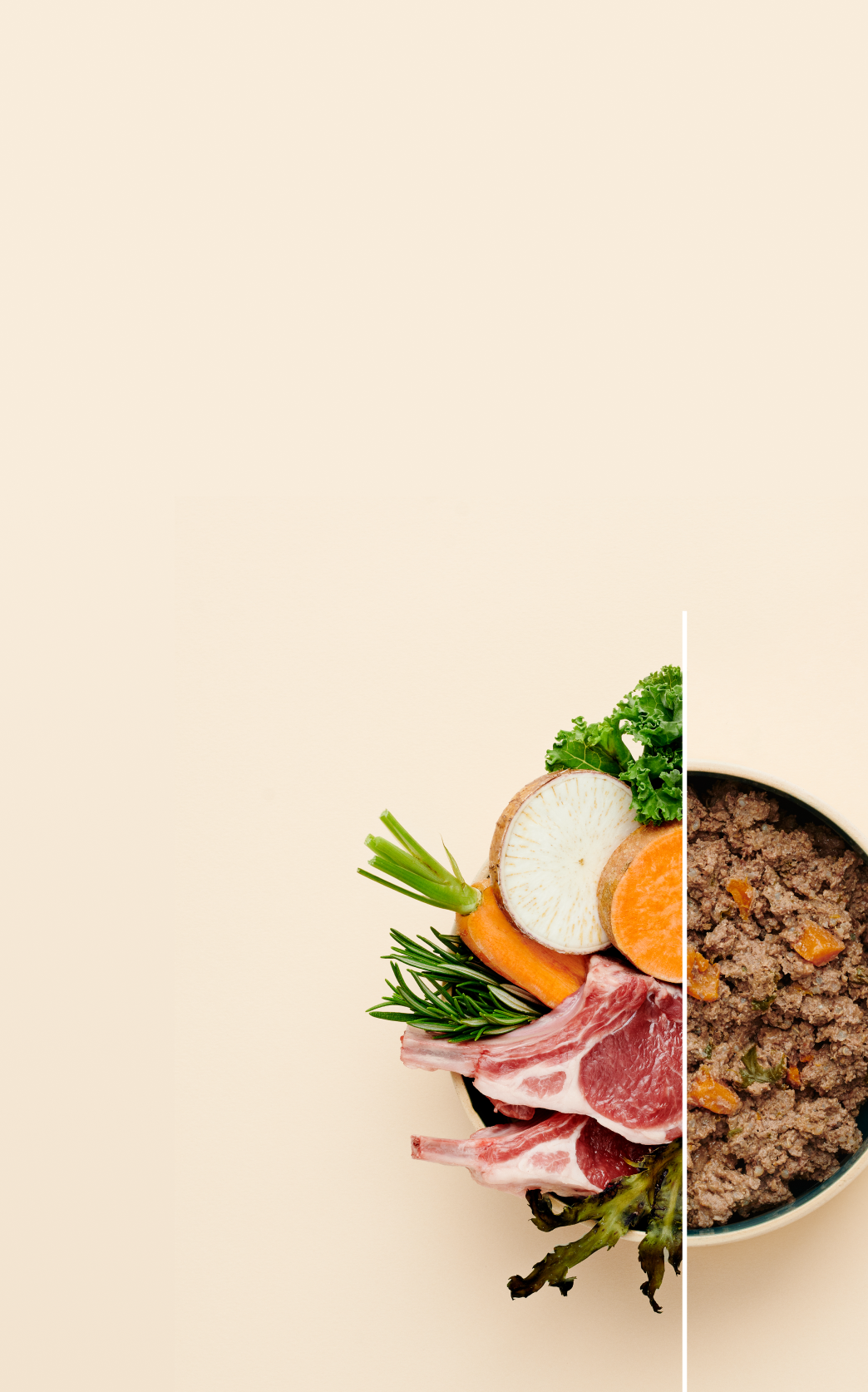
Freshly prepared fish, veggies & superfoods
How is the texture of fresh dog food different from canned?
Canned dog food usually comes as a smooth loaf or as chunks in jelly or gravy, while gently cooked fresh food is soft, moist pieces of real meat and vegetables. Canned food starts with ground or minced proteins, and its gravy or jelly is made from starch or gelling agents.
Pantry Fresh® meals are sealed raw and slow-cooked in-pack, so the meat and vegetables cook in their own juices, and no gravy or gelling agent appears on the ingredient list. The recipes prioritise nutritious seeds and superfoods, such as quinoa, chia seeds, linseeds and hemp seeds, over large quantities of visible vegetables, which gives a slightly softer, more blended texture with fewer visible vegetable pieces.
The look follows the same logic: each ingredient in these recipes goes in at a level chosen for nutrition rather than colour, so a less colourful bowl is not a sign of lower-quality ingredients.
Is wet dog food a good option for fussy eaters?
Wet food is more palatable than kibble for most dogs, largely because of its aroma and soft texture. Fresh dog food tends to be even more palatable than standard wet food, because the natural aroma of meat cooked in its own juices is more appealing than the processed smell of a canned or pouched product. In a January 2026 survey of 1,056 Marleybones subscribers, 9 in 10 owners of fussy dogs said their dog now enjoys its food.
For dogs coming off dry food, wet food is a meaningful step up in moisture and palatability, and fresh food goes further again on ingredient quality.
Which dogs benefit most from fresh food over wet?
Fresh food makes the clearest difference for dogs with sensitive or demanding digestive systems, because it combines whole ingredients, gentler cooking and natural prebiotics such as chicory root. It is also the stronger choice for owners who want full visibility of what is in their dog's bowl, since the ingredient quality and sourcing of Marleybones meals are verifiable in a way that mass-market wet food often is not.
Can you mix fresh and wet dog food?
Yes, and some owners do this to add variety or manage costs. When mixing, calculate total daily calorie intake across both foods rather than following the full serving guidelines for each independently. Both formats tend to be calorie-dense, and overfeeding is the most common mistake when combining them.
If transitioning from wet food to fresh food, do so gradually over 7–10 days, starting with 25% fresh and 75% wet and shifting the ratio progressively. Most dogs transition well given the similarity in texture and moisture content.
Every dog is different — build your personalised Marleybones feeding and health plan tailored to your dog's age, size, and health requirements.

“Such a relief to see her enjoying her food”
FAQs
Is fresh dog food healthier than wet dog food?
For many dogs, yes. Fresh dog food uses whole ingredients cooked at lower temperatures, while wet food is sterilised at high heat, and fresh food goes further on ingredient quality and processing standards. The moisture content is comparable across both formats, which is the main nutritional advantage wet food has over kibble. Against kibble the digestibility evidence is clear: a 2021 study found the digestibility of a kibble diet was significantly lower than that of any of the fresh diets tested.
Is wet dog food good for dogs with sensitive stomachs?
Wet food is gentler on sensitive stomachs than kibble, largely because of its higher moisture content and softer texture. Fresh dog food with a natural prebiotic, like the chicory root in Marleybones Pantry Fresh®, adds direct support for gut bacteria balance on top of that.
Can I mix wet food with fresh dog food?
Yes, though portion control matters. A wet food labelled complete and Marleybones Pantry Fresh® are each nutritionally complete on their own, so mixing them means splitting the daily calories between the two rather than serving full portions of each. Transition gradually over 7–10 days if moving from one to the other.
Does Marleybones Pantry Fresh® need to be refrigerated?
No. Marleybones meals are Pantry Fresh® and shelf-stable, stored in a cupboard until opened, with no freezing or thawing at any point. They keep for up to 18 months unopened; once opened, refrigerate and use within 48 hours.
Is fresh dog food suitable for senior dogs?
Yes. The soft texture of fresh food suits older dogs who may have dental wear or reduced jaw strength, and its high moisture content supports hydration. Marleybones Pantry Fresh® is nutritionally complete for all life stages, including seniors, and the natural prebiotics in every recipe help maintain gut health as dogs get older.
Is premium wet food as good as fresh dog food?
Premium wet food uses better ingredients than budget options and is a genuine step up from standard canned food, but it is still subject to the high-heat sterilisation process that affects all wet food production. The cooking temperature gap between premium wet food and gently cooked fresh food remains.
Is canned dog food better than kibble?
For moisture and palatability, yes: canned food carries 70–80% moisture, far more than dry kibble, and its soft texture and aroma appeal to more dogs. Ingredient quality varies widely in both formats, so check the nutritional adequacy statement on the label whichever you choose.
“A complete game changer!!”
Sources
- Do, S., Phungviwatnikul, T., de Godoy, M. R., & Swanson, K. S. (2021). Nutrient digestibility and fecal characteristics, microbiota, and metabolites in dogs fed human-grade foods. Journal of Animal Science, 99(2), skab028.
- Tanprasertsuk, J., Perry, L. M., Tate, D. E., Honaker, R. W., & Shmalberg, J. (2021). Apparent total tract nutrient digestibility and metabolizable energy estimation in commercial fresh and extruded dry kibble dog foods. Translational Animal Science, 5(3), txab071.
- Geary, E. L., Oba, P. M., Templeman, J. R., & Swanson, K. S. (2024). Apparent total tract nutrient digestibility of frozen raw, freeze-dried raw, fresh, and extruded dog foods and their effects on serum metabolites and fecal characteristics, metabolites, and microbiota of healthy adult dogs. Translational Animal Science, 8, txae163.
- Dainton, A. N., Molnar, L. M., & Aldrich, C. G. (2023). Effects of container type and size on thermal processing characteristics and B-vitamin retention of canned cat food. Frontiers in Veterinary Science, 10, 1175819.


 Give your dog the quality nutrition they deserve
Real meat, wholesome veggies and functional superfoods.
Get 40% OFF today