


Best Dog Food for Puppies with Sensitive Stomachs

At a glance
- Puppies have immature digestive systems — they are more susceptible to stomach upsets than adult dogs
- Single-protein, high-digestibility recipes reduce the risk of food-triggered sensitivity
- Chicory root (a natural prebiotic) actively supports gut microbiome development in growing dogs
- Switching foods too quickly is one of the most common causes of puppy diarrhoea — transition over 7 to 10 days
- Persistent vomiting, blood in stools, or failure to gain weight all require a vet assessment
Why do so many puppies seem to have sensitive stomachs?
Puppies with sensitive stomachs need food that is easy to digest, made from recognisable ingredients, and free from the fillers and artificial additives that irritate an immature gut. The reason so many puppies struggle is straightforward: their digestive systems are not fully developed. The gut lining is still maturing, the microbiome is being established, and the enzyme systems that break down food are not yet working at full capacity.
That immaturity means a puppy's gut reacts more strongly to poor-quality ingredients, sudden food changes, or anything artificially preserved. Loose stools, wind, and occasional vomiting are common in the first months of life, but they are not something you simply have to tolerate. The right food makes a genuine difference.
Understanding what drives digestive sensitivity in puppies sits at the heart of the complete guide to sensitive stomachs and gut health, which covers the full picture from causes to long-term dietary management.
What ingredients should you look for in puppy food for a sensitive stomach?
The most important quality in food for a sensitive-stomached puppy is digestibility. High-quality protein from a named single source, such as chicken, lamb, or salmon, is easier for the gut to process than mixed meat derivatives or protein meals. More of the nutrition gets absorbed, and there is less undigested material passing through to ferment and cause gas.
Beyond protein, these are the ingredients that matter most:
- Chicory root — a natural prebiotic that feeds beneficial gut bacteria and helps stabilise the microbiome during the critical development window
- Linseeds and chia seeds — provide soluble fibre that supports healthy stool formation without over-stimulating the bowel
- Rice or sweet potato — easily digestible carbohydrate sources that are gentle on a sensitive gut
- Omega-3 fatty acids — reduce gut inflammation and support the integrity of the intestinal lining
Equally important is what the food does not contain. Artificial preservatives, artificial colours, rendered meat meals, and excessive cereal fillers all put unnecessary strain on a developing digestive system. Fresh or minimally processed food retains more of its natural nutritional value, which means the gut has less work to do.
Chicory root is one of the most well-researched prebiotics in dog nutrition — it feeds the beneficial bacteria that keep digestion stable, and it is particularly valuable during the early months when the microbiome is still being shaped.
Is fresh food actually better for puppies with sensitive stomachs?
Fresh food is better for puppies with sensitive stomachs because it is less processed, which preserves more of the natural enzymes and nutrients that aid digestion. Heavily processed kibble, by contrast, is cooked at very high temperatures. That process changes the structure of proteins and destroys heat-sensitive nutrients, making the food harder to digest and often requiring synthetic additives to replace what was lost.
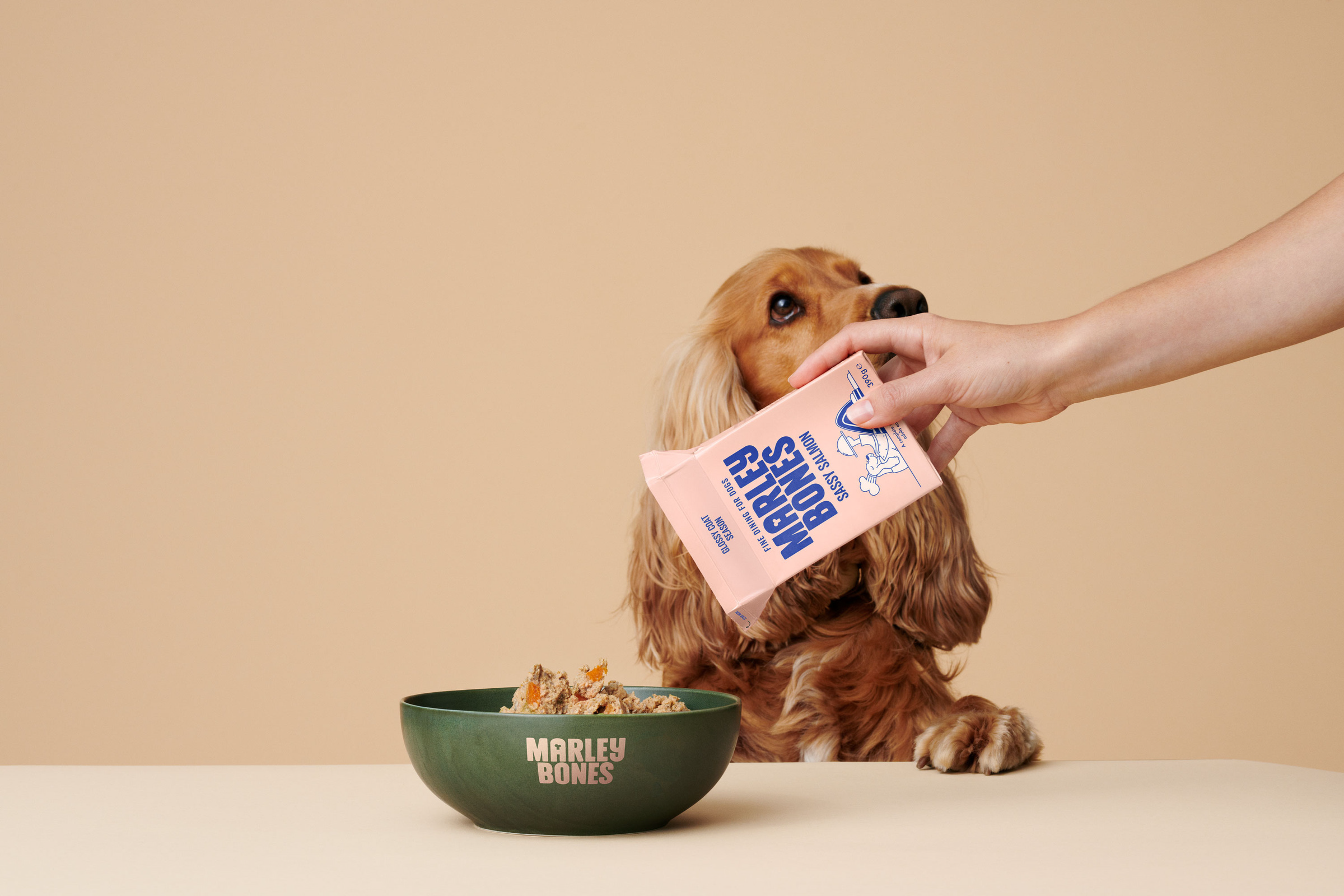
Marleybones uses a Pantry Fresh format: ingredients are freshly prepared, sealed raw, and slow-cooked inside the pack. There are no preservatives and no need for freezing. The recipes are vet-developed and FEDIAF compliant for all life stages including puppies, so you are not choosing between digestibility and complete nutrition.
Fresh food does not automatically mean better, though. The recipe quality and ingredient sourcing still matter. A fresh food made with low-quality ingredients is no better than a well-formulated kibble. What you are looking for is both: fresh preparation and quality ingredients.
If you want a comparison of formats before deciding, the best dog food for sensitive stomachs in the UK covers the main options across fresh, wet, and dry formats with honest detail on what each delivers.
How do you switch a puppy with a sensitive stomach to a new food safely?
Transition over 7 to 10 days minimum. A puppy with a sensitive stomach needs even longer than a healthy adult dog. The gut microbiome needs time to adjust to a new food profile, and rushing the transition is one of the most reliable ways to cause a setback.
A sensible approach for a sensitive puppy:
- Days 1 to 3: 75% old food, 25% new food
- Days 4 to 6: 50% old food, 50% new food
- Days 7 to 9: 25% old food, 75% new food
- Day 10 onwards: 100% new food
If loose stools appear during the transition, slow down rather than pushing through. Go back one step and hold at that ratio for two to three extra days before progressing again.
If your puppy experiences persistent vomiting, blood in the stool, significant weight loss, or symptoms that worsen rather than settle during transition, speak to your vet before continuing. Some puppies have underlying conditions, such as a food allergy or inflammatory bowel disease, that need proper diagnosis.
Every dog is different — build your personalised Marleybones feeding and health plan tailored to your dog's age, size, and health requirements.
What food formats work best, and which ones tend to cause problems?
This table summarises how the main dog food formats generally perform for puppies with sensitive stomachs:
| Food format | Digestibility | Ingredient transparency | Practical notes |
|---|---|---|---|
| Fresh (pantry or frozen) | High | High | Best option for sensitive puppies; check recipes are complete for puppies |
| Wet food (pouches or tins) | Moderate to high | Variable | High moisture content helps; quality varies widely between brands |
| Dry kibble | Moderate | Variable | High-heat processing reduces digestibility; some puppies manage well on premium options |
| Raw | High in theory | High | Bacterial contamination risk; not recommended for young puppies by most vets |
For puppies specifically, completeness is non-negotiable. Puppies need the right balance of calcium and phosphorus for bone development, along with adequate DHA for brain and eye development. Any food you choose must be labelled as complete for all life stages or specifically for puppies. Adult formulas are not suitable.

“Such a relief to see her enjoying her food”
FAQs
Can a puppy grow out of a sensitive stomach?
Some puppies do settle as their digestive system matures, usually by 12 to 18 months. However, if a puppy's sensitivity is driven by food quality rather than developmental immaturity, it will persist regardless of age. Switching to a higher-quality, more digestible food often resolves the issue faster than waiting it out.
How do I know if my puppy has a food sensitivity or a food allergy?
Food sensitivity causes digestive symptoms such as loose stools, gas, and vomiting. A true food allergy triggers an immune response and often involves skin symptoms alongside digestive ones, such as itching, redness, or ear infections. Allergies are less common than sensitivities. Both are diagnosed by an elimination diet, not a blood test.
Is grain-free food better for puppies with sensitive stomachs?
Not automatically. Some puppies do better without grains, but many digest rice and oats without any problem. The bigger factor is overall ingredient quality and processing method. Grain-free foods sometimes replace cereals with high amounts of legumes, which can cause their own digestive issues. Focus on ingredient quality rather than grain-free as a category.
How many meals should a sensitive-stomached puppy have per day?
Three to four smaller meals per day for puppies under six months, reducing to twice daily from around six months. Smaller, more frequent meals are easier on a sensitive digestive system than one or two large ones. Consistent meal times also help regulate gut motility, which reduces the chance of loose stools.
What should I do if my puppy has diarrhoea after switching food?
Slow the transition down and hold at the previous food ratio for a few days. A 24-hour bland diet of plain cooked chicken and rice gives the gut a chance to settle. If diarrhoea persists beyond 48 hours, contains blood, or is accompanied by lethargy or vomiting, contact your vet.
“A complete game changer!!”


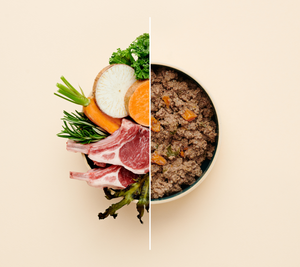 Give your dog the quality nutrition they deserve
Real meat, wholesome veggies and functional superfoods.
Get 40% OFF today