


Sensitive Stomach in Dogs: The Complete Guide to Gut Health and Diet

At a glance
- Sensitive stomachs and poor gut health are usually the same problem seen from different angles — loose stools, wind, and inconsistent digestion are what an imbalanced gut microbiome looks like on the outside
- The most common dietary triggers are beef, dairy, wheat, soy, and artificial preservatives; switching to a novel protein like lamb or salmon removes the most likely variable immediately
- Around 70% of the immune system lives in the gut — poor gut health affects immunity, coat condition, energy, and mood, not just digestion
- Prebiotic fibre feeds the beneficial bacteria in the gut; natural moisture supports its lining; quality protein reduces the digestive load — all three are significantly lower in dry kibble than in fresh food
- Most dogs show noticeable improvement within two to four weeks of switching to a more digestible diet; if there is no meaningful change after four consistent weeks, see a vet
In this guide
What is causing my dog's sensitive stomach?
Most dogs with a sensitive stomach are reacting to something specific in their food — not suffering from a condition they will have forever. The symptoms are the digestive system flagging that something is not working, which is useful information rather than a cause for panic.
The two most common causes are ingredient sensitivity and processing load. Ingredient sensitivity is straightforward: a specific protein, carbohydrate, or additive that the gut struggles to handle. Processing load is less obvious. It is the cumulative digestive effort required to extract nutrition from heavily processed food. Conventional dry kibble is produced through high-temperature extrusion, a manufacturing process that degrades proteins and breaks down fibre in ways that directly increase how hard the digestive system has to work at every meal. Many dogs improve on less processed food before any specific trigger has been identified, because reducing the processing burden alone was enough.
Ingredient sensitivities develop gradually rather than appearing suddenly. Dogs that have eaten the same protein for most of their lives are more likely to have built a sensitivity to it. Beef and dairy are the most frequent culprits, followed by chicken in dogs that have been on chicken-based food for years. This is not because these ingredients are harmful. It is because they are the most widely used in commercial dog food, giving sensitivities more opportunity to develop over time.
The third cause is a clinical condition. Inflammatory bowel disease, pancreatitis, and parasites all produce symptoms that look identical to food sensitivity. Persistent symptoms lasting more than two weeks, blood in stools, significant weight loss, or repeated vomiting are reasons to see a vet before making any dietary changes — a food switch will not resolve these.
Some breeds appear more often in sensitive stomach conversations than others: Cavalier King Charles Spaniels, Cockapoos, Dachshunds, and Labradors among them. For these breeds, diet is worth investigating sooner rather than later.
Why does gut health affect so much more than digestion?
Around 70% of the immune system lives in the gut — which is why poor gut health shows up well beyond the digestive system. When the gut microbiome is balanced, your dog absorbs nutrients efficiently, fights off infection more effectively, and maintains stable energy and mood. When it is not, the effects reach every system in the body.

“A complete game changer!!”
The gut microbiome is the community of bacteria living in your dog's digestive tract. A diverse, balanced microbiome is a healthy one. When harmful bacteria outnumber beneficial ones — a state called dysbiosis — the consequences are wide-ranging. Chronic diarrhoea, itchy or inflamed skin, weakened immunity, low energy, and a dull coat are all linked to dysbiosis. So is anxiety. Research into the gut-brain axis, the two-way communication channel between the gut and the brain, shows that dogs with poor gut health are more likely to show signs of anxiety. That connection runs in both directions: chronic stress also disrupts gut function.
Loose stools, wind, and inconsistent digestion are often what dysbiosis looks like from the outside. Treating the symptoms without addressing the microbiome is why so many food changes produce only partial or temporary improvement. The symptoms go away. The underlying imbalance does not.
What are the signs of poor gut health in dogs?
Loose or inconsistent stools, excessive wind, bloating, and stomach gurgling are the most obvious signs. Beyond digestion, poor gut health shows up as itchy or inflamed skin without an obvious external cause, a dull or flaky coat, low energy, and frequent grass eating — a reliable signal of digestive discomfort. Vomiting that happens more than occasionally is worth taking seriously.
Symptoms that come and go are typically dietary in origin. Symptoms that are persistent, progressive, accompanied by weight loss, or include blood in stools need a vet assessment before any dietary changes are made. Some conditions that produce these symptoms need clinical diagnosis and treatment, not a food switch.
Which nutrients matter most for a healthy gut?
Four nutrients make the biggest and most consistent difference to gut health in dogs.
Prebiotic fibre feeds the beneficial bacteria in the gut. Its role goes well beyond keeping stools firm — prebiotic fibre directly shapes the diversity and balance of the gut microbiome. Chicory root is one of the most researched prebiotic ingredients in canine nutrition, with well-documented effects on gut bacteria populations and stool consistency. Unlike probiotics, chicory root feeds the bacteria already living in the gut, which is why its effects are sustained rather than temporary. It is present in every Marleybones meal for this reason.
Quality protein from whole, recognisable ingredients is significantly easier for the gut to break down than protein from processed meals or unspecified derivatives. The gut lining itself is maintained by amino acids from dietary protein — low-quality protein sources do not support that repair process effectively.
Natural moisture supports the mucosal lining of the gut and keeps digestion moving smoothly. Fresh dog food contains 65 to 75% moisture. Dry kibble contains around 10%. That difference matters across every single meal, not just during acute digestive episodes.
Omega-3 fatty acids reduce gut inflammation and support the integrity of the intestinal lining. Salmon is a particularly strong source, which is part of why novel-protein salmon-based food consistently performs well for sensitive and reactive dogs.
How does diet affect the gut microbiome directly?
Diet is the single most powerful lever available for improving gut health — and it works faster than most owners expect. What your dog eats directly shapes the composition of their gut microbiome, often within days of a dietary change.
Highly processed foods, particularly ultra-processed dry kibble, tend to be low in natural moisture and high in starches and artificial additives. These characteristics do not support a diverse microbiome. A dog's gut handles fresh food differently to heavily processed kibble: fresh food is closer in composition to what a dog's digestive system evolved to process, and the microbiome responds accordingly.
Artificial preservatives, colours, and flavour enhancers offer nothing to gut health. Removing them from the diet — which tends to be a natural consequence of switching to fresh food — is one of the simplest changes that produces consistent improvement across a range of digestive symptoms.

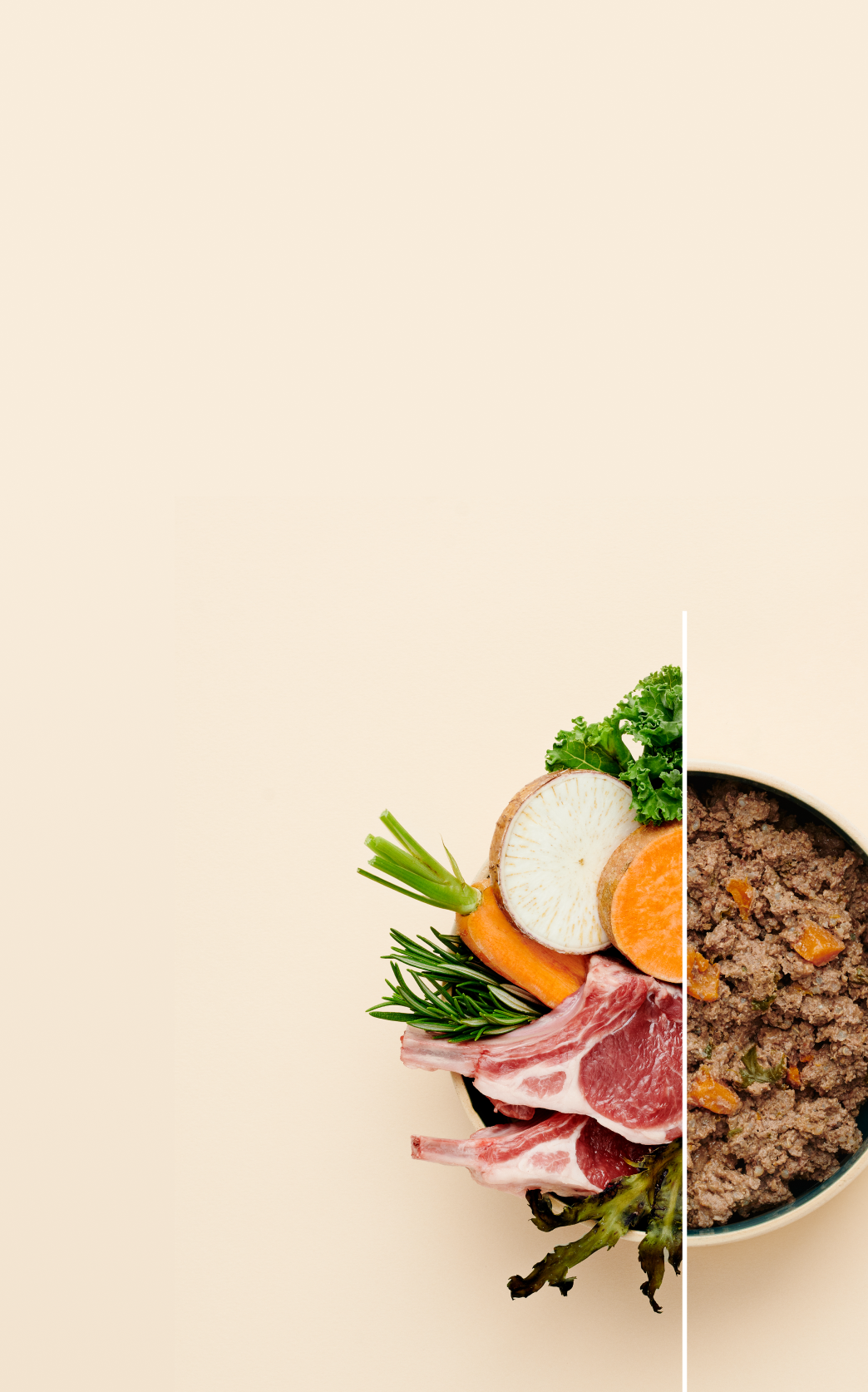
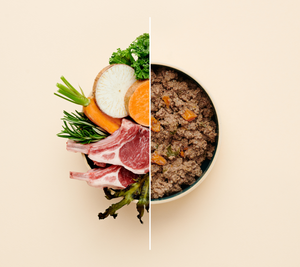
Freshly prepared British lamb, veggies & superfoods
What should I feed a dog with a sensitive stomach?
Fresh dog food built around a novel protein is the strongest starting point for sensitive dogs. Novel means a protein your dog has not eaten regularly before. Lamb and salmon are the most reliable choices, because they are less prevalent in mainstream dog food and fewer dogs have had the repeated exposure needed to develop a sensitivity to them. Choosing the right food for a sensitive stomach comes down to three things: protein source, ingredient quality, and how the food was made.
The ingredient list matters as much as the protein itself. Every item should be something you can picture in its natural form. Short, recognisable lists make it straightforward to identify a trigger if one appears, and they tend to be free of the artificial additives that are among the most common causes of reactive digestion.
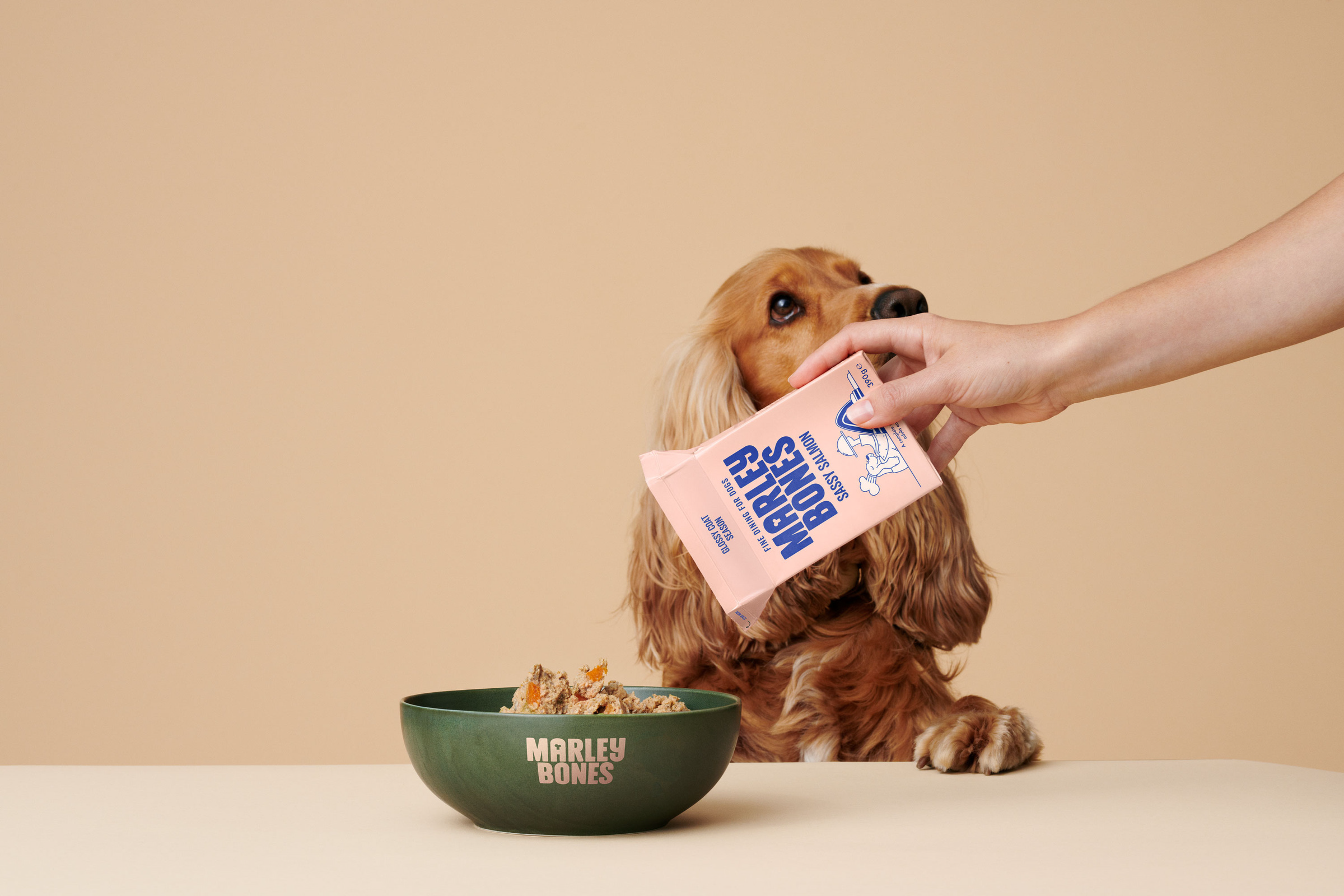
Processing method matters too. The same ingredients prepared at high temperature versus low temperature produce different digestive outcomes. Food that is gently cooked retains more of its natural protein structure, which is easier for the gut to break down. Marleybones Lush Lamb and Sassy Salmon are both single novel protein recipes with short ingredient lists, chicory root prebiotics, and no artificial additives — built specifically for dogs that need a more digestible diet. 71% of Marleybones customers report better digestion and stool quality after switching, based on a survey of 1,056 active subscribers. Create your personalised Marleybones feeding plan here.
How do different dog food formats compare for sensitive stomachs?
Fresh dog food is the most digestible format for most sensitive dogs, combining whole ingredients, low processing load, and complete nutritional balance. The differences between formats are meaningful and consistent across dogs.
| Format | Digestibility | Moisture content | Processing level | Verdict for sensitive stomachs |
|---|---|---|---|---|
| Fresh | High | 65-75% | Minimal - gentle low-temperature cooking | Best option for most sensitive dogs |
| Raw | High | 65-75% | None | Works well for some — bacterial load a consideration, especially for puppies and immunocompromised dogs |
| Cold pressed | Medium-high | Around 12% | Low - below extrusion temperatures | Good middle ground if fresh is not practical |
| Freeze dried | Medium-high | Around 5% | Low - no heat applied | Retains nutrients well — very low moisture a consideration for sensitive dogs |
| Wet / canned | Medium | 75-85% | Moderate | Better than kibble — quality varies widely |
| Dry kibble | Low-medium | Around 10% | High - high-temperature extrusion | Hardest to digest — worst option for most sensitive dogs |
Do dogs with gut problems need supplements?
For dogs on a well-balanced diet with plenty of prebiotic fibre, a supplement is not always necessary. For dogs recovering from illness, a course of antibiotics, or a longer history of digestive difficulty, targeted support can make a meaningful difference in the speed of recovery.
Probiotics introduce beneficial live bacteria into the gut. Prebiotics feed the bacteria already there. The most effective approach combines both. If you want to support gut health beyond diet alone, the Marleybones Gut Health Supplement combines prebiotics, probiotics, and digestive enzymes, formulated specifically for the canine digestive system.
How do I switch a sensitive dog to new food without making things worse?
Gradually, over seven to ten days. Even the most suitable food can cause temporary digestive upset if introduced too quickly — the gut microbiome needs time to adjust to a new nutrient profile. Move too fast, see loose stools, and it is easy to conclude the food is not working, when the transition was the problem, not the food itself.
A workable schedule: 25% new food for the first two days, 50% for days three and four, 75% for days five and six, 100% from day seven. For dogs with particularly reactive digestion, extend each stage by a day or two. The signal to move forward is stable stools at the current ratio — not the passage of a fixed number of days. Moving a sensitive dog onto fresh food follows the same principle throughout. Gradual always wins.
Keep a simple food diary during the switch — what was eaten, portion size, any symptoms. If things are not improving after four consistent weeks, that diary will be genuinely useful when you speak to a vet.
What should I do if my dog has an upset stomach right now?
Occasional loose stools that clear up within 24 to 48 hours are usually not a cause for concern and resolve on their own. Diarrhoea persisting beyond 48 hours, blood in stools, vomiting alongside digestive symptoms, or significant lethargy are reasons to see a vet before making any dietary changes.
For dogs recovering from an acute stomach upset, bland and easily digestible food in smaller, more frequent meals is the priority. Consistent protein source, nothing high in fat, nothing new — and reintroduce normal food gradually once stools have stabilised. Managing an acute digestive episode is a short-term situation; the longer-term question is whether the underlying diet is setting the gut up to cope well.
“Such a relief to see her enjoying her food”
FAQs
What are the signs my dog has a sensitive stomach?
Loose or inconsistent stools, excessive wind, occasional vomiting, and discomfort around mealtimes are the most common signs. Poor gut health also shows up beyond digestion: itchy skin, a dull coat, low energy, and frequent grass eating are all reliable indicators. Symptoms that come and go are typically dietary in origin. Symptoms that are persistent, progressive, or accompanied by weight loss are worth a vet assessment before any food changes are made.
Is grain-free dog food better for sensitive stomachs?
Not automatically. For most sensitive dogs the issue is not grains themselves but the quantity and quality of grain used as a cheap filler in heavily processed food. A dog reacting to wheat in low-quality kibble may tolerate modest amounts of whole oats or brown rice in a fresh recipe without any difficulty. Grain-free food that replaces grain with large quantities of peas or lentils introduces its own nutritional considerations and is not automatically easier to digest.
Should I try a novel protein for my sensitive dog?
Yes, if your dog has been eating the same protein for most of their life. Dogs that have eaten chicken or beef for years are more likely to have developed a sensitivity to those proteins — not because they are harmful, but because repeated exposure gives the immune system more opportunity to react. Lamb and salmon are both strong starting points. Marleybones Lush Lamb and Sassy Salmon are built around single novel proteins with short ingredient lists, making it straightforward to identify whether the protein change is what is making the difference.
How long does it take to improve gut health after switching food?
Most dogs show noticeable improvement in stool quality within two to four weeks of moving to a more digestible diet. A full microbiome shift takes closer to eight to twelve weeks — coat condition and energy tend to follow over that period. If there is no meaningful change after four consistent weeks, the cause may not be purely dietary. A vet assessment is the right next step.
Can stress cause gut problems in dogs?
Yes. Stress and anxiety have a direct impact on digestive function via the gut-brain axis, the two-way communication channel between the gut and the nervous system. Dogs experiencing chronic stress are more prone to loose stools, stomach gurgling, and irregular digestion. Addressing the root cause of anxiety matters as much as dietary changes, and the two work together rather than independently.
Can I mix fresh food with my dog's existing kibble?
Yes, and for sensitive dogs it is often a sensible transitional approach. Starting with a smaller proportion of fresh food alongside existing kibble reduces the microbiome adjustment required at each stage. Some owners continue mixing long-term as a way to improve nutritional quality without a complete format switch. If digestive symptoms persist on a mixed diet, a consistent four-week trial on fresh food alone gives a cleaner picture of whether the format change is making a difference.
When should I see a vet about my dog's sensitive stomach?
For mild, intermittent symptoms with no other health concerns, a careful food change with a slow transition and a four-week consistent trial is a reasonable first step. Symptoms that have persisted beyond two weeks, include blood in stools or repeated vomiting, involve significant weight loss, or are getting progressively worse need a vet assessment before any dietary changes. Some conditions that produce digestive symptoms need clinical diagnosis and treatment. A food switch will not resolve them.


 Give your dog the quality nutrition they deserve
Real meat, wholesome veggies and functional superfoods.
Get 40% OFF today