


 Vet reviewed
What is the best dog food for a Pug?

At a glance
- Pugs do best on fresh, whole-ingredient food with controlled calories and high digestibility - the breed's combination of a voracious appetite, slow metabolism, and compressed airways makes weight management and food quality both critical.
- Chicken and beef are the proteins most likely to cause sensitivity in Pugs that have eaten the same food for years - lamb and salmon are stronger starting points for dogs with recurring skin folds inflammation or digestive upset.
- Fresh food with 65-75% moisture content is significantly more satiating per calorie than dry kibble, which helps manage the Pug's persistent hunger without overfeeding.
- Omega-3 fatty acids from oily fish actively support skin barrier health in Pugs - particularly relevant for a breed prone to irritation in skin folds.
- Portion discipline matters more for Pugs than almost any other small breed - excess weight puts direct pressure on the airways and joints, and the breed's flat face makes it harder for owners to read hunger cues accurately.
What is the best diet for a Pug?
Fresh dog food built around a high-quality, named protein source with tightly controlled portions is the most appropriate diet for most Pugs. The breed combines a genuinely powerful appetite with a compact, low-activity build and a metabolism that does not burn calories quickly. That combination makes ingredient quality and portion precision both non-negotiable.
Heavily processed dry kibble is calorie-dense, low in moisture, and places a significant load on the digestive system - none of which suits a breed that already struggles to regulate weight and digestion. Fresh food cooked gently from whole ingredients delivers significantly higher moisture content, better digestibility, and a more satiating feed that reduces the constant hunger Pug owners know well.
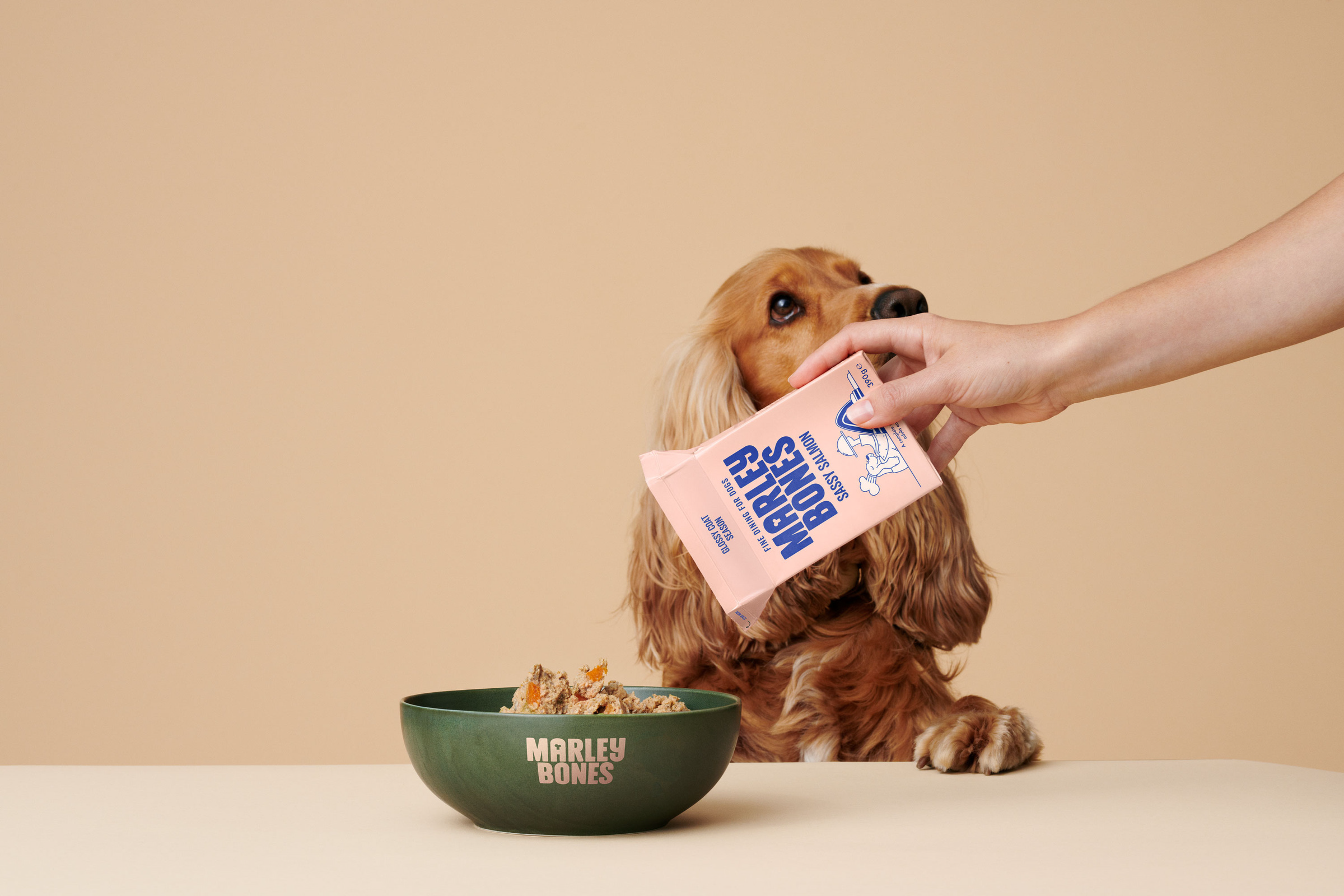
The practical checklist for a good Pug food is: a named protein source, omega-3 fatty acids for skin fold health, no artificial additives or high-starch fillers, and calories you can actually track. Marleybones Pantry Fresh meals are vet-developed, contain no artificial preservatives or fillers, and come in single-protein recipes that make it straightforward to manage a sensitive Pug's diet without guesswork.
Do Pugs have sensitive stomachs?
Many do, and the cause is usually the food rather than the breed. Pugs are frequently fed the same chicken or beef-based food from puppyhood through to old age, and prolonged exposure to the same protein is one of the most reliable ways to develop a sensitivity over time. Switching protein source tends to resolve digestive symptoms more effectively than switching between brands of the same format.
Loose stools, wind, and intermittent vomiting are the most common digestive complaints in Pugs, and all three are regularly improved by moving to a fresh, minimally processed food with a single, novel protein. The high-temperature extrusion used to make dry kibble denatures proteins and destroys much of the natural nutritional value - the gut then has to work harder to extract what little is left. A fresh diet reduces that load significantly, and most Pugs with a history of digestive upset see meaningful improvement within two to four weeks of switching.
If symptoms persist beyond four weeks, or include blood in stools, significant weight loss, or repeated vomiting, see a vet before continuing to adjust the food.
Why is weight management so important for Pugs?
Keeping a Pug lean is one of the most effective dietary interventions an owner can make for the breed's long-term health. Excess weight compresses the chest cavity, worsens breathing effort, and puts additional load on the joints - all of which are already under pressure in a breed with a flat face and short, compact legs. A Pug that is even a kilogram over its ideal weight breathes and moves noticeably harder than one in lean condition.
The challenge is that Pugs are expert communicators of hunger - expressive faces, persistent presence at mealtimes, and an apparent ability to convince owners they have not been fed recently. Fresh food is significantly more satiating than dry kibble at an equivalent calorie count, because the higher moisture content occupies more volume in the stomach. Owners switching from kibble typically find their Pug seems more satisfied on fewer calories - which is exactly the outcome the breed needs.
Body condition, not the scales alone, is the right measure. You should be able to feel the ribs without pressing, and the waist should be visible from above. If neither is true, reduce the daily portion and reassess after four weeks.

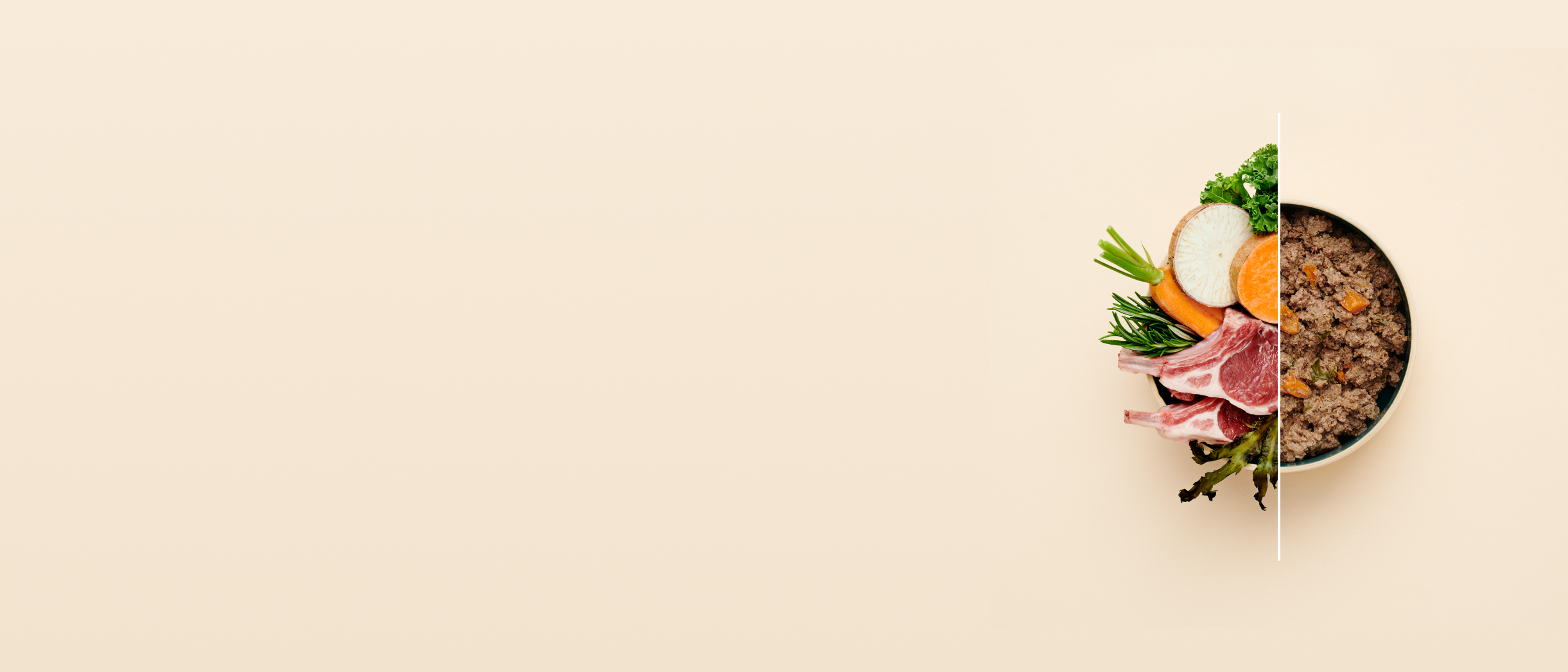
Freshly prepared British beef, veggies & superfoods
What protein is best for a Pug?
Lamb and salmon are the strongest starting points for most Pugs, particularly those currently eating chicken or beef. A protein a dog has not eaten regularly carries less risk of sensitivity, because the immune system has not had repeated exposure to it.
Salmon is the most nutritionally complete choice for Pugs specifically, delivering clean protein alongside EPA and DHA omega-3 fatty acids that directly support skin barrier integrity and reduce the low-grade inflammation that drives fold irritation. Lamb is the better option for dogs that have already eaten fish regularly or need a red meat protein - it is lower in allergenicity than beef and digests reliably in dogs with reactive guts.
Single-protein meals are the most practical choice for any Pug with a history of sensitivity, because they make it straightforward to identify what the dog tolerates without the confusion of multi-protein recipes. Meals built around novel proteins - like Marleybones Sassy Salmon or Lush Lamb - include chicory root as a natural prebiotic, which supports gut flora stability during and after the transition.
How much should I feed a Pug?
An adult Pug typically weighs between 6 and 9kg, but body condition is more informative than the number on the scales. Feeding guides on packaging are a starting point - adjust based on body condition over six to eight weeks, and factor in every treat as part of the daily calorie total. With a breed this food-motivated, treats add up faster than most owners expect.
Pugs are one of the few breeds where erring toward the lower end of a feeding guide is nearly always the right call. The breed's reduced activity levels and compact build mean maintenance calorie requirements are lower than the weight alone suggests. Two meals a day - morning and evening in equal portions - suits adult Pugs better than one large daily feed, which can cause bloating and leaves them hungry for too long between meals.
Every dog is different - build your personalised Marleybones feeding and health plan tailored to your dog's age, size, and health requirements.
How do different dog food formats compare for Pugs?
| Format | Moisture content | Processing level | Verdict for Pugs |
|---|---|---|---|
| Fresh (Pantry Fresh) | 65-75% | Minimal - slow low-temperature cooking | Best option - whole ingredients, high satiety, supports skin fold health and weight management |
| Raw | 65-75% | None | Works for some - bacterial load a consideration, preparation discipline required |
| Wet / canned | 75-85% | Moderate | Better than kibble - ingredient quality varies widely, check calorie density carefully |
| Cold pressed | Around 12% | Low - below extrusion temperatures | Decent middle ground - better digestibility than kibble, lower satiety than fresh |
| Dry kibble | Around 10% | High - high-temperature extrusion | Worst option for Pugs - low satiety, calorie-dense, hardest to digest |
FAQs
How often should I feed my Pug?
Twice daily is the right approach for adult Pugs - morning and evening in equal portions. One large daily meal is harder to digest and leaves the breed hungry for extended periods, which tends to produce persistent begging behaviour. Puppies under six months need three to four smaller meals spread through the day.
Why does my Pug always seem hungry?
Pugs have a genuinely powerful appetite drive, and dry kibble does little to satisfy it - the low moisture content means the stomach empties quickly despite the calorie load. Switching to fresh food with higher moisture content produces a more physically satisfying meal at an equivalent or lower calorie count, and most owners find the persistent hunger behaviour reduces significantly within a few weeks of switching.
Is grain-free food better for Pugs?
Not automatically. The issue for most Pugs is not grain itself but the quantity of cheap, high-starch grain used as a filler in heavily processed food. A Pug reacting to wheat in low-quality kibble may tolerate whole oats or brown rice in a fresh, minimally processed meal without difficulty. Grain-free foods that replace grain with large quantities of peas or lentils are not automatically easier to digest or better suited to the breed.
Does diet affect skin fold health in Pugs?
Diet is one of the most practical levers for managing skin fold irritation in Pugs. Omega-3 fatty acids from oily fish - EPA and DHA specifically - support the skin barrier from the inside, reducing the baseline inflammation that makes folds prone to redness and infection. A diet built around salmon delivers these naturally as part of the protein source, rather than as a synthetic add-on to an otherwise poor-quality food.
Is Marleybones Pantry Fresh good for Pugs?
Yes. Marleybones Pantry Fresh meals are vet-developed, contain no artificial preservatives or fillers, and are available in single-protein recipes well-suited to a breed prone to sensitivity and weight gain. With a 4.9/5 Trustpilot rating and over 2,000,000 meals delivered, Sassy Salmon is the strongest choice for Pugs - it delivers natural EPA and DHA omega-3 fatty acids for skin fold support alongside clean, whole ingredients that are straightforward for a sensitive gut to handle.
How do I transition my Pug to a new food?
Gradually, over seven to ten days, mixing increasing amounts of the new food with decreasing amounts of the old. Pugs can be enthusiastic about new food and owners are sometimes tempted to switch immediately - but even a keen eater benefits from a slow transition to avoid digestive upset. Start with roughly 25% new food for the first two to three days, increase to 50% for the next two to three, then 75%, then complete the switch.
Can Pugs eat fresh food as puppies?
Yes. Marleybones Pantry Fresh meals are complete for all life stages, including puppies. Pug puppies grow quickly in their first six months and benefit from the higher digestibility and moisture content of fresh food from the start. Portion amounts need to be adjusted for age and growth rate - use a breed-specific puppy feeding guide and transition gradually if switching from a different format.

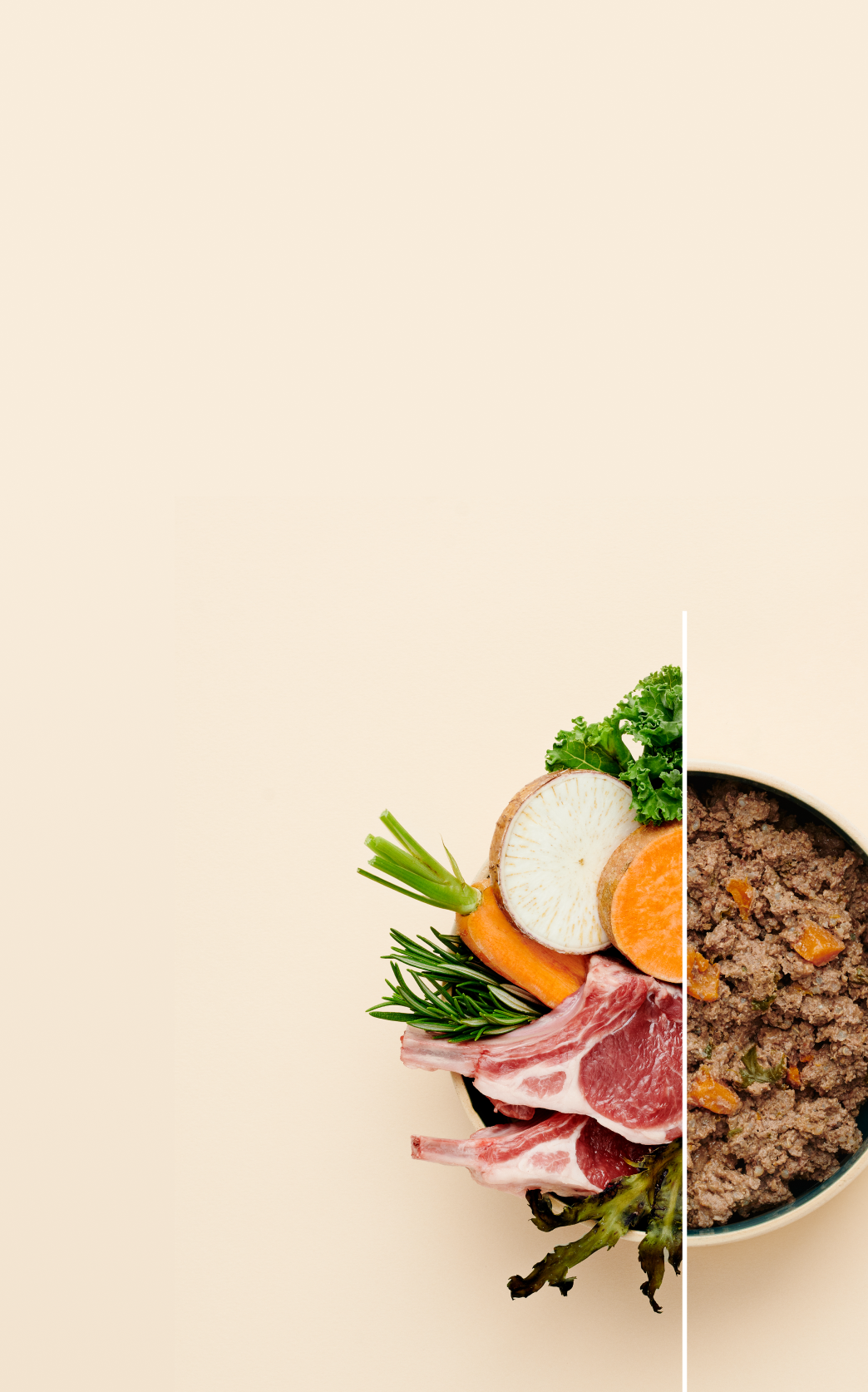
Freshly prepared British chicken, veggies & superfoods


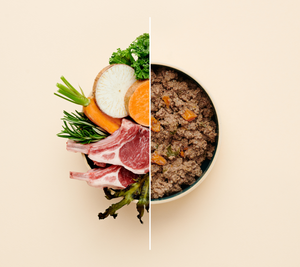 Give your dog the quality nutrition they deserve
Real meat, wholesome veggies and functional superfoods.
Get 30% off: Take the quiz