


Fresh Dog Food Explained: What It Is, Why It Matters and How to Choose

At a glance
- Fresh dog food is made from whole, recognisable ingredients with minimal processing. What goes in is what your dog gets, without the fillers, artificial preservatives, or high-temperature manufacturing that define most commercial pet food
- The way food is processed matters as much as what is in it. High-temperature extrusion degrades proteins and breaks down fibre in ways that directly increase the digestive load on your dog at every meal
- Fresh food contains 65 to 75% natural moisture compared to around 10% in dry kibble, a difference that affects digestion, kidney function, and gut health across every single meal
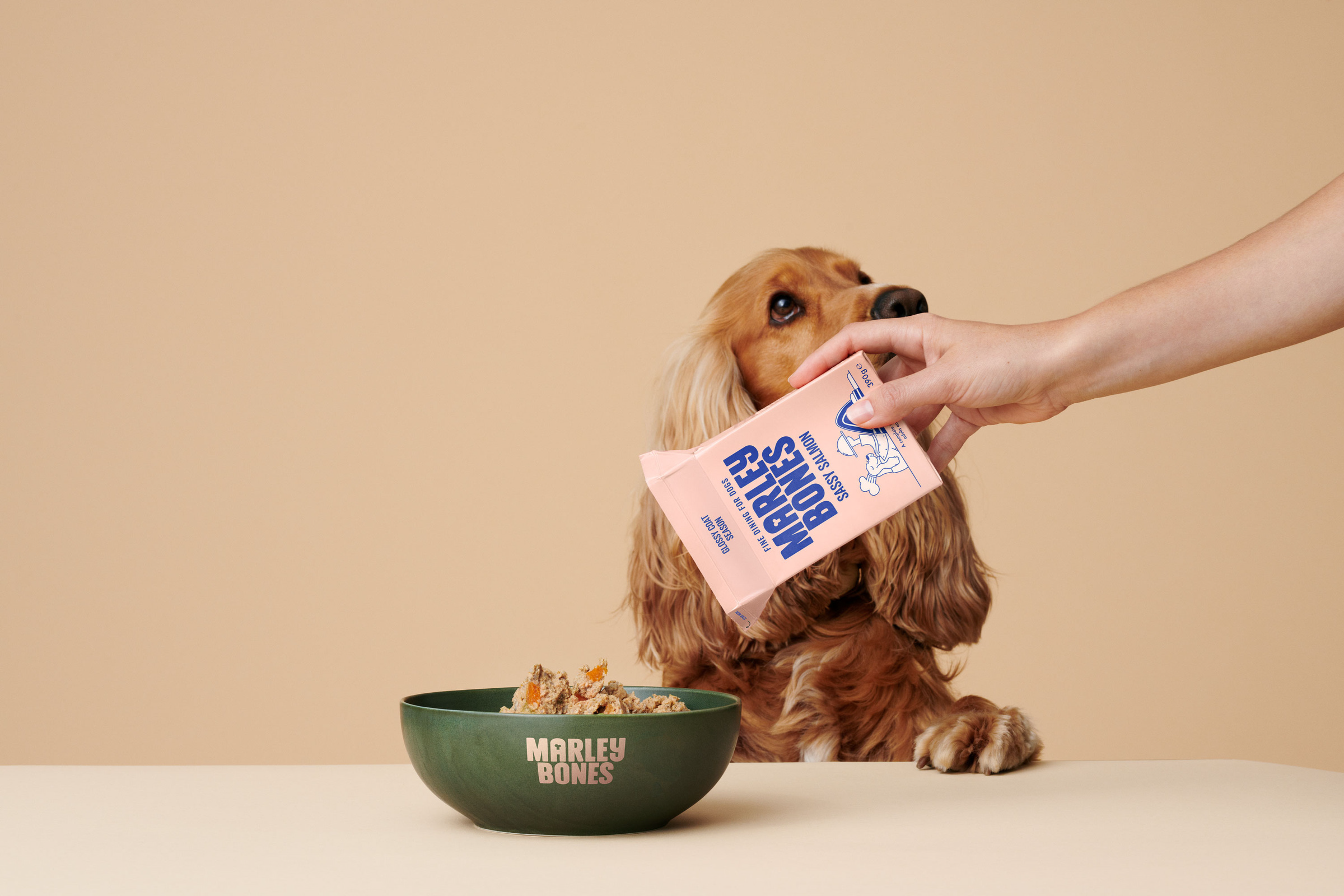
- Not all fresh dog food is frozen. Shelf-stable fresh formats like Pantry Fresh deliver the same nutritional quality without freezer space, defrosting, or single-use plastic
In this guide
What is fresh dog food?
Fresh dog food is made from whole, recognisable ingredients, real meat, vegetables, and functional additions like herbs and seeds, prepared with minimal processing and without artificial preservatives, colours, or flavour enhancers. The definition sits in contrast to conventional pet food manufacturing, where ingredients are often rendered, extruded at high temperatures, or heavily processed in ways that change their nutritional structure before they reach the bowl.
The category covers several distinct formats. Fresh frozen is the most established: meals prepared from whole ingredients and frozen to preserve freshness, requiring freezer storage and defrosting before serving. Shelf-stable fresh, sometimes called Pantry Fresh, uses a gentle in-pack cooking process that achieves the same nutritional outcome without freezing. Meals store in the cupboard and are ready to serve straight from the pack. Raw feeding uses uncooked whole ingredients with no heat applied at all. Each format sits under the fresh dog food umbrella but delivers a meaningfully different practical experience.
What unites them is the ingredient standard. Fresh dog food starts with ingredients you can picture in their natural form: chicken thigh, lamb mince, salmon fillet, sweet potato, spinach. If an ingredient on the label requires a chemistry degree to identify, it is a signal that the food has moved away from the fresh category regardless of how it is marketed.

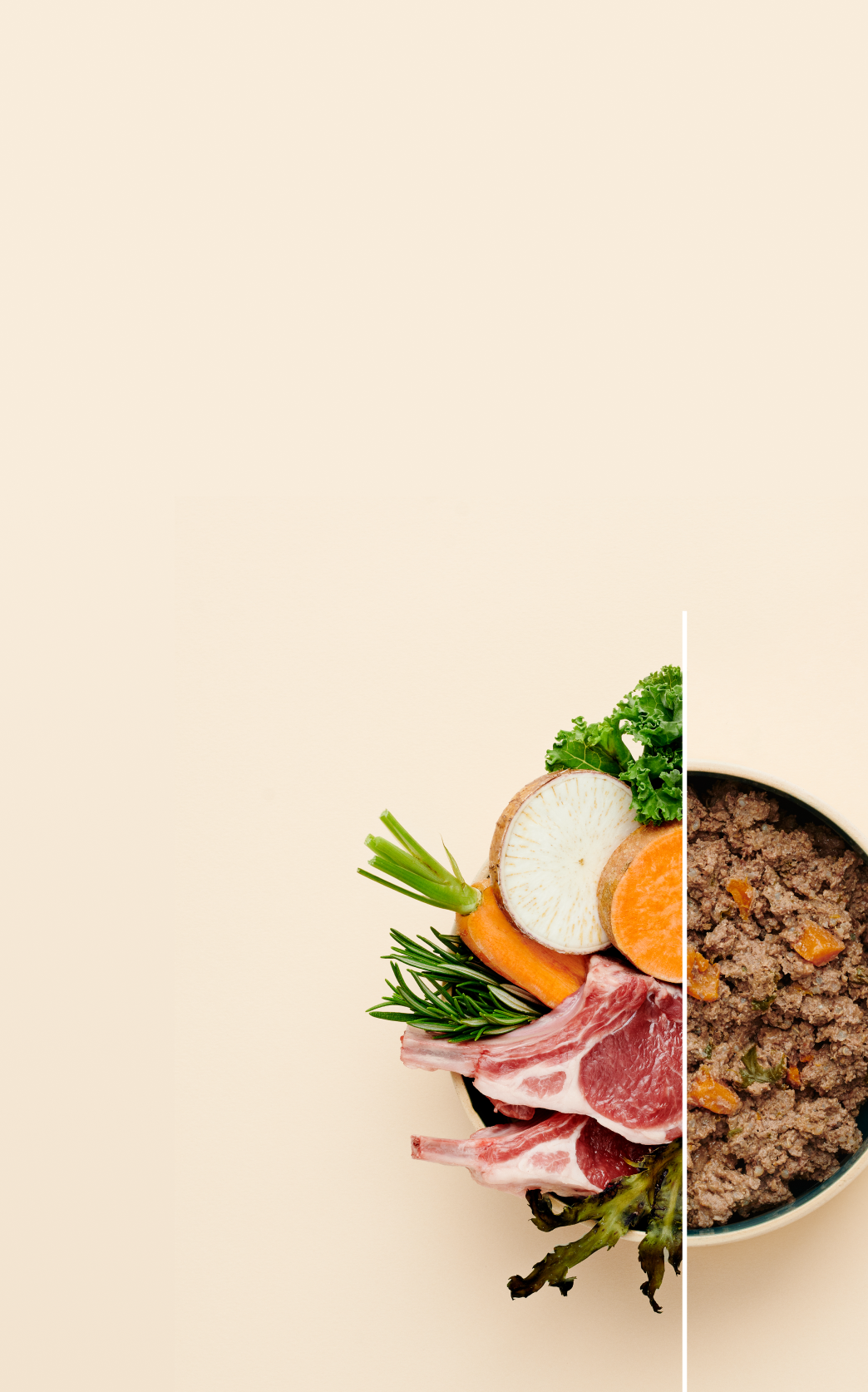
Freshly prepared British lamb, veggies & superfoods
What does fresh dog food do differently?
Fresh dog food produces better nutritional outcomes than heavily processed alternatives because of two things that work together: ingredient quality and processing load. Improving one without the other produces partial results. Addressing both is what makes the difference most owners notice within the first few weeks of switching.
Ingredient quality is the more obvious of the two. Whole proteins from named animal sources are more bioavailable than rendered meals or protein derivatives. The gut extracts more usable nutrition from the same quantity of food. Vegetables in their recognisable form retain fibre that feeds the gut microbiome and supports consistent digestion. Functional ingredients like chicory root, chia seeds, and linseeds contribute genuinely to digestion, coat condition, and energy rather than appearing on a label for marketing purposes. The difference between a named ingredient with a documented function and a generic additive is not subtle. It shows up in coat quality, stool consistency, and energy levels within weeks of switching.
Processing load is the factor most owners miss. Conventional dry kibble is produced through high-temperature extrusion, a manufacturing process that degrades proteins, breaks down fibre, and strips natural moisture in ways that directly increase how hard the digestive system has to work at every meal. A dog eating heavily processed food every day is working harder to extract less nutrition from every bowl. Many dogs with chronic digestive issues, dull coats, or low energy improve on fresh food before any specific dietary trigger has been identified, because reducing the processing burden alone was enough to make a difference.
Natural moisture is the third factor, and the one most consistently underestimated. Fresh food contains 65 to 75% moisture. Dry kibble contains around 10%. That gap affects kidney function, gut health, and digestion across every meal across every year of a dog's life. Dogs on long-term dry food diets are in a state of mild, chronic underhydration that compounds quietly over time. It is not a marginal difference.
How does fresh dog food compare to other formats?
Fresh dog food sits at one end of a processing spectrum. Understanding where each format sits on that spectrum, and what the practical trade-offs are, is the most useful frame for choosing what to feed.
| Format | What you get | Practical considerations | Verdict |
|---|---|---|---|
| Fresh - Pantry Fresh | Whole ingredients, gentle cooking, complete nutrition, no preservatives | Cupboard storage, no defrosting, ready to serve | Fresh food quality without the frozen faff |
| Fresh frozen | Whole ingredients, high nutritional quality | Requires freezer space, defrosting time, single-use plastic packaging common | Fresh food. Convenience is the main consideration |
| Raw | Unprocessed whole ingredients, high digestibility | Requires careful handling, freezer storage, bacterial load a consideration | Works well for committed feeders. Not practical for everyone |
| Wet / canned | Higher moisture than kibble, moderate ingredient quality | Convenient, widely available. Quality varies significantly by brand | Better than kibble. Ingredient quality is the deciding factor |
| Dry kibble | Convenient, long shelf life, low moisture | High-temperature processing, low moisture, often high in starch and fillers | Convenient but the hardest format for most dogs to get full nutrition from |
Brands like Butternut Box and Different Dog also deliver genuine fresh food. The question is whether the freezer space, defrosting, and single-use plastic packaging work for your household. Pantry Fresh removes those friction points without compromising on ingredient quality or nutritional outcome. For owners considering dehydrated formats, the comparison with Pure Pet Food covers the key differences between rehydrated powder and gently cooked whole ingredients.
Is fresh dog food worth it?
Fresh dog food is worth it for most dogs. The question is whether the specific format and price point works for your household. The nutritional case is well established. The practical and financial case depends on which fresh format you choose and how you factor in the outcomes.
On cost, fresh food sits above dry kibble and most wet food on a per-meal basis. Fresh frozen brands tend to sit at a comparable price point to shelf-stable fresh when delivery and packaging are factored in. The more relevant comparison for most owners is not fresh versus kibble in isolation, but fresh versus the vet bills, specialist foods, and digestive supplements that often follow years on heavily processed food. Feeding well is an investment that tends to cost less over a dog's lifetime than the alternative.
On outcomes, the evidence from customers who have switched is consistent. 98% of Marleybones customers are happy they switched. 71% report better digestion and stool quality. 76% say it has helped maintain or improve a healthy weight. These figures come from a survey of 1,056 active subscribers conducted in January 2026.

“A complete game changer!!”
On convenience, Pantry Fresh removes the two practical barriers that stop most owners from switching to fresh food: freezer space and defrosting. Meals store in the cupboard for up to 18 months unopened, serve straight from the pack, and arrive on a subscription schedule that fits around normal life. 90% of customers find it easier than their previous food, including those who switched from fresh frozen.
How do I choose the right fresh dog food?
Four things matter when choosing a fresh dog food: ingredient quality, protein source, processing method, and format practicality. Get those right and most of the other variables take care of themselves.
Ingredient quality is the starting point. Read the label and ask whether every ingredient is something you can picture in its natural form. Named animal proteins, chicken breast, lamb mince, salmon fillet, are a good sign. Meat meal, animal derivatives, and unnamed fat sources are not. A short ingredient list is not a compromise on nutrition. It is usually a signal of confidence in what is actually in the food. If the brand cannot tell you clearly where the meat comes from, that is worth paying attention to.
Protein source matters particularly for dogs with a history of digestive sensitivity or fussy eating. Novel proteins, ones your dog has not eaten regularly before, are less likely to trigger a reaction and often more interesting to a picky eater. Lamb and salmon are both strong starting points because they are less prevalent in mainstream commercial pet food, giving sensitivities less opportunity to develop. Marleybones Lush Lamb and Sassy Salmon are single protein recipes built around this principle: one protein, short ingredient list, nothing to confuse the picture if a reaction does appear.
Processing method is what separates genuinely fresh food from food that is marketed as fresh but produced through conventional high-temperature manufacturing. Gentle cooking at lower temperatures retains more of the natural protein structure and fibre behaviour that makes fresh food digestible and nutritionally complete. Shelf-stable does not mean lower quality: the Pantry Fresh in-pack cooking process achieves the same nutritional outcome as fresh frozen at around 89°C, a temperature that preserves nutritional integrity while making the food safe and shelf-stable without preservatives.
Format practicality is the factor that determines whether a switch actually sticks long-term. The best food in the world does not help a dog whose owner has run out of freezer space, forgotten to defrost dinner, or finds the daily routine too complicated to maintain. Choose a format that fits genuinely into your life, not one that requires it to reorganise around feeding time. A food that gets served consistently is always better than a theoretically superior one that gets abandoned after a month.
Create your personalised Marleybones feeding plan — built around your dog's size, age, and needs.

Treats with fresh British chicken as the #1 ingredient
FAQs
What counts as fresh dog food?
Fresh dog food is made from whole, recognisable ingredients with minimal processing and no artificial preservatives, colours, or flavour enhancers. The category includes fresh frozen, shelf-stable fresh, and raw formats. What unites them is the ingredient standard and the absence of the high-temperature manufacturing that defines conventional dry and wet pet food.
Is fresh dog food better than kibble?
For most dogs, yes. Fresh food contains significantly more natural moisture, higher quality protein, and is produced through lower-temperature processes that retain more nutritional integrity than high-temperature extrusion. The practical and cost differences are real, but the nutritional gap between fresh food and dry kibble is consistent and well documented.
Does fresh dog food need to be frozen?
No. Shelf-stable fresh formats like Pantry Fresh use a gentle in-pack cooking process that preserves nutritional quality without freezing. Meals store in the cupboard for up to 18 months unopened and refrigerate for two to three days once opened. Fresh frozen is the better-known format but it is not the only one. For owners without freezer space, shelf-stable fresh delivers the same nutritional outcome without the practical constraints.
How do I know if fresh dog food is genuinely high quality?
Read the ingredient list and apply a simple test: can you picture every ingredient in its natural form? Named animal proteins, whole vegetables, and recognisable functional ingredients are good signals. Meat meal, animal derivatives, artificial preservatives, and unnamed fat sources are not. The processing method matters too. Look for food that is cooked at lower temperatures rather than extruded, and check whether the brand is transparent about how the food is made.
How much does fresh dog food cost?
Fresh dog food costs more per meal than dry kibble but less than most owners expect when compared on a like-for-like basis. Shelf-stable fresh and fresh frozen brands tend to sit at a similar price point once delivery and packaging are included. The more relevant comparison is the long-term cost of feeding a dog well versus the cumulative cost of digestive issues, specialist foods, and vet visits that often follow years on heavily processed food.
Can puppies eat fresh dog food?
Yes. Marleybones Pantry Fresh meals are complete and balanced for all life stages including puppies. The key consideration for puppies is ensuring the food is FEDIAF compliant and formulated to meet the higher nutritional demands of growth. Not all fresh dog food brands meet this standard, so it is worth checking before switching a puppy.
How do I switch my dog to fresh food?
Gradually, over seven to ten days. Mix increasing proportions of fresh food with existing food: 25% new for the first two days, 50% for days three and four, 75% for days five and six, then 100% from day seven. Even the most suitable food can cause temporary digestive upset if introduced too quickly, because the gut microbiome needs time to adjust. The signal to move to the next stage is stable stools at the current ratio, not the passage of a fixed number of days.
“Such a relief to see her enjoying her food”


 Give your dog the quality nutrition they deserve
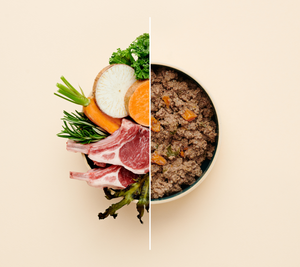
Real meat, wholesome veggies and functional superfoods.
Get 40% OFF today