


 Vet reviewed
What’s the best dog food for a Gerberian Shepsky?

At a glance
- Gerberian Shepskies do best on fresh, whole-ingredient food built around a high-quality animal protein - this large, athletic hybrid burns significant energy and needs nutrient density that heavily processed food struggles to deliver.
- Hip dysplasia is common in both parent breeds, and a diet that actively supports joint health through omega-3 fatty acids and anti-inflammatory ingredients makes a meaningful difference over the dog's lifetime.
- Protein should come from a named, identifiable source - chicken and beef are the most common sensitisers in dogs that have eaten them for years, and lamb or salmon are stronger starting points for dogs with any history of digestive or skin reactions.
- Coat quality in Gerberian Shepskies is closely tied to dietary fat - omega-3 fatty acids from oily fish support the dense double coat this breed carries year-round.
- Portion discipline matters from puppyhood - rapid growth in large-breed hybrids increases the risk of skeletal problems if calorie intake consistently outpaces controlled development.
What is the best diet for a Gerberian Shepsky?
Fresh dog food built around a high-quality, named animal protein is the most appropriate diet for most Gerberian Shepskies. A German Shepherd crossed with a Siberian Husky produces a large, active dog with the working-breed energy demands of both parents - and those energy demands are best met by nutrient-dense whole ingredients rather than calories bulked out with cheap starch.
Both parent breeds carry a genetic predisposition to hip and elbow dysplasia, and the Husky line brings a digestive system that evolved on a lean, protein-rich diet with minimal carbohydrate. Fresh food prepared from whole ingredients at low temperatures retains far more of its natural nutritional profile than high-temperature extruded kibble, and the higher moisture content - 65-75% versus around 10% in dry food - supports digestion and hydration in a breed that runs warm and works hard.
The practical checklist for a good Gerberian Shepsky food is: a named protein you can read on the label, omega-3 fatty acids to support joints and coat, no artificial preservatives or fillers, and controlled portions through puppyhood and into adulthood. Marleybones Pantry Fresh meals are vet-developed, built from whole ingredients slow-cooked in-pack, and contain superfoods including chia seeds, hemp seeds, and linseeds - practical nutritional support for a large, active hybrid with real joint and coat needs.
Do Gerberian Shepskies have sensitive stomachs?
The Siberian Husky side of this cross brings a digestive system that is noticeably reactive to low-quality food. Huskies evolved on a high-protein, low-carbohydrate diet, and their digestive tract handles grain-heavy, starch-dense kibble less efficiently than breeds with a longer history of eating mixed diets. Gerberian Shepskies inherit enough of that sensitivity to make ingredient quality a genuine consideration rather than an optional upgrade.
Loose stools, wind, and intermittent digestive upset are the most common complaints in the breed, and the cause is usually the food rather than an underlying clinical condition. Heavily processed dry kibble forces the gut to work harder on denatured proteins and fermentable carbohydrates - switching to a minimally processed food with a lower starch load resolves the issue in most cases within two to four weeks. If symptoms include blood in the stool, significant weight loss, or repeated vomiting, see a vet before making further dietary adjustments.
How does diet support joint health in a Gerberian Shepsky?
Keeping joints healthy in a Gerberian Shepsky starts with two things: controlling weight so that growing and adult joints are not carrying more load than they were built for, and providing omega-3 fatty acids that reduce the low-grade inflammation that accelerates joint wear. Both are dietary levers the owner controls directly.
EPA and DHA - the omega-3 fatty acids found in oily fish - are the most evidence-backed nutritional support for joint health in dogs. They work systemically, reducing inflammatory signalling that contributes to both the progression of dysplasia and the day-to-day discomfort that comes with it. A diet that delivers these from a whole food source, such as salmon, is more consistent than one that relies on a synthetic supplement added to an otherwise low-quality base. For dogs already showing stiffness or reduced mobility, a targeted omega oil alongside a fresh diet gives an additional, concentrated source of EPA and DHA.
Weight management is the other half of the equation. A Gerberian Shepsky carrying even 10% excess body weight places significantly more daily stress on hip and elbow joints than one held at a lean, healthy condition. Portion discipline is one of the most practical things an owner can do for this breed's long-term mobility.

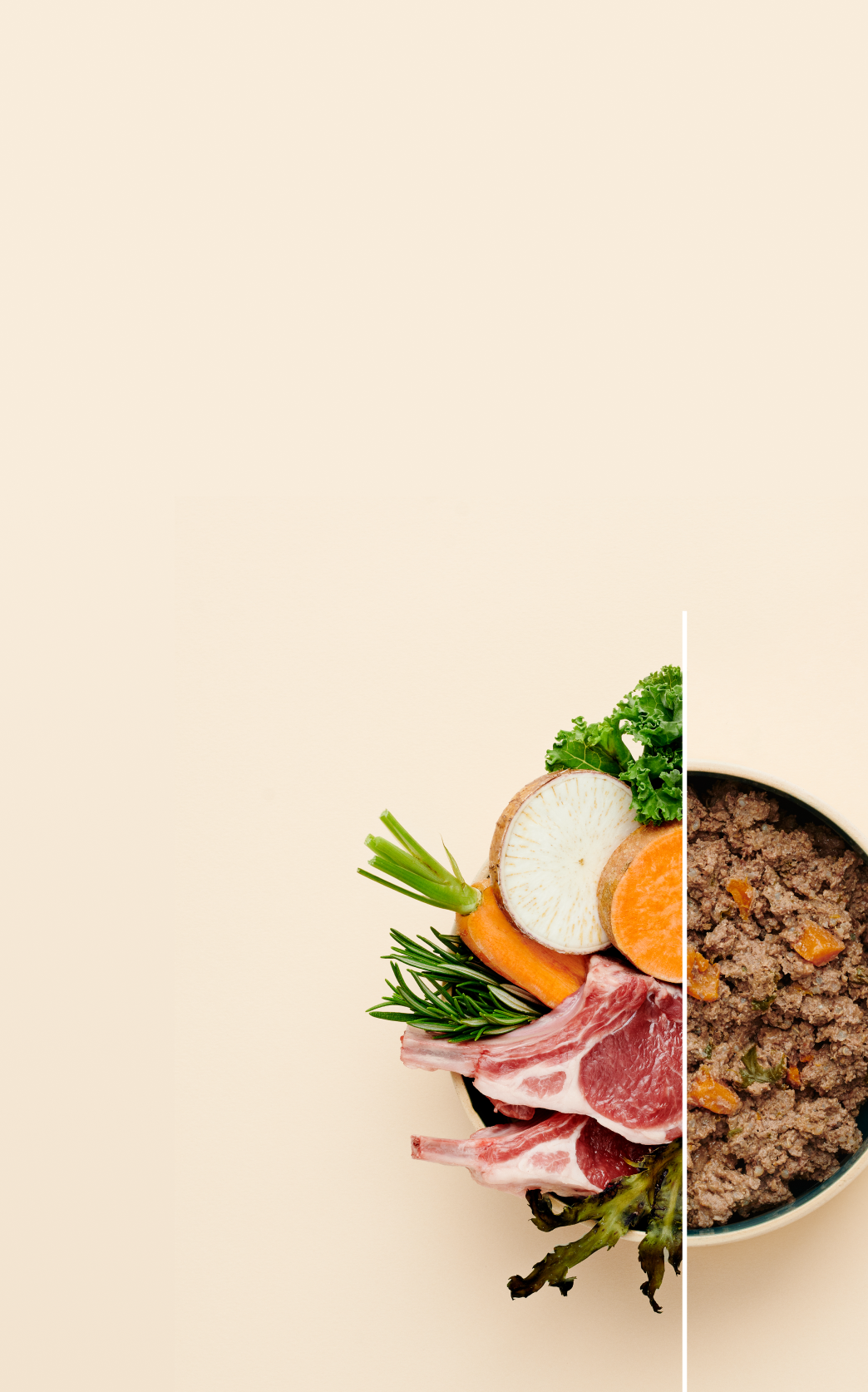
Freshly prepared British beef, veggies & superfoods
What protein is best for a Gerberian Shepsky?
Salmon and lamb are the strongest starting points for most Gerberian Shepskies, particularly those with any history of digestive sensitivity or those currently eating chicken or beef. Novel proteins - those the dog has not eaten repeatedly - are less likely to trigger a sensitivity response, and salmon offers the additional advantage of delivering EPA and DHA directly relevant to this breed's joint and coat needs.
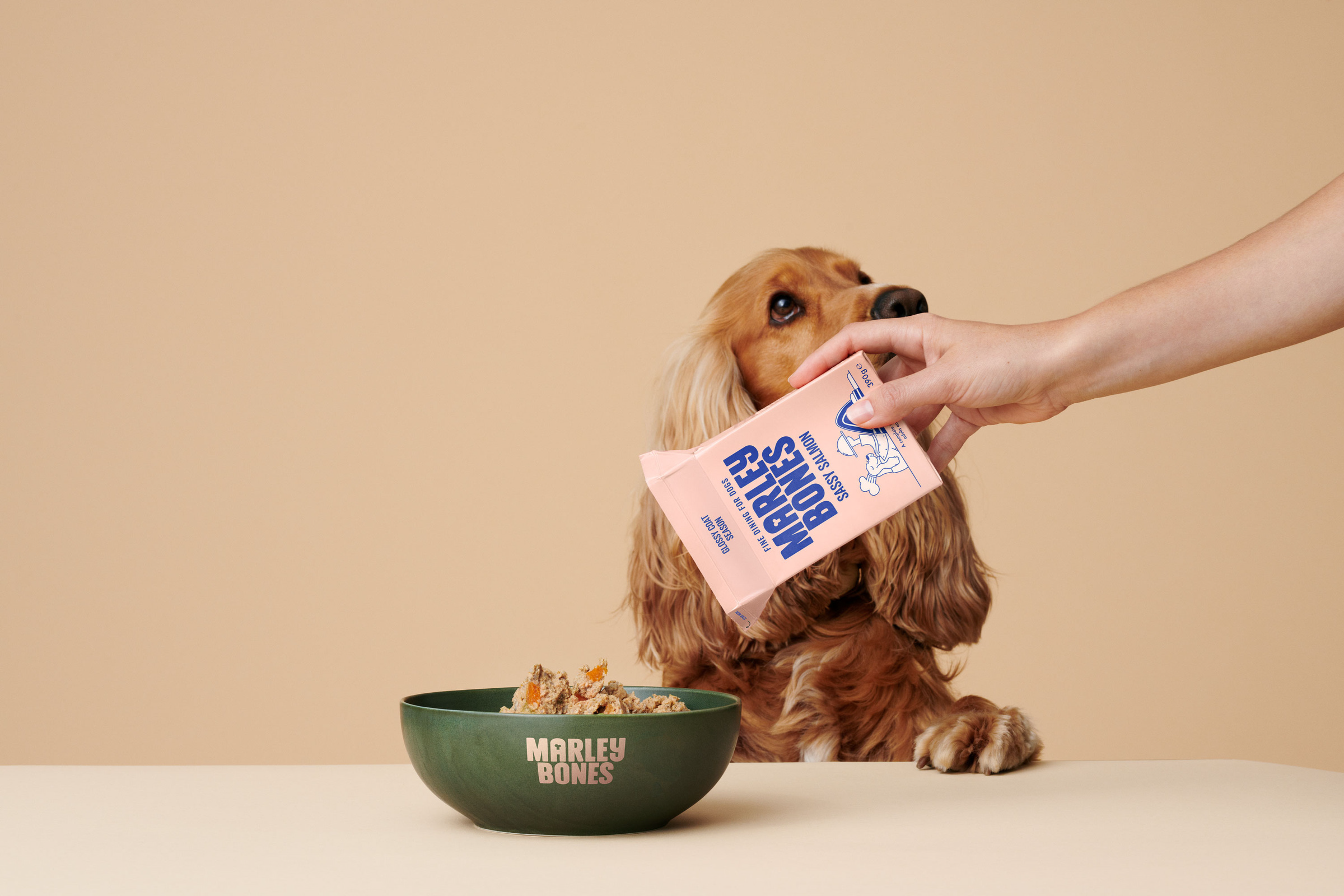
Lamb is a well-tolerated red meat option for dogs that have already eaten fish or prefer a land-protein diet. It sits well with reactive guts and is lower in allergenicity than beef, which is one of the most common protein sensitisers in dogs fed the same food over extended periods. Single-protein meals make it straightforward to identify what the dog tolerates well, and to isolate the cause if symptoms appear. Marleybones Sassy Salmon provides whole salmon as the sole protein source alongside chicory root as a natural prebiotic - a combination that addresses gut stability and omega-3 intake in one recipe, which is directly relevant to the most common concerns in this breed.
How much should I feed a Gerberian Shepsky?
Adult Gerberian Shepskies typically weigh between 25 and 45kg depending on which parent's size they take after more strongly, but body condition is a more reliable guide than the scales. Ribs should be easy to feel with light pressure and a waist should be visible when looking down from above. If either check fails, the daily portion needs adjusting before weight becomes a joint health issue.
Puppies need particular attention - large-breed puppies that grow too quickly are at greater risk of developmental skeletal problems. Feeding to support steady, controlled growth rather than maximum growth rate is the right approach from weaning to around 18 months, when the skeleton is close to mature. Feeding guides are a starting point; adjust to body condition over six to eight weeks and account for any treats, which add up quickly in a breed that is easy to reward with food.
Switching from kibble to fresh food usually allows a reduction in the nominal calorie count without the dog appearing hungry - the higher moisture content is more satiating volume for volume than dry food.
Every dog is different - build your personalised Marleybones feeding and health plan tailored to your dog's age, size, and health requirements.
How do different dog food formats compare for Gerberian Shepskies?
| Format | Moisture content | Processing level | Verdict for Gerberian Shepskies |
|---|---|---|---|
| Fresh (Pantry Fresh) | 65-75% | Minimal - slow low-temperature cooking | Best option - whole ingredients, supports joints, digestion, and double coat |
| Raw | 65-75% | None | Suits the breed's ancestral diet profile - bacterial load and preparation demands are practical considerations |
| Wet / canned | 75-85% | Moderate | Better than dry kibble - ingredient quality varies widely, read the label carefully |
| Cold pressed | Around 12% | Low - below extrusion temperatures | A reasonable step up from kibble if fresh is not accessible |
| Dry kibble | Around 10% | High - high-temperature extrusion | Hardest to digest - high starch load sits poorly with the Husky gut this breed inherits |
FAQs
How often should I feed a Gerberian Shepsky?
Twice daily is the right approach for adult Gerberian Shepskies - morning and evening in roughly equal portions. A single large daily meal increases the risk of bloat in deep-chested dogs of this size, and two meals are more satiating across the day. Puppies under six months need three to four smaller meals spread through the day to support steady growth without overloading the digestive system.
Why does my Gerberian Shepsky shed so much and can diet help?
Gerberian Shepskies carry the double coat of both parent breeds, which means a dense undercoat that sheds heavily twice a year and moderately year-round. Diet does not stop shedding - it is driven by photoperiod and genetics - but a diet low in quality fat produces a dry, brittle coat that sheds in larger clumps and mats more readily. Omega-3 fatty acids from oily fish and named animal fats from identifiable sources keep the coat properly conditioned, which makes the shedding manageable rather than excessive.
Is grain-free food better for a Gerberian Shepsky?
Not automatically. The Husky's ancestral diet was low in carbohydrate, which makes high-starch grain-heavy kibble a poor fit - but the grain itself is rarely the direct problem. Grain-free foods that replace grain with large quantities of peas, lentils, or potato have their own nutritional considerations and are not automatically easier to digest. A minimally processed food with moderate, whole-grain carbohydrate sources is preferable to a grain-free product built on legume-heavy starch alternatives.
Is Marleybones Pantry Fresh good for Gerberian Shepskies?
Yes. Marleybones Pantry Fresh meals are vet-developed, contain no artificial preservatives or fillers, and are complete for all life stages - relevant for a breed where getting nutrition right in puppyhood matters for long-term joint development. With over 2,000,000 meals delivered and a 4.9/5 Trustpilot rating, Sassy Salmon is the strongest choice for most Gerberian Shepskies: it delivers whole salmon as a single protein source alongside natural omega-3s and chicory root prebiotic, addressing joint support, coat condition, and gut stability in one recipe.
Can diet help with a Gerberian Shepsky's energy levels?
A Gerberian Shepsky fed on low-quality, high-starch food gets a significant proportion of its calories from fast-digesting carbohydrates that produce energy spikes followed by dips. Whole-ingredient food built around quality animal protein delivers calories in a form the body uses more steadily. Owners switching from kibble to fresh food regularly report more consistent energy across the day, which is particularly noticeable in a breed this active.
How do I know if my Gerberian Shepsky's food is causing joint problems?
Diet does not cause joint dysplasia - that is genetic and structural - but it influences how quickly joint deterioration progresses and how much discomfort the dog experiences day to day. Signs that diet may be making things worse include weight gain, reduced willingness to exercise, or visible stiffness after rest. A fresh diet with meaningful omega-3 content and strict portion control to maintain a lean body condition is the most practical dietary response, and the one most likely to support comfortable movement across the dog's lifetime.
What should I look for on a Gerberian Shepsky food label?
A named protein source listed first - "salmon", "lamb", or "chicken" rather than "meat and animal derivatives". Identifiable fat sources rather than "animal fat" of unspecified origin. No artificial preservatives, colourings, or flavourings. A short ingredient list where you can read and recognise most of what is in it is a reliable proxy for a food that is doing its job - understanding what drives digestive sensitivity makes label-reading considerably more straightforward.

Freshly prepared British chicken, veggies & superfoods


 Give your dog the quality nutrition they deserve
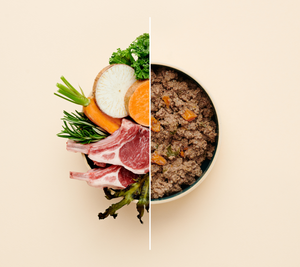
Real meat, wholesome veggies and functional superfoods.
Get 30% off: Take the quiz