

 Vet reviewed
What is the best dog food for Dachshunds?

At a glance
- Dachshunds do best on a complete, fresh, whole-ingredient diet fed in carefully weighed portions. Their long backs make keeping them lean the most important thing food can do for them.
- About one in six Dachshunds in a large UK survey had been diagnosed with intervertebral disc disease (IVDD), and being overweight raises the risk of a slipped disc, so a lean weight is the part of back health an owner can control.
- Fresh food with 65–75% moisture gives a food-motivated Dachshund a fuller bowl for the same calories than dry kibble, which makes a modest portion easier to stick to.
- Single-protein recipes, such as lamb or salmon, are a strong starting point for a Dachshund with a sensitive stomach or itchy skin, because there's only one protein to react to.
- Dachshunds will beg whether or not they're hungry, so treats belong inside the day's food, not on top of it.
- In our January 2026 survey of 1,056 Marleybones subscribers, 76% said their dog's healthy weight had been maintained or improved.
What's the best food for Dachshunds?
Fresh, whole-ingredient food built around a single, good-quality protein, fed in carefully weighed portions, is the most appropriate diet for most Dachshunds. The breed's long back and short legs mean weight matters more than it does for almost any other dog, and Dachshunds are famously food-motivated, so a diet that's easy to portion and satisfying to eat does a lot of the work.
Sausage dog or wiener dog, every Dachshund needs a complete and balanced diet, and wet food, dry kibble, raw and fresh can all be good dog food for Dachshunds as long as the label says complete; a food labelled complementary is a topper or a treat, not a full diet. Dry kibble is around 10% moisture, against 65–75% in fresh food, so a Dachshund's daily ration of kibble is a small handful that's easy to top up without noticing. A moist, gently cooked food fills the bowl for the same calories, which matters for a small dog whose portion has to stay modest.
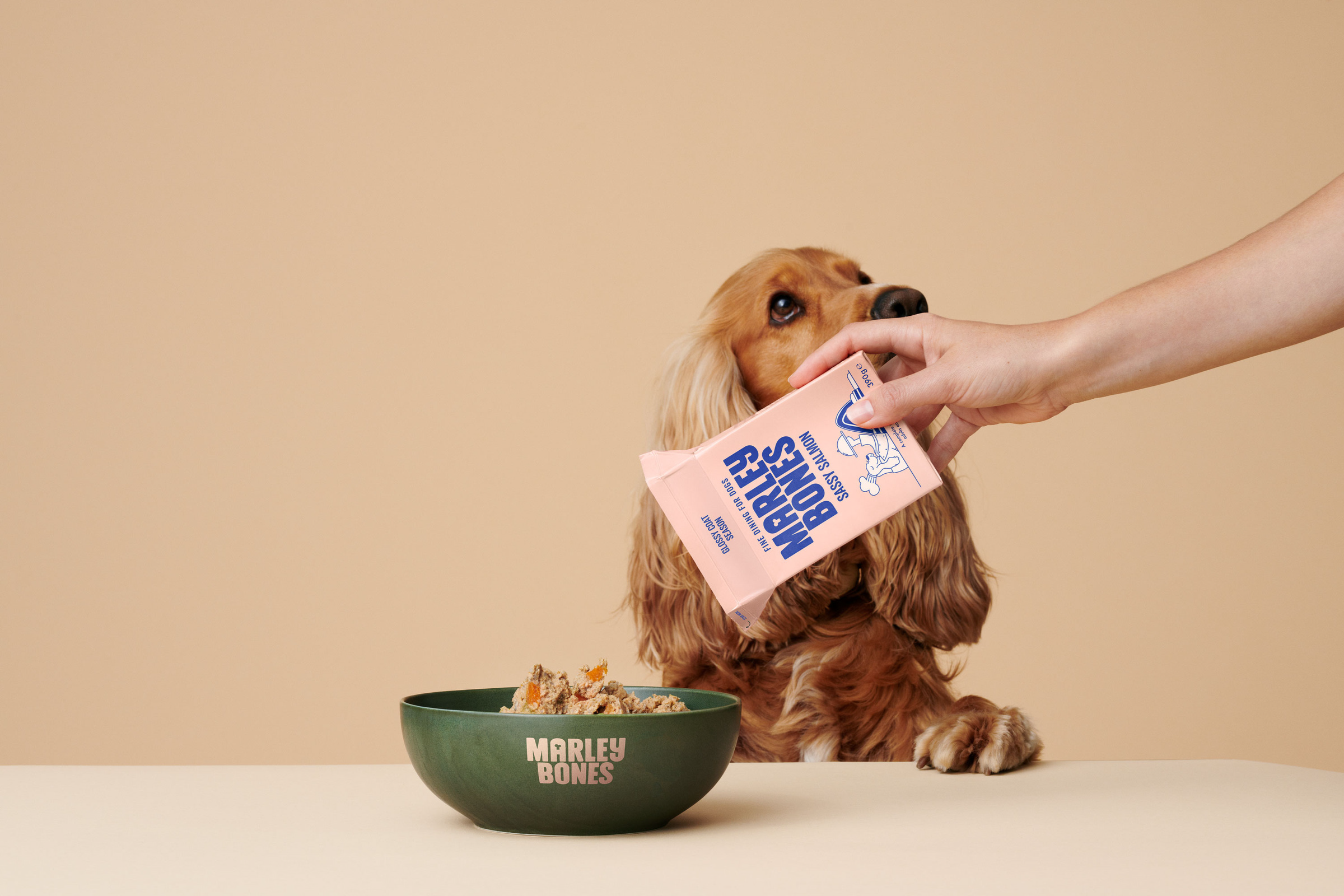
The practical checklist for a good Dachshund food is: a named protein you can read on the label, a complete recipe for your dog's life stage, no artificial preservatives or fillers, and a portion you can weigh to keep them lean. Fresh food that's gently cooked and portioned ticks all of those at once. Marleybones Pantry Fresh® meals are exactly that: vet-developed, single-protein recipes gently cooked from whole ingredients, with no artificial additives, in packs that make a Dachshund's daily amount easy to measure.
The best dog food for Dachshunds: Marleybones Pantry Fresh
Single-protein recipes, with Lush Lamb for sensitive stomachs and Sassy Salmon as a new protein to try, gently cooked at an average temperature of 89°C, with no preservatives and no freezer needed.
Does a Dachshund need a breed-specific dog food?
No. FEDIAF, the European pet food industry's nutritional guidelines, sets nutrient levels by life stage, for growing puppies and for adults, and has none for individual breeds. A food with a Dachshund on the bag is made to the same nutrient levels as any other complete food, so good Dachshund nutrition comes down to the protein, the portion and the waistline rather than the label.
Breed-labelled kibbles mostly change two things: the size and shape of each piece, to suit a small mouth, and the calorie density, to suit a small dog. Both are sensible ideas. Calcium and phosphorus, often mentioned on breed bags, have to sit within the same limits in any complete food made to those guidelines.
Gently cooked fresh food, like Marleybones Pantry Fresh, does both of those jobs without a breed label: it's soft enough for the smallest mouth, and the portion is set by your dog's weight rather than their breed.
Why does weight matter so much for a Dachshund's back?
Extra weight is the one back risk an owner can control through food. In a 2013 Royal Veterinary College study of 700 dogs seen at its referral hospital, being overweight significantly raised the risk of a slipped disc, and in Miniature Dachshunds even being moderately overweight raised it. Nearly half of the Miniature Dachshunds in that study were overweight.
Dachshunds are a chondrodystrophic breed, which means their cartilage develops differently from most dogs'. That gives them their long body and short legs, and it also makes the cushioning discs between the vertebrae age early. When one of those discs bulges or bursts and presses on the spinal cord, it's called intervertebral disc disease, or IVDD. In a 2015 survey of around 2,000 Dachshunds, mostly in the UK, about one in six had been diagnosed with IVDD by a vet.
Can diet prevent IVDD?
No food can prevent IVDD, because the disc changes come with the breed's build, and in that 2015 survey diet and treats showed no link with it. What food can do is keep a Dachshund lean, so their back isn't carrying weight it doesn't need. That's why how much goes in the bowl matters more than which food it is.
What's the best dog food for a Dachshund with back problems?
There's no special food for Dachshund back problems. The best diet, even for a Dachshund that has had IVDD, is a complete food fed at the right portion to keep them lean, and most don't need a prescription diet. Many owners also add a joint supplement with glucosamine and chondroitin, which you'll see in some breed foods too. It's worth talking through with your vet, as an extra alongside keeping your Dachshund lean.
On crate rest after a disc problem, a Dachshund burns far fewer calories, so cut the portion for those weeks. Keep to the same food so their tummy stays settled, make sure there's enough fibre, and leave fatty scraps off the menu.
Back pain, a reluctance to jump, dragging paws, wobbly back legs or a change in the way your Dachshund walks all mean a vet the same day: IVDD can get worse quickly. After a disc problem, your vet will also tell you how much exercise is safe.
What should I feed a Dachshund to keep weight off its spine?
Feed a complete, high-protein food in a weighed portion set for your Dachshund's target weight, the weight they should be rather than the weight they are now. Protein helps hold on to muscle while the fat comes off, and a small daily calorie gap does the rest. A diet for a Dachshund prone to weight gain needs no special ingredient, just the right amount every day.
A healthy weight for a Dachshund is about 9–12kg for a Standard and about 4.5kg for a Miniature. Body condition tells you more than the scales: you should be able to feel the ribs easily under light pressure and see a waist when you look down from above. If you can't, the portion needs trimming.
A Dachshund diet to lose weight should take it off slowly, at about 1–2% of body weight a week. For a 10kg Standard that's 100–200g a week, which spares muscle better than a crash diet. Eight to twelve weeks on a steady portion gives a clear picture of progress. Weigh food in grams on kitchen scales rather than scooping it, because feeding an overweight dog well depends on knowing exactly what goes in the bowl.
The best weight management dog food for Dachshunds is often their usual complete food in a smaller, weighed portion. A light or weight-control recipe only helps if you still weigh it. Swapping a biscuit for a slice of cucumber or a few green beans keeps the treat habit going without the calories, which matters for an overweight Dachshund that lives for snacks.
Gently cooked fresh food in pre-portioned packs, like Marleybones Pantry Fresh, takes the guesswork out of counting calories. Every plan is portioned to your dog's weight, age and activity, so a day's food comes worked out for you. Fresh food isn't automatically lower in calories than kibble; what helps is knowing exactly what each meal holds.

How much should I feed a Dachshund?
A Miniature Dachshund of 4–5kg needs roughly 270–370 kcal a day, and a Standard of 9–12kg roughly 490–710 kcal, depending on how active they are. In Marleybones Pantry Fresh that's about half to three-quarters of a 390g pack a day for a Miniature, and one to one and a half packs for a Standard.
The calorie ranges come from FEDIAF's energy guidelines for adult dogs. Split the day's food into two meals, morning and evening: twice a day suits most adult Dachshunds and makes each portion look like more.
| Dachshund | Adult weight | Calories a day | Per meal (two a day) | Marleybones packs a day (390g) |
|---|---|---|---|---|
| Miniature | 4–5kg | about 270–370 kcal | about 135–185 kcal | about ½–¾ |
| Standard | 9–12kg | about 490–710 kcal | about 245–355 kcal | about 1–1½ |
The lower figure suits a calmer, older or neutered Dachshund, and the higher one a young dog that's out and about all day. Feed for the weight you're aiming for, and recheck body condition every few weeks. The packs column is based on about 495 kcal in each 390g pack; the feeding guide on your recipe has the exact figure.
Treats are where a Dachshund's calories quietly creep up. Keep them under 10% of the day and count them inside the allowance, never on top: a single 25 kcal chew is about 8% of a Miniature's day.
What's the best food for a miniature Dachshund?
The best food for a Miniature Dachshund is the same complete food a Standard eats, in a much smaller, weighed portion. Gently cooked fresh food, like Marleybones, suits Miniatures well, because a modest portion still fills the bowl.
Miniatures and Standards need the same nutrients in very different amounts. A 4.5kg Miniature needs only a little over half the calories of a 10kg Standard, so a feeding guide written for a Standard will overfeed a Miniature every single day. Plenty of Miniatures are fussy as well as small, and getting a fussy Dachshund to eat is often about routine as much as the recipe.
“She licks the bowl clean & then asks for more.”
Nicola, owner of a fussy Miniature Dachshund, on Trustpilot, September 2026
Do Dachshunds have sensitive stomachs?
Some Dachshunds do, and it usually shows as loose stools, wind or a grumbling tummy after meals. A gently cooked, single-protein food with a natural prebiotic, like Marleybones Lush Lamb, is a good place to start: lamb is the only meat in it, and chicory root feeds the friendly bacteria in the gut.
A protein a Dachshund has eaten every day for years can be the culprit, so changing the protein often helps more than changing the brand. Make any switch over seven to ten days, mixing in a little more of the new food each day, and stools usually settle within two to four weeks. Feeding a Dachshund with a sensitive stomach mostly comes down to one protein, a slow switch and a steady routine.
What's the best dog food for Dachshunds with skin allergies?
The best dog food for Dachshunds with skin allergies is a single-protein food built on a novel protein, one they haven't eaten before, fed on its own for at least eight weeks. Gently cooked fresh food, like Marleybones Pantry Fresh, makes that easier to stick to, because every recipe contains just one protein.
An itchy Dachshund that scratches at its ears, belly and paws, or has redness between the toes and flaky or greasy patches, is usually reacting to something in its food, its surroundings or both. Itching mostly in spring and summer points to pollen or grass, which a change of food won't fix on its own. Itching all year round, especially with loose stools, points more towards food. Fleas are worth ruling out first, whatever the season.
There's no breed list of foods Dachshunds are allergic to. In dogs generally, the foods most likely to cause a food allergy are beef, dairy, chicken and wheat, and a Dachshund that has eaten one of them every day for years has had plenty of time to react to it.
An elimination trial is the standard way to find out whether food is behind the itch. Feed one new protein and nothing else for at least eight weeks, treats and chews included, then bring old foods back one at a time and watch whether the scratching returns. Eight weeks matters, because some dogs take that long to settle, and coat changes often take six to eight weeks to show after any switch. If the itch carries on through a full trial, food probably isn't the main cause.
A Dachshund raised on chicken or beef could start on Marleybones Sassy Salmon or Lush Lamb.
“Monty's skin is glossy again and scab-free.”
Julied, owner of Monty, a Miniature long-haired Dachshund, on Trustpilot, August 2026
What's the best dog food for Dachshund puppies?
The best dog food for Dachshund puppies is a complete food made for growth or for all life stages, fed in measured meals so they grow steadily and stay slim. Gently cooked fresh food that's complete for all life stages, like Marleybones Pantry Fresh, means there's no switch to make at a year old.
A growing puppy needs more of some nutrients than an adult, including calcium and phosphorus in the right balance for growing bones, and the European guidelines set separate levels for growth for that reason. A Dachshund puppy can eat adult food only if it's labelled complete for all life stages; a food made for adult maintenance alone isn't enough for a puppy.
Feed a Dachshund puppy three meals a day until about four months old, then two. Dachshunds are a small breed and are fully grown at around 10–12 months, and on an all-life-stages food nothing changes when they get there except the portion. Weigh your puppy every couple of weeks: a slim puppy with a waist you can see is the right shape at any age.
The best kibble for a Dachshund puppy, or the best puppy food of any kind, follows the same rules: complete for growth, a named meat first on the label, and no added sugars or artificial preservatives such as BHA, BHT and ethoxyquin. Raw can work for a puppy only if the recipe is complete, and it needs strict kitchen hygiene.
What's the best dog food for senior Dachshunds?
The best dog food for senior Dachshunds is a complete food with plenty of good protein, fed in a slightly smaller portion as they slow down. On Marleybones, that's simply a little less of the same recipe.
Most Dachshunds are considered senior from around eight, and Miniatures tend to live a little longer than Standards. The European pet food guidelines set no separate nutrient levels for seniors, so senior Dachshund food is a label rather than a separate standard. Keep the protein up to hold on to muscle, weigh them monthly, and trim the portion if their waist starts to disappear.
Soft, moist food suits an older Dachshund with fewer teeth or a fading appetite, so wet or fresh food is often the easier choice in the senior years. A complete food already covers an older dog's needs, and a supplement can be a useful extra to talk through with your vet.
Every dog is different — build your personalised Marleybones feeding and health plan tailored to your dog's age, size, and health requirements.
Which Marleybones recipe is best for a Dachshund?
Lush Lamb is the best Marleybones recipe for most Dachshunds to start on, because lamb is a protein many Dachshunds haven't eaten much and it suits a sensitive stomach. Sassy Salmon is the other new protein to try, and Chic Chicken or Boss Beef suit a Dachshund with no history of tummy or skin trouble.
| Recipe | Meat content | A good first pick if your Dachshund… |
|---|---|---|
| Lush Lamb | 60% Lamb | has a sensitive stomach, or has only ever eaten chicken or beef |
| Sassy Salmon | 42% salmon, 18% white fish | needs a new protein to try (the fish brings omega-3 too) |
| Chic Chicken | 60% Chicken | already does well on chicken |
| Boss Beef | 60% Beef | already does well on beef |
Every Marleybones recipe is single-protein, which keeps things simple for a Dachshund with a sensitive stomach or an itch you're trying to get to the bottom of. The meals are gently cooked at an average temperature of 89°C, so the food stays close to its whole ingredients. Each recipe carries seven superfoods: quinoa, chia seeds, linseeds, hemp seeds, chicory root, yucca and a herb that changes by recipe, with the linseeds, chia and hemp seeds adding plant omega-3s.
Vet nutritionist Dr Davide Stefanutti helped formulate the recipes. And because the meals are Pantry Fresh, they live in the cupboard with no freezer needed; once opened, a pack goes in the fridge and is used within 48 hours, so a Miniature on half a pack a day gets two days from each one.
In our January 2026 survey of 1,056 Marleybones subscribers, 71% reported better digestion and stool quality.
“The fact that Marleybones isn't frozen or chilled makes a huge difference as I just don't have the freezer space.”
Micheala, owner of a Dachshund puppy, on Trustpilot, June 2026
Switching doesn't have to be all or nothing. Plenty of owners start with a half plan, mixing Marleybones into their Dachshund's usual food, and you can see what fresh food really costs per day before you decide.

Freshly prepared fish, veggies & superfoods
FAQs
My Dachshund is a picky eater: what should I feed?
A gently cooked fresh food with a rich, meaty smell, like Marleybones Pantry Fresh, is the best thing to try for a picky Dachshund, because dogs decide whether to eat mostly by smell. In a January 2026 survey of 1,056 of its subscribers, 95% of owners with previously fussy dogs said their dog now enjoys mealtimes. Keep treats inside the day's allowance too, so a little appetite does some of the work.
My Dachshund acts starving all the time: should I feed more?
No. Dachshunds are food-motivated and will look hungry whether or not they've eaten enough, so feeding to their begging leads straight to weight gain. Go by their ribs and waist instead, and if treats are part of the day, take them out of the meal portion.
Is dry food better for a Dachshund's teeth?
Daily tooth brushing is what vets advise for a Dachshund's teeth, whether they eat dry food, wet food or fresh. Gum disease is one of the most common problems UK vets diagnose in dogs, and small dogs are more prone: in UK vet records, Miniature Dachshunds had higher odds of it than crossbred dogs. Start with a soft brush and a dog toothpaste for a few seconds a day, and build up from there.
Is grain-free food better for Dachshunds?
Not automatically. Of the foods most often behind allergies in dogs, only wheat is a grain, and grain-free recipes often swap grains for peas, lentils or potato, which aren't automatically easier to digest or lower in calories. Read the label for a named meat and a sensible calorie count rather than the words grain-free.
Is Marleybones Pantry Fresh good for Dachshunds?
Yes. Marleybones Pantry Fresh is a vet-developed, single-protein fresh food that's complete for every life stage, so a Dachshund can stay on one recipe from puppy to senior. It's soft enough for a Miniature's small mouth, and it's rated 4.9 on Trustpilot.

“A complete game changer!!”
Sources
- Packer et al. (2013), How long and low can you go? Effect of conformation on the risk of thoracolumbar intervertebral disc extrusion in domestic dogs, PLoS ONE
- Packer et al. (2016), DachsLife 2015: lifestyle and the risk of intervertebral disc disease in Dachshunds, Canine Genetics and Epidemiology
- FEDIAF Nutritional Guidelines, 2025 edition (European Pet Food Industry Federation)
- FEDIAF Scientific Advisory Board (2017), Nutrition of senior dogs
- Mueller et al. (2016), common food allergen sources in dogs and cats, BMC Veterinary Research
- Olivry et al. (2015), how long elimination diets need to run in dogs and cats, BMC Veterinary Research
- O'Neill et al. (2021), periodontal disease in dogs in UK veterinary practice (RVC VetCompass), Journal of Small Animal Practice
Last updated: 21 October 2026


 Give your dog the quality nutrition they deserve
Real meat, wholesome veggies and functional superfoods.
Get 40% OFF today