

 Vet reviewed
What is the best dog food for a Catalan Sheepdog?

At a glance
- Catalan Sheepdogs do best on fresh, whole-ingredient food built around a quality protein - the breed's high activity level and dense double coat place consistent demands on both energy supply and dietary fat quality.
- Chicken and beef are the proteins most commonly associated with sensitivity in working and herding breeds fed the same food long-term - lamb and salmon are stronger starting points for dogs showing any digestive or skin reaction.
- A diet rich in omega-3 fatty acids directly supports the Catalan Sheepdog's thick, shaggy coat - the breed's outer guard hairs and soft undercoat both depend on dietary fat quality to stay healthy and manageable.
- Joint and connective tissue health matters for an active herding breed - a diet with natural anti-inflammatory support from oily fish reduces the cumulative load on joints used hard over a working lifetime.
- Portion discipline is essential as the breed ages - Catalan Sheepdogs that slow down after their working years are prone to weight gain if portions are not adjusted to match their reduced activity.
What is the best diet for a Catalan Sheepdog?
Fresh dog food built around a high-quality single protein, with adequate dietary fat and no artificial additives, is the most appropriate diet for most Catalan Sheepdogs. The breed is a working herding dog with genuine stamina - it needs food that delivers sustained energy from quality ingredients rather than high-starch fillers, and enough dietary fat to keep its distinctive coat in good condition.
Heavily processed dry kibble carries around 10% moisture and relies on high-temperature extrusion that degrades natural proteins and fats. For a breed that works hard and has a coat requiring consistent nutritional support, fresh food with 65-75% moisture content and minimal processing is considerably easier for the body to use. The difference shows up in coat condition, recovery after exercise, and digestive consistency.
The practical checklist for a good Catalan Sheepdog food is: a named protein source at meaningful inclusion, natural omega-3 fatty acids for coat and joint support, no artificial preservatives or cheap grain fillers, and portion control calibrated to actual activity level. Marleybones Pantry Fresh meals are vet-developed, slow-cooked from whole ingredients in the sealed pack, and available in single-protein recipes - well-suited to a working breed where nutritional quality translates directly into performance and condition.
Does the Catalan Sheepdog's coat depend on diet?
Directly, yes. The Catalan Sheepdog has a long, flat or slightly wavy double coat with a coarser outer layer and a dense insulating undercoat - both require a consistent supply of quality dietary fat to stay soft, hydrated, and in good structural condition. A diet low in named fat sources, or one relying on rendered fats of unspecified origin, leaves the coat dry, prone to matting, and dull regardless of how much grooming it receives.
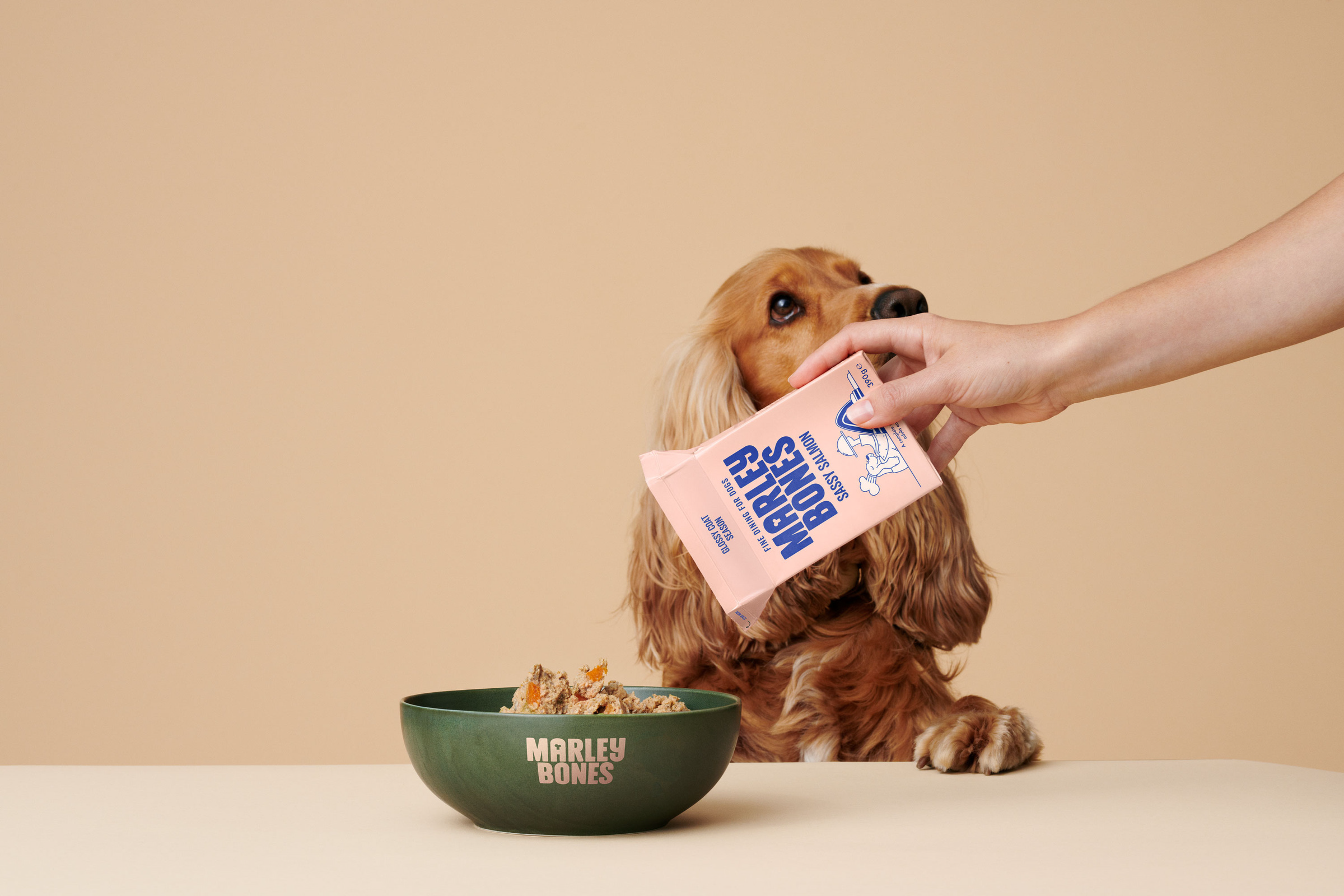
Omega-3 fatty acids - particularly EPA and DHA from oily fish - are the most practical nutritional support for coat and skin health in this breed. They reduce background inflammation, maintain the skin barrier, and supply the oils the coat needs from the inside out. Meals built around salmon, like Marleybones Sassy Salmon, provide EPA and DHA as a natural whole-food ingredient rather than a synthetic addition to an otherwise low-quality base - which makes a more consistent difference to coat condition over time.
Coat improvement after a switch to fresh food is usually visible within six to eight weeks. If coat condition remains poor beyond that period despite a clean diet, a vet check is worthwhile to rule out thyroid or other systemic causes.
What health conditions affect food choice in Catalan Sheepdogs?
Joint health is the most diet-relevant consideration for this breed. Catalan Sheepdogs are built for sustained, active work - herding, agility, and long days covering rough ground - and that activity accumulates load on hips, elbows, and connective tissue over time. A diet with natural anti-inflammatory support reduces that load. Omega-3 fatty acids from oily fish are the most evidence-backed dietary tool for joint health in active dogs, and they work most effectively when they come from a whole food source rather than a synthetic supplement added to poor-quality food.
Digestive sensitivity is worth watching in this breed, particularly in dogs fed the same protein long-term. Recurring loose stools, wind, or intermittent digestive upset are often the result of a protein the gut has developed a reaction to rather than a structural digestive problem. Switching protein source - moving away from chicken or beef toward lamb or salmon - resolves the majority of these cases within two to four weeks on a consistent new diet.
Weight management becomes relevant as the breed gets older or less active. Catalan Sheepdogs carry a moderate amount of muscle for their size, and their coat can disguise early weight gain. Running a hand along the ribs regularly is a more reliable check than visual assessment alone for a heavily coated breed.

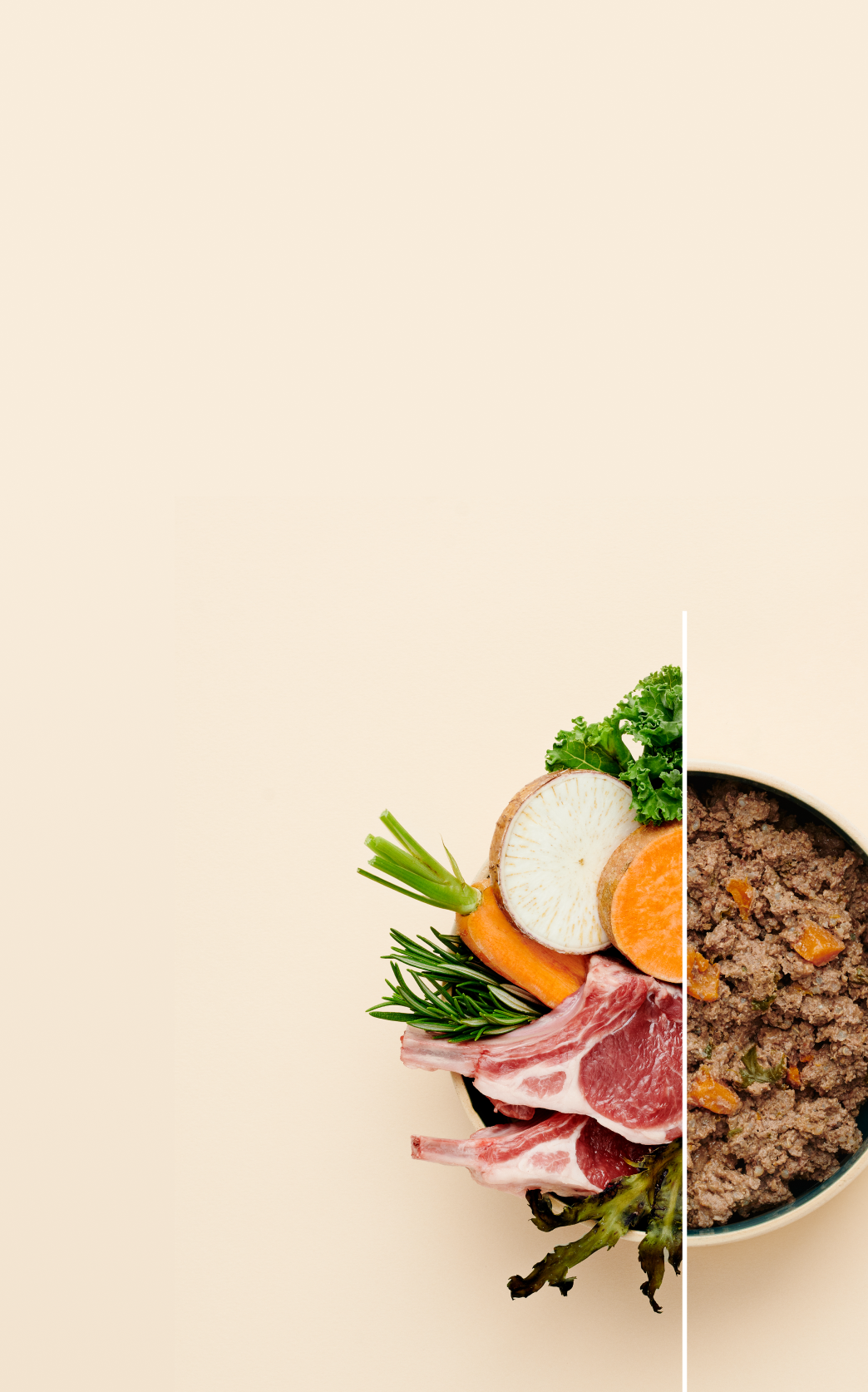
Freshly prepared British beef, veggies & superfoods
What protein is best for a Catalan Sheepdog?
Lamb and salmon are the strongest starting points for most Catalan Sheepdogs, particularly those with any history of digestive sensitivity or those currently eating chicken or beef. A protein the dog has not eaten repeatedly is less likely to provoke a reaction, because no sensitivity has had time to develop against it.
Salmon is the most nutritionally complete choice for this breed specifically - it delivers clean protein alongside EPA and DHA omega-3 fatty acids that directly support the coat and joints this breed relies on. Lamb is the stronger option for dogs needing a red meat base or those that have already eaten fish regularly - it has lower allergenicity than beef and sits well with reactive digestive systems.
Single-protein meals give the clearest picture of what a dog tolerates and make it straightforward to isolate any reaction without the guesswork of a multi-protein recipe. Marleybones Lush Lamb and Sassy Salmon are both single-protein recipes with chicory root as a natural prebiotic, which provides additional gut support during and after the transition.
How much should I feed a Catalan Sheepdog?
Adult Catalan Sheepdogs typically weigh between 17 and 20kg, but body condition is the more reliable guide than weight alone given how much the coat can obscure a dog's true shape. You should be able to feel the ribs without pressing hard and see a defined waist when looking down from above. If neither is true, portions need reducing regardless of what the feeding guide suggests.
Activity level must be factored in directly. A Catalan Sheepdog working or training daily needs meaningfully more food than one living a relaxed companion life. Owners switching from kibble to fresh food often find the higher moisture and nutrient density means the dog is satisfied on a lower calorie count - adjust over six to eight weeks based on body condition rather than treating the initial suggested amount as fixed.
Treats count toward the daily total. Catalan Sheepdogs are intelligent, highly trainable dogs that can accumulate a significant treat load during training sessions without owners realising. Factor that in before assuming a portion size is too small.
Every dog is different - build your personalised Marleybones feeding and health plan tailored to your dog's age, size, and health requirements.How do different dog food formats compare for Catalan Sheepdogs?
| Format | Moisture content | Processing level | Verdict for Catalan Sheepdogs |
|---|---|---|---|
| Fresh (Pantry Fresh) | 65-75% | Minimal - slow low-temperature cooking | Best option - whole ingredients support coat, joints, and sustained energy for an active breed |
| Raw | 65-75% | None | Works for some - bacterial load a consideration, particularly for dogs in households with children |
| Wet / canned | 75-85% | Moderate | Better than kibble - ingredient quality varies widely, check for named protein sources and meaningful fat content |
| Cold pressed | Around 12% | Low - below extrusion temperatures | A reasonable middle ground if fresh is not accessible - better preserved nutrients than standard kibble |
| Dry kibble | Around 10% | High - high-temperature extrusion | Hardest to digest - low moisture and degraded fats make it the weakest choice for coat and joint health |
FAQs
How often should I feed my Catalan Sheepdog?
Twice daily is the standard for adult Catalan Sheepdogs - morning and evening in roughly equal portions. A single large meal is harder on digestion and less satiating than two smaller ones. Puppies under six months need three to four meals a day to support the energy demands of rapid growth.
My Catalan Sheepdog has itchy skin - could it be their food?
Diet is one of the most common causes of chronic itching in dogs, alongside environmental allergens. In Catalan Sheepdogs, a reaction to a frequently eaten protein - usually chicken or beef - is the most likely dietary culprit. Switching to a novel protein like salmon or lamb and removing artificial additives from the diet resolves itching in a significant number of cases within four to six weeks. If itching persists or is accompanied by hair loss, hot spots, or ear infections, a vet assessment is the right step to distinguish dietary from environmental causes.
Is grain-free food better for Catalan Sheepdogs?
Not automatically. Whole grains in a minimally processed food are not the problem - it is the volume of cheap starchy grain used as a bulk filler in heavily processed kibble that causes issues. A Catalan Sheepdog tolerating oats or brown rice in a fresh, whole-ingredient food is not experiencing a grain problem. Grain-free foods that replace grain with large amounts of peas or lentils are not inherently more digestible, and their long-term cardiac implications in certain breeds are still being studied.
Do Catalan Sheepdogs need extra joint support as they age?
Active and working breeds accumulate more joint load over their lifetimes than sedentary companion dogs, so joint support becomes relevant earlier. A diet consistently rich in EPA and DHA omega-3 fatty acids from oily fish is the most practical baseline dietary support. For dogs already showing stiffness or reduced mobility, a targeted joint supplement alongside the diet is worth discussing with a vet - but diet is the foundation that everything else builds on.
Is Marleybones Pantry Fresh good for Catalan Sheepdogs?
Yes. Marleybones Pantry Fresh meals are vet-developed, made without artificial preservatives or fillers, and available in single-protein recipes that suit a breed where coat, joint, and digestive health are all diet-dependent. Sassy Salmon is the strongest choice for most Catalan Sheepdogs - it provides natural EPA and DHA for coat and joint support alongside whole ingredients the gut handles easily. With a 4.9/5 Trustpilot rating and over 2,000,000 meals delivered, it is a practical, proven option for an active breed where food quality shows up directly in condition and performance.
How do I transition my Catalan Sheepdog to a new food without upsetting their digestion?
Transition gradually over seven to ten days, replacing a larger proportion of the old food with the new food every two to three days. Even dogs that seem keen on the new food benefit from a gradual switch - the digestive microbiome needs time to adjust to a different protein and ingredient profile. Loose stools in the first few days are common and usually settle without intervention. If digestive upset is significant or persists beyond two weeks, slow the transition further and see a vet if it does not resolve.
Can I feed my Catalan Sheepdog puppy the same food as an adult?
Marleybones Pantry Fresh meals are complete for all life stages, including puppies, so no separate puppy food is required. What changes with a puppy is portion frequency and total daily intake - puppies need more calories relative to their body weight and need those calories spread across more meals to support steady growth without overloading digestion. Follow the feeding guide for your puppy's current weight and expected adult size, and adjust portions as they grow.

Freshly prepared British chicken, veggies & superfoods


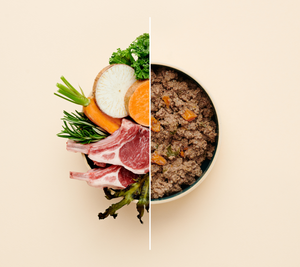 Give your dog the quality nutrition they deserve
Real meat, wholesome veggies and functional superfoods.
Get 30% off: Take the quiz