


 Vet reviewed
What is the best dog food for a Cairn Terrier?

At a glance
- Cairn Terriers do best on fresh, whole-ingredient food built around a quality protein - the breed's combination of a fast metabolism, sensitive skin, and strong appetite means ingredient quality and portion discipline both matter from the start.
- Chicken and beef are the proteins most likely to cause sensitivity in Cairn Terriers that have eaten them for years - lamb and salmon are stronger starting points for dogs with recurring skin irritation or digestive upset.
- Skin health in Cairn Terriers is closely tied to diet - omega-3 fatty acids from oily fish are one of the most practical nutritional tools for keeping the breed's wiry double coat and underlying skin in good condition.
- Despite their small size, Cairn Terriers are energetic working dogs at heart - daily portion amounts need to reflect actual activity level rather than weight alone.
- Joint and soft tissue health benefits from diets rich in natural anti-inflammatory nutrients, particularly for older Cairn Terriers or those with a history of Legg-Calvé-Perthes disease.
What is the best diet for a Cairn Terrier?
Fresh dog food built around a single, high-quality protein with minimal processing and no artificial additives is the most appropriate diet for most Cairn Terriers. The breed is compact, active, and prone to skin sensitivity - a combination that makes ingredient quality worth getting right rather than relying on whatever dry kibble happens to be marketed at small breeds.
Dry kibble contains around 10% moisture and is processed at high temperatures that degrade natural proteins and strip out nutrients that have to be added back synthetically. For a breed prone to skin flare-ups and digestive sensitivity, that processing load creates a problem before the food has even reached the gut. Fresh food cooked gently from whole ingredients retains its natural nutritional profile and sits at 65-75% moisture - significantly easier on both the digestive system and the skin barrier.
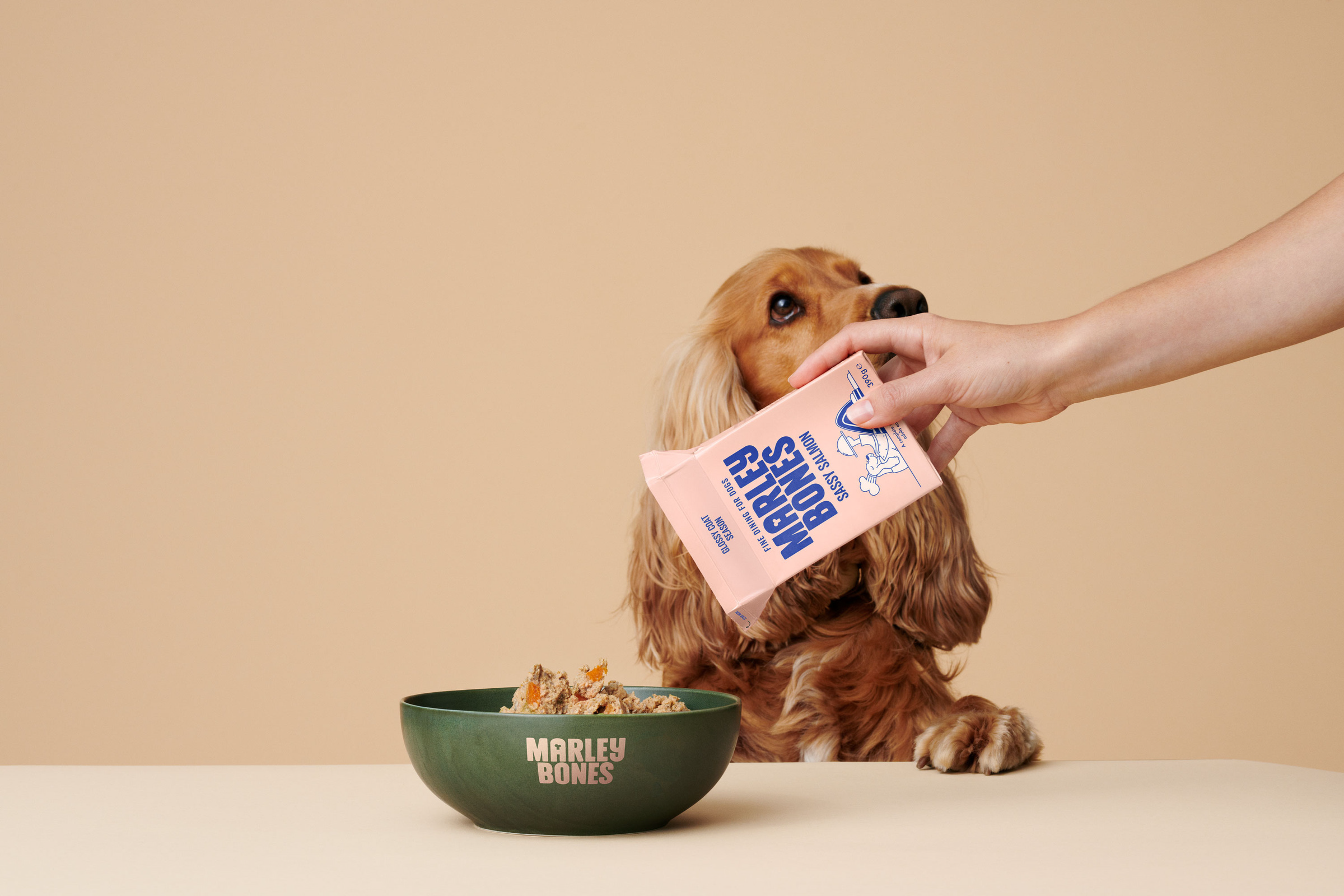
The practical checklist for a good Cairn Terrier food is: a named protein source listed clearly on the label, natural omega-3 fatty acids for skin and coat support, no artificial preservatives or fillers, and controlled portions to prevent weight creep. Marleybones Pantry Fresh meals are vet-developed, built from whole ingredients slow-cooked in-pack, and available in single-protein recipes well-suited to a breed where what goes in shows up clearly on the skin and coat.
Do Cairn Terriers have sensitive skin?
Skin irritation, itching, and a dull or brittle coat in Cairn Terriers are frequently diet-related - either a reaction to a specific protein eaten repeatedly over time, or a nutritional gap in omega-3 fatty acids. The breed's double coat, with its dense undercoat and wiry outer layer, creates a skin environment that reflects dietary quality more readily than smoother coat types do.
Omega-3 fatty acids, specifically EPA and DHA sourced from oily fish, are the most effective dietary support for the Cairn's skin and coat. They reduce systemic inflammation, reinforce the skin barrier, and give the coat the lipid content it needs to stay resilient and healthy. A diet that includes a natural source of omega-3s as a genuine ingredient - rather than a synthetic top-up added to an otherwise poor-quality base - makes a more consistent and lasting difference. Meals built around salmon, like Marleybones Sassy Salmon, provide EPA and DHA from whole fish alongside clean, whole ingredients, addressing both the nutritional gap and the likely irritants simultaneously.
Artificial additives, cheap grain fillers, and low-quality rendered fats are the most common dietary contributors to skin reactions in this breed. If your Cairn is scratching persistently, losing coat condition, or developing hot spots, the ingredient list on their current food is the first place to look. If symptoms persist beyond four to six weeks of a dietary change, or include significant hair loss or broken skin, a vet assessment is the right next step.
What protein is best for a Cairn Terrier?
Lamb and salmon are the strongest starting points for most Cairn Terriers, particularly those with a history of skin sensitivity or digestive upset, or those that have been eating chicken or beef-based food for an extended period. The logic is straightforward: proteins a dog has not eaten regularly are less likely to trigger a reaction, because no sensitivity has had time to develop.
Salmon is the most nutritionally complete choice for Cairn Terriers specifically - it delivers clean protein alongside EPA and DHA omega-3 fatty acids that directly address the skin and coat issues the breed is prone to. Lamb is a strong alternative for dogs that have already eaten fish regularly or need a red meat option; it has lower allergenicity than beef and sits well with reactive guts.
Single-protein meals are the most reliable option for any Cairn with a history of sensitivity, making it possible to identify what the dog tolerates without guesswork. Marleybones Lush Lamb and Sassy Salmon are both single-protein recipes built around whole, recognisable ingredients with chicory root as a natural prebiotic - giving the gut a further layer of support during and after the transition.
Are Cairn Terriers prone to weight gain?
Cairn Terriers are small but genuinely active dogs - historically bred to work all day flushing prey from rocky Highland terrain - and their appetite tends to reflect that working drive rather than their actual daily exercise. A Cairn living as a companion dog burns fewer calories than their appetite suggests, which makes portion discipline one of the more important practical aspects of feeding the breed.
An adult Cairn Terrier typically weighs between 6 and 8kg. Body condition is a more reliable guide than scales alone: you should be able to feel the ribs without pressing, and see a clear waist from above. If neither is true, the daily portion needs reducing. Feeding guides on packaging are a starting point - adjust to body condition over six to eight weeks rather than treating the initial amount as fixed, and account for treats, which add up quickly with a breed this food-motivated.
Fresh food is more satiating than the equivalent calorie count in dry kibble, because the higher moisture content occupies more volume in the stomach. Most owners switching from kibble find they can reduce the nominal calorie count without their dog appearing hungry. For Cairn Terriers prone to weight gain, this is one of the more practical benefits of the switch.
Does diet support joint health in Cairn Terriers?
Nutritional support for joints is worthwhile for Cairn Terriers, particularly those with a history of Legg-Calvé-Perthes disease - a condition affecting the hip joint that is seen with higher frequency in the breed - or for older dogs whose activity level is starting to slow. Diet cannot prevent structural joint conditions, but anti-inflammatory nutrients meaningfully support the surrounding soft tissue and reduce the load on affected joints.
Omega-3 fatty acids from oily fish are the most well-evidenced anti-inflammatory dietary nutrient for joint health. Whole food sources of glucosamine, found naturally in poultry and meat meals made from whole carcass rather than just muscle meat, also contribute. A diet based on whole, minimally processed ingredients delivers these naturally, whereas heavily processed kibble strips them out and relies on synthetic supplementation to compensate - which is less bioavailable.
Every dog is different - build your personalised Marleybones feeding and health plan tailored to your dog's age, size, and health requirements.
How do different dog food formats compare for Cairn Terriers?
| Format | Moisture content | Processing level | Verdict for Cairn Terriers |
|---|---|---|---|
| Fresh (Pantry Fresh) | 65-75% | Minimal - slow low-temperature cooking | Best option - whole ingredients, supports skin, coat, and digestion |
| Raw | 65-75% | None | Works for some - bacterial load a consideration, preparation required |
| Wet / canned | 75-85% | Moderate | Better than kibble - ingredient quality varies widely, check the label |
| Cold pressed | Around 12% | Low - below extrusion temperatures | Decent middle ground if fresh is not accessible |
| Dry kibble | Around 10% | High - high-temperature extrusion | Hardest to digest - lowest moisture, worst option for skin-sensitive Cairns |
FAQs
How often should I feed my Cairn Terrier?
Twice daily is the standard for adult Cairn Terriers - morning and evening in roughly equal portions. It is more satiating than a single daily meal and suits the breed's digestive rhythm better. Puppies under six months need three to four smaller meals a day to support their growth and fast metabolism.
Why does my Cairn Terrier itch so much?
Persistent itching in Cairn Terriers is most commonly diet-related - either a sensitivity to a protein the dog has eaten repeatedly over a long period, or a deficiency in omega-3 fatty acids that leaves the skin barrier underprotected. Switching to a novel single protein alongside a natural source of EPA and DHA resolves itching in the majority of cases within four to eight weeks. If itching is accompanied by swelling, eye discharge, or broken skin, a vet should rule out environmental allergies or infection before attributing it to food alone.
Is grain-free food better for Cairn Terriers?
Not automatically. Grains are not inherently the problem - it is the quantity and quality of grain used as a cheap filler in heavily processed food that causes issues. A Cairn reacting to wheat in low-quality kibble may tolerate whole oats or brown rice in a fresh, minimally processed meal without any difficulty. Grain-free foods that replace grain with large quantities of peas or lentils are not automatically easier to digest and are not the default recommendation for this breed.
Is Marleybones Pantry Fresh good for Cairn Terriers?
Yes. Marleybones Pantry Fresh meals are vet-developed, contain no artificial preservatives or fillers, and are available in single-protein recipes that suit a breed prone to skin sensitivity and digestive reactivity. Sassy Salmon is the strongest choice for Cairn Terriers, providing a natural source of EPA and DHA omega-3 fatty acids alongside whole, recognisable ingredients - rated 4.9/5 on Trustpilot and loved by 9 in 10 fussy dogs. Lush Lamb is the best alternative for dogs that have already eaten fish regularly or need a novel red meat protein.
Can diet help with my Cairn Terrier's digestion?
Yes, directly. Digestive issues in small terriers - loose stools, wind, and intermittent upset - are almost always linked to food quality or a protein sensitivity rather than a structural problem. Switching to a fresh, single-protein food with no fillers, artificial additives, or high-starch grains resolves these symptoms in most dogs within two to four weeks. Chicory root, included as a natural prebiotic in Marleybones recipes, feeds the beneficial gut bacteria that keep digestion stable over the long term.
My Cairn Terrier is fussy - will they eat fresh food?
Almost certainly. Fresh food is significantly more palatable than dry kibble - the aroma, texture, and moisture content make it far more appealing to dogs that have learned to be selective. Cairn Terriers that have refused multiple kibble brands typically take to fresh food without hesitation. Transition gradually over seven to ten days to avoid digestive upset from the switch, even if your dog seems eager to eat the new food straight away.


 Give your dog the quality nutrition they deserve
Real meat, wholesome veggies and functional superfoods.
Get 30% off: Take the quiz