



 Vet reviewed
What is the best dog food for French Bulldogs?

At a glance
- Fresh, high-moisture food is better suited to French Bulldogs than dry kibble — the breed's flat face affects how they eat and digest, and a food that is easier to swallow reduces the air-gulping that drives most of the breed's digestive problems.
- Digestive sensitivity and flatulence are the most common dietary complaints in French Bulldogs, and both are primarily caused by what they are eating rather than anything structural — switching to a clean, single-protein food resolves them in most cases.
- French Bulldogs have one of the highest rates of food-related skin problems of any breed, and omega-3 fatty acids alongside a novel protein address both the nutritional gap and the most likely dietary trigger simultaneously.
- Weight management matters more for French Bulldogs than for most breeds — exercise intolerance means diet is the primary tool for keeping weight controlled, and excess weight directly worsens the breathing difficulties the breed already lives with.
- Salmon is the strongest protein choice for most French Bulldogs, providing omega-3 fatty acids for skin and coat support alongside clean, digestible protein that most Frenchies have not been regularly exposed to.
What is the best diet for a French Bulldog?
Fresh dog food built around a single high-quality protein, minimal processing, and no fermentable fillers is the best diet for most French Bulldogs. The breed's digestive system is more reactive than most, driven by a combination of how they eat and what they eat, and the gap between a diet that suits them and one that does not shows up quickly and clearly in digestion, skin condition, and general comfort.
High-moisture fresh dog food, with 65-75% moisture compared to dry kibble's 10%, is easier for French Bulldogs to eat and digest for reasons specific to this breed. Kibble requires more chewing and produces more swallowed air in a dog that cannot breathe freely while eating, two factors that make dry food the format most likely to cause discomfort. Fresh food moves more easily through the digestive system, places a lower processing load on the gut, and eliminates the fermentable fillers that are the primary dietary driver of the breed's famous flatulence.
The practical checklist for a good French Bulldog food is: a named protein the dog has not eaten before, 65-75% moisture content, no artificial preservatives or fermentable fillers, omega-3 fatty acids for skin support, and controlled portions to keep weight in check. A minimally processed fresh food addresses all of these where standard dry food does not.
How does being flat-faced affect a French Bulldog's digestion?
French Bulldogs are brachycephalic, meaning their skull is compressed in a way that shortens the muzzle and narrows the airways. That structure affects far more than breathing. When a French Bulldog eats, it cannot chew and breathe freely at the same time, which leads to faster eating, more swallowed air, and a digestive system that receives more air and less chewed food than it is designed to handle. Swallowed air is the primary cause of the bloating, gurgles, and wind this breed is known for.
Food format directly affects how much air a French Bulldog swallows while eating. Dry kibble requires more effort to eat, including more jaw movement, more air intake per bite, and more swallowing against restricted airflow. Fresh food with a high moisture content requires less physical effort to eat, passes more easily to the stomach, and reduces the amount of air entering the digestive tract with each meal. This is a practical advantage that applies to this breed specifically, not a general claim about food format.

Meal size and frequency also matter. Two or three smaller meals a day place a lower load on the digestive system per sitting than one large meal and reduce the volume of food moving through a gut that is already managing above-average levels of swallowed air. Elevated feeding bowls can further reduce the air intake per swallow by bringing the food closer to the dog's natural head position while eating.
Why do French Bulldogs get so much wind?
French Bulldog flatulence has two causes, and both are addressable through diet. The first is swallowed air from eating, described above, which is reduced by feeding high-moisture food in smaller, more frequent portions. The second is fermentation in the gut. Ingredients that do not digest fully in the small intestine pass to the large intestine, where gut bacteria ferment them and produce gas. High-starch fillers, cheap grain by-products, and large quantities of peas or lentils are the most common dietary culprits.
French Bulldogs fed a heavily processed dry food with multiple protein sources and cheap filler ingredients almost always produce more wind than the same dog on a fresh, single-protein food with no fermentable additives. The improvement after switching is usually visible within two to four weeks. For owners managing a French Bulldog with persistent digestive issues, a novel single protein alongside clean ingredients gives the clearest baseline for identifying what the gut handles well.
If wind is accompanied by bloating, obvious discomfort, repeated regurgitation, or significant changes in stool, a vet assessment is the right step before making further dietary changes. Some gastrointestinal conditions in brachycephalic breeds need clinical management alongside dietary adjustment.
Why do so many French Bulldogs have skin problems?
French Bulldogs have some of the highest rates of diet-related skin problems of any breed. Atopic dermatitis and food sensitivity-driven skin reactions are common, and the breed's deep facial folds and body wrinkles create additional surface area where inflammation and moisture retention combine to produce skin fold dermatitis. The skin problems that look topical often have a dietary driver underneath them.
Omega-3 fatty acids from oily fish are the most practical nutritional support for French Bulldog skin health. They reduce systemic inflammation, strengthen the skin barrier, and reduce the background inflammatory state that makes skin fold problems worse. A food sensitivity to a commonly fed protein, most often chicken or beef in this breed, drives the systemic inflammation that contributes to recurring skin flare-ups, hot spots, and ear irritation. For French Bulldogs with persistent itchy skin or recurring skin infections, switching to a novel single protein alongside a clean, whole-ingredient food is the most reliable first step. Most owners see visible improvement within six to eight weeks.
Skin fold hygiene matters independently of diet, but the two work together. A dog on an anti-inflammatory diet with a clean protein source is less likely to develop secondary infections in the folds, because the underlying inflammatory state that makes folds reactive is reduced at source.
What protein is best for a French Bulldog?
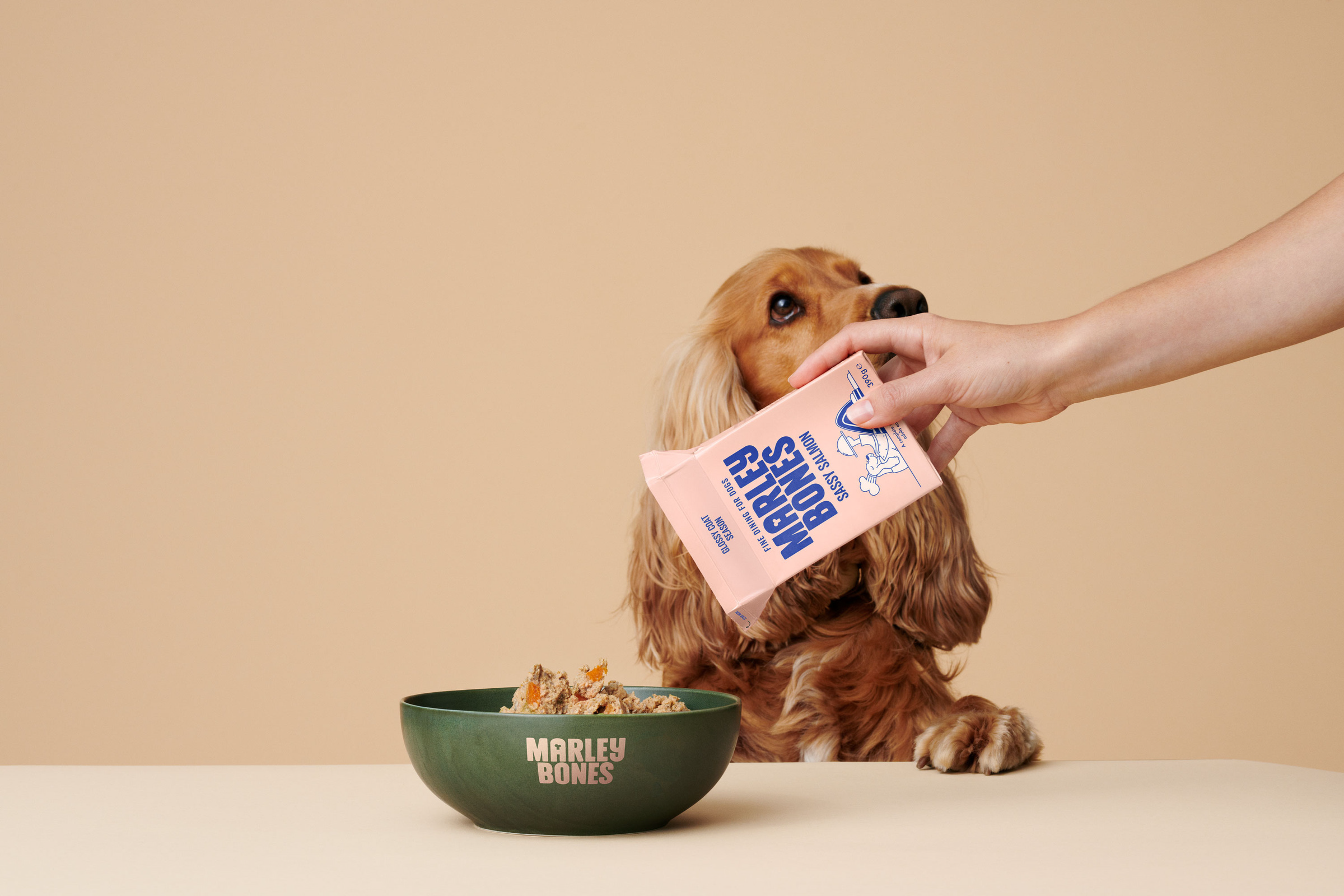
Salmon is the strongest protein choice for most French Bulldogs. It provides complete, digestible protein alongside EPA and DHA omega-3 fatty acids that directly address the skin sensitivity and inflammatory skin conditions this breed is prone to, and for most French Bulldogs it is a novel protein, which means no sensitivity has had time to develop. Sassy Salmon from Marleybones delivers salmon as a whole, identifiable ingredient with no artificial additives or fermentable fillers, making it well-suited to a breed where gut sensitivity and skin health are both primary concerns.
Lamb is the strongest alternative for French Bulldogs that have eaten fish regularly or need a red meat option. It is lower in allergenicity than beef, sits well with reactive digestive systems, and provides a complete amino acid profile without the high prior-exposure risk of chicken or beef. Single-protein meals are the most practical approach for any French Bulldog with a history of digestive upset or skin reactions. They give a clean baseline that makes it straightforward to confirm what the dog tolerates before anything new is introduced.
Chicken is the protein most French Bulldogs have been eating for most of their lives, and high cumulative exposure makes it the most common source of food sensitivity in the breed. This does not mean chicken is harmful, but it does mean that a French Bulldog with recurring skin or digestive issues and a chicken-based diet is worth trialling on a novel protein before anything else. The improvement, when the protein was the issue, is usually clear within four to six weeks.

How much should I feed a French Bulldog?
An adult French Bulldog typically weighs between 8 and 14kg. Body condition is more reliable than weight alone: ribs should be palpable under light pressure, and there should be a visible waist when looking from above. French Bulldogs carry excess weight across the chest and abdomen, which can be masked by their naturally compact build. The rib check is more informative than appearance alone.
Weight management is more consequential for this breed than for most. French Bulldogs cannot exercise freely enough to compensate for excess calories. The same respiratory constraints that affect digestion also limit sustained physical activity. Every extra kilogram a French Bulldog carries increases the pressure on airways that are already operating below capacity. Diet is therefore the primary mechanism for weight control in this breed, not a supplement to exercise. Fresh food's higher moisture content is more filling per calorie than dry kibble, which makes it a practical format for a breed that needs satiety from smaller portions. Every dog is different — build your personalised Marleybones feeding and health plan tailored to your dog's age, size, and health requirements.

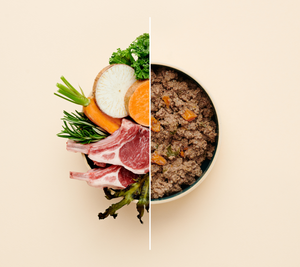
Freshly prepared fish, veggies & superfoods
How do different dog food formats compare for French Bulldogs?
Fresh dog food is the best format for most French Bulldogs, combining high moisture content with whole ingredients and no fermentable fillers. The moisture advantage is more significant for this breed than for most. Here is how the main formats compare.
| Format | Moisture content | Processing level | Verdict for French Bulldogs |
|---|---|---|---|
| Fresh (Pantry Fresh) | 65-75% | Minimal — slow low-temperature cooking | Best option — easy to eat, high satiety per calorie, no fermentable fillers, supports digestion and skin |
| Raw | 65-75% | None | Works for some — high moisture is a genuine advantage for this breed; bacterial load and preparation required |
| Wet / canned | 75-85% | Moderate | Better than kibble — higher moisture helps; ingredient quality and filler content vary widely, check labels |
| Cold pressed | Around 12% | Low — below extrusion temperatures | Better ingredient quality than standard kibble — low moisture is a meaningful limitation for this breed |
| Dry kibble | Around 10% | High — high-temperature extrusion | Least suitable format — increases air-gulping, fermentable fillers common, low moisture, hardest to digest |

Gloss up your pup’s life with an omega-3 booster
FAQs
How often should I feed my French Bulldog?
Two to three times daily is better for French Bulldogs than the standard twice-daily approach recommended for most breeds. Smaller, more frequent meals reduce the volume of food in the stomach per sitting, which lowers the digestive load on a gut that is already managing above-average swallowed air. Three meals a day is particularly worth trying for dogs with a history of bloating, regurgitation, or post-meal discomfort.
Is flatulence in French Bulldogs just normal — or is it the food?
Some wind in French Bulldogs is structural and unavoidable. The brachycephalic anatomy means more air is swallowed while eating than in other breeds. But the degree of flatulence most Frenchie owners experience is heavily influenced by diet. High-starch fillers, cheap grain by-products, and multiple protein sources in heavily processed food are the primary dietary drivers. A switch to a fresh, single-protein food with no fermentable additives reduces flatulence significantly in most dogs within two to four weeks. If the same dog produces dramatically less wind on different food, the original food was the problem.
Is grain-free food better for French Bulldogs?
It depends on what replaces the grain. Grain-free foods that substitute large quantities of peas or lentils swap one source of fermentable carbohydrate for another, and can make flatulence and digestive sensitivity worse rather than better. The issue for French Bulldogs is not grains per se but the quantity and quality of fermentable ingredients in heavily processed food. A food containing whole oats or brown rice in a minimally processed meal is not inherently problematic. The label question worth asking is whether the ingredients are whole, identifiable, and low in fermentable content, not simply whether grains are absent.
Can diet affect a French Bulldog's breathing?
Diet cannot change the anatomy that makes French Bulldogs brachycephalic. The shortened skull, narrowed nostrils, and elongated soft palate are structural and require surgery to address if intervention is needed. What diet can do is manage weight, and weight has a direct and meaningful impact on breathing in this breed. A French Bulldog carrying excess body weight has additional pressure on airways that are already operating under constraint. Keeping weight in a healthy range through diet is one of the most practical things an owner can do to support respiratory comfort, and it requires no surgery or medication.
Should I feed a French Bulldog puppy the same food as an adult?
The same qualities apply at every life stage: high-moisture format, single novel protein, no fermentable fillers, clean ingredients. Marleybones Pantry Fresh meals are complete for all life stages including puppies, so no separate puppy formula is needed. Portion sizes for puppies should be adjusted for growth rate and body condition, and three to four smaller meals a day suits the brachycephalic digestive system better than two larger ones during the first six months.
How long before I see a difference after switching my French Bulldog's food?
Flatulence and digestive comfort typically improve within two to four weeks of switching to a clean, single-protein fresh food. Skin condition and coat improvement follow over six to eight weeks. Weight changes take eight to twelve weeks on a consistent portion to assess accurately. If digestive symptoms have not improved after four weeks on a consistent diet, a vet assessment is the right next step. Some brachycephalic digestive conditions require clinical management alongside dietary adjustment.


 Give your dog the quality nutrition they deserve
Real meat, wholesome veggies and functional superfoods.
Get 40% OFF today