



Best Dog Food for a Senior Cockapoo

At a glance
- Senior Cockapoos need high-quality, digestible protein to maintain muscle mass as metabolism slows with age.
- Joint support through omega-3 fatty acids becomes a priority from around seven years old.
- Cockapoos are prone to weight gain in later life, making calorie density and portion control critical.
- Fresh or lightly cooked food preserves more natural nutrients than heavily processed formats like dry kibble.
What makes a Cockapoo's needs different as they age?
Cockapoos are a cross between a Cocker Spaniel and a Poodle, and they combine the energy and intelligence of both breeds. Most Cockapoos are considered senior from around seven to eight years old, though smaller individuals often stay sprightly well into their teens.
As they age, three things change significantly. First, muscle mass naturally decreases, so protein quality matters more, not less. Second, the joints that powered all those enthusiastic walks start to feel the wear, making anti-inflammatory nutrients like omega-3s genuinely important. Third, the Cockapoo's famously food-motivated nature combined with a slower metabolism creates a real risk of weight gain, which puts additional strain on those same joints.
Cocker Spaniels also carry a genetic predisposition to ear problems and skin sensitivities, which Cockapoos inherit to varying degrees. A diet rich in omega-3 and omega-6 fatty acids supports skin barrier function and reduces the inflammatory response that underlies both conditions. Digestive sensitivity is also common, so highly processed food with artificial additives and low-grade fillers is worth avoiding at this life stage. Our full guide to the best dog food for Cockapoos covers the breed's needs across all life stages.
| Format | Digestibility | Joint support | Weight management | Convenience | Verdict |
|---|---|---|---|---|---|
| Pantry Fresh (e.g. Marleybones) | High, real ingredients, lightly cooked | Strong, natural omega-3 sources | Good, no filler calories, clear portion guidance | Excellent, no freezer, shelf-stable | Best overall for senior Cockapoos |
| Frozen raw | High, minimal processing | Good, natural fat profile | Moderate, requires careful balancing | Lower, freezer space needed, defrost planning | Good option with careful management |
| Cold pressed | Good, gentler processing than kibble | Moderate, depends on recipe | Good, lower in fat than wet food | High, easy to store and serve | Solid choice, better than standard kibble |
| Dry kibble | Lower, high heat destroys nutrients | Weak unless supplemented | Variable, often high in carbohydrates | Very high, easiest to store | Convenient but nutritionally compromised |
| Wet canned | Moderate, high moisture aids digestion | Moderate, depends heavily on recipe | Poor, calorie counting harder, often high in fat | Good, no prep needed | Useful as a topper, weaker as a sole diet |
What should be in the best dog food for a senior Cockapoo?
Named meat should appear first on the ingredient list. For a senior Cockapoo, this means real chicken, beef, lamb, or salmon, not meat meal or derivatives, which are lower-grade processed forms of protein. High biological value protein from whole meat sources is directly usable by ageing muscles in a way that heavily processed alternatives are not.
Omega-3 fatty acids from oily fish or plant-based sources like linseeds and chia seeds support joint lubrication, reduce inflammation, and maintain the skin and coat quality Cockapoos are known for. This is especially relevant given the breed's inherited tendency toward skin sensitivity. For dogs with pronounced joint stiffness, Marleybones Joint Health Supplement can complement a nutrient-rich diet with targeted support.
Prebiotic fibre keeps the gut microbiome in good shape. Chicory root is one of the best natural sources, feeding beneficial gut bacteria and supporting regular, healthy digestion. As dogs age, gut motility slows, so added fibre is not optional, it is essential.
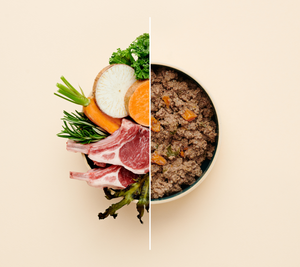
Marleybones meals include quinoa, chia seeds, hemp seeds, chicory root, and linseeds as core superfoods alongside named meat proteins. These are the exact nutrients a senior Cockapoo needs, delivered in a Pantry Fresh format that preserves their integrity without artificial preservatives or freezing.
How much should you feed a senior Cockapoo?
Most Cockapoos weigh between 5kg and 11kg depending on the size of their Poodle parent. A senior Cockapoo at the lower end of that range needs roughly 10 to 15 percent fewer calories than the same dog at peak adult activity. The exact reduction depends on how much their exercise has changed and whether they are carrying any extra weight.
The safest approach is to weigh your dog every four to six weeks and adjust portions accordingly rather than waiting until visible weight gain is obvious. By the time extra weight is clearly visible on a Cockapoo's fluffy frame, they are already overconditioned. For detailed guidance on how much to feed a senior dog, including portion calculations by weight, our feeding guide covers this in full.
Marleybones provides clear feeding guidelines by weight, making portion calculation straightforward. Because the meals contain no filler calories from low-grade starches, the calorie-per-gram ratio reflects actual nutrition rather than bulk. Splitting the daily allowance into two meals supports digestion and keeps energy levels stable across the day.
If your senior Cockapoo shows sudden unexplained weight loss, a dramatic change in appetite, or persistent digestive upset, speak to your vet before changing their diet, as these can indicate an underlying health issue that food alone will not address.
Which Marleybones meal is best for a senior Cockapoo?
All four Marleybones meals, Boss Beef, Chic Chicken, Lush Lamb, and Sassy Salmon, are complete for all life stages including seniors, and all are formulated to FEDIAF standards. The best choice depends on your individual dog.
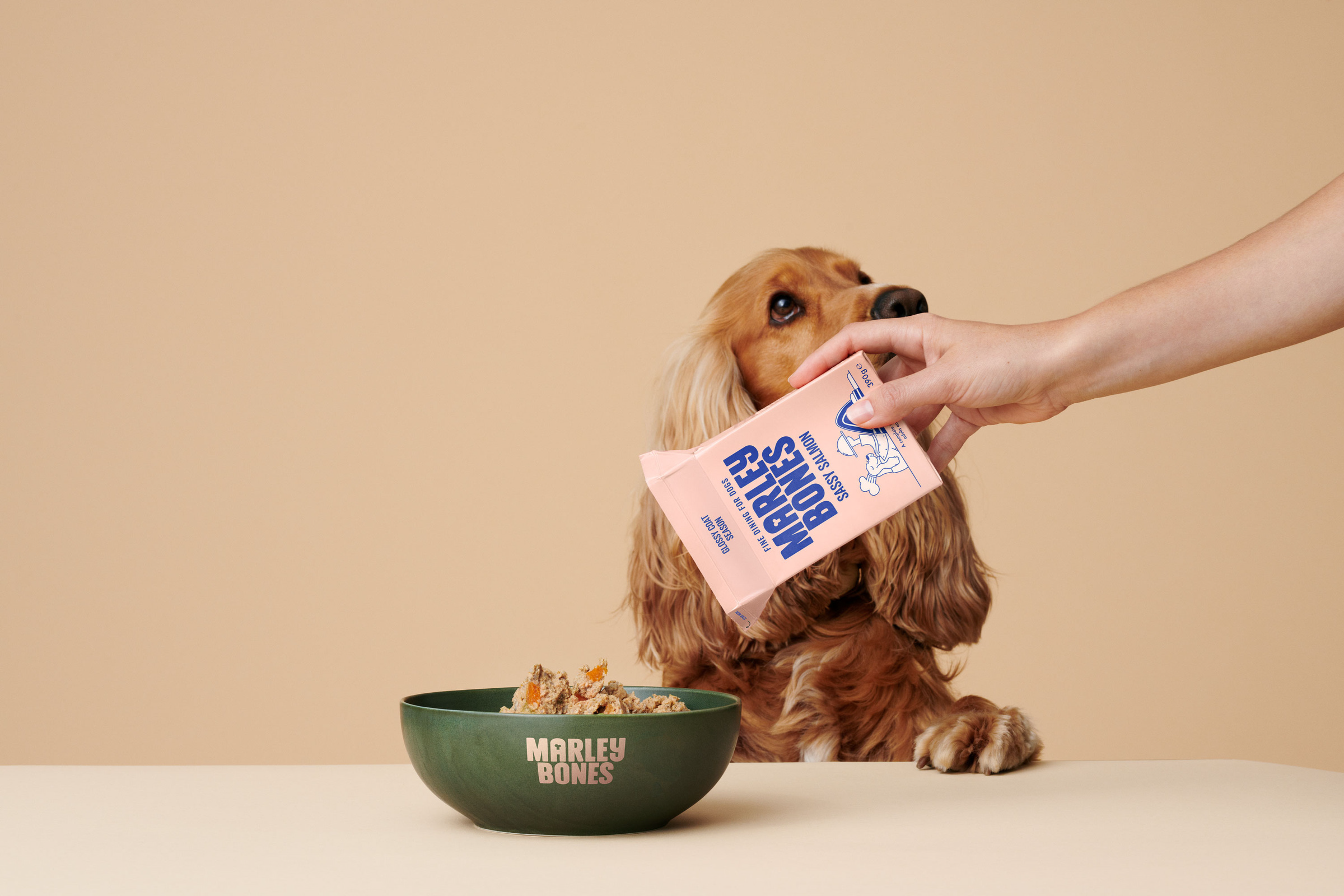
Sassy Salmon is the standout for Cockapoos with skin sensitivity or joint stiffness. Salmon is one of the richest natural sources of EPA and DHA, the omega-3 fatty acids most directly linked to reduced joint inflammation and improved coat condition. For a senior Cockapoo with itchy skin or stiff mornings, this is the logical first choice.
Chic Chicken suits dogs with a more sensitive stomach, as chicken is one of the most digestible proteins available. Boss Beef and Lush Lamb offer variety and are particularly well suited to dogs who have eaten chicken or fish-based food for most of their lives and benefit from dietary rotation to support gut diversity. Every dog is different, so build your personalised Marleybones feeding and health plan tailored to your dog's age, size, and health requirements.

“A complete game changer!!”
FAQs
When is a Cockapoo considered a senior dog?
Most Cockapoos reach senior status between seven and eight years old. Smaller individuals, those under 8kg, age more slowly and stay in good health well into their early teens. Larger Cockapoos follow a faster ageing trajectory and benefit from senior-specific nutritional support from around six years old.
Does a senior Cockapoo need less protein or more?
More, not less. Older dogs lose muscle mass faster than younger dogs, a process called sarcopenia. Maintaining adequate high-quality protein intake from named meat sources slows this process and supports a healthy body condition. Reducing protein in senior dogs is outdated advice unless there is a specific kidney condition confirmed by a vet.
Can Marleybones food be used as the only diet for a senior Cockapoo?
Yes. Marleybones meals are complete and balanced for all life stages, developed by vets and formulated to FEDIAF standards. They provide everything a senior Cockapoo needs without supplementation. More than two million meals have been delivered, and the brand holds a 4.9 out of 5 rating on Trustpilot.
Is fresh food better than kibble for senior dogs?
Fresh food is more digestible than dry kibble for most dogs. High-temperature processing during kibble manufacture degrades proteins and destroys heat-sensitive vitamins, which are then added back in synthetic form. Lightly cooked fresh food retains more of the natural nutrient matrix and is easier for ageing digestive systems to process efficiently.
How do I transition my senior Cockapoo to a new food?
Transition over seven to ten days, replacing roughly 25 percent of the old food with the new food every two to three days. Senior dogs have less digestive flexibility than younger dogs, so a slower transition reduces the risk of loose stools or stomach upset. If your dog has a known sensitive stomach, extend the transition to fourteen days.
Are there any ingredients to avoid in food for senior Cockapoos?
Avoid artificial preservatives such as BHA, BHT, and ethoxyquin. Avoid high proportions of unnamed meat derivatives, which are low-grade protein sources with inconsistent nutritional value. High-sugar or high-starch recipes contribute to weight gain and dental issues, both of which are more problematic in senior dogs. Marleybones meals contain no preservatives, no fillers, and no low-grade ingredients.

Gloss up your pup’s life with an omega-3 booster


 Give your dog the quality nutrition they deserve
Real meat, wholesome veggies and functional superfoods.
Get 40% OFF today