



How to keep your dog cool during a heatwave

At a glance
- Dogs cool themselves almost entirely through panting and sweat glands in their paws — they cannot regulate body temperature the way humans do, which makes heatwaves genuinely dangerous
- Heatstroke can develop within minutes in a hot environment — a dog that is panting heavily, drooling excessively, or stumbling needs cooling and veterinary attention immediately
- Fresh water and shade are the two most effective things you can do — more so than cooling vests, paddling pools, or any other intervention
- Walk times matter more than most owners expect — pavements above 25°C can burn paw pads, and body temperature rises fast during exercise in heat
- Brachycephalic breeds, overweight dogs, and elderly dogs are at significantly higher risk and need more active management in warm weather
How do I know if my dog is too hot?
A dog that is too hot will pant harder and faster than normal — that is the body working to cool itself, and it is the first signal to take seriously. Heavier panting is normal in warm weather; panting that looks laboured, continuous, or distressed is not.
The early warning signs are heavy panting, excessive drooling, and restlessness. The dog may seek out cool surfaces, press against walls, or refuse to move. These are the body's first attempts to regulate temperature and the point at which you should act — move the dog somewhere cool and offer water.
Heatstroke signs are more serious and require immediate action: vomiting, diarrhoea, glazed eyes, bright red or pale gums, stumbling, or loss of coordination. At this stage the dog needs veterinary attention, not just shade. Call your vet while beginning first aid — do not wait to see if the dog improves on its own.
What is the fastest way to cool a dog down?
Move the dog into shade or indoors, apply cool (not cold) water to the neck, armpits, groin, and paw pads, and offer small amounts of water to drink. This combination works faster than any single intervention and does not carry the risks of ice or very cold water.
Ice and very cold water are both counterproductive. They cause blood vessels near the skin to constrict, which traps heat inside the body rather than releasing it. Tepid water applied to high blood-flow areas — armpits, groin, the underside of the neck — is significantly more effective at drawing heat out quickly.
A wet towel draped over the dog sounds logical but is not as effective as direct water application. A wet towel traps a layer of warm air against the body as it absorbs heat and does not allow airflow to carry that heat away. If you use one, keep it moving or replace it frequently rather than leaving it in place.
A fan directed at a dog that has had cool water applied to its coat accelerates cooling substantially. This is the same principle as sweating in humans — evaporation pulls heat away from the surface. If you have a fan available, use it.
When is it too hot to walk my dog?
The standard pavement test is reliable: press the back of your hand against the pavement for seven seconds. If you cannot hold it there, it is too hot for your dog's paws. Pavement surface temperatures routinely reach 50-60°C on a hot day even when air temperature is only 25-30°C, and paw pad burns happen faster than most owners expect.
The broader rule for exercise is to walk in the early morning or evening when temperatures are lowest. Before 8am and after 7pm are the practical targets during a UK heatwave, though the specific window depends on how warm the night has been. A cloudy morning that turns sunny by 9am can still produce dangerous pavement temperatures by mid-morning.
Shorter, slower walks in heat are not just safer — they are genuinely preferable for most dogs. A dog that is panting heavily during a walk is spending significant physiological effort on temperature regulation rather than enjoying the exercise. Two shorter walks in cooler windows are better than one longer walk in the heat.
How do I keep my dog cool at home?
Shade, airflow, and cool surfaces are the three things that make the most practical difference indoors during a heatwave. Dogs will naturally seek them out given the option — your job is to make sure they are available.
Drawn curtains on south-facing windows significantly reduce indoor temperature — more than most owners expect. A room that feels warm in the morning with curtains open can be noticeably cooler by afternoon with them closed. This is one of the easiest and most effective interventions available.
Cool surfaces matter because dogs lose heat by lying on them. Tiled floors and stone are the most effective. If your dog's usual spot is a soft bed in a warm room, they may struggle to find a cool surface on their own — move them or place a cooling mat in an accessible location. Cooling mats that use gel rather than ice work well for most dogs and do not require freezing or refrigeration.
A paddling pool in a shaded garden is genuinely useful for dogs that will use one. Not all dogs will wade in voluntarily — if yours will not, do not force it. A wet towel on the ground in the shade, or occasional cool water on the paws and belly, achieves a similar effect without the infrastructure.
Does what my dog eats make a difference in hot weather?
Hydration is the main dietary factor in hot weather, and food moisture content contributes to it more than most owners realise. A dog eating dry kibble gets almost no moisture from their food — the burden of hydration falls entirely on water intake, which many dogs do not manage well independently in heat.
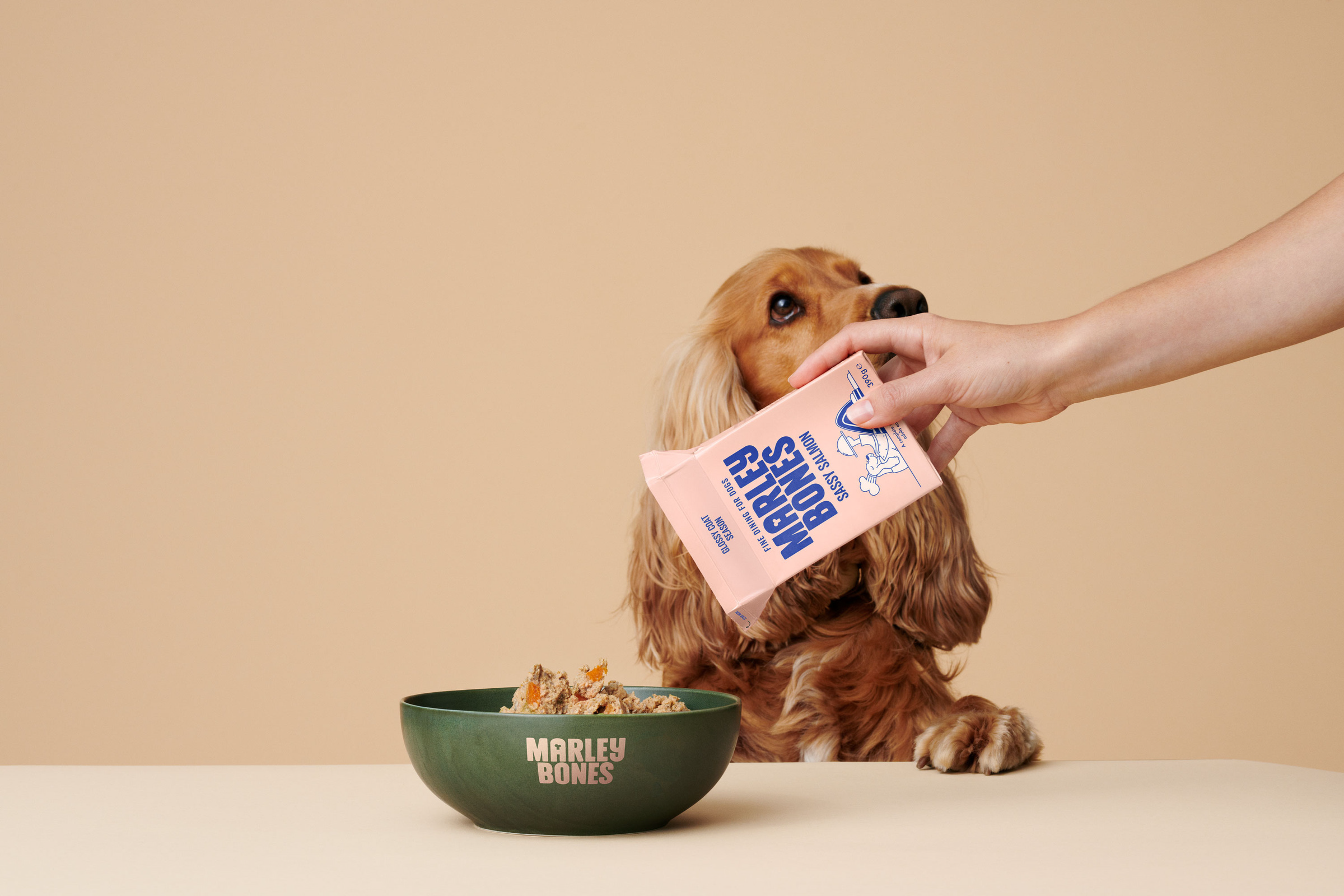
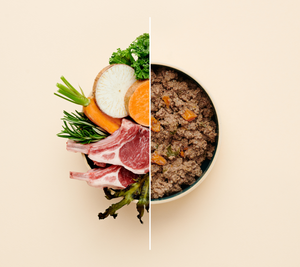
Fresh food with high moisture content — typically 65-75% in fresh formats contributes to daily fluid intake alongside fresh water. This does not replace access to water, but it reduces the gap a dog needs to close through drinking alone.
Avoid feeding large meals during the hottest part of the day. Digestion generates heat internally, which adds to the challenge of temperature regulation. Smaller meals or meals shifted to cooler morning and evening windows are a straightforward adjustment that reduces unnecessary metabolic load in the heat.
Frozen treats made from dog-safe ingredients — a Marleybones Pantry Fresh meal poured into an ice cube tray and frozen, or plain frozen fruit like blueberries or watermelon chunks — are enjoyed by most dogs and provide additional moisture alongside the cooling effect. Check that any fruit is safe for dogs before using it — grapes, raisins, and currants are toxic.
Which dogs are most at risk in hot weather?
Brachycephalic breeds — Bulldogs, French Bulldogs, Pugs, Boxers, and Shih Tzus among others — are at significantly higher risk than other dogs because their shortened airways make panting less efficient. Panting is the primary cooling mechanism in dogs, and any breed that cannot pant effectively is working at a physiological disadvantage in heat. These dogs need active monitoring and earlier intervention than other breeds.
Overweight dogs carry more insulating body mass and have a higher baseline metabolic load, both of which make temperature regulation harder. Dogs with cardiac or respiratory conditions are similarly compromised. Elderly dogs lose thermoregulatory efficiency with age and may not show distress signals as clearly as younger dogs, which is one of many reasons how you feed your dog through each life stage matters just as much in summer as it does the rest of the year.
Thick-coated breeds like Huskies, Malamutes, and Bernese Mountain Dogs are better insulated than their appearance suggests — the double coat traps cooler air close to the skin and provides some protection against radiant heat. Shaving these breeds is not recommended and can actually worsen sun exposure and heat absorption. Regular grooming to remove dead undercoat is more effective.
Every dog is different — build your personalised Marleybones feeding and health plan tailored to your dog's age, size, and health requirements.

“Such a relief to see her enjoying her food”
FAQs
Can dogs get sunburnt?
Yes, particularly on areas with thin or pale fur — the nose, ear tips, and belly are the most exposed. White or light-coloured dogs and breeds with thin coats are at greater risk. Dog-safe sunscreen applied to vulnerable areas is a reasonable precaution for dogs spending extended time outdoors; human sunscreen contains ingredients toxic to dogs and should not be used.
How much water should my dog drink in hot weather?
A rough baseline is 50-60ml per kilogram of body weight per day under normal conditions — in hot weather or following exercise, that requirement increases significantly. The more useful signal is whether your dog is drinking voluntarily and regularly. A dog that is not drinking in warm weather, or showing signs of lethargy without obvious cause, may be dehydrating. Place multiple water bowls in different locations, keep them in the shade, and refresh them frequently — dogs often refuse warm or stale water.
Is it safe to leave my dog in the car on a warm day?
No. The temperature inside a parked car rises to dangerous levels far faster than most people expect — a car at 22°C outside can reach over 47°C inside within an hour, even with windows cracked. Heatstroke in an enclosed car can be fatal within minutes. If you see a dog in distress in a hot car, call 999.
Should I shave my dog in summer?
For most breeds, no. Double-coated breeds in particular should not be shaved — the undercoat provides insulation against heat as well as cold, and removing it disrupts the coat's natural function and can increase sun exposure. Single-coated breeds with very dense fur may benefit from a trim, but a full shave is rarely the right answer. Coat condition year-round comes down to diet as much as grooming, and Omega Boosting Oil is a straightforward way to support skin and coat health through the summer months. Ask your groomer for breed-specific advice rather than applying a general rule.
What are the signs of heatstroke in dogs?
Heavy continuous panting, excessive drooling, bright red or pale gums, vomiting, disorientation, and collapse are the main signs. Heatstroke is a veterinary emergency — begin cooling immediately with cool (not ice cold) water applied to the armpits, groin, and neck, and call your vet while doing so. Do not wait for symptoms to resolve before seeking help.
Can dogs swim to cool down?
Swimming is an effective and enjoyable way for most dogs to cool down, provided the water is clean and safe. Rivers and lakes can carry blue-green algae in warm weather, which is toxic to dogs — check local warnings before allowing your dog to swim in natural water. Always rinse your dog after swimming in the sea or treated water. Supervise dogs around open water regardless of how confident a swimmer they are.
Do cooling vests actually work for dogs?
Yes, when used correctly. Cooling vests work by evaporative cooling — the same principle as wet water application — and are most effective in environments with airflow rather than still, humid air. Soak the vest in cool water before use and re-wet as needed. They are particularly useful for brachycephalic breeds and dogs that need to be outside during warmer parts of the day. They are not a substitute for shade and fresh water, but they are a genuine tool for high-risk dogs in unavoidable heat exposure.


 Give your dog the quality nutrition they deserve
Real meat, wholesome veggies and functional superfoods.
Get 40% OFF today