



 Vet reviewed
What is the best dog food for a Whippet?

At a glance
- Whippets are a healthy, long-lived breed — the dietary focus here is fuelling an athletic, sensitive dog well, with high-quality protein and natural omega-3 fatty acids doing the most work.
- A lean body with faintly visible ribs is entirely normal and healthy for a Whippet — the breed's sighthound build looks different from most dogs, and the goal is a well-nourished, well-muscled dog rather than a padded one.
- Whippets can be selective eaters, and fresh food with its natural aroma, moisture, and texture consistently outperforms dry kibble in palatability for a breed that notices what is in the bowl.
- Salmon is the strongest protein choice for most Whippets, providing omega-3 fatty acids that support skin health, muscle recovery, and the fine single coat this breed relies on for warmth.
- Fresh food with 65-75% moisture content supports the sensitive digestion some Whippets are prone to, and provides better dietary hydration than dry kibble for a lean, active breed.
What is the best diet for a Whippet?
Fresh dog food built around a high-quality protein, natural omega-3 fatty acids, and no artificial additives is the best diet for most Whippets. This is a generally healthy breed, and the dietary goal is straightforward: provide the protein quality and nutritional completeness that supports an athletic, lean body, a sensitive gut, and a fine coat that has no dense undercoat to compensate for gaps in nutrition.
The case for fresh dog food for Whippets comes down to palatability as much as nutrition. Sighthounds as a group tend toward selectivity about food, and many Whippet owners have experienced the frustration of a dog that grazes indifferently at its kibble. Fresh food, with its natural aroma and higher moisture content, is significantly more appealing than dry processed food, and for a breed that benefits from eating well and consistently, that difference in palatability has a practical impact on nutritional intake. The gap between fresh and kibble in ingredient quality and bioavailability is also more meaningful for a lean, athletic breed than owners might expect.
The practical checklist for a good Whippet food is: a named whole protein, omega-3 fatty acids from oily fish, no fermentable fillers or artificial additives, high moisture content, and adequate calories to maintain lean muscle in an active breed. Marleybones Pantry Fresh meals are exactly that: vet-developed recipes slow-cooked from whole ingredients, with no artificial additives, and a nutritional profile that suits a lean, sensitive breed at every life stage.
How do I know if my Whippet is a healthy weight?
This is one of the most common concerns Whippet owners have, and the reassuring answer is that a lean Whippet is a healthy Whippet. The breed's sighthound build is fundamentally different from most dogs. A Whippet in ideal body condition will have faintly visible ribs, a clearly defined waist, and visible hip bones when viewed from above. If that sounds underweight by normal dog standards, it is because Whippet body condition is assessed differently. For this breed, slightly visible ribs are correct; well-padded ribs are a sign of excess weight.
The more useful checks are muscle tone and energy. A healthy Whippet should have visible muscle definition across the hindquarters and shoulders, lean but not scrawny, with good muscle coverage over the spine. A dog that looks bony without muscle tone, or that is losing condition despite eating well, is worth a vet check. But the vast majority of Whippets that owners worry look too thin are exactly the right weight for their build.
Where diet goes wrong for Whippets is usually in the direction of underfeeding rather than overfeeding. Owners restrict portions out of anxiety about the natural lean appearance, and the dog does not get the protein and calories it needs for muscle maintenance and energy. Feeding to body condition rather than to a visual ideal borrowed from other breeds produces a much better result.
What nutritional support does a Whippet's skin and coat need?
The Whippet's short, fine single coat is one of the breed's most elegant features and one of its most nutritionally revealing. With no dense undercoat to buffer the effects of diet, a Whippet's skin condition shows up directly in coat texture and appearance, and the short coat provides less insulation, making skin health more practically important for this breed than in many others.
Omega-3 fatty acids from oily fish are the most practical dietary support for Whippet skin and coat. They reduce systemic inflammation, strengthen the skin barrier, and provide the dietary fats that keep the coat sleek and the skin resilient. A food sensitivity to a common protein, most often chicken or beef in dogs with long-term exposure, can show up in this breed as dry, flaky skin or recurring irritation. For Whippets with persistent skin sensitivity, a salmon-based food provides omega-3 support and a novel protein in one.
How does diet support a Whippet's athletic performance?
Whippets are sprint athletes, built for explosive short-distance speed rather than sustained endurance. The breed's activity pattern is characterised by intense bursts of running followed by long, comfortable rest periods, which means calorie needs are moderate overall but protein quality is genuinely important for muscle maintenance and recovery from high-intensity effort.
High-quality protein from whole meat sources supports the lean muscle mass that makes a Whippet fast and protects joints during explosive movement. Protein from rendered by-products in heavily processed kibble is less bioavailable and less effective at supporting muscle maintenance than protein from whole, identifiable ingredients. Omega-3 fatty acids contribute to post-exercise recovery by reducing the inflammatory response to intense muscular effort, which is particularly relevant for a breed that goes from zero to full speed with regularity. A fresh, whole-ingredient diet provides both in forms the body can actually use.
What protein is best for a Whippet?
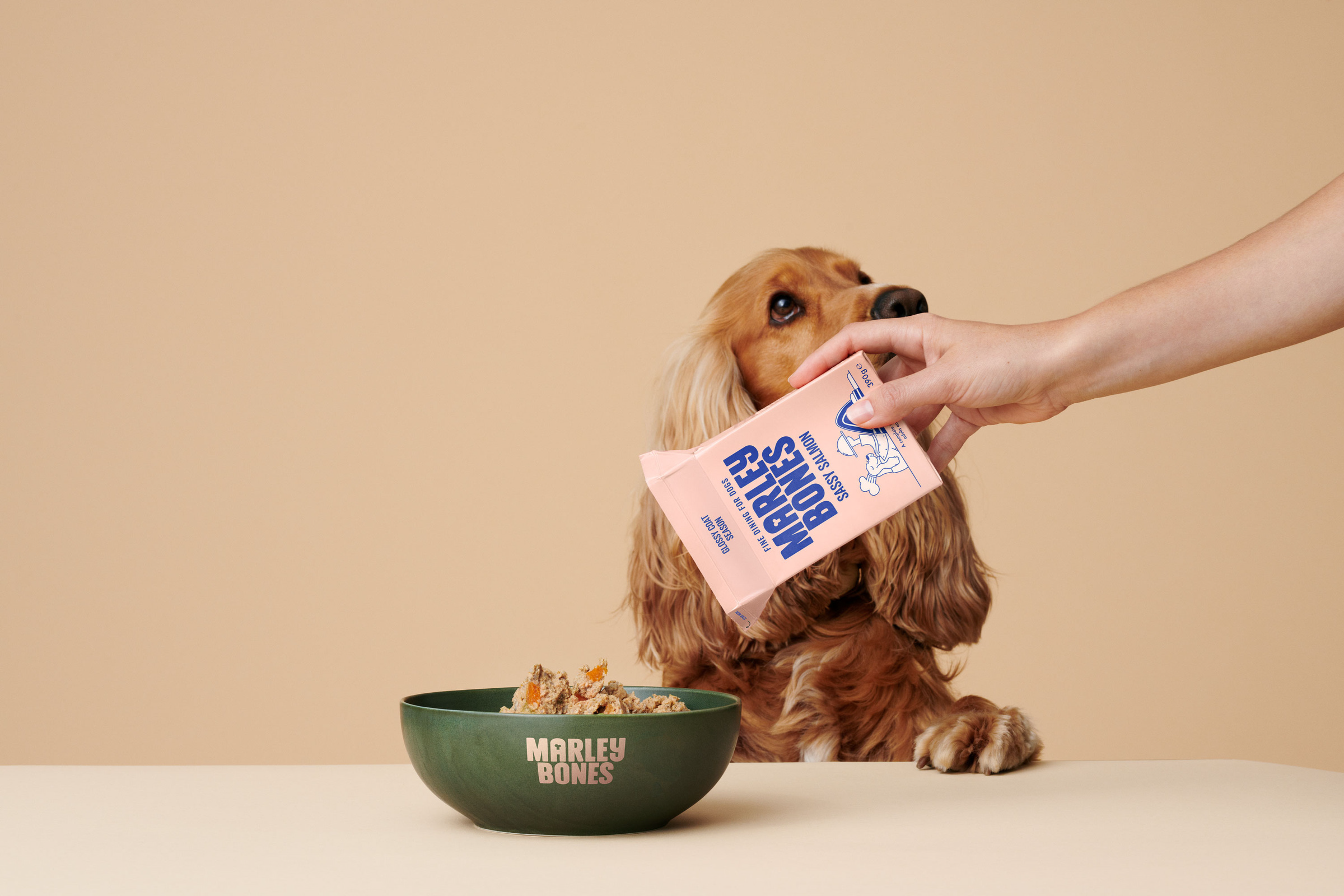
Salmon is the strongest protein choice for most Whippets. It provides complete, digestible protein alongside EPA and DHA omega-3 fatty acids that support skin condition, coat health, and muscle recovery simultaneously. For most Whippets it is also a novel protein, which means no sensitivity has had time to develop from repeated exposure. Sassy Salmon from Marleybones delivers salmon as a whole, identifiable ingredient alongside antioxidant-rich vegetables and no fillers or artificial additives, making it a well-suited starting point for a breed where palatability and ingredient quality both matter.
Lamb is a strong alternative for Whippets that have eaten fish regularly or prefer a red meat option. It is gentle on sensitive digestion, lower in allergenicity than beef, and a novel protein for most dogs currently eating chicken-based food. Single-protein meals are the most practical approach for any Whippet with a history of skin sensitivity or digestive issues, making it easy to confirm what the dog tolerates before introducing anything new.
Chicken is the protein most Whippets have been eating throughout their lives. Many tolerate it without obvious issues, but long-term exposure increases the chance of a low-grade sensitivity developing over time. For a Whippet showing dry skin, intermittent digestive upset, or a dull coat on a long-term chicken diet, a protein switch is a straightforward and often effective first step.
How much should I feed a Whippet?
An adult Whippet typically weighs between 12 and 18kg, with females towards the lower end. Body condition should be assessed using sighthound standards rather than general dog guidelines. Faintly visible ribs and clear muscle definition are correct for this breed, not a sign of underfeeding. A dog that is losing muscle tone, lacking energy, or showing coat deterioration despite an apparently adequate portion may need more food, not a different assessment of what they should look like.
Fresh food is more satiating per calorie than dry kibble because the higher moisture content occupies more stomach volume, which means some owners switching from kibble find their Whippet needs a slightly higher nominal calorie target to maintain the same body condition. Monitor body condition over four to six weeks and adjust accordingly. For a breed that can be selective about food, consistency in the feeding routine and a high-palatability food make a meaningful practical difference. Every dog is different — build your personalised Marleybones feeding and health plan tailored to your dog's age, size, and health requirements.

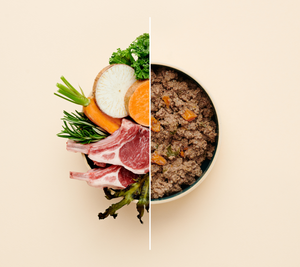
Freshly prepared British chicken, veggies & superfoods
How do different dog food formats compare for Whippets?
Fresh dog food is the best format for most Whippets, combining high palatability, whole ingredients, and natural omega-3s in a format that suits the breed's sensitive digestion and lean build. Here is how the main formats compare.
| Format | Moisture content | Processing level | Verdict for Whippets |
|---|---|---|---|
| Fresh (Pantry Fresh) | 65-75% | Minimal — slow low-temperature cooking | Best option — high palatability, whole ingredients, natural omega-3s; suits sensitive digestion and the lean sighthound build |
| Raw | 65-75% | None | Works for some — whole ingredients and high palatability suit the breed; bacterial load and preparation discipline required |
| Wet / canned | 75-85% | Moderate | Better than kibble — higher moisture and palatability; ingredient quality and protein source vary widely, check labels |
| Cold pressed | Around 12% | Low — below extrusion temperatures | Decent option — better ingredient quality than standard kibble; lower palatability than wet or fresh formats for a selective breed |
| Dry kibble | Around 10% | High — high-temperature extrusion | Least suited — lowest palatability for a selective breed, degrades omega-3s, poorest ingredient quality |
FAQs
How often should I feed my Whippet?
Twice daily is the standard for adult Whippets, splitting the total daily portion into morning and evening meals. For a breed with a deep chest, avoiding a single large meal reduces the risk of digestive discomfort, and two meals provide more consistent energy through the day. Whippets that are selective eaters tend to eat more reliably on a consistent twice-daily routine than with free-feeding or irregular timings.
My Whippet is a fussy eater — what should I do?
Try fresh food. Whippets as a group are among the more selective dog breeds, and the aroma, moisture, and texture of fresh food are significantly more appealing than dry kibble to most dogs that graze or refuse. Loved by 9 in 10 fussy dogs, Marleybones Pantry Fresh meals are one of the most practical switches for a selective Whippet. Transition gradually over seven to ten days, and resist the temptation to add extras or rotate foods frequently. Consistency in what you offer encourages consistent eating better than variety.
My Whippet's ribs are visible — should I be feeding more?
Not necessarily. Faintly visible ribs are correct body condition for a Whippet in good health. This is a sighthound build, and the visual standard is different from most breeds. The checks that matter more are muscle definition and energy: a healthy Whippet should have visible muscle across the hindquarters and shoulders, and should be alert and energetic. If ribs are more than faintly visible, muscle tone is poor, or the spine is very prominent without muscle coverage, a modest increase in daily portion and a vet check are both sensible. But a lean Whippet is far more often a normal Whippet than an underfed one.
Is grain-free food better for Whippets?
Not automatically. Whippets do not have a breed-specific issue with grains, and a well-formulated food containing whole oats or brown rice is nutritionally appropriate for most. The relevant questions are ingredient quality and digestibility rather than whether grains are present. For Whippets with sensitive digestion, the absence of fermentable fillers, including peas, lentils, and cheap grain by-products, matters more than whether moderate whole grains appear on the label. A fresh, whole-ingredient food with named protein and no artificial additives is the right frame regardless of grain content.
Is Marleybones Pantry Fresh good for Whippets?
Yes. Marleybones Pantry Fresh meals are vet-developed, slow-cooked from whole ingredients, and contain no artificial preservatives, fillers, or fermentable additives. Sassy Salmon is the strongest choice for most Whippets, providing complete protein alongside EPA and DHA omega-3 fatty acids that support skin, coat, and muscle recovery in a breed where all three matter. With a 4.9 Trustpilot rating and over 2 million meals delivered, Marleybones is a trusted choice for owners who want to feed a lean, sensitive breed with food that matches its needs.
How long before I see a difference after switching my Whippet's food?
Palatability improvement is immediate. Most selective Whippets that have been grazing at kibble take to fresh food straight away. Digestive changes settle within two to four weeks. Coat and skin condition improve over six to eight weeks, which is particularly visible in the Whippet's short, close coat. Body condition and muscle tone take eight to twelve weeks on a consistent portion to assess accurately. For Whippets that have been slightly underfed relative to their actual needs, muscle tone improvement is often one of the more noticeable early changes.

“A complete game changer!!”


 Give your dog the quality nutrition they deserve
Real meat, wholesome veggies and functional superfoods.
Get 40% OFF today