



 Vet reviewed
What’s the best dog food for a Saint Bernard?

At a glance
- Saint Bernards do best on fresh, whole-ingredient food built around a high-quality protein - the breed's size, joint load, and slower metabolism make ingredient quality and precise portion control both genuinely critical.
- Joint health is the most diet-relevant concern for Saint Bernards - omega-3 fatty acids from oily fish reduce systemic inflammation and directly support cartilage and connective tissue in a dog carrying this much weight.
- Bloat risk is real in deep-chested giant breeds - splitting daily food into two meals, avoiding exercise around feeding, and choosing a food with a lower fermentable starch content all reduce that risk.
- Saint Bernards gain weight easily and their sheer size makes excess weight far harder on their joints than it would be in a smaller dog - portion discipline from puppyhood is one of the most practical things an owner can do for long-term health.
- Fresh food with 65-75% moisture content supports kidney and urinary function in a breed whose size places higher ongoing demands on organ health than smaller dogs face.
What is the best diet for a Saint Bernard?
Fresh, minimally processed food built around a named, high-quality protein is the most appropriate diet for the vast majority of Saint Bernards. The breed's combination of giant size, heavy bone structure, and relatively slow metabolism means that food quality, portion accuracy, and the right nutritional profile all matter more than they do for lighter, more energetic breeds.
Standard dry kibble is formulated to be broadly suitable across many breeds and sizes. For a dog that can weigh 70-90kg, feeding a heavily processed, low-moisture food with cheap fillers means the digestive system is working harder than it needs to, the joints are missing the anti-inflammatory support they need, and the calorie density makes portion creep genuinely risky. Fresh food cooked from whole ingredients at lower temperatures retains far more of its natural nutritional value and is significantly easier on the digestive system - both of which matter in a breed of this size.
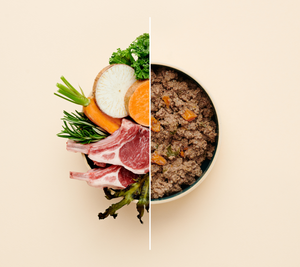
The practical checklist for a good Saint Bernard food is: a named protein source, omega-3 fatty acids to support the joints, no artificial fillers or preservatives, and a calorie density that allows accurate portion control without underfeeding. Marleybones Pantry Fresh meals are vet-developed from whole ingredients, slow-cooked in-pack, and contain no artificial additives - well-suited to a breed where the nutritional gap between a good diet and a poor one shows up in joints, weight, and long-term health.
How does diet affect joint health in Saint Bernards?
Dietary support for joints starts with reducing the inflammation that accelerates cartilage wear. In a dog of this size, every kilogram of excess body weight translates into several kilograms of additional load on the hips and elbows - both joints that Saint Bernards are structurally predisposed to finding difficult as they age. Omega-3 fatty acids, specifically EPA and DHA from oily fish, are the most evidence-backed nutritional support available, reducing systemic inflammation and supporting connective tissue in a way that no synthetic joint supplement alone can replicate when the diet underneath it is poor.
Weight control is the other half of joint protection. A lean Saint Bernard puts substantially less stress on its skeleton than one carrying even a modest amount of extra weight, and the difference becomes more visible with age. Fresh food with clear, accurate calorie information makes it easier to feed correctly than high-starch kibble, where the calorie density varies and fillers add bulk without nutritional value. Meals built around oily fish - like Marleybones Sassy Salmon - provide natural EPA and DHA alongside whole ingredients, addressing both the anti-inflammatory nutritional need and the weight management requirement in a single switch.
If your Saint Bernard is already showing signs of stiffness or reduced mobility, a dietary change is a sensible first step but should sit alongside a veterinary assessment rather than replace one.
What protein is best for a Saint Bernard?
Salmon and lamb are the strongest starting points for most Saint Bernards. Salmon provides clean protein alongside natural EPA and DHA omega-3 fatty acids, making it nutritionally ideal for a breed where joint inflammation and weight management are both ongoing priorities. Lamb is a strong alternative - lower allergenicity than beef, well-tolerated by dogs with any history of digestive sensitivity, and a good fit for dogs that need a red meat option or have already eaten fish regularly.
Chicken and beef are not inherently problematic, but Saint Bernards fed the same protein for years develop sensitivities more readily than owners expect. Skin irritation, loose stools, and recurring ear issues in a dog that has always eaten chicken are often a sign of exactly that. Rotating proteins, or switching to a novel protein the dog has not eaten frequently, tends to resolve these issues without any other dietary change.
Single-protein meals make it straightforward to identify what a dog tolerates, which is particularly useful in a breed this size where digestive upset is uncomfortable for the dog and inconvenient for everyone else. Fresh single-protein food also avoids the mixed protein meals common in lower-quality kibble, where the actual protein source is often unclear from the label.

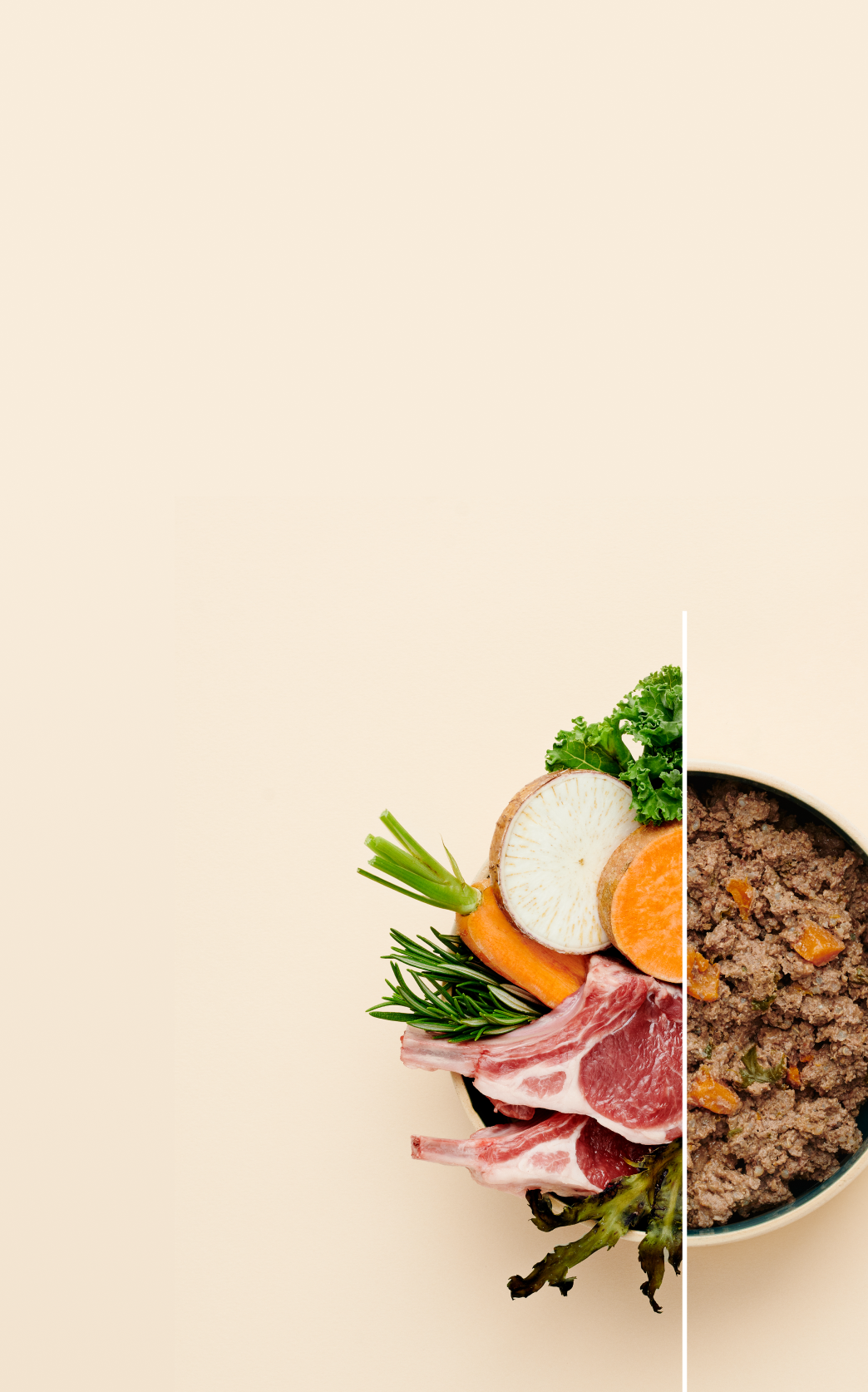
Freshly prepared British beef, veggies & superfoods
Do Saint Bernards have a bloat risk, and does diet affect it?
Yes on both counts. Gastric dilatation-volvulus (GDV), commonly called bloat, is a serious and potentially life-threatening condition that deep-chested giant breeds are disproportionately susceptible to. Diet does not cause bloat directly, but several dietary practices meaningfully reduce the risk. Feeding two smaller meals rather than one large daily meal is the most consistently recommended change - it reduces the volume of food the stomach holds at any one time. Avoiding vigorous exercise for at least an hour before and after feeding matters for the same reason.
The fermentable starch content of the food is also relevant. Heavily processed kibble with a high proportion of cheap starch ingredients produces more gas during digestion, which contributes to stomach distension. Fresh food with whole, recognisable ingredients and a lower starch load produces significantly less fermentation. Eating speed is worth managing too - Saint Bernards that eat quickly swallow more air, and a slow feeder bowl is a practical, low-cost intervention.
Any Saint Bernard showing signs of a distended abdomen, unproductive retching, or acute distress after eating needs immediate veterinary attention. Bloat is a medical emergency.
How much should I feed a Saint Bernard?
Adult Saint Bernards typically weigh between 54 and 90kg, with males at the heavier end of that range. At that size, even a 10% overcalculation in daily portions adds up to a meaningful amount over weeks. The most reliable guide is body condition: ribs should be easily felt without pressing hard, a waist should be visible from above, and there should be no visible fat deposits over the spine or at the base of the tail.
Feeding guides on packaging are a starting point, not a fixed prescription. Dogs switching from kibble to fresh food often need a lower nominal calorie count than the guide suggests, because the higher moisture content in fresh food is more satiating and the dog is absorbing more from each meal. Adjust portions over six to eight weeks based on body condition, and account for treats - in a dog this size, what looks like a small treat is more calorically significant than it appears.
Saint Bernard puppies have specific growth-rate requirements that differ from adult feeding. Giant breed puppies grow fastest between three and six months and need controlled energy intake during this period - rapid growth increases the risk of skeletal problems in adult life. A vet or veterinary nutritionist is the right source of guidance for puppies under twelve months.
Every dog is different - build your personalised Marleybones feeding and health plan tailored to your dog's age, size, and health requirements.How do different dog food formats compare for Saint Bernards?
| Format | Moisture content | Processing level | Verdict for Saint Bernards |
|---|---|---|---|
| Fresh (Pantry Fresh) | 65-75% | Minimal - slow low-temperature cooking | Best option - whole ingredients, supports joints, weight management, and organ health |
| Raw | 65-75% | None | Works for some - bacterial load a consideration, preparation at this scale is significant |
| Wet / canned | 75-85% | Moderate | Better than kibble - ingredient quality varies widely, check labels carefully at giant breed portions |
| Cold pressed | Around 12% | Low - below extrusion temperatures | Decent step up from kibble - lower processing, but still lacks the moisture this breed benefits from |
| Dry kibble | Around 10% | High - high-temperature extrusion | Hardest to digest - high starch content raises fermentation and bloat risk, worst option for Saint Bernards |
FAQs
How often should I feed my Saint Bernard?
Twice daily, in roughly equal portions, is the standard recommendation for adult Saint Bernards. Two smaller meals reduce the volume of food in the stomach at any one time, which is relevant for a deep-chested breed with an elevated bloat risk. A single large daily meal is not appropriate for this breed. Puppies under six months need three to four smaller meals a day to support their growth requirements.
Is Marleybones Pantry Fresh good for Saint Bernards?
Yes. Marleybones Pantry Fresh meals are vet-developed, made from whole ingredients with no artificial additives, and available in single-protein recipes that suit a large breed with joint, weight, and digestive health priorities. Sassy Salmon is the strongest choice for Saint Bernards, providing natural EPA and DHA omega-3 fatty acids that directly support joint health in a breed carrying significant body weight. With a 4.9/5 Trustpilot rating and over 2,000,000 meals delivered, it is a practical, evidence-backed option for owners who want the nutritional gap between a good diet and a poor one to work in their dog's favour.
My Saint Bernard is stiff after exercise - can diet help?
Diet is one of the most practical levers available. Omega-3 fatty acids from oily fish reduce systemic inflammation, which is a direct contributor to post-exercise stiffness in large, heavy breeds. Maintaining a lean body condition through accurate portioning reduces the mechanical load on joints during and after exercise. Both are achievable through dietary change alone, but stiffness that is worsening, present at rest, or accompanied by swelling warrants a veterinary assessment alongside any dietary adjustment.
Do Saint Bernards need giant breed specific food?
The "giant breed" label on commercial food is largely a marketing category rather than a guarantee of nutritional superiority. What actually matters is the quality of ingredients, the protein source, the omega-3 content, and the calorie density - all of which need to be appropriate for a large, slower-metabolism dog. A fresh food with whole ingredients and a sound nutritional profile serves a Saint Bernard better than a "giant breed" kibble built around cheap fillers and synthetic additives.
Is grain-free food better for Saint Bernards?
Not automatically. Grain itself is not the issue - it is the quantity and quality of starchy filler used in heavily processed food that drives digestive and fermentation problems in large breeds. A Saint Bernard tolerating whole oats or brown rice in a fresh, minimally processed meal is a different situation from one eating a high-starch extruded kibble. Grain-free foods that replace grain with large quantities of peas or lentils have their own nutritional considerations and are not automatically easier to digest or better suited to this breed.
How long before I see a difference after switching my Saint Bernard's food?
Digestion and stool quality typically improve within two to four weeks of switching to a fresh, whole-ingredient diet. Coat condition improves over six to eight weeks. Changes in weight, energy, and mobility take longer to assess accurately - eight to twelve weeks on a consistent portion gives a reliable picture. Transition gradually over seven to ten days to avoid digestive upset from the change, even if your dog takes to the new food immediately.
Can diet support a Saint Bernard's skin and coat?
Yes. Saint Bernards have a thick double coat that reflects dietary fat quality directly - named animal fats and omega-3 fatty acids from oily fish keep it soft, hydrated, and healthy-looking. A diet low in quality fat, or relying on rendered fats of unspecified origin, leaves the coat dry and dull regardless of how much grooming the dog receives. Owners switching Saint Bernards to a fresh, whole-ingredient diet consistently report coat improvements within six to eight weeks, making it one of the more visible early indicators that the diet change is working.

Freshly prepared British chicken, veggies & superfoods


 Give your dog the quality nutrition they deserve
Real meat, wholesome veggies and functional superfoods.
Get 30% off: Take the quiz