

 Vet reviewed
What’s the best dog food for a Pyrenean Mastiff?

At a glance
- Pyrenean Mastiffs do best on fresh, whole-ingredient food built around a quality protein - the breed's large frame and slow metabolism mean ingredient quality and precise portion control both matter from the start.
- Joint health is a genuine priority for this breed - food with natural sources of omega-3 fatty acids supports cartilage and reduces systemic inflammation in a dog carrying significant body weight.
- Bloat risk in deep-chested giant breeds makes how and when you feed as important as what you feed - two measured meals a day, never exercise immediately before or after eating.
- Pyrenean Mastiffs grow slowly and reach skeletal maturity later than smaller breeds - large-breed puppy nutrition with controlled calcium and phosphorus levels is essential through the first 18-24 months.
- Fresh food with 65-75% moisture supports kidney function and digestive health in a breed whose sheer size places greater long-term demand on major organs.
What is the best diet for a Pyrenean Mastiff?
Fresh, whole-ingredient food built around a named, high-quality protein is the most appropriate diet for most Pyrenean Mastiffs. This is a giant breed - adults typically weigh between 70 and 90kg - and the nutritional demands of maintaining a dog that size differ from almost every other breed. Ingredient quality, portion precision, and feeding routine all carry more consequence here than they do for a smaller, more forgiving physique.
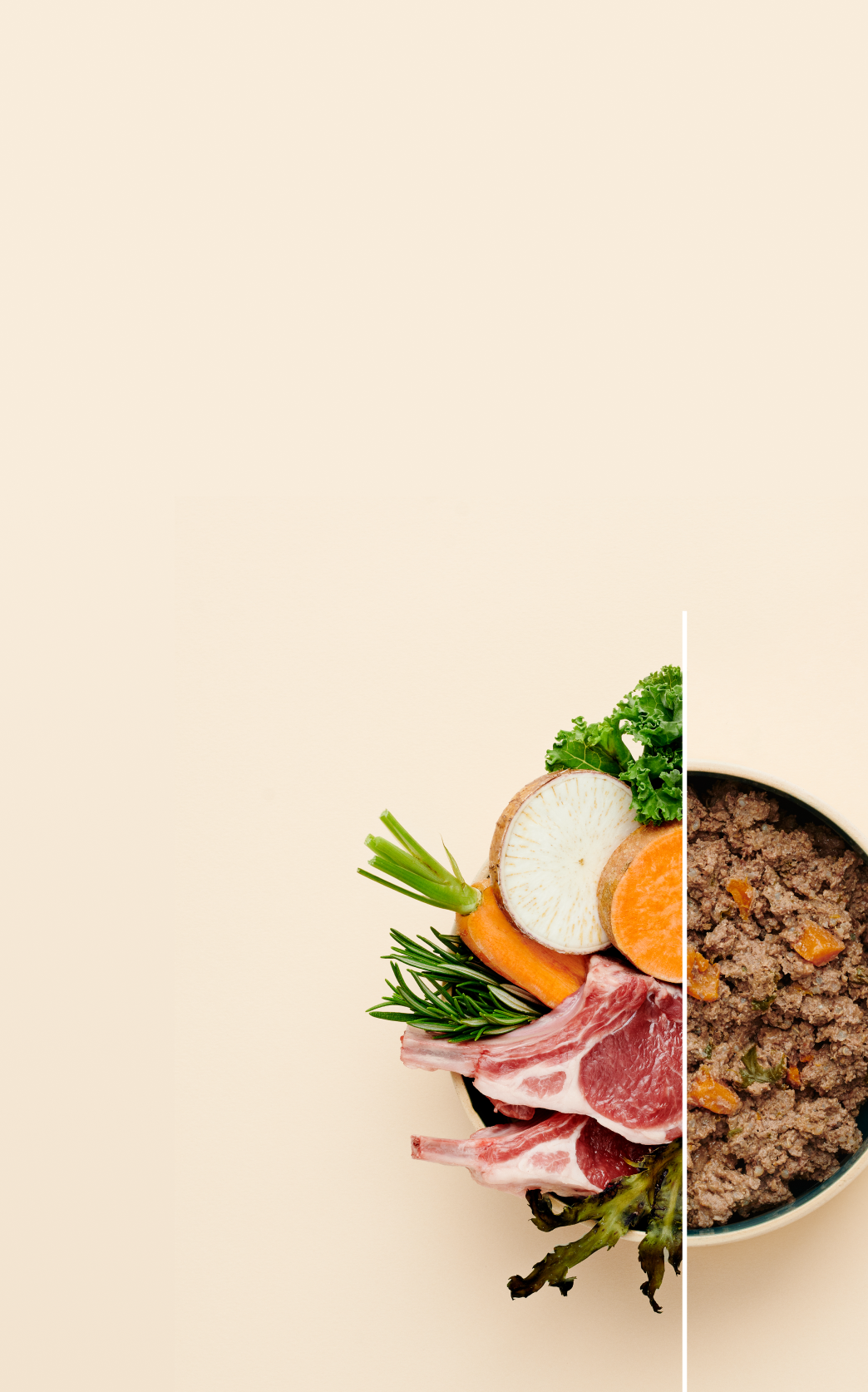
Heavily processed dry kibble is high in starch, low in moisture, and places a sustained load on the digestive and urinary systems. For a breed this size, fresh food brings a genuinely different nutritional profile - whole proteins the gut processes efficiently, 65-75% moisture content to support organ function, and none of the artificial preservatives or cheap fillers found in most mass-market dry foods.
The practical checklist for a good Pyrenean Mastiff food is: a named protein source, natural omega-3 fatty acids for joint and coat support, no artificial additives, and precise portions calibrated to body condition rather than the label alone. Marleybones Pantry Fresh meals are vet-developed recipes slow-cooked from whole ingredients, with no artificial preservatives or fillers, and complete for all life stages - including the extended puppyhood this breed goes through.
How does feeding a giant breed differ from feeding a standard-sized dog?
Giant breeds like the Pyrenean Mastiff have a slower metabolic rate relative to body mass than smaller dogs, which means they require fewer calories per kilogram of bodyweight. Overfeeding is the most common nutritional mistake owners make, and it accelerates joint wear in a dog already carrying considerable weight. The goal is lean condition - ribs palpable without pressing, a visible waist, and no fat padding over the spine.
Meal frequency also matters in a way it simply does not for a Beagle or a Spaniel. Deep-chested giant breeds carry a higher risk of gastric dilatation-volvulus (GDV), commonly known as bloat - a life-threatening condition where the stomach fills with gas and twists. Two calm, measured meals per day, with no vigorous exercise for at least an hour either side, is the standard recommendation for managing that risk through routine. Raised feeding bowls are sometimes suggested, but the evidence on whether they reduce bloat risk is mixed - consult your vet before making that change.
Phosphorus and calcium balance is critical during growth. Pyrenean Mastiffs are not fully skeletally mature until around 24 months, and excess calcium during that window actively increases the risk of developmental orthopaedic conditions. A food formulated to FEDIAF large-breed puppy standards during this period is not optional - it is a meaningful safeguard against problems that affect the dog for life.
What protein is best for a Pyrenean Mastiff?
Lamb and salmon are the strongest starting points for most Pyrenean Mastiffs, particularly those with any history of digestive sensitivity or skin irritation, or those currently eating chicken or beef. A protein a dog has not eaten extensively is less likely to cause a reactive response, because no sensitivity has had time to develop.
Salmon is the most nutritionally complete choice for this breed specifically. It delivers clean, highly digestible protein alongside EPA and DHA omega-3 fatty acids - the most practical dietary support available for joint health in a dog carrying this much bodyweight. Lamb is a strong alternative for dogs that need a red meat option or have already eaten fish; it is lower allergenicity than beef and sits well with dogs that have a reactive digestive system.
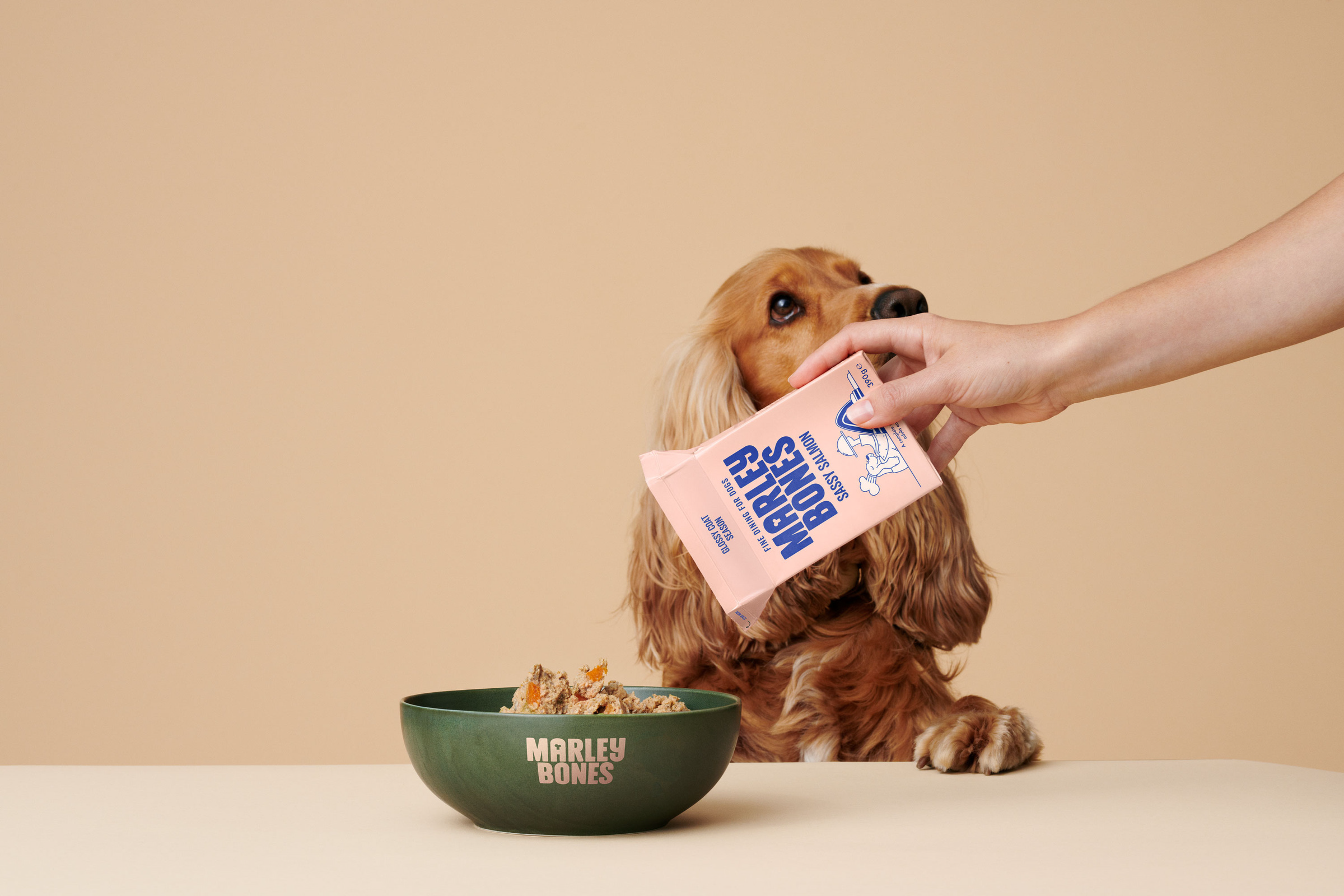
Novel proteins and single-protein meals are worth prioritising if digestive or skin symptoms are present, making it straightforward to identify what the dog tolerates without guesswork. Meals built around a single whole-food protein - like Marleybones Sassy Salmon or Lush Lamb - are a practical starting point for owners switching a Pyrenean Mastiff whose current food is not working.
Do Pyrenean Mastiffs have joint problems?
Supporting joint health through diet is one of the most important things an owner can do for this breed throughout their life - not just in old age. A Pyrenean Mastiff's joints carry far greater load than those of a medium or large breed dog, and the wear that accumulates over years of weight-bearing begins well before any stiffness becomes visible.
Omega-3 fatty acids - specifically EPA and DHA from oily fish - are the most well-evidenced dietary support for joint health. They reduce systemic inflammation, support synovial fluid quality, and help maintain cartilage in dogs with high joint load. A diet that includes oily fish as a genuine whole ingredient delivers these more reliably than a dry food with a small amount of omega-3 supplement added after high-temperature processing has already degraded much of the value.
Weight management is the other half of the equation. Every excess kilogram a Pyrenean Mastiff carries accelerates joint wear in a way that no supplement can reverse. Keeping the dog in lean body condition from adulthood onwards is a more meaningful intervention for long-term joint health than any additive. If stiffness, reluctance to rise, or changes in gait appear, a vet assessment is the right first step - diet works alongside veterinary care, not instead of it.

Freshly prepared British beef, veggies & superfoods
How much should I feed a Pyrenean Mastiff?
An adult Pyrenean Mastiff typically weighs between 70 and 90kg, but body condition is a more reliable guide than the scales. You should be able to feel the ribs without pressing, see a slight waist when looking down from above, and see no obvious fat deposits over the spine or at the base of the tail. A dog in good condition at 75kg needs a different daily portion to one that is overweight at the same figure.
Fresh food is more satiating than the equivalent calorie count in dry kibble - the higher moisture content occupies more stomach volume, and the protein is more bioavailable, meaning the dog extracts more nutritional value from each gram consumed. Owners switching from kibble to fresh food often find they can reduce the nominal daily calorie amount without the dog appearing hungry. Adjust portions to body condition over eight to twelve weeks, not to the initial label suggestion alone.
Treats add up quickly on a dog this size, and many commercial treats are calorie-dense. Factor them into the daily total and reduce the main meal portion accordingly. Every dog is different - build your personalised Marleybones feeding and health plan tailored to your dog's age, size, and health requirements.
How do different dog food formats compare for Pyrenean Mastiffs?
| Format | Moisture content | Processing level | Verdict for Pyrenean Mastiffs |
|---|---|---|---|
| Fresh (Pantry Fresh) | 65-75% | Minimal - slow low-temperature cooking | Best option - whole ingredients, supports joint health, digestion, and organ function at scale |
| Raw | 65-75% | None | Works for some - bacterial load and sourcing complexity are greater considerations at giant-breed portions |
| Wet / canned | 75-85% | Moderate | Better than kibble - ingredient quality varies widely, portion costs are high at this breed's daily intake |
| Cold pressed | Around 12% | Low - below extrusion temperatures | Decent middle ground - lower processing than kibble, but moisture content remains a limitation for this breed |
| Dry kibble | Around 10% | High - high-temperature extrusion | Hardest to digest - low moisture, high starch content, least suited to a giant breed's long-term organ and joint health |
FAQs
How often should I feed a Pyrenean Mastiff?
Twice daily, morning and evening in roughly equal portions. Two measured meals reduces the stomach load at any one sitting and fits the bloat-management routine that deep-chested giant breeds require. Never feed a single large daily meal, and always allow at least an hour before or after vigorous exercise.
Is Marleybones Pantry Fresh good for Pyrenean Mastiffs?
Yes. Marleybones Pantry Fresh meals are vet-developed, FEDIAF compliant, and complete for all life stages - including the extended puppyhood a giant breed goes through. With no artificial preservatives or fillers, and single-protein recipes available in salmon and lamb, they address the joint support and digestive quality this breed genuinely needs. Loved by 9 in 10 fussy dogs, they are a practical choice for an owner who wants ingredient quality they can actually read on the label.
What should I feed a Pyrenean Mastiff puppy?
A food that meets large-breed puppy nutritional standards with controlled calcium and phosphorus ratios. Pyrenean Mastiffs grow for up to 24 months, and excess calcium during that period increases the risk of developmental joint conditions. Avoid feeding adult food during puppyhood, and ensure whatever you feed is complete and balanced to FEDIAF large-breed puppy guidelines. Marleybones Pantry Fresh meals are complete for all life stages and meet FEDIAF standards.
Can diet help with bloat risk in a Pyrenean Mastiff?
Diet does not eliminate bloat risk, but feeding routine significantly affects it. Two calm meals per day rather than one large one, no exercise for at least an hour either side of feeding, and avoiding foods that ferment excessively in the gut all reduce the environmental triggers. If your dog shows signs of a distended abdomen, restlessness, or unproductive retching after eating, treat it as an emergency and contact a vet immediately.
Is grain-free food better for Pyrenean Mastiffs?
Not automatically. Grains are not inherently harmful, and the issue with most poor-quality dry foods is the quantity of grain used as a cheap filler rather than grain itself. A Pyrenean Mastiff that reacts to wheat in heavily processed kibble may tolerate whole oats or brown rice in a fresh, minimally processed meal without any issue. Grain-free foods that substitute large quantities of peas or lentils carry their own considerations and are not a straightforward upgrade.
How do I know if my Pyrenean Mastiff is a healthy weight?
Use body condition rather than a target number on the scales. You should be able to feel the ribs with light pressure but not see them, there should be a visible waist when viewed from above, and the abdomen should tuck upwards slightly when viewed from the side. If the ribs are buried under fat or the waist has disappeared, reduce the daily portion and reassess over eight weeks before making further changes.
How long before I see a difference after changing my Pyrenean Mastiff's food?
Stool quality and digestion typically improve within two to four weeks of switching to a higher-quality diet. Coat condition and skin health follow over six to eight weeks. Joint mobility and weight changes take longer to assess reliably - twelve weeks on a consistent portion and exercise routine gives a meaningful picture. If there is no improvement after four weeks, the issue may not be dietary and a vet assessment is the right next step.

Freshly prepared British chicken, veggies & superfoods


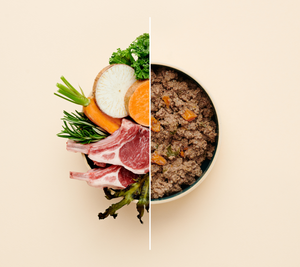 Give your dog the quality nutrition they deserve
Real meat, wholesome veggies and functional superfoods.
Get 30% off: Take the quiz