



 Vet reviewed
What’s the best dog food for a Pembroke Welsh Corgi?

At a glance
- Pembroke Welsh Corgis do best on fresh, whole-ingredient food built around a quality protein - the breed's strong appetite combined with a compact, low-slung frame makes calorie density and portion precision genuinely important.
- Salmon and lamb are the strongest protein choices for Corgis - both sit well with the breed's digestion and salmon provides omega-3 fatty acids that directly support joint and skin health.
- Fresh food with 65-75% moisture content is significantly easier for Corgis to digest than dry kibble, and helps manage the calorie concentration that makes weight gain so easy in this breed.
- Corgis are highly food-motivated and gain weight quickly - excess weight places direct mechanical stress on the spine and hips, making portion discipline one of the most important things an owner can get right.
- Joint and spinal health in Corgis is closely linked to diet - omega-3 fatty acids, healthy body weight, and anti-inflammatory ingredients all reduce the load on a frame that carries more body than its legs were designed for.
What is the best diet for a Pembroke Welsh Corgi?
Fresh dog food built around a quality protein, with controlled calorie density and no artificial fillers, is the most appropriate diet for most Pembroke Welsh Corgis. The breed is built for work - alert, energetic, and genuinely athletic - but its long body and short legs create a structural profile that makes weight management a permanent dietary consideration rather than an occasional one.
Dry kibble is calorie-dense, low in moisture, and highly palatable in a way that makes portion creep almost inevitable for a breed this food-motivated. Fresh food contains 65-75% moisture, which means a correctly portioned meal occupies significantly more volume in the stomach than the equivalent calorie count in kibble. For a Corgi that always appears hungry and would eat until told otherwise, that satiety difference is meaningful in practice.
The checklist for a good Corgi food is: a named protein source as the primary ingredient, omega-3 fatty acids to support joint health, no artificial additives or cheap grain fillers, and a calorie density that makes accurate portioning achievable. Marleybones Pantry Fresh meals are vet-developed, built from whole ingredients slow-cooked in-pack, and available in single-protein recipes that suit the Corgi's digestive profile and make portion control straightforward.
Do Corgis gain weight easily?
Yes, and the consequences for this breed are more significant than for longer-legged dogs. A Corgi carrying even one or two extra kilograms is placing substantially greater load on a spine that already has a long lever to manage, and on hips and elbows that sit close to the ground. The breed's enthusiasm for food is genuine and consistent - Corgis do not self-regulate well, and owners who feed ad libitum or are generous with treats tend to find their dog overweight within months.
The dietary response to this is straightforward: choose a food with a moisture content and ingredient profile that delivers satiety at a controlled calorie level, weigh portions rather than estimating by eye, and treat treats as part of the daily calorie budget rather than additions to it. Fresh food's higher moisture content makes this easier than managing a kibble-fed Corgi, where the gap between what looks like enough food and what actually is enough can be deceptively large.
Body condition is a more reliable guide than breed weight charts. You should be able to feel the ribs without pressing hard, and see a clear waist when looking down from above. If neither is true, reduce the daily portion by ten percent and reassess over four weeks before making further adjustments.
How does diet affect a Corgi's joints and spine?
Keeping body weight within a healthy range is the single most impactful dietary lever for Corgi joint and spinal health - but the specific nutrients in the food also matter. Omega-3 fatty acids, particularly EPA and DHA from oily fish, reduce systemic inflammation and directly support cartilage and joint function. A diet that provides these from a whole-food source rather than a synthetic top-up delivers them more consistently and in a more bioavailable form.
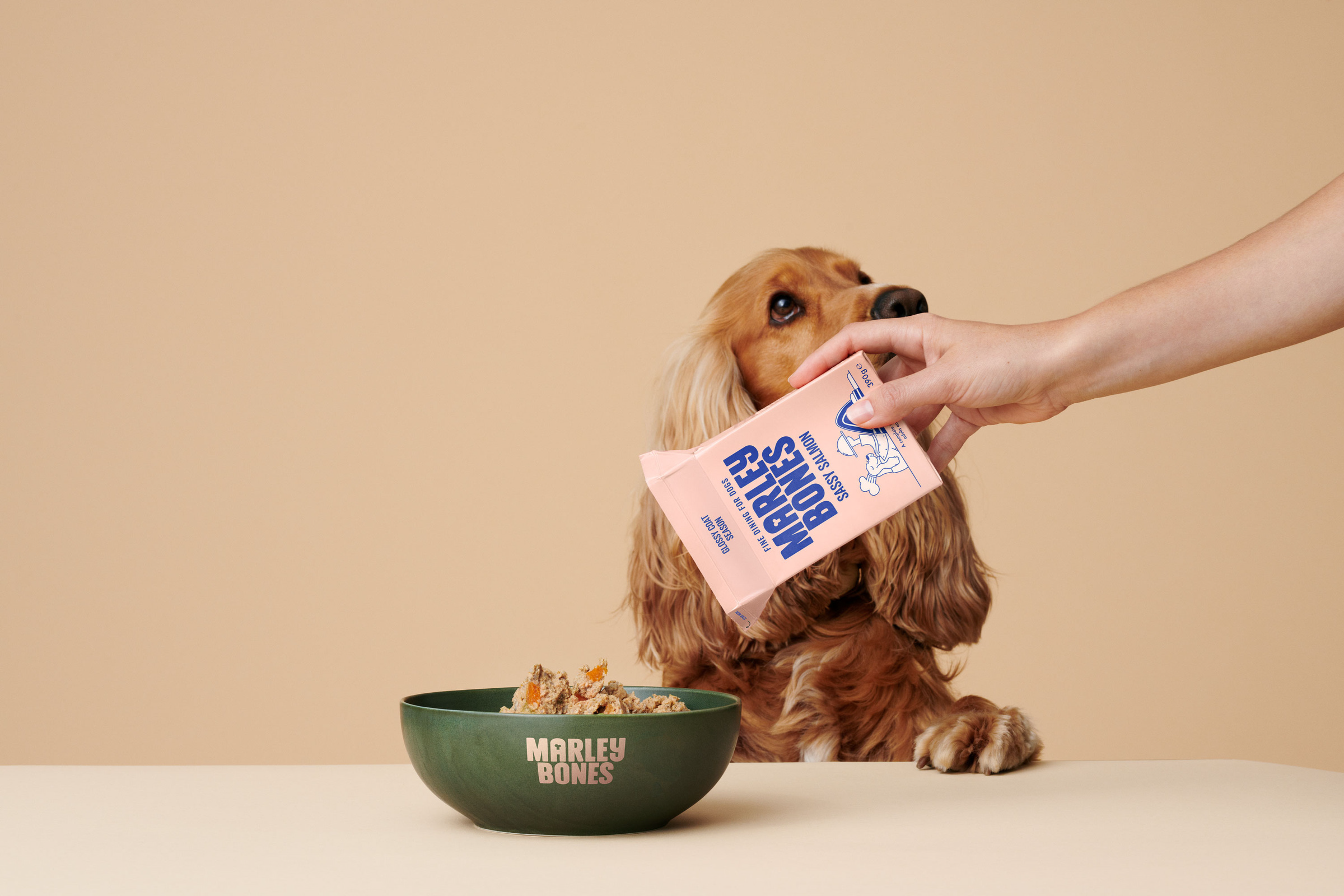
Corgis are predisposed to intervertebral disc disease (IVDD) due to their chondrodystrophic body shape - the same trait that gives the breed its distinctive silhouette puts the spinal discs under greater mechanical load throughout their life. Diet cannot change the breed's anatomy, but it can reduce the two factors that accelerate disc degeneration: excess body weight and chronic inflammation. A fresh diet built around anti-inflammatory ingredients and a quality omega-3 source addresses both. Marleybones Sassy Salmon provides a natural source of EPA and DHA alongside whole vegetables and no artificial additives - a practical everyday choice for a breed where joint support needs to be built into the diet rather than treated as an optional extra.
For Corgis already showing signs of stiffness or reduced mobility, a vet assessment should come before any dietary change, as some presentations need clinical management rather than nutritional support alone.

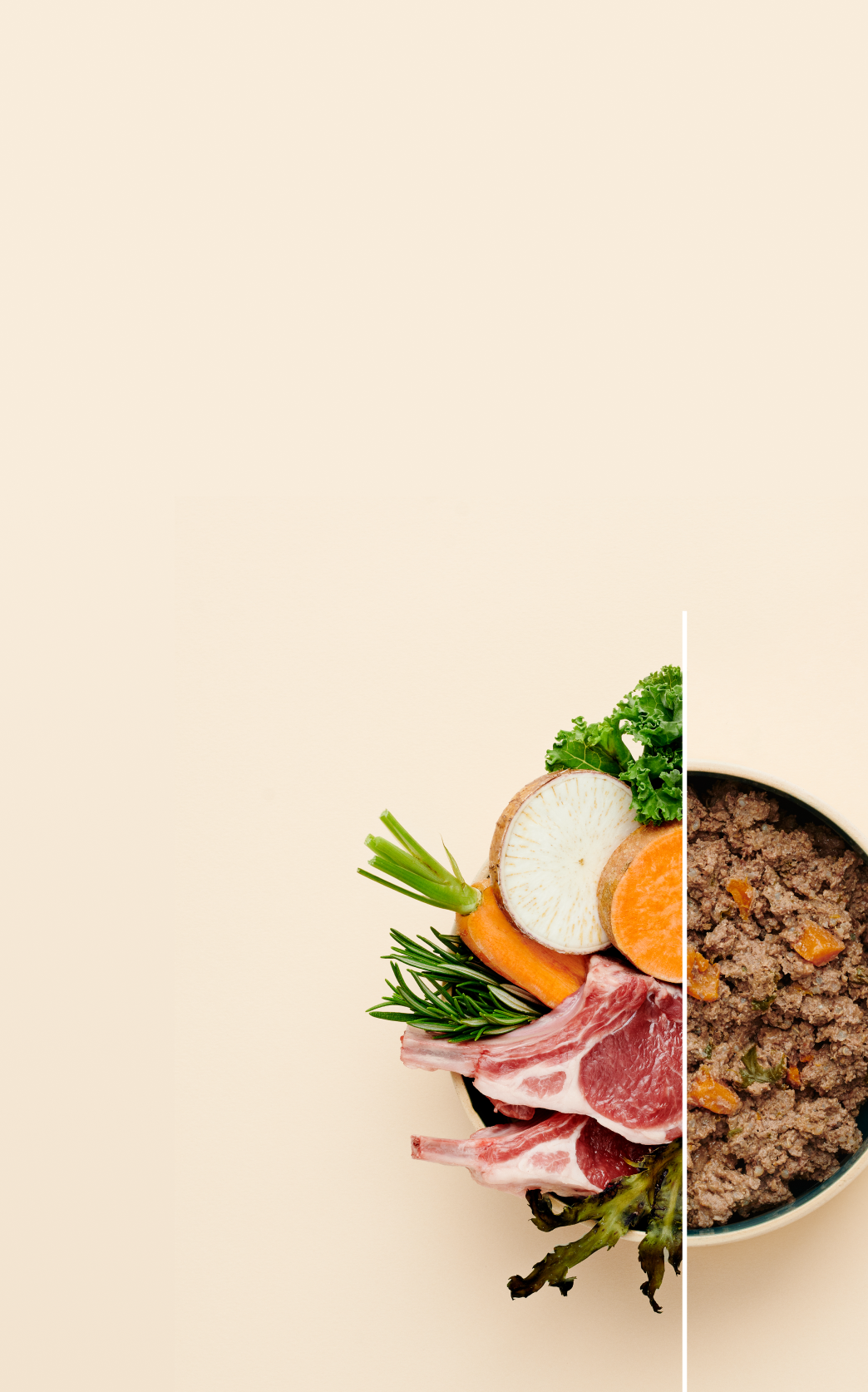
Freshly prepared British beef, veggies & superfoods
What protein is best for a Pembroke Welsh Corgi?
Salmon is the strongest protein choice for most Corgis, providing clean, digestible protein alongside EPA and DHA omega-3 fatty acids that directly address the joint and inflammatory health concerns the breed faces throughout its life. Lamb is the strongest alternative - lower in allergenicity than chicken or beef, well-tolerated by most digestive systems, and a good option for dogs that have eaten fish-based food for an extended period and benefit from rotating protein.
Chicken and beef are the proteins most Corgis have eaten longest, which makes them the most likely candidates for sensitivity if digestive or skin issues develop over time. Switching to a novel protein - one the dog has not eaten regularly - is the most effective first step when recurring loose stools, wind, or itching appear, and is worth trying before assuming the problem requires veterinary intervention.
Single-protein meals make it straightforward to identify what a dog tolerates without guesswork. Marleybones Lush Lamb and Sassy Salmon are both single-protein recipes built around whole, identifiable ingredients with chicory root as a natural prebiotic - giving the gut additional support during any transition period.
How much should I feed a Pembroke Welsh Corgi?
Adult Pembroke Welsh Corgis typically weigh between 10 and 14kg, but body condition rather than the scales should be the primary guide. Feeding guides on packaging are starting points - the right daily amount for an individual Corgi depends on age, activity level, and whether the dog is currently at a healthy weight or working toward one.
Fresh food is more satiating than dry kibble at the same calorie count because of its higher moisture content, so owners switching from kibble often find they can reduce the nominal calorie amount without their dog appearing unsatisfied. Two meals a day - morning and evening in roughly equal portions - suits adult Corgis better than one large meal, which can contribute to digestive discomfort in a breed that eats enthusiastically.
Treats must be counted as part of the daily total, not added on top. For a breed this food-motivated, treat calories accumulate quickly and are the most common cause of gradual weight gain that owners do not immediately attribute to overfeeding. Air-dried treats kept small and used deliberately are a better choice than high-calorie biscuit-style rewards.
Every dog is different - build your personalised Marleybones feeding and health plan tailored to your dog's age, size, and health requirements.How do different dog food formats compare for Pembroke Welsh Corgis?
| Format | Moisture content | Processing level | Verdict for Corgis |
|---|---|---|---|
| Fresh (Pantry Fresh) | 65-75% | Minimal - slow low-temperature cooking | Best option - whole ingredients, supports weight management, joint health, and digestion |
| Raw | 65-75% | None | Works for some - bacterial load a consideration, preparation required, calorie management still essential |
| Wet / canned | 75-85% | Moderate | Better than kibble - ingredient quality varies widely, check the label for fillers and named protein sources |
| Cold pressed | Around 12% | Low - below extrusion temperatures | Reasonable middle ground - lower processing than kibble but still low moisture, portion accuracy remains important |
| Dry kibble | Around 10% | High - high-temperature extrusion | Hardest format to manage for Corgis - calorie density and low satiety make weight control more difficult |
FAQs
How often should I feed my Pembroke Welsh Corgi?
Twice daily is the right approach for adult Corgis - morning and evening in equal portions. A single large meal is harder for the breed to digest comfortably and does nothing to help the feeling of hunger that Corgis carry between feeds. Puppies under six months need three to four smaller meals spread through the day.
My Corgi always seems hungry - is that normal?
Yes, and it is a trait that runs deep in the breed rather than a sign the dog is not eating enough. Corgis were bred to work long days herding cattle and have the appetite to match. The practical response is to choose a food that provides genuine satiety at a controlled calorie level - fresh food with high moisture content is more filling than the equivalent amount of dry kibble. If your dog appears distressed between meals or is losing condition, that is worth a vet check, but persistent enthusiasm for food in a Corgi at a healthy weight is simply the breed being itself.
Is grain-free food better for Corgis?
Not automatically. Grains are not the problem in themselves - the issue is the volume of low-quality grain used as a cheap filler in heavily processed food. A Corgi that reacts to wheat in poor-quality kibble will often tolerate whole oats or brown rice in a fresh, minimally processed meal without any issue. Grain-free foods that replace grain with large amounts of peas or lentils introduce their own considerations and are not automatically easier to digest or more appropriate for the breed.
Does diet affect Corgi skin and coat condition?
Directly. The Corgi's dense double coat needs quality dietary fat to stay healthy, and the source of that fat matters. Omega-3 fatty acids from oily fish support skin barrier function and coat quality from the inside - a diet that provides these naturally, rather than through synthetic supplementation added to an otherwise poor-quality food, makes a more consistent difference. Coat condition is often one of the first things to improve after switching to a fresh diet, typically visible within six to eight weeks.
Is Marleybones Pantry Fresh good for Pembroke Welsh Corgis?
Yes. Marleybones Pantry Fresh meals are vet-developed, contain no artificial preservatives or fillers, and are available in single-protein recipes that suit a breed where weight management and joint support need to be built into the everyday diet. Sassy Salmon is the strongest choice for Corgis, providing a natural source of EPA and DHA omega-3 fatty acids alongside whole ingredients that support joint health and a healthy body condition. Loved by 9 in 10 fussy dogs - which Corgis rarely are - it is one of the most practical everyday choices for a breed where what goes in the bowl has a direct effect on long-term health.
Can diet help with a Corgi's energy levels?
A nutritionally complete fresh diet supports consistent energy better than heavily processed food, because the protein and fat are delivered in a more bioavailable form and without the blood sugar swings associated with high-starch kibble. Corgis are naturally energetic dogs, and a diet that genuinely fuels that energy without excess calories is the target. If a Corgi appears lethargic despite a good diet and adequate exercise, that is worth investigating with a vet rather than adjusting food alone.
How do I transition my Corgi to fresh food?
Gradually, over seven to ten days, even if your dog takes to the new food immediately. Start with roughly 25% new food to 75% current food, and shift the ratio every two to three days. Corgis switching from kibble to fresh food occasionally experience looser stools in the first week as the gut adjusts - this resolves in most cases without intervention. If symptoms persist beyond two weeks or include vomiting or significant discomfort, slow the transition further and speak to a vet if needed.

Freshly prepared British chicken, veggies & superfoods


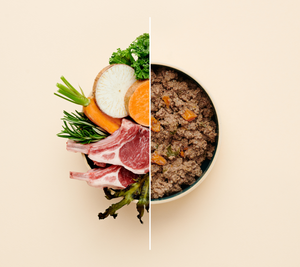 Give your dog the quality nutrition they deserve
Real meat, wholesome veggies and functional superfoods.
Get 40% OFF today