

 Vet reviewed
What’s the best dog food for an Otterhound?

At a glance
- Otterhounds do best on fresh, whole-ingredient food built around a quality protein - the breed's deep chest, substantial build, and tendency toward joint problems make nutritional density and ingredient quality genuine priorities from day one.
- Salmon and lamb are the strongest protein choices for Otterhounds, delivering clean amino acids for muscle maintenance alongside nutrients that directly support the joints and coat this breed depends on.
- Bloat risk is real in large, deep-chested breeds - feeding two smaller meals daily rather than one large portion is one of the most practical things an owner can do to reduce it.
- Fresh food with 65-75% moisture content supports the Otterhound's active digestion and dense double coat in ways that dry kibble - at around 10% moisture - cannot match.
- Weight management matters throughout an Otterhound's life - excess bodyweight places direct additional load on joints already predisposed to problems, making portion discipline as important as protein quality.
What is the best diet for an Otterhound?
Fresh dog food built around a high-quality single protein, with the nutritional density to support a large, active breed, is the most appropriate diet for most Otterhounds. The breed is a working scent hound at heart - substantial, energetic, and built for endurance - with a set of health predispositions that make ingredient quality genuinely matter rather than being a nice-to-have.
Heavily processed dry kibble provides around 10% moisture and puts a high processing load on the digestive system. For a breed of this size and build, the gap between what the gut receives from whole, identifiable ingredients and what it receives from extruded pellets is significant. Fresh food slow-cooked from whole ingredients retains more of its natural protein structure, delivers meaningful moisture with every meal, and provides the dietary fats a working-type double coat requires to stay in good condition.
The practical checklist for a good Otterhound food is: a named protein source listed clearly on the label, omega-3 fatty acids for joint and coat support, no artificial preservatives or bulking agents, controlled portions to protect bodyweight and joint health, and two meals a day rather than one. Marleybones Pantry Fresh meals are vet-developed recipes slow-cooked from whole ingredients with no artificial additives, and they address that checklist in a single, straightforward switch.
How does diet help protect an Otterhound's joints?
Supporting the joints through diet starts with two things: maintaining a healthy bodyweight and providing the right anti-inflammatory fats. Otterhounds carry significant muscle and bone mass, and every kilogram of excess weight translates into increased load on hips, elbows, and the joints of the lower limbs across thousands of daily strides. Keeping an Otterhound lean is one of the most protective things an owner can do, and it starts with controlled, calorie-accurate portions from a food with known nutritional density.
Omega-3 fatty acids - specifically EPA and DHA from oily fish - reduce systemic inflammation and support the cartilage and synovial fluid that cushion joints during exercise. A diet that includes salmon or another oily fish as a primary ingredient provides these passively, without the guesswork of adding a separate supplement. For Otterhounds already showing stiffness or reduced mobility, a dedicated joint health supplement alongside a high-quality diet gives additional targeted support.
If an Otterhound is showing significant lameness, swelling, or a sudden change in gait, a vet assessment is the right first step. Diet supports joint health over the long term but does not replace clinical management of an active orthopaedic condition.
Do Otterhounds have sensitive digestion?
Otterhounds are not among the breeds most commonly associated with digestive sensitivity, but their size means that when digestion does become unsettled - loose stools, wind, or intermittent upset - the consequences are harder to ignore. A large-breed dog with an unhappy gut is difficult to miss. The most common dietary causes are low-quality rendered ingredients, artificial additives, and high-starch fillers that ferment in the lower digestive tract.
The breed's shaggy, dense coat also tends to reflect nutritional status clearly. Poor dietary fat quality, inadequate omega-3s, or excessive processing of ingredients shows up as a dull, dry, or lacklustre outer coat before it shows up anywhere else. Fresh food with a lower processing load than kibble tends to produce noticeably better coat condition within six to eight weeks of switching, because the dietary fats the coat depends on arrive intact rather than degraded by high-temperature extrusion.

Freshly prepared British beef, veggies & superfoods
What protein is best for an Otterhound?
Salmon and lamb are the strongest starting points for most Otterhounds. Salmon provides clean, complete protein alongside EPA and DHA omega-3 fatty acids - the most directly useful nutrients for a breed with joint predispositions and a demanding double coat. Lamb is a strong alternative for dogs that need a red meat option or have already eaten fish regularly; it sits well with dogs that have a reactive gut and is lower in allergenicity than beef.
Chicken and beef are fine proteins for dogs without any history of sensitivity, but they are the two most common proteins in commercial dog food and the ones most likely to have been eaten continuously for years. Where any digestive or skin issue has developed, switching protein source tends to be more effective than switching brand while staying on the same protein. Single-protein meals make this straightforward - there is no guesswork about what is and is not being tolerated.
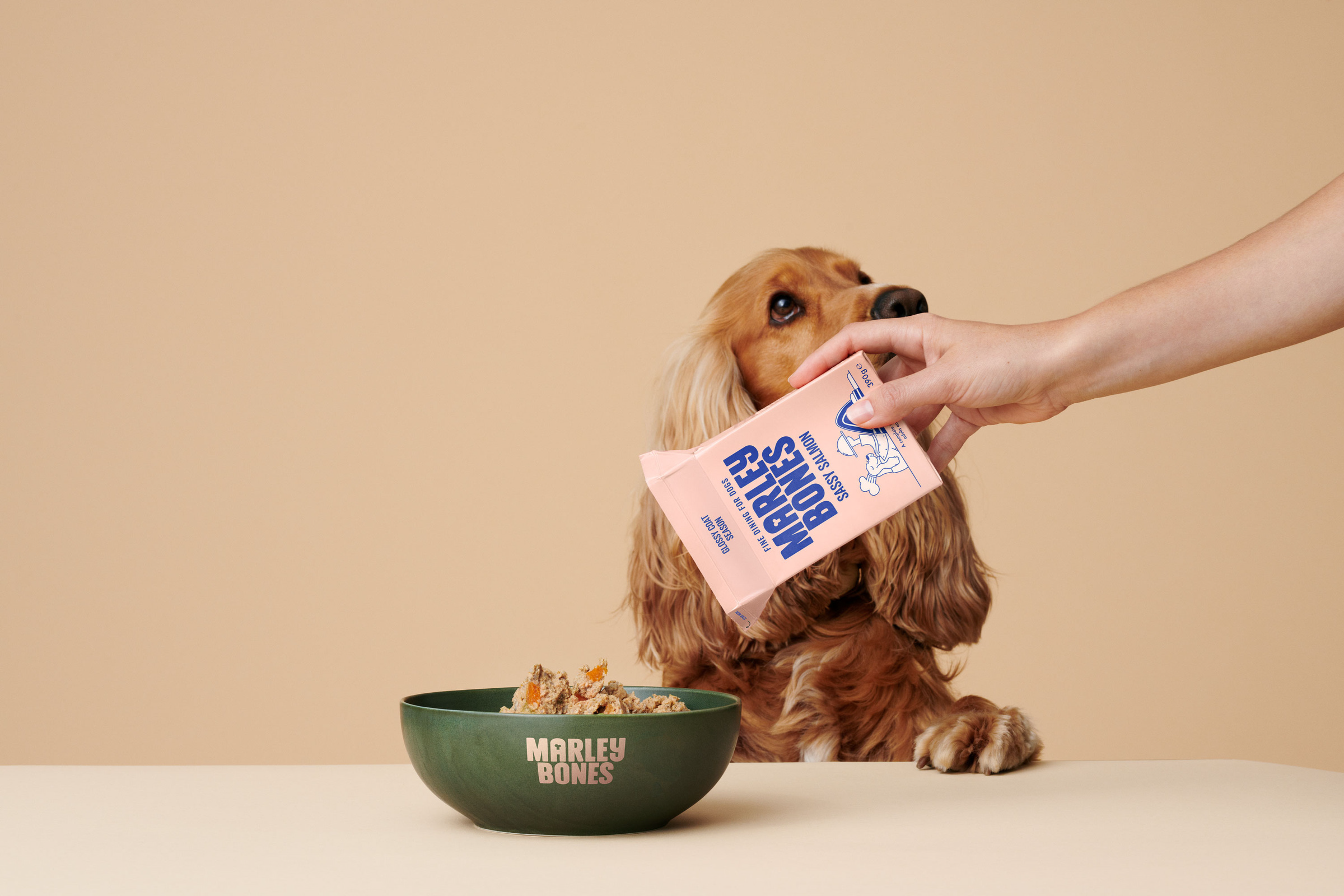
Meals built around novel proteins - like Marleybones Sassy Salmon or Lush Lamb - provide the clean amino acid profile a large breed needs for muscle maintenance, without the dietary baggage that comes with low-quality multi-protein recipes. Both are single-protein recipes built around whole, identifiable ingredients with chicory root included as a natural prebiotic for digestive stability.
How much should I feed an Otterhound?
An adult Otterhound typically weighs between 30 and 52kg, with males sitting toward the upper end and females toward the lower. Body condition is a better guide than the scales alone: the ribs should be easy to feel without pressing hard, there should be a visible waist when looking down from above, and there should be a slight tuck of the abdomen from the side. If those three indicators are not present, the daily portion needs adjusting downward.
Feeding guides on packaging are a starting point. Fresh food is more satiating than the equivalent calorie count in kibble because the higher moisture content occupies more volume in the stomach, and most owners switching from kibble find they can reduce nominal calorie intake without their dog appearing less satisfied. Adjust portions to body condition over six to eight weeks rather than treating the initial suggested amount as fixed, and account for treats - they are easy to overlook with a breed this food-motivated and this large.
Splitting the daily ration across two meals rather than one is a practical non-negotiable for a deep-chested breed. A single large meal increases gastric distension after eating, which is one of the environmental factors associated with bloat in breeds of this conformation.
Every dog is different - build your personalised Marleybones feeding and health plan tailored to your dog's age, size, and health requirements.
How do different dog food formats compare for Otterhounds?
| Format | Moisture content | Processing level | Verdict for Otterhounds |
|---|---|---|---|
| Fresh (Pantry Fresh) | 65-75% | Minimal - slow low-temperature cooking | Best option - whole ingredients support joint health, coat condition, and digestion in a large, active breed |
| Raw | 65-75% | None | Works for some - bacterial handling considerations apply, and sourcing nutritionally balanced large-breed recipes requires care |
| Wet / canned | 75-85% | Moderate | Better than kibble - ingredient quality varies widely, and large-breed portions make label scrutiny especially important |
| Cold pressed | Around 12% | Low - below extrusion temperatures | A reasonable middle ground if fresh is not accessible - better ingredient integrity than standard kibble |
| Dry kibble | Around 10% | High - high-temperature extrusion | Hardest to digest - lowest moisture, poorest fat and protein integrity for a breed that depends on both |
FAQs
How often should I feed my Otterhound?
Twice daily, in roughly equal portions, morning and evening. For a deep-chested large breed, splitting the daily ration is a practical risk-reduction measure as well as a digestive one - a single large meal increases gastric volume after eating in a way that twice-daily feeding avoids. Puppies under six months need three to four smaller meals a day to support growth without overloading the stomach.
Is bloat a real risk for Otterhounds, and can diet help?
Bloat - specifically gastric dilatation-volvulus - is a genuine risk in deep-chested large breeds, and Otterhounds fit that profile. Diet does not eliminate the risk, but feeding two smaller meals rather than one large one, avoiding vigorous exercise immediately after eating, and not feeding from a raised bowl unless clinically advised are the most evidence-consistent dietary and management steps. If an Otterhound appears distressed, has a visibly distended abdomen, or is retching without producing anything, treat it as a veterinary emergency.
My Otterhound's coat looks dull - is that a diet issue?
Frequently, yes. The Otterhound's dense, rough double coat depends on dietary fat - specifically the quality and source of it - to stay in good condition. Diets relying on rendered fat of unspecified origin, or those with minimal omega-3 content, tend to produce a dry, lacklustre outer coat regardless of how much grooming the dog receives. Switching to a food with a named oily fish ingredient or supplementing with an omega boosting oil typically produces visible improvement in coat quality within six to eight weeks.
Is grain-free food better for Otterhounds?
Not automatically. Grains are not inherently problematic - the issue is typically the volume and quality of grain used as a cheap filler in heavily processed food. An Otterhound tolerating whole oats or brown rice in a minimally processed fresh meal may react to the same volume of lower-quality wheat starch in standard kibble. Grain-free foods that replace grain with large quantities of legumes or root vegetables are not automatically easier to digest, and the calorie density of those substitutes still needs to be factored into portion control for a breed prone to weight gain.
Is Marleybones Pantry Fresh good for Otterhounds?
Yes. Marleybones Pantry Fresh meals are vet-developed, contain no artificial preservatives or fillers, and are slow-cooked from whole ingredients - which directly addresses the joint support, coat condition, and digestive stability that matter most for this breed. With over 2,000,000 meals delivered and a 4.9/5 Trustpilot rating, they are a practical fit for a large breed where nutritional quality shows up clearly in condition and mobility. Sassy Salmon is the strongest choice for Otterhounds with joint concerns or coat issues, providing EPA and DHA omega-3 fatty acids from a named, whole ingredient rather than a synthetic additive.
How long before I see a difference after switching my Otterhound's food?
Stool quality and digestive comfort typically improve within two to four weeks. Coat condition takes longer - six to eight weeks gives a reliable indication of what the new diet is doing. Weight and body condition changes take eight to twelve weeks of consistent portioning to assess accurately. If there is no meaningful improvement after four weeks on a consistent diet, a vet assessment is the right next step to rule out a non-dietary cause.
What should I look for on an Otterhound food label?
A named protein source at the top of the ingredient list - salmon, lamb, chicken, beef - rather than a generic "meat and animal derivatives" entry. Identifiable vegetables and whole grains where included. A declared omega-3 content, ideally from a named fish source rather than a synthetic additive. No artificial preservatives, colours, or flavourings. For a breed this size, the difference between a food that lists "chicken" and one that lists "poultry derivatives" is meaningful - it reflects the quality and consistency of what is actually in every batch.

Freshly prepared British chicken, veggies & superfoods


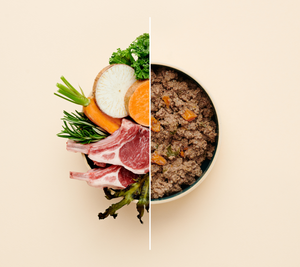 Give your dog the quality nutrition they deserve
Real meat, wholesome veggies and functional superfoods.
Get 40% OFF today