


 Vet reviewed
What is the best dog food for a Norwegian Elkhound?

At a glance
- Norwegian Elkhounds do best on fresh, whole-ingredient food built around a quality protein - the breed's high activity level, dense double coat, and tendency toward weight gain in later life all make nutrient quality and portion discipline worth getting right from the start.
- Salmon is the standout protein for Norwegian Elkhounds, providing clean lean protein alongside EPA and DHA omega-3 fatty acids that directly support the breed's thick coat and naturally active joints.
- A diet with 65-75% moisture content supports kidney function and overall hydration - Elkhounds are a breed with some inherited predisposition to kidney concerns, and food format makes a meaningful difference to daily fluid intake.
- Portion control is essential: Norwegian Elkhounds are efficient metabolisers that gained weight on relatively little food historically, and that tendency carries through to modern pets in lower-activity households.
- The breed's double coat reflects dietary fat quality directly - named animal fats and omega-3s from oily fish keep it weatherproof and glossy; poor-quality fats leave it dull, dry, and prone to shedding in excess.
What is the best diet for a Norwegian Elkhound?
Fresh dog food built around a high-quality single protein, with controlled portions and genuine nutritional density, is the most appropriate diet for most Norwegian Elkhounds. The breed was historically a working sled and hunting dog that covered enormous distances in harsh conditions on modest amounts of food. That metabolic efficiency is still present in modern Elkhounds, which means the quality of every calorie matters more than the quantity.
Heavily processed dry kibble delivers calories efficiently but at significant nutritional cost - high-temperature extrusion degrades protein quality, strips natural moisture, and relies on synthetic additives to restore what processing removes. For a breed where coat condition, joint health, and weight management are all diet-sensitive, fresh food with intact proteins, natural moisture, and whole-ingredient nutrition is a meaningfully better starting point than reformulated dried alternatives.
The practical checklist for a good Norwegian Elkhound food is: a named protein source high in lean muscle meat, omega-3 fatty acids for coat and joint support, controlled calorie density to prevent easy weight gain, and no artificial fillers or preservatives. Marleybones Pantry Fresh meals are built exactly to that specification - vet-developed, slow-cooked from whole ingredients, with no artificial additives and a nutritional profile that suits an active, dense-coated breed.
Do Norwegian Elkhounds gain weight easily?
Yes - and it is one of the most practically important things to understand about feeding this breed. Norwegian Elkhounds evolved to perform sustained physical work on limited food in cold northern environments. Their bodies became exceptionally efficient at extracting and storing energy, an adaptation that works against them in a household setting where food is plentiful and exercise is bounded by a garden and daily walks.
Weight gain in Elkhounds tends to accumulate gradually and quietly. Owners often only notice it once the dog is meaningfully overweight, by which point the additional load on joints and the cardiovascular system is already a concern. Feeding a food with controlled calorie density - rather than managing weight by dramatically reducing portion size - is the more sustainable approach. Fresh food is more satiating than the equivalent calorie count in kibble because higher moisture content occupies more volume in the stomach, which helps prevent the persistent low-level hunger that drives scavenging and begging in calorie-restricted dogs.
Check body condition regularly rather than relying on weight alone. You should be able to feel the ribs without pressing hard, and see a visible waist from above. If the waist has disappeared, the portion needs reducing regardless of what the feeding guide suggests.
Why does coat condition matter so much in Norwegian Elkhounds?
The Norwegian Elkhound's double coat - a dense, woolly undercoat beneath a coarser outer layer - was bred to insulate in Arctic conditions. It is a high-maintenance structure that requires consistent nutritional support to function correctly. A coat that looks dull, sheds excessively outside normal seasonal moults, or develops dry, flaky skin underneath it is almost always reflecting a dietary gap, most commonly in fat quality and omega-3 fatty acids.
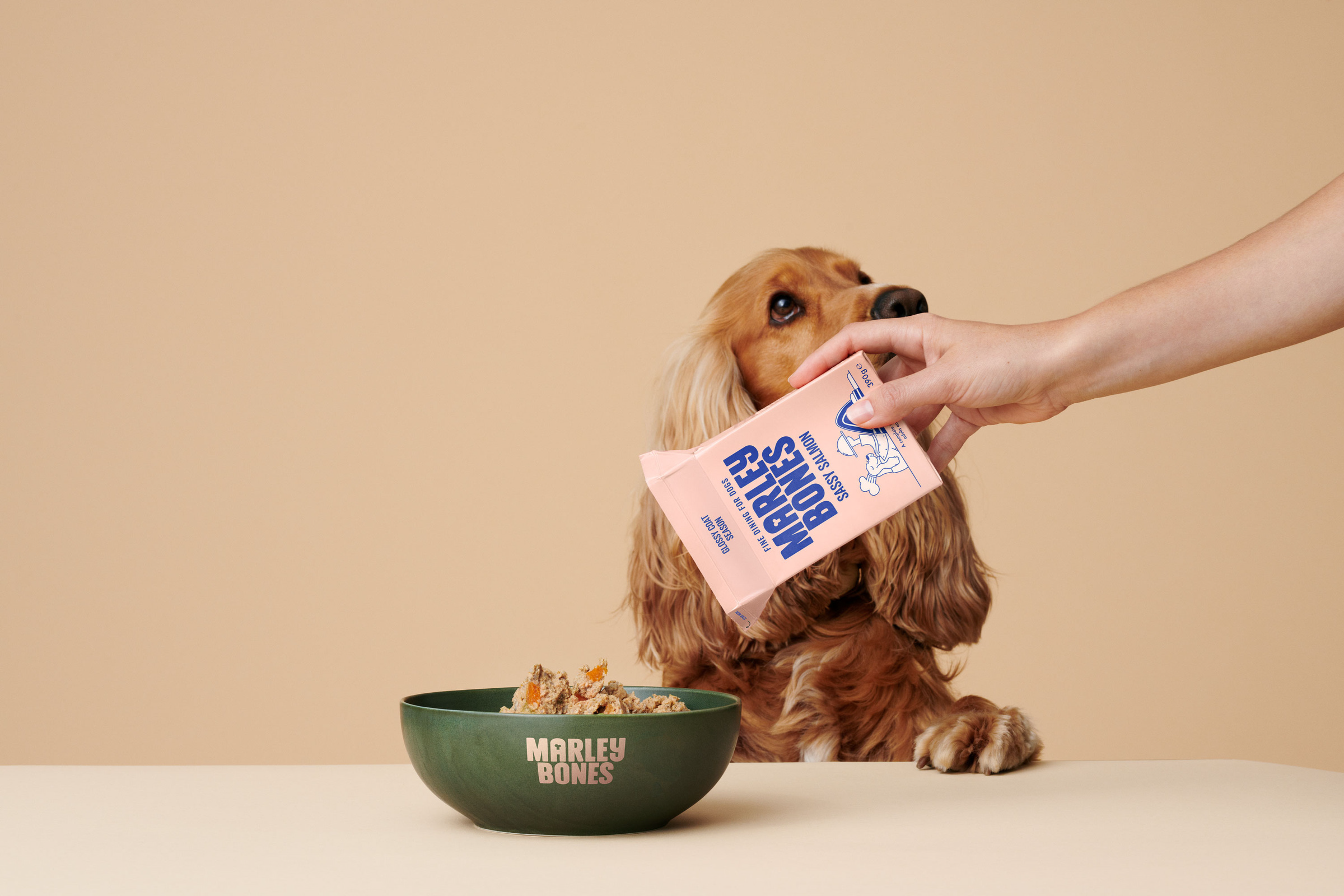
EPA and DHA from oily fish are the most effective dietary support for this coat type. They reduce the low-level skin inflammation that drives excess shedding, support the lipid barrier that keeps the skin from drying out beneath all that fur, and give the outer coat the oils it needs to shed water and stay manageable. A diet built around salmon - like Marleybones Sassy Salmon - delivers these alongside clean lean protein and whole-ingredient nutrition, without the rendered fats and synthetic additives that actively worsen coat condition in sensitive dogs.
Coat condition improvement after a dietary switch typically becomes visible over six to eight weeks. Reduced shedding and improved skin condition usually follow shortly after. If coat deterioration is rapid or accompanied by significant skin symptoms, a vet check is worth doing before attributing it to diet alone.

Freshly prepared British beef, veggies & superfoods
What protein is best for a Norwegian Elkhound?
Salmon is the strongest protein choice for most Norwegian Elkhounds, combining lean, digestible protein with a natural source of EPA and DHA omega-3 fatty acids - nutrients the breed genuinely needs for coat quality and joint support. Lamb is a strong alternative, particularly for dogs already eating fish regularly or those that need a red meat option; it is lower in allergenicity than beef and tends to sit well with dogs that run lean.
Chicken and beef are both widely used in commercial dog food, which means many Elkhounds have eaten them consistently for years. Extended exposure to the same protein increases the risk of developing a sensitivity over time. If your Elkhound has recurring loose stools, skin irritation, or coat dullness on their current food, switching protein source - rather than switching brand - is the more targeted response.
Single-protein meals make it straightforward to assess what the dog tolerates and what it thrives on, without the guesswork of multi-protein recipes. Marleybones Lush Lamb and Sassy Salmon are both single-protein options built around whole, recognisable ingredients with chicory root as a natural prebiotic - useful for any dog transitioning from a heavily processed diet.
How much should I feed a Norwegian Elkhound?
Adult Norwegian Elkhounds typically weigh between 20 and 25kg, but feeding to body condition is more reliable than feeding to target weight. The breed's metabolic efficiency means standard feeding guides - built around average energy expenditure - regularly overshoot what a moderately active household Elkhound actually needs.
Start from the feeding guide on your chosen food, then adjust over six to eight weeks based on body condition rather than treating the initial amount as fixed. A fresh diet will feel more satisfying to the dog than the equivalent calorie count in dry food, which helps on both sides - less hunger-driven scavenging, and easier portion reduction without the dog appearing deprived. Factor in treats honestly; they are easy to undercount in a breed that is good at soliciting them.
Puppies, working dogs, and elderly Elkhounds all have different requirements. Puppies need more calories per kilogram to support growth; older dogs with reduced activity levels need meaningfully less than the adult guide suggests. Transition to any new food gradually over seven to ten days to avoid digestive disruption, regardless of how keen the dog appears to eat it straight away.
Every dog is different - build your personalised Marleybones feeding and health plan tailored to your dog's age, size, and health requirements.
How do different dog food formats compare for Norwegian Elkhounds?
| Format | Moisture content | Processing level | Verdict for Norwegian Elkhounds |
|---|---|---|---|
| Fresh (Pantry Fresh) | 65-75% | Minimal - slow low-temperature cooking | Best option - whole ingredients, supports coat, joints, and weight management |
| Raw | 65-75% | None | Works for some - bacterial load a consideration, requires careful preparation and sourcing |
| Wet / canned | 75-85% | Moderate | Better than kibble - ingredient quality varies widely, check the label carefully |
| Cold pressed | Around 12% | Low - below extrusion temperatures | Reasonable middle ground if fresh is not accessible - better protein quality than extruded kibble |
| Dry kibble | Around 10% | High - high-temperature extrusion | Hardest to digest - low moisture compounds the breed's hydration needs, poorest option overall |
FAQs
How often should I feed my Norwegian Elkhound?
Twice daily is the right approach for adult Norwegian Elkhounds - splitting the daily portion into morning and evening meals is more satiating than one larger feed and better suited to the breed's digestion. Puppies under six months need three to four smaller meals a day to support growth without overloading the gut.
Do Norwegian Elkhounds have sensitive stomachs?
Not as a defining breed trait, but digestive sensitivity does develop in Elkhounds that have eaten the same protein source for extended periods, or that are fed heavily processed food over several years. Switching to a single-protein fresh food typically resolves low-grade digestive symptoms - loose stools, wind, inconsistent appetite - within two to four weeks. If symptoms are severe or persistent, a vet assessment is the right first step before adjusting the diet independently.
Is grain-free food better for Norwegian Elkhounds?
Not automatically. Grains are not inherently problematic for the breed - the issue is high-starch grain used in large quantities as a cheap filler in heavily processed food. Whole grains in minimally processed meals are handled well by most Elkhounds. Grain-free foods that substitute large amounts of peas or lentils are not automatically easier to digest or better for weight management, and the overall ingredient quality matters far more than whether grain is present at all.
Can diet support joint health in Norwegian Elkhounds?
Diet is one of the most practical tools available for joint health in this breed. Norwegian Elkhounds are prone to progressive retinal atrophy and Fanconi syndrome genetically, but musculoskeletal wear - particularly in active or heavier dogs - is the joint concern most directly influenced by what they eat. Omega-3 fatty acids from oily fish reduce systemic inflammation that compounds joint deterioration, and maintaining a healthy body weight reduces the mechanical load on joints significantly. Both are diet-dependent outcomes.
Is Marleybones Pantry Fresh good for Norwegian Elkhounds?
Yes. Marleybones Pantry Fresh meals are vet-developed, contain no artificial preservatives or fillers, and are available in single-protein recipes well suited to a breed where coat quality, joint health, and weight management are all diet-sensitive. Sassy Salmon is the strongest choice for most Norwegian Elkhounds, providing a natural source of EPA and DHA alongside whole ingredients and none of the processed fats that undermine coat condition. With a 4.9/5 Trustpilot rating and over two million meals delivered, it is a practical switch for a breed where food quality shows up clearly in everyday health.
How do I know if my Elkhound's diet needs changing?
The clearest signals are coat condition, body weight, and digestive consistency. A coat that is dull or shedding heavily outside seasonal moults, a waistline that has disappeared, or persistent loose stools are all practical indicators that the current diet is not meeting the breed's needs. Changes to a better-quality diet typically produce visible improvements within four to eight weeks - coat condition and digestion respond fastest, weight management takes longer to assess accurately.
Should I add supplements to my Norwegian Elkhound's diet?
A nutritionally complete fresh diet built around oily fish covers most of what Norwegian Elkhounds need without supplementation. Where joint support is a priority - particularly in older or more heavily built dogs - an additional omega-3 source is a well-evidenced option. If the base diet is already salmon-based, the overall dietary picture matters more than adding individual supplements to an otherwise poor-quality food.

Freshly prepared British chicken, veggies & superfoods


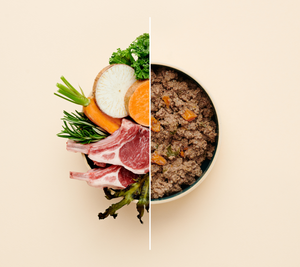 Give your dog the quality nutrition they deserve
Real meat, wholesome veggies and functional superfoods.
Get 40% OFF today