

 Vet reviewed
What is the best dog food for a Kerry Blue Terrier?

At a glance
- Kerry Blue Terriers do best on fresh, whole-ingredient food built around a high-quality protein - the breed's active muscle mass and skin sensitivity make ingredient quality and nutritional completeness both worth getting right.
- Chicken and beef are the proteins most likely to cause sensitivity in Kerry Blues that have eaten them consistently - lamb and salmon are stronger starting points for dogs with recurring skin irritation or digestive trouble.
- Omega-3 fatty acids from oily fish are the most practical dietary support for the Kerry's distinctive blue coat and the skin underneath it, which reacts visibly when the diet is poor.
- Kerry Blue Terriers are muscular, energetic dogs that carry condition well - portion control matters to avoid gradual weight gain, particularly in middle-aged dogs whose activity level drops before their appetite does.
- Fresh food with 65–75% moisture content supports digestion and coat health in a way that dry kibble, at around 10% moisture, simply cannot match.
What is the best diet for a Kerry Blue Terrier?
Fresh, whole-ingredient food built around a named protein source is the most appropriate diet for most Kerry Blue Terriers. The breed is athletic and solidly built, with a distinctive soft coat that reflects nutritional status directly - dull, dry, or irritated skin in a Kerry Blue is one of the clearest signs that the current food is falling short.
Heavily processed dry kibble goes through high-temperature extrusion that degrades protein quality and strips moisture, leaving around 10% water content in the finished product. For an active breed with a coat as distinctive as the Kerry Blue's, fresh food cooked at lower temperatures preserves the protein structure and fat quality the body actually uses, and the higher moisture content supports both digestion and skin condition from the inside out.
The practical checklist for a good Kerry Blue diet is: a named protein you can read on the label, natural omega-3 fatty acids for coat and skin support, no artificial preservatives or fillers, and portions matched to actual activity level rather than the maximum on the packaging. Marleybones Pantry Fresh meals are vet-developed, slow-cooked from whole ingredients inside the sealed pack, and contain no artificial additives - a strong fit for a breed where what goes in shows up clearly on the outside.
Why does the Kerry Blue Terrier's coat depend so heavily on diet?
The Kerry Blue's coat is its most recognisable feature - a dense, wavy, blue-grey coat that develops fully by around 18 months and requires genuine nutritional backing to stay in good condition. The skin underneath it tends toward sensitivity, and reactions show up quickly as dryness, flaking, or persistent itching when the diet is missing key nutrients or contains ingredients the dog reacts to.
Omega-3 fatty acids, particularly EPA and DHA from oily fish, are the most direct dietary support for both the coat and the skin barrier. They reduce systemic inflammation, maintain the lipid layer that keeps skin supple, and give the coat the oils it needs to stay soft and manageable. A food that delivers these through a whole ingredient - salmon, for instance - rather than through a synthetic additive sprayed onto the surface of processed kibble makes a more consistent and measurable difference.
Artificial preservatives, low-quality rendered fats, and cheap starch fillers are the most common dietary contributors to skin reactions in Kerry Blues. If your dog is scratching persistently, losing coat gloss, or developing hot spots, the ingredient list on the current food is the first place to look - not the shampoo.
Do Kerry Blue Terriers have sensitive digestion?
Kerry Blues are not as universally sensitive as some other breeds, but the digestive system does react when ingredient quality is poor or when a protein has been eaten long enough to build a sensitivity. Many owners feed the same chicken-based food for years without incident, then find the dog developing loose stools, wind, or itching - at which point the protein, rather than the brand, is usually the issue worth addressing.
Switching to a novel protein is frequently more effective than switching between kibble brands when digestive symptoms appear. Fresh food places a significantly lower processing load on the gut than extruded dry food, and the improvement in stool quality and digestive comfort is often noticeable within two to three weeks of the switch.
If digestive symptoms include blood in the stool, significant weight loss, or repeated vomiting, see a vet before adjusting the food further. Some conditions need clinical investigation rather than a dietary change alone.

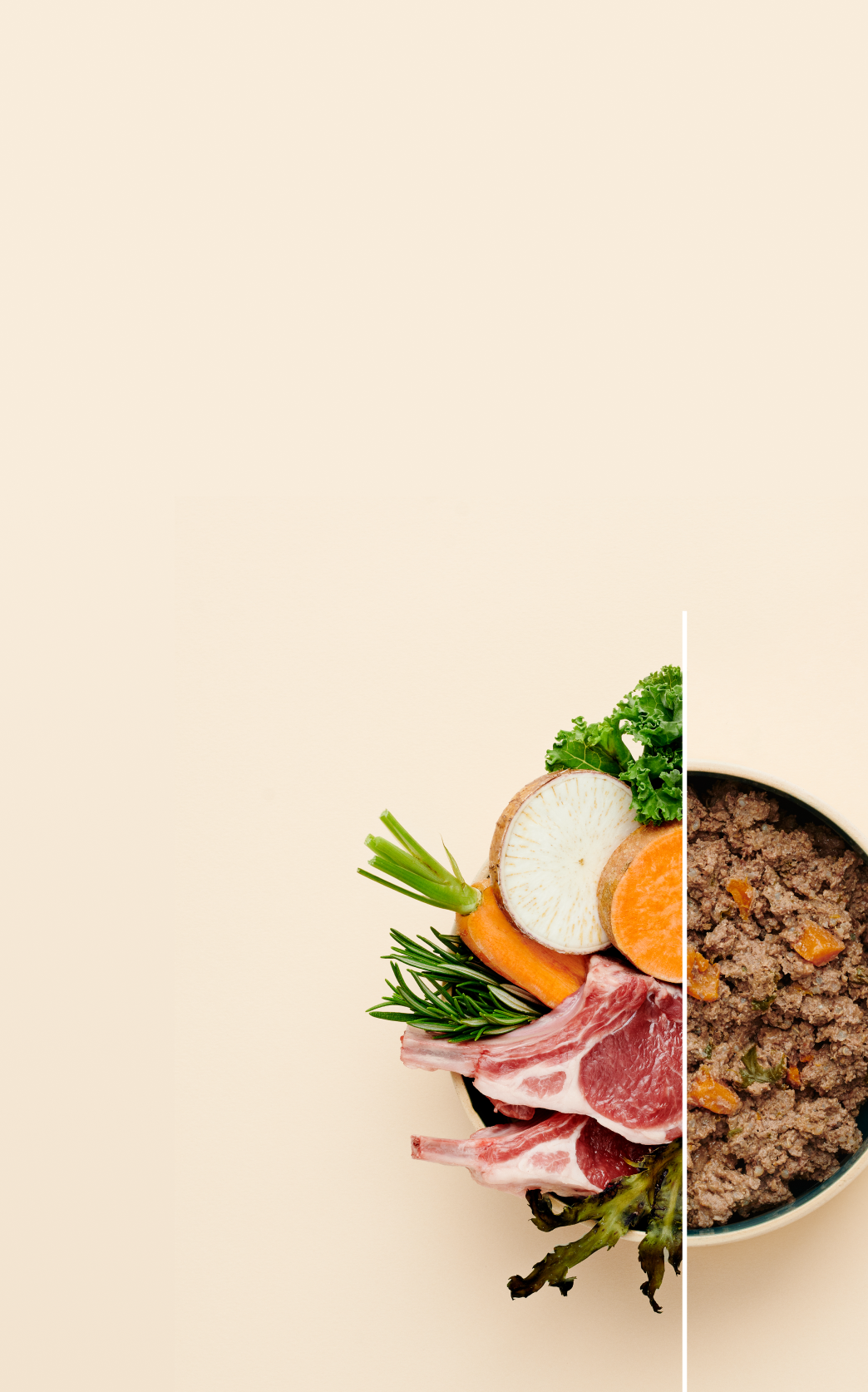
Freshly prepared British beef, veggies & superfoods
What protein is best for a Kerry Blue Terrier?
Lamb and salmon are the strongest starting points for Kerry Blues, particularly those with any history of skin sensitivity or digestive upset. Both are lower-allergenicity proteins that the breed handles well, and neither is as commonly overused in commercial dog food as chicken or beef, which means fewer dogs arrive at them having already built a sensitivity.
Salmon is the strongest overall choice for this breed specifically - it delivers clean protein alongside EPA and DHA omega-3 fatty acids that directly address the skin and coat issues Kerry Blues are prone to. Lamb suits dogs that need a red meat option or have already been eating fish regularly; it sits well with a reactive gut and provides good iron and amino acid profiles for an active, muscular breed.
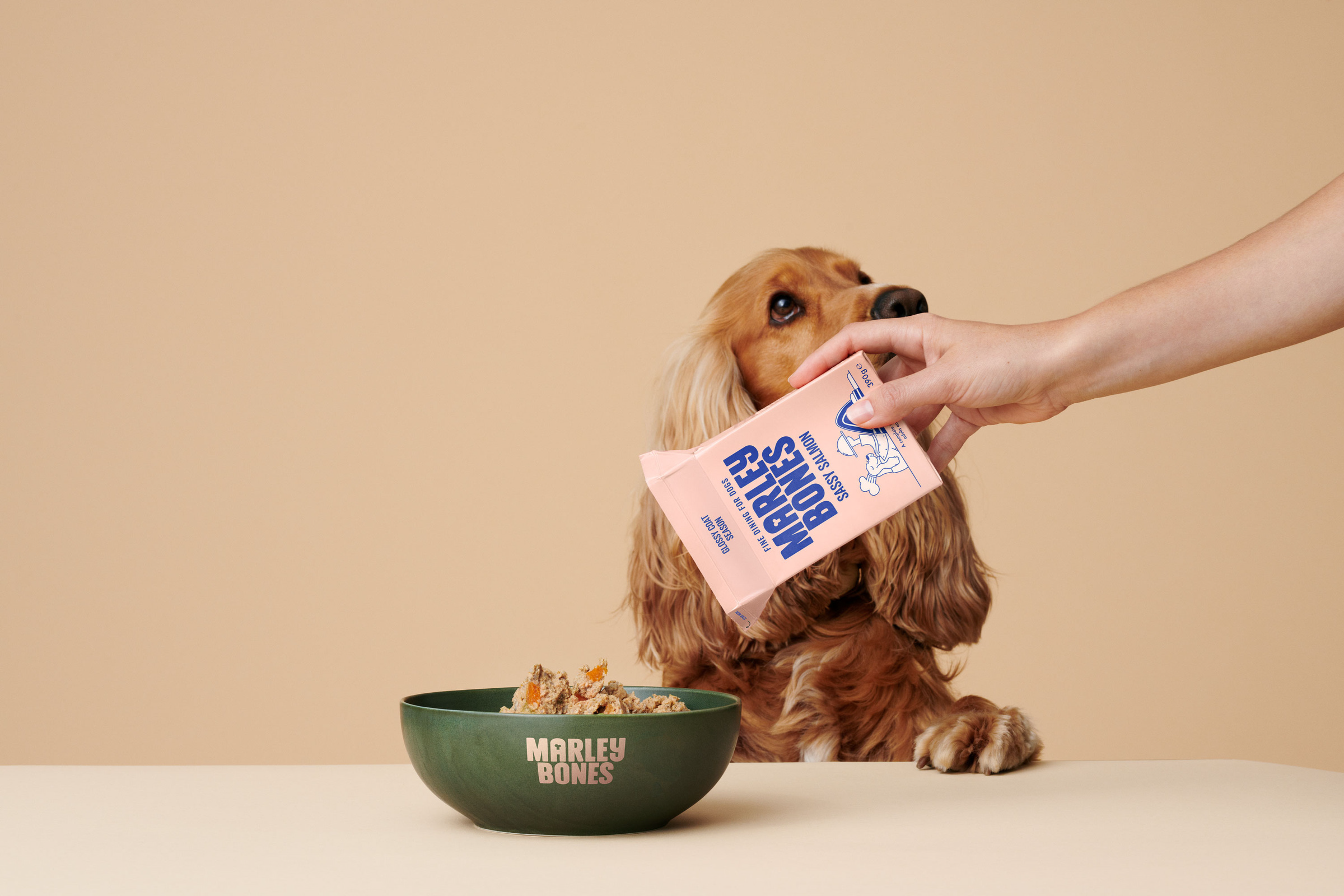
Single-protein meals make it straightforward to confirm what the dog tolerates without the guesswork of multi-protein recipes. Marleybones Sassy Salmon and Lush Lamb are both single-protein recipes built around whole, identifiable ingredients, with chicory root as a natural prebiotic to support gut stability - useful for any dog coming off a heavily processed diet.
How much should I feed a Kerry Blue Terrier?
Adult Kerry Blue Terriers typically weigh between 15 and 18kg, but body condition tells you more than the scales. Ribs should be easily felt without pressing, and a waist should be visible from above. If the dog is carrying extra weight through the middle, the daily portion needs reducing before the problem becomes entrenched.
Kerry Blues are an active working terrier breed, but activity level varies considerably between dogs kept as working dogs, regular walkers, and those with a quieter home routine. Feeding guides on packaging assume a broadly average activity level - adjust in either direction based on what your specific dog actually does each day, and review portion sizes every few months as the dog ages and activity naturally decreases.
Treats count toward the daily calorie total, which matters with a breed that trains willingly and is often rewarded frequently. Factor them in rather than treating them as extras. Owners switching from kibble to fresh food often find they can reduce the nominal calorie count without their dog appearing hungry, because higher moisture content is more satiating per calorie than dry food.
Every dog is different - build your personalised Marleybones feeding and health plan tailored to your dog's age, size, and health requirements.
How do different dog food formats compare for Kerry Blue Terriers?
| Format | Moisture content | Processing level | Verdict for Kerry Blue Terriers |
|---|---|---|---|
| Fresh (Pantry Fresh) | 65–75% | Minimal - slow low-temperature cooking | Best option - whole ingredients, supports coat, skin, and digestion |
| Raw | 65–75% | None | Works for some - bacterial load a consideration, preparation and storage required |
| Wet / canned | 75–85% | Moderate | Better than kibble - ingredient quality varies widely, check the label |
| Cold pressed | Around 12% | Low - below extrusion temperatures | A reasonable middle ground if fresh is not accessible |
| Dry kibble | Around 10% | High - high-temperature extrusion | Hardest to digest - lowest moisture, worst option for coat and skin health |
FAQs
How often should I feed my Kerry Blue Terrier?
Twice daily is the right approach for adult Kerry Blues - morning and evening in roughly equal portions. A single large meal is harder on the digestive system and less satiating across the day. Kerry Blue puppies under six months need three to four smaller meals spread through the day to support healthy growth without overloading their developing digestion.
Is grain-free food better for Kerry Blue Terriers?
Not automatically. The issue in most dogs reacting to processed food is not grain itself but the volume and quality of grain used as a cheap filler in heavily processed recipes. A Kerry Blue that reacts to wheat in low-quality kibble may tolerate whole oats or brown rice in a fresh, minimally processed meal without any difficulty. Grain-free foods that substitute large quantities of peas or lentils for grain are not automatically easier to digest and bring their own nutritional considerations.
Can diet help with the skin conditions Kerry Blue Terriers are prone to?
Diet is one of the most practical levers available for managing skin sensitivity in Kerry Blues. Removing artificial additives, switching to a novel protein, and ensuring the food contains a genuine source of omega-3 fatty acids addresses the three most common dietary contributors to skin reactions. Improvement typically takes six to eight weeks to show clearly in coat and skin condition - allow enough time before concluding a dietary change has not worked.
Is Marleybones Pantry Fresh good for Kerry Blue Terriers?
Yes. Marleybones Pantry Fresh meals are vet-developed, contain no artificial preservatives or fillers, and are available in single-protein recipes well-suited to a breed prone to skin sensitivity and coat-related nutritional needs. Sassy Salmon is the strongest choice for Kerry Blues specifically, providing whole salmon as a natural source of EPA and DHA omega-3 fatty acids alongside clean ingredients the gut handles well. Loved by 9 in 10 fussy dogs, with over 2,000,000 meals delivered, it is one of the most straightforward dietary switches for a breed where coat and skin condition reflects food quality so directly.
How long before I see a difference after switching my Kerry Blue's food?
Digestion and stool quality tend to improve within two to four weeks of switching to a higher-quality diet. Coat gloss and skin condition typically take six to eight weeks to show meaningful change, because the skin and coat cycle takes time to respond to improved nutrition. Weight changes are best assessed over eight to twelve weeks on a consistent portion. If there is no improvement after four weeks of a consistent dietary change, a vet assessment is the right next step to rule out non-dietary causes.
Do Kerry Blue Terriers need supplements alongside their food?
A nutritionally complete fresh food fed at the right portion size should not require additional supplementation for most healthy adult Kerry Blues. Where coat and skin support is a priority, a food that naturally provides omega-3 fatty acids through whole oily fish is preferable to relying on supplements added to an otherwise poor-quality diet. If a dog has a specific joint, dental, or gut health concern, a targeted supplement alongside a complete diet is a reasonable approach - but food quality comes first.
My Kerry Blue Terrier is a picky eater - will they eat fresh food?
Kerry Blues are typically enthusiastic eaters rather than fussy ones, but dogs that have been fed the same dry food for a long time sometimes take a short period to adjust to a change in format and texture. Fresh food is considerably more palatable than dry kibble - the aroma, moisture, and texture make it more immediately appealing to most dogs. Transitioning gradually over seven to ten days avoids digestive upset from the switch, even if the dog shows every sign of wanting to eat the new food immediately.

Freshly prepared British chicken, veggies & superfoods


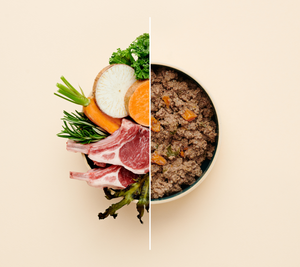 Give your dog the quality nutrition they deserve
Real meat, wholesome veggies and functional superfoods.
Get 30% off: Take the quiz