








 Vet reviewed
What’s the best dog food for an Irish Red and White Setter?

At a glance
- Irish Red and White Setters thrive on fresh, whole-ingredient food built around a high-quality animal protein - the breed's deep chest and high activity level make both digestive efficiency and caloric balance genuinely important to get right.
- Salmon and lamb are the strongest protein starting points for Irish Red and White Setters, particularly dogs with any history of skin sensitivity or digestive irregularity after years on chicken or beef.
- Fresh food with 65-75% moisture content supports this breed's digestion and helps maintain the silky, feathered coat the breed is known for - dry kibble's 10% moisture delivers neither benefit.
- Bloat (gastric dilatation-volvulus) is a serious risk in deep-chested breeds - meal timing, portion splitting, and avoiding exercise immediately after eating are practical dietary steps that reduce that risk.
- Omega-3 fatty acids from oily fish directly support the skin and coat health of Irish Red and White Setters, and are most effective when delivered as a whole food ingredient rather than a synthetic top-up.
What is the best diet for an Irish Red and White Setter?
Fresh dog food built around a single, high-quality animal protein with minimal processing and no artificial additives is the most appropriate diet for most Irish Red and White Setters. The breed is energetic, deep-chested, and carries a longer feathered coat that reflects nutritional status clearly - food quality and feeding routine both matter.
Heavily processed dry kibble sits at around 10% moisture and is produced through high-temperature extrusion that degrades protein quality and strips natural fats. For an active, large-framed breed already at elevated risk of digestive issues, that processing load is an unnecessary burden. Fresh food cooked at lower temperatures retains more of its natural nutritional integrity, is significantly easier on the digestive system, and delivers the moisture content and dietary fat this breed needs to keep its coat and energy in good condition.
The practical checklist for a good Irish Red and White Setter food is: a named animal protein you can read on the label, a genuine source of omega-3 fatty acids for coat and skin support, no artificial preservatives or fillers, and a portion and meal-timing routine that accounts for bloat risk. Marleybones Pantry Fresh meals are vet-developed, built from whole ingredients slow-cooked in-pack, and free from artificial additives - a practical match for a breed where ingredient quality and feeding discipline both show up in how the dog looks and feels.
What should Irish Red and White Setter owners know about bloat?
A fresh, easily digestible diet and a consistent feeding routine are the most practical dietary tools for reducing bloat risk in this breed. Gastric dilatation-volvulus (GDV) is a life-threatening condition in which the stomach fills with gas and twists - deep-chested breeds like Irish Red and White Setters are structurally more susceptible than most, and diet and feeding habits play a meaningful role in risk reduction.
Splitting the daily food allowance into two meals rather than one large feed is the most important practical step. Feeding from a raised bowl is sometimes recommended but the evidence is mixed - the clearest guidance is to avoid vigorous exercise for at least an hour before and after meals. Feeding a highly digestible, low-fermentation diet also reduces the gas load in the stomach. Fresh, minimally processed food with whole ingredients produces less fermentation in the gut than starch-heavy kibble, which is a meaningful practical difference for this breed.
GDV is a veterinary emergency. If your dog shows a distended abdomen, unproductive retching, or signs of distress after eating, seek emergency veterinary care immediately - this is not a condition that resolves on its own.
Do Irish Red and White Setters have sensitive digestion?
Digestive sensitivity is not universal in the breed, but the combination of a deep chest, high energy output, and a working dog's appetite means that what and how they are fed has a more direct impact on digestive health than it does in less physically active breeds. High-starch kibble ferments more readily in the gut, producing gas and loose stools that owners sometimes normalise as just how their dog digests food.
Irish Red and White Setters that have eaten the same chicken or beef-based food for extended periods can develop a sensitivity to those proteins over time. When digestive symptoms appear - recurring loose stools, wind, or intermittent vomiting - switching protein source is often more effective than switching brand. A novel protein the dog has not eaten regularly gives the gut a clean start without the accumulated immune response.
If digestive symptoms include blood in stools, significant weight loss, or persist beyond four weeks of a consistent dietary change, a vet assessment is the right step before continuing to adjust the food.

Freshly prepared British beef, veggies & superfoods
What protein is best for an Irish Red and White Setter?
Salmon and lamb are the strongest protein starting points for most Irish Red and White Setters - particularly any dog currently eating chicken or beef, or one with a history of recurring skin or digestive issues. Proteins the dog has not eaten regularly are less likely to trigger a sensitivity response, because no repeated exposure has had time to build one.
Salmon is the most nutritionally complete choice for this breed specifically, providing clean protein alongside EPA and DHA omega-3 fatty acids that directly support the skin barrier and the coat's natural oils. For a breed with a feathered coat prone to dullness when dietary fat is inadequate, that dual benefit makes salmon a genuinely practical choice rather than just a novel option. Marleybones Sassy Salmon delivers both in a single-protein fresh meal with no artificial additives and chicory root as a natural prebiotic for gut support.
Lamb is the stronger choice for dogs that have already eaten fish regularly, or those that need a red meat option. It is lower in allergenicity than beef, sits well with reactive guts, and provides the iron and amino acid profile a working-type breed benefits from. Single-protein meals are the most reliable format for any dog with a history of sensitivity, making it straightforward to identify what the dog tolerates without the guesswork of a multi-protein recipe.
How much should I feed an Irish Red and White Setter?
Adult Irish Red and White Setters typically weigh between 25 and 34kg, but body condition is a more reliable guide than the scales. You should be able to feel the ribs without pressing, and see a clear waist tuck when looking from above. If neither is visible, the daily portion needs reducing regardless of what the packaging suggests.
Feeding guides are a starting point. Fresh food is more satiating than the equivalent calorie count in dry kibble because the higher moisture content occupies more stomach volume - most owners transitioning from kibble find they can reduce the nominal calorie count without their dog appearing unsatisfied. For this breed specifically, splitting the daily allowance into two equal meals is both a weight management tool and a bloat-risk reduction measure - it is worth doing regardless of the food format.
Factor in treats when calculating daily intake, and adjust portions based on activity level. An Irish Red and White Setter in regular working or field exercise burns considerably more than a dog on lead walks alone, and the daily allowance should reflect that. Reassess body condition every six to eight weeks rather than treating the initial portion as fixed.
Every dog is different - build your personalised Marleybones feeding and health plan tailored to your dog's age, size, and health requirements.
How do different dog food formats compare for Irish Red and White Setters?
| Format | Moisture content | Processing level | Verdict for Irish Red and White Setters |
|---|---|---|---|
| Fresh (Pantry Fresh) | 65-75% | Minimal - slow low-temperature cooking | Best option - whole ingredients, supports digestion, coat health, and suits bloat-risk feeding routine |
| Raw | 65-75% | None | Works for some - bacterial load a consideration for households with children or immunocompromised adults; preparation discipline required |
| Wet / canned | 75-85% | Moderate | Better than kibble - ingredient quality varies widely; check the label and avoid high-starch recipes |
| Cold pressed | Around 12% | Low - below extrusion temperatures | A reasonable middle ground - better protein integrity than kibble but still low moisture for a large active breed |
| Dry kibble | Around 10% | High - high-temperature extrusion | Hardest to digest - high starch content increases gut fermentation, a specific concern for a deep-chested breed |
FAQs
How often should I feed my Irish Red and White Setter?
Twice daily, in two roughly equal portions, morning and evening. One large daily meal increases the risk of gastric dilatation-volvulus in deep-chested breeds and is harder for the digestive system to process efficiently. Splitting the daily allowance into two meals is one of the most straightforward practical steps an owner can take to reduce bloat risk in this breed.
Why does my Irish Red and White Setter's coat look dull despite regular grooming?
A dull or dry coat in Irish Red and White Setters is most commonly a dietary issue rather than a grooming one. The breed's long, feathered coat needs dietary fat - specifically omega-3 fatty acids from oily fish - to stay soft, glossy, and well-conditioned. If the current food lacks a quality fat source, no amount of brushing compensates. Switching to a diet with salmon or a genuine omega-3 source typically produces visible coat improvement within six to eight weeks.
Is grain-free food better for Irish Red and White Setters?
Not automatically. Grains are not inherently problematic - the issue is the quantity and quality of grain used as a cheap bulking agent in heavily processed food. A dog reacting to the wheat in low-quality kibble may tolerate whole oats or brown rice in a minimally processed meal without any problem. Grain-free foods that replace cereal with large quantities of peas or lentils are not automatically easier to digest and carry their own nutritional considerations, particularly for a large, active breed.
Is Marleybones Pantry Fresh good for Irish Red and White Setters?
Yes. Marleybones Pantry Fresh meals are vet-developed, free from artificial preservatives and fillers, and available in single-protein recipes that suit a breed with a tendency toward digestive sensitivity and skin reactions. Sassy Salmon is the strongest choice for most Irish Red and White Setters, providing a natural source of EPA and DHA omega-3 fatty acids alongside whole ingredients the gut handles easily - with no high-starch fillers that increase fermentation in a deep-chested breed. Rated 4.9/5 on Trustpilot and loved by 9 in 10 fussy dogs, Pantry Fresh is one of the most practical dietary upgrades available for this breed.
Can diet help with an Irish Red and White Setter's joint health as they age?
Diet supports joint health meaningfully in large, active breeds as they age. Omega-3 fatty acids reduce systemic inflammation, which directly benefits joint comfort - this is one more reason salmon is a strong protein choice for this breed. Maintaining a healthy body weight through portion discipline is equally important; excess weight places disproportionate load on joints. For dogs showing early stiffness, a targeted joint supplement alongside a quality diet is worth discussing with a vet.
How do I transition my Irish Red and White Setter to a new food?
Transition gradually over seven to ten days, starting with roughly 25% new food mixed with 75% existing food and shifting the ratio every two to three days. Irish Red and White Setters are not typically fussy eaters, so palatability is rarely the challenge - the transition period is about giving the gut microbiome time to adjust without producing loose stools or wind from an abrupt switch. Even if your dog seems keen to eat the new food immediately, a gradual transition produces a smoother outcome.
Does an Irish Red and White Setter's working background affect their nutritional needs?
Yes, meaningfully. The breed was developed as a hunting and field dog, and those in regular working or field exercise have significantly higher caloric needs than pet dogs on daily walks. Active working dogs need more protein and fat to sustain energy and support muscle recovery, while a lightly exercised pet on the same portion risks putting on weight. Body condition assessment every six to eight weeks is the most reliable way to calibrate portions to actual activity level rather than relying on packaging guidelines alone.

Freshly prepared British chicken, veggies & superfoods


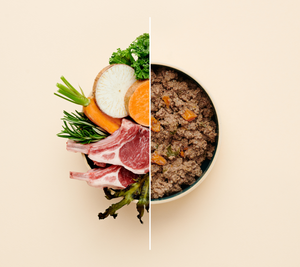 Give your dog the quality nutrition they deserve
Real meat, wholesome veggies and functional superfoods.
Get 30% off: Take the quiz