


 Vet reviewed
What’s the best dog food for Great Pyrenees?

At a glance
- Great Pyrenees do best on fresh, whole-ingredient food built around a quality protein - the breed's large frame, slow metabolism, and joint load make ingredient quality and portion discipline both essential from an early age.
- Bloat is a genuine risk in deep-chested breeds like the Great Pyrenees - food format, feeding frequency, and meal size all influence digestive safety in ways that make how you feed as important as what you feed.
- Bone and joint support starts at the bowl - a diet with natural sources of omega-3 fatty acids and clean, bioavailable protein reduces the inflammatory load on joints that carry significant weight throughout this breed's life.
- Great Pyrenees are easy keepers with a low calorie requirement relative to their size - overfeeding is the most common dietary mistake, and excess weight compounds joint stress significantly in a breed already carrying a heavy frame.
- Coat quality in the Great Pyrenees is directly tied to dietary fat - the breed's dense double coat needs a consistent supply of omega-3 fatty acids and named animal fats to stay clean, soft, and manageable.
What is the best diet for a Great Pyrenees?
Fresh, minimally processed food built around a quality protein source and natural anti-inflammatory ingredients is the most appropriate diet for most Great Pyrenees. The breed is large, slow-moving by nature, and prone to the joint conditions and digestive risks that come with a deep chest and heavy frame. That combination makes ingredient quality, portion control, and feeding practice all worth getting right from the start.
Heavily processed dry kibble places a high load on the digestive system and delivers around 10% moisture - a significant contrast to the 65-75% found in fresh dog food. For a deep-chested breed where digestive function and gut motility are directly relevant to bloat risk, reducing the processing load and improving ingredient quality is a meaningful practical step rather than a marginal one.
The practical checklist for a good Great Pyrenees food is: a named protein source you can read on the label, natural sources of omega-3 fatty acids for joint and coat support, no artificial preservatives or fillers, and tightly controlled portions to keep weight from creeping up on a breed that does not need many calories to maintain its size. Marleybones Pantry Fresh meals are vet-developed recipes slow-cooked from whole ingredients, with no artificial additives, and well-suited to a breed where long-term joint health and digestive comfort are the primary dietary concerns.
How does bloat risk affect how you feed a Great Pyrenees?
Raised bowls, single large meals, and feeding immediately before or after exercise are the three most commonly cited risk factors for bloat in deep-chested breeds, and the Great Pyrenees qualifies on all counts as a breed that warrants careful feeding practice. Splitting the daily ration into two meals rather than one reduces the volume of food and air entering the stomach at any one time, and a rest period of at least an hour either side of feeding is a sensible routine to establish.
Food format plays a role too. Highly fermentable ingredients - large quantities of cheap grain fillers, legumes used as protein replacements, or heavily processed starches - produce more gas in the digestive tract than whole, minimally processed ingredients. A food built from recognisable whole ingredients with a lower fermentation potential is a more appropriate choice for this breed than a high-starch dry food, irrespective of any other nutritional consideration.
Bloat that progresses to gastric dilatation-volvulus (GDV) is a veterinary emergency. If your Great Pyrenees shows signs of a distended abdomen, unproductive retching, or acute distress after eating, contact a vet immediately. Dietary management reduces risk but does not eliminate it, and no food choice is a substitute for prompt veterinary attention if symptoms appear.
What should I feed a Great Pyrenees for joint health?
A diet with natural omega-3 fatty acids, clean bioavailable protein, and a carefully controlled calorie intake does more for Great Pyrenees joints than any supplement added to a nutritionally poor base food. The breed carries significant weight across its musculoskeletal system throughout its life, and the inflammatory load on those joints is directly influenced by what goes into the bowl.
Omega-3 fatty acids - specifically EPA and DHA from oily fish - reduce systemic inflammation and support the cartilage and connective tissue that cushion weight-bearing joints. A food that includes oily fish as a whole ingredient delivers these more reliably than synthetic omega-3 additives sprayed onto processed food. For Great Pyrenees already showing stiffness or reduced mobility, a dedicated joint health supplement alongside a quality fresh diet gives additional targeted support.
Weight management is the other half of the joint equation. Every kilogram of excess weight translates to several times that load on the joints during movement. For a breed that already carries a large frame, keeping body condition lean is one of the most impactful things an owner can do for long-term joint health - more so than any single ingredient.

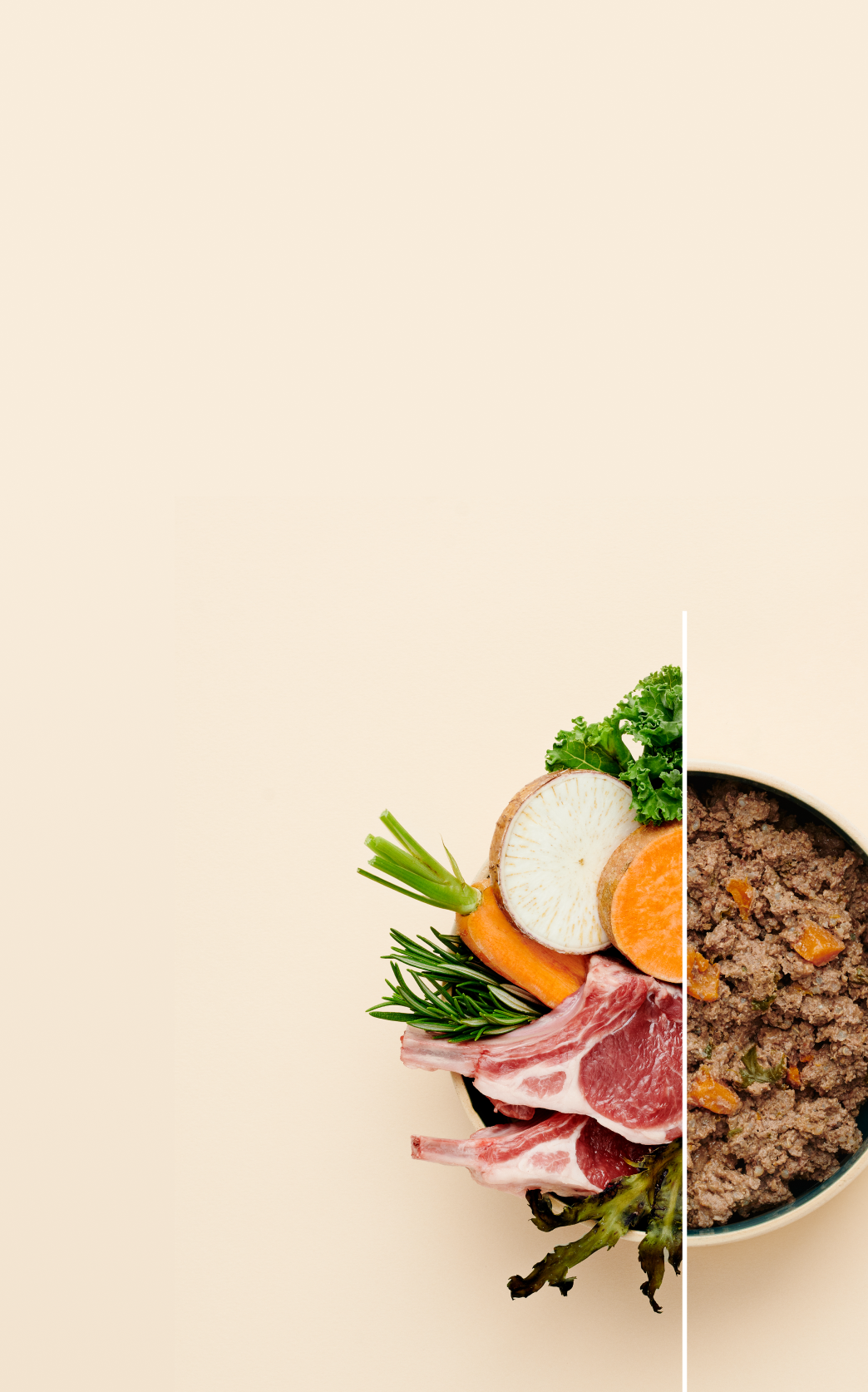
Freshly prepared British beef, veggies & superfoods
What protein is best for a Great Pyrenees?
Salmon and lamb are the strongest protein choices for most Great Pyrenees. Salmon provides clean protein alongside EPA and DHA omega-3 fatty acids that directly address the joint inflammation this breed is prone to, making it the most nutritionally targeted single choice for the breed. Lamb is a strong alternative for dogs that need a red meat option - it is lower allergenicity than beef and tends to sit well with dogs that benefit from a digestible, clean protein source.
Chicken and beef are not problematic by nature, but they are the proteins most commonly found in standard dog foods, which means dogs fed them for extended periods are most likely to develop a sensitivity over time. For a breed as long-lived as the Great Pyrenees - typically 10 to 12 years - rotating proteins or choosing a novel starting point reduces that risk over the long term.
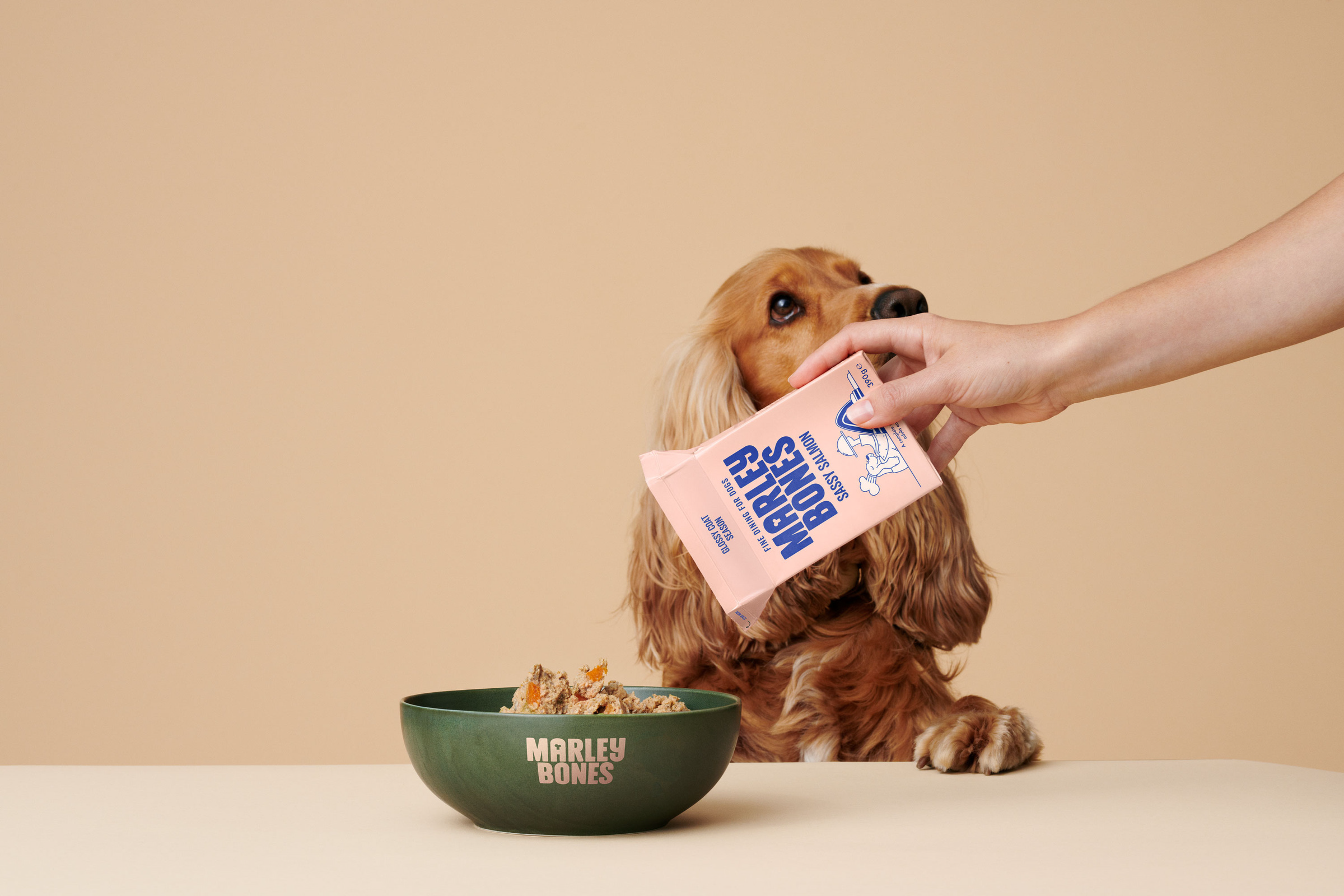
Single-protein meals are the most straightforward choice for identifying what a dog tolerates well, and they simplify any future elimination process if digestive or skin issues emerge. Marleybones Sassy Salmon and Lush Lamb are both built around whole, identifiable ingredients with chicory root as a natural prebiotic - giving the gut additional support alongside the primary protein benefit.
How much should I feed a Great Pyrenees?
An adult Great Pyrenees typically weighs between 38 and 54kg, but the breed's daily calorie requirement is lower than that size suggests. Great Pyrenees were bred as livestock guardian dogs - calm, energy-efficient, and built for endurance rather than high activity. That metabolism means they need less food relative to their body weight than more active large breeds, and overfeeding is consistently the more common error.
Body condition is the most reliable guide. You should be able to feel the ribs with light pressure but not see them, and there should be a visible waist when looking down from above. If the waist is absent or the ribs are difficult to locate, the daily portion needs reducing. Given how slowly Great Pyrenees put on and take off weight, adjusting portions gradually and reassessing over six to eight weeks gives a more accurate picture than making large changes and expecting fast results.
Treats add up quickly in a breed whose daily calorie allowance is already modest. Factor them into the daily total rather than treating them as separate from the main diet, and use portion-appropriate options rather than large chews or high-calorie training treats given freely.
Every dog is different - build your personalised Marleybones feeding and health plan tailored to your dog's age, size, and health requirements.How do different dog food formats compare for Great Pyrenees?
| Format | Moisture content | Processing level | Verdict for Great Pyrenees |
|---|---|---|---|
| Fresh (Pantry Fresh) | 65-75% | Minimal - slow low-temperature cooking | Best option - whole ingredients, lower fermentation load, supports joints and coat |
| Raw | 65-75% | None | Works for some - portion accuracy at this size is critical; bacterial handling requires care |
| Wet / canned | 75-85% | Moderate | Better than kibble - ingredient quality varies widely; check for cheap fillers |
| Cold pressed | Around 12% | Low - below extrusion temperatures | Reasonable middle ground where fresh is not accessible; lower starch than kibble |
| Dry kibble | Around 10% | High - high-temperature extrusion | Hardest to digest - high starch content and low moisture are a poor combination for this breed |
FAQs
How often should I feed my Great Pyrenees?
Twice daily is the standard for adult Great Pyrenees, splitting the daily ration into morning and evening meals of roughly equal size. A single large meal is a risk factor for bloat in deep-chested breeds, so two smaller meals are a straightforward and meaningful safety measure. Maintain a rest period of at least an hour either side of feeding and avoid vigorous exercise immediately after meals.
Do Great Pyrenees have sensitive stomachs?
The breed is not categorically known for digestive sensitivity, but the deep-chested anatomy that creates bloat risk means gut health and digestive comfort are worth managing proactively. Highly fermentable ingredients, large meal volumes, and heavily processed starches all place unnecessary load on the digestive system of a breed already predisposed to gas accumulation. A fresh, whole-ingredient diet with a lower fermentation potential is a sensible baseline choice irrespective of whether symptoms are present.
Is grain-free food better for a Great Pyrenees?
Not automatically. Grains are not inherently problematic, and the concern about grain-free diets replacing grain with large quantities of legumes - peas, lentils, chickpeas - is worth noting, particularly given ongoing research into the relationship between high-legume diets and dilated cardiomyopathy in large breeds. A Great Pyrenees does better on a minimally processed food with moderate, whole-food carbohydrates than on a heavily processed grain-free food where legumes make up the bulk of the carbohydrate fraction.
Is Marleybones Pantry Fresh good for Great Pyrenees?
Yes. Marleybones Pantry Fresh meals are vet-developed, contain no artificial preservatives or fillers, and are built from whole, recognisable ingredients that support the joint health, digestive comfort, and coat condition this breed needs throughout its life. Sassy Salmon is the strongest choice for Great Pyrenees, providing natural EPA and DHA omega-3 fatty acids alongside clean protein in a single-protein recipe. Loved by 9 in 10 fussy dogs, with over 2,000,000 meals delivered, it is one of the most practical changes an owner can make for a breed where long-term joint and digestive health are the primary dietary concerns.
How do I manage my Great Pyrenees's weight without leaving them hungry?
Fresh food is more satiating than the equivalent calorie count in dry kibble because the higher moisture content occupies more volume in the stomach. Most owners switching from kibble find their dog is satisfied on a lower nominal calorie intake, which helps with weight management in a breed where the daily calorie allowance is modest. Splitting the daily ration into two meals, using lower-calorie vegetables as occasional extras, and accounting for treats in the daily total are the most practical levers for keeping a Great Pyrenees lean without the dog appearing unsatisfied.
When should I switch my Great Pyrenees from puppy to adult food?
Great Pyrenees are a giant breed and reach skeletal maturity later than smaller dogs - typically between 18 and 24 months. Puppy foods for giant breeds should be formulated for controlled growth, with calcium and phosphorus levels appropriate for large breed development rather than the higher levels found in standard puppy foods. Switching to an adult diet before skeletal maturity is complete can shortchange the developmental window; equally, staying on a high-energy puppy food too long contributes to excess growth rate, which places stress on developing joints.
Does diet affect the Great Pyrenees's coat?
Directly. The breed's dense, weather-resistant double coat needs dietary fat - specifically named animal fats and omega-3 fatty acids - to stay soft, clean, and properly textured. A diet low in quality fat or relying on rendered fat of unspecified origin leaves the coat dry, prone to matting, and harder to manage despite regular grooming. Coat condition is one of the clearest visible signals of whether a Great Pyrenees's diet is meeting its nutritional needs, and it typically improves noticeably within six to eight weeks of switching to a higher-quality food.

Freshly prepared British chicken, veggies & superfoods


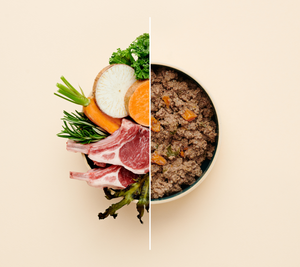 Give your dog the quality nutrition they deserve
Real meat, wholesome veggies and functional superfoods.
Get 30% off: Take the quiz