





 Vet reviewed
What’s the best dog food for a German Shorthaired Pointer?

At a glance
- German Shorthaired Pointers do best on fresh, high-protein food built around a quality named meat source - the breed's exceptional energy output and lean muscle mass make protein density and ingredient quality essential to maintaining condition.
- Bloat (gastric dilatation-volvulus) is the most serious health risk for GSPs with a direct dietary link - meal timing, portion splitting, and avoiding exercise around feeding all reduce risk significantly.
- Joint health is a genuine concern in this breed, and omega-3 fatty acids from oily fish are the most practical dietary support for keeping active working joints in good condition.
- GSPs carry very little body fat, so weight management means preventing muscle loss as much as preventing excess gain - underfeeding an active Pointer is as much of a risk as overfeeding a sedentary one.
- Skin and coat health in the breed is straightforward when diet is right - the short, dense coat should be glossy and close-lying, and a dull or dry coat usually signals a nutritional gap rather than a grooming issue.
What is the best diet for a German Shorthaired Pointer?
Fresh dog food built around a high-quality, named protein source - with genuine caloric density, minimal processing, and no artificial fillers - is the most appropriate diet for most German Shorthaired Pointers. This is an athletic, high-drive breed that burns significant energy whether working in the field or running hard in a park, and the food has to be able to sustain that output without compromising digestive health.
Dry kibble at around 10% moisture and processed at high temperatures places a meaningful load on a digestive system already at risk of bloat in this breed. Fresh food cooked at lower temperatures retains more of its natural nutrient structure, is significantly easier to digest, and delivers the protein in a form the body can actually use for muscle maintenance and repair. For a breed that is all muscle and very little fat, the quality of protein in the diet matters as much as the quantity.
The practical checklist for a good GSP food is: a clearly named protein source, sufficient caloric density to maintain a lean athletic physique, omega-3 fatty acids for joint and coat support, no artificial preservatives or fillers, and meals split across two sittings to reduce bloat risk. Marleybones Pantry Fresh meals are vet-developed recipes slow-cooked from whole ingredients with no artificial additives, and well-suited to an athletic breed where protein quality and digestive simplicity both matter.
How does bloat affect what I feed my German Shorthaired Pointer?
Splitting the daily ration into two meals and enforcing at least an hour's rest either side of feeding are the most practical dietary steps any GSP owner can take. Bloat - where the stomach fills with gas and can rotate on itself - is a genuine emergency in this breed, and while the condition is not caused solely by diet, eating habits and food type both influence the risk.
Large single meals, eating from a raised bowl, and vigorous exercise immediately before or after feeding are all associated with higher bloat incidence in deep-chested breeds. Highly fermentable ingredients, excessive starch, and food that is difficult to digest also increase the gas load in the stomach. A minimally processed, whole-ingredient food with a moderate fibre profile is easier for the stomach to handle than a high-starch kibble that ferments in the gut.
If your GSP shows signs of a distended, hard abdomen, unproductive retching, restlessness, or collapse, treat it as an emergency and get to a vet immediately - bloat can be fatal within hours.
What protein is best for a German Shorthaired Pointer?
Beef, lamb, and salmon are the strongest protein choices for most GSPs. The breed has a high lean muscle mass relative to body weight, and protein requirements are correspondingly higher than in a smaller or less active dog. The priority is a named, whole-protein source rather than a meat meal or by-product derivative, because the amino acid profile and digestibility are meaningfully better.
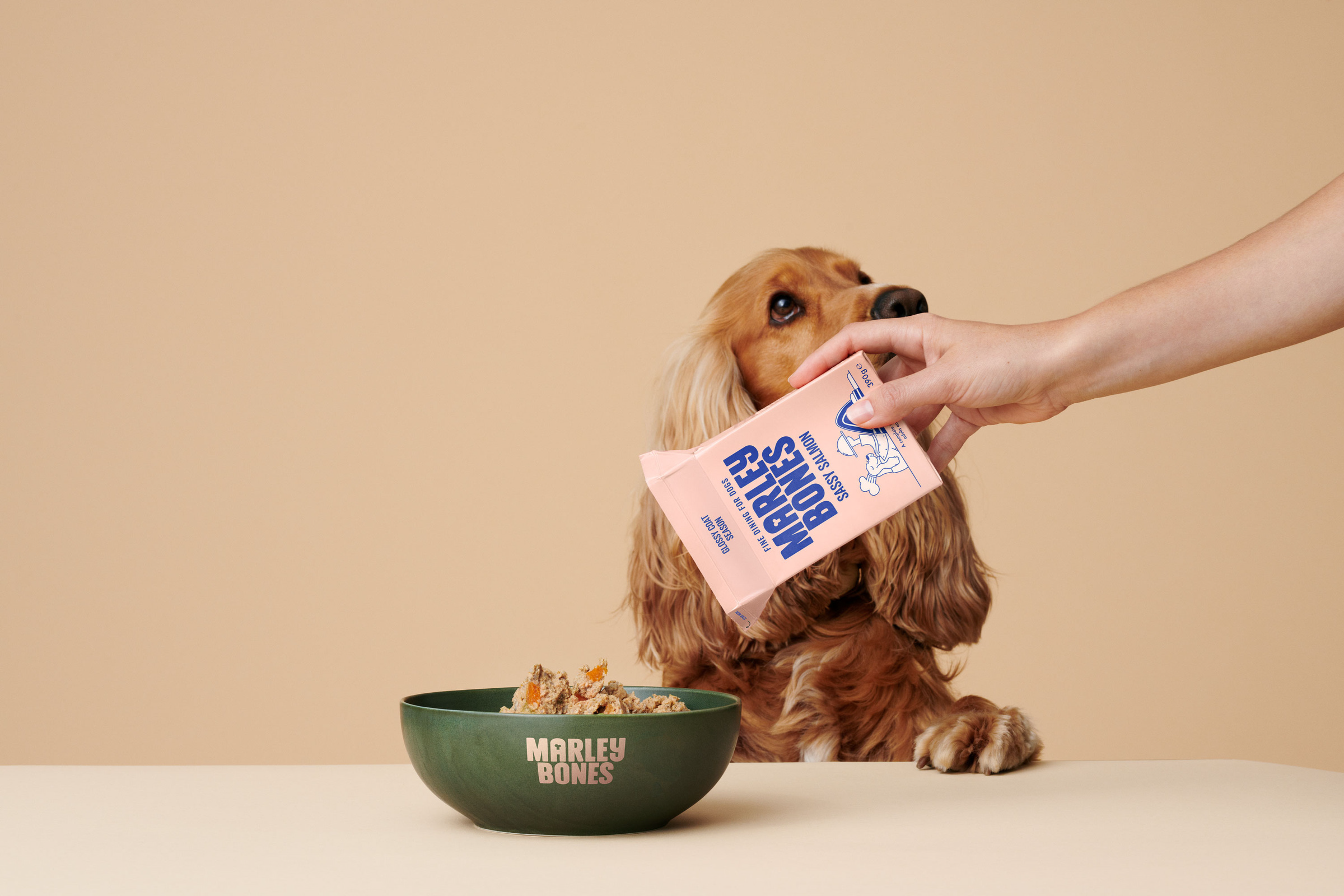
Salmon is particularly well-suited to this breed because it delivers clean, highly digestible protein alongside EPA and DHA omega-3 fatty acids that support joint health - a genuine consideration in a breed that puts its joints under sustained high-impact work. For GSPs with any history of digestive sensitivity, lamb is the stronger red meat option: it is lower in allergenicity than beef and tends to sit well with reactive guts. Marleybones Sassy Salmon provides both the protein density this breed needs and the omega-3s that active working joints depend on, from whole, recognisable ingredients.
Single-protein meals give the clearest read on what a dog tolerates, which matters when managing a breed that is prone to eating enthusiastically regardless of whether the food agrees with it.

Freshly prepared British beef, veggies & superfoods
How much should I feed a German Shorthaired Pointer?
Adult GSPs typically weigh between 20 and 32kg, but caloric need varies substantially depending on activity level. A lightly exercised pet Pointer needs considerably less than a dog doing two hours of hard fieldwork daily - using body condition as the primary guide is more reliable than following a feeding guide designed for the average dog of that weight.
The visual test: you should see a waist from above and feel the ribs without pressing hard, but not see them at rest. GSPs carry so little subcutaneous fat that visible ribs at rest usually indicate underfeeding rather than ideal lean condition. Adjust portions over four to six weeks and track body condition rather than weight alone, since muscle gain and fat loss can offset each other on the scales.
Two meals a day is non-negotiable for this breed given the bloat risk. Factor treats into the daily caloric total - they add up quickly with a dog as food-motivated and trainable as a GSP, and training treats are rarely small in practice. If your dog is highly active in the field during season and sedentary for long stretches otherwise, adjust portions across those periods rather than feeding a fixed amount year-round.
Do German Shorthaired Pointers need joint support from their diet?
Active management of joint health through diet makes a meaningful difference in a breed that runs hard, turns sharply, and does so for years. GSPs are not disproportionately prone to hip dysplasia compared to all large breeds, but the sheer volume of work their joints absorb over a lifetime makes nutritional support genuinely worthwhile.
Omega-3 fatty acids - specifically EPA and DHA from oily fish - reduce systemic inflammation and support cartilage health. A diet that includes a natural source of these, rather than a synthetic supplement added to an otherwise poor-quality food, makes a more consistent difference over time. Maintaining a healthy body weight is also one of the most effective protections for joint health in any dog, and for a lean-framed breed like the GSP, that means consistent portioning rather than free-feeding. If a GSP is showing stiffness after exercise or slowing on retrieves, a vet assessment is the right first step - diet can support joint health but cannot reverse structural damage.
Every dog is different - build your personalised Marleybones feeding and health plan tailored to your dog's age, size, and health requirements.
How do different dog food formats compare for German Shorthaired Pointers?
| Format | Moisture content | Processing level | Verdict for German Shorthaired Pointers |
|---|---|---|---|
| Fresh (Pantry Fresh) | 65-75% | Minimal - slow low-temperature cooking | Best option - protein-dense, whole ingredients, easy to digest, lower bloat risk than kibble |
| Raw | 65-75% | None | Works for some - good protein quality, but portion management and bacterial load require careful handling |
| Wet / canned | 75-85% | Moderate | Better than kibble - caloric density varies widely, check protein content carefully for an athletic breed |
| Cold pressed | Around 12% | Low - below extrusion temperatures | Reasonable middle ground - lower processing than kibble, but limited moisture for a high-output dog |
| Dry kibble | Around 10% | High - high-temperature extrusion | Hardest to digest - high starch content increases gas load, a real concern for a bloat-susceptible breed |
FAQs
How often should I feed my German Shorthaired Pointer?
Twice daily, in roughly equal portions, with at least an hour between feeding and vigorous exercise in either direction. A single large daily meal is not appropriate for this breed given the bloat risk associated with deep-chested dogs eating large volumes in one sitting. Puppies under six months need three to four smaller meals spread through the day.
My GSP is always hungry - should I increase their food?
Not automatically. GSPs are enthusiastic, food-motivated dogs that present as hungry even when adequately fed. Use body condition as the guide: visible ribs at rest suggest the portions are too small, a waist you cannot feel suggests they are too large. If body condition looks right and the dog appears hungry, the food may not be satiating enough - fresh food with higher moisture content is more filling than the equivalent calorie count in dry kibble, and switching format often resolves apparent hunger without increasing total calories.
Can diet help prevent bloat in German Shorthaired Pointers?
Diet does not eliminate the risk, but it meaningfully influences it. Splitting meals into two smaller portions, avoiding vigorous exercise around feeding, and choosing a minimally processed food with low fermentable starch content all reduce the gas load in the stomach. High-starch dry kibble ferments more readily in the gut than whole-ingredient fresh food, which is a practical reason to consider food format alongside feeding routine in this breed.
Is Marleybones Pantry Fresh good for German Shorthaired Pointers?
Yes. Marleybones Pantry Fresh meals are vet-developed, built from whole ingredients, and contain no artificial preservatives or fillers - which makes them well-suited to an athletic breed where protein quality and digestive simplicity both matter. Sassy Salmon is the standout choice for GSPs, providing high-quality protein alongside natural EPA and DHA omega-3s for joint and coat health. Rated 4.9/5 on Trustpilot and loved by 9 in 10 fussy dogs, Marleybones is also a practical option for GSPs that are enthusiastic eaters: the higher moisture content makes meals more satiating without inflating the caloric total.
What should I feed a German Shorthaired Pointer puppy?
GSP puppies need a complete food with sufficient protein and controlled calcium and phosphorus levels to support the rapid growth of a large-breed dog without stressing developing joints. Marleybones Pantry Fresh meals are complete for all life stages including puppies, so no separate puppy formula is needed. Three to four meals a day until six months, reducing to twice daily thereafter, with portions adjusted as the puppy grows rather than following a fixed amount from week to week.
Does a working GSP need different food to a pet one?
A working dog in season - doing several hours of hard hunting daily - has substantially higher caloric needs than the same dog living as a pet. The protein and fat requirements increase in line with output; the food type does not need to change, but portions do. Adjust based on body condition across the season rather than switching to a specialist working-dog formula, and reduce portions proportionally during periods of low activity to avoid fat gain on a frame that does not carry it well.
How does diet affect the GSP's coat?
The German Shorthaired Pointer's short, dense coat should lie flat and carry a natural gloss - a dull, dry, or rough coat is almost always a dietary signal rather than a grooming one. Named animal fats from identifiable sources, and omega-3 fatty acids from oily fish, are what the coat needs to stay in good condition. A switch to a fresh, whole-ingredient food tends to produce visible coat improvement within six to eight weeks in dogs previously on heavily processed food.

Freshly prepared British chicken, veggies & superfoods


 Give your dog the quality nutrition they deserve
Real meat, wholesome veggies and functional superfoods.
Get 30% off: Take the quiz