


 Vet reviewed
What is the best dog food for a Banjara Hound?

At a glance
- Banjara Hounds do best on fresh, whole-ingredient food built around a high-quality animal protein - the breed's lean, athletic build and deep-chested frame make nutrient density and digestive efficiency both genuinely important.
- As a sighthound-type breed with a naturally low body fat percentage, Banjara Hounds need a diet with adequate healthy fat alongside quality protein to maintain muscle condition and support energy without overloading a lean digestive system.
- Bloat risk is a real consideration for deep-chested breeds - portion timing, meal frequency, and avoiding exercise immediately after eating are all worth building into the feeding routine.
- Skin and coat health in Banjara Hounds responds well to omega-3 fatty acids from oily fish, which support the breed's short, dense coat and reduce any tendency toward dry or itchy skin.
- Banjara Hounds are not typically greedy eaters, but their lean frame means weight loss can become visible quickly - monitoring body condition rather than relying solely on the scales keeps feeding on track.
What is the best diet for a Banjara Hound?
Fresh dog food built around a named, high-quality animal protein with minimal processing and no artificial additives is the most appropriate diet for most Banjara Hounds. The breed is a lean, athletic sighthound type with a digestive system that handles whole, recognisable food more efficiently than heavily processed alternatives. Ingredient quality, protein completeness, and digestive ease all matter more for a breed with this physique than they do for stockier, less active dogs.
Dry kibble provides around 10% moisture and requires high-temperature extrusion that denatures protein structure and reduces the bioavailability of key nutrients. For a lean, muscular breed that depends on efficient protein use for muscle maintenance and recovery, fresh food cooked gently from whole ingredients is a meaningfully better match - it delivers 65–75% moisture alongside intact proteins the gut processes with much less effort.
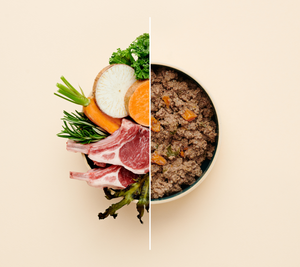
The practical checklist for a good Banjara Hound food is: a named animal protein you can read on the label, adequate healthy fat for energy and coat condition, omega-3 fatty acids for skin and coat support, no artificial fillers or preservatives, and a feeding routine structured to reduce bloat risk. Marleybones Pantry Fresh meals are vet-developed, slow-cooked from whole ingredients with no artificial additives, and well-suited to a breed where nutrient density and digestive ease both show up directly in condition and performance.
Does the Banjara Hound's athletic build change what they need from food?
Yes, directly. Banjara Hounds carry very little body fat relative to their size - a characteristic shared by sighthound types generally - which means the body has minimal reserves to draw on when diet falls short. Protein quality and completeness are not optional extras for this breed; they are the foundation of maintaining the lean muscle mass that defines the Banjara Hound's working physique.
Complete proteins from whole animal sources provide the full amino acid profile the body needs for muscle repair and maintenance. Heavily processed food loses a significant portion of this through high-temperature extrusion, leaving proteins that are harder for the gut to break down and less useful once absorbed. Fresh food prepared at lower temperatures retains the natural protein structure and delivers it in a form the body can actually use.
Healthy dietary fat matters too. Fat is the primary energy source for dogs, and a lean breed that is regularly active needs enough of it to maintain condition without the body drawing on muscle for fuel. Named animal fats from identifiable sources - not rendered fat of unspecified origin - are the ones the body handles well. This is worth checking on the label of any food you feed a Banjara Hound long-term.
What should Banjara Hound owners know about bloat?
Feeding management is the most practical tool available to reduce bloat risk in deep-chested breeds, and the Banjara Hound's frame puts it in the higher-risk category. Feeding two smaller meals a day rather than one large one, avoiding vigorous exercise for at least an hour after eating, and using a slow-feeder bowl if the dog eats quickly are all straightforward adjustments that make a real difference.
Food format plays a supporting role. Dry kibble expands with water in the stomach after eating, which increases the volume of stomach contents rapidly. Fresh food with a naturally high moisture content does not expand in the same way, making it a more appropriate choice for a breed where stomach distension is a genuine concern. This is not a reason to avoid dry food entirely if it is what you are using, but it is a meaningful consideration when choosing between formats.
Bloat that progresses to gastric dilatation-volvulus (GDV) is a veterinary emergency. If your dog shows a distended abdomen, unproductive retching, restlessness, or signs of distress after eating, contact a vet immediately - this is not a situation where a wait-and-see approach is appropriate.

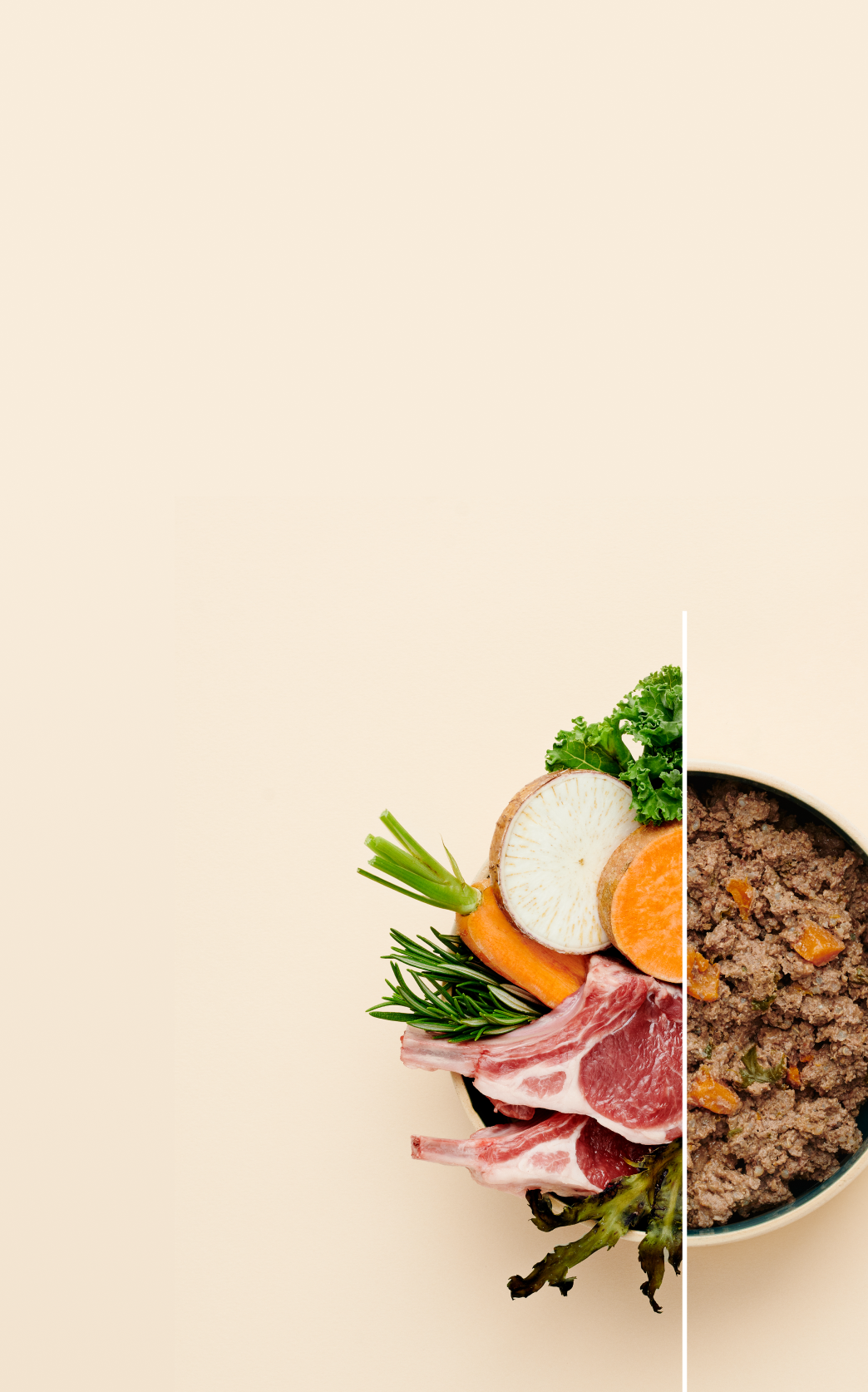
Freshly prepared British beef, veggies & superfoods
What protein is best for a Banjara Hound?
Lamb and salmon are strong starting points for most Banjara Hounds, particularly those with any history of digestive sensitivity or dogs currently eating chicken or beef who have not responded well. For an athletic breed, the priority is a protein the body uses efficiently - complete amino acid profile, good bioavailability, and a source the gut does not have to work against.
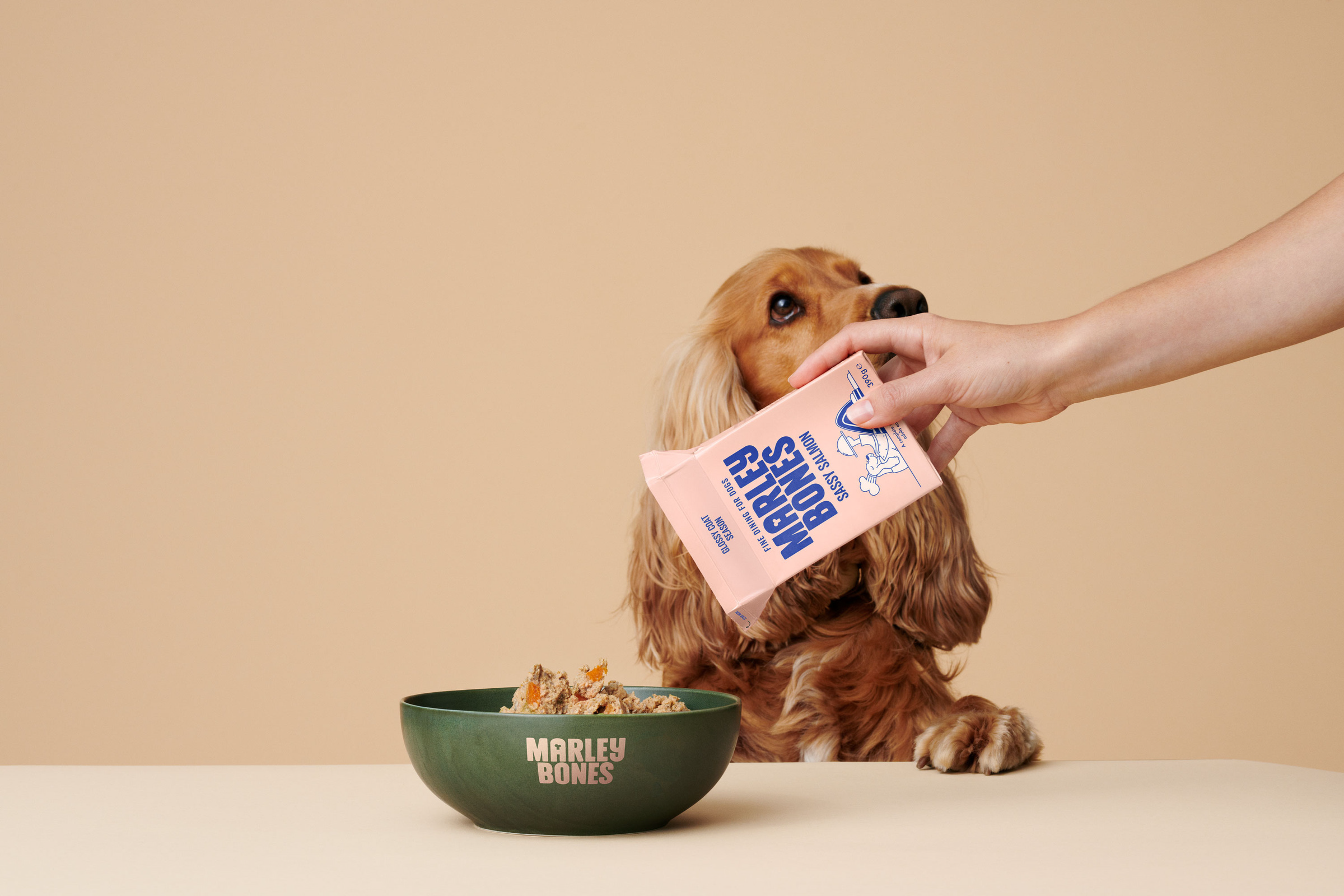
Salmon is particularly well-suited to Banjara Hounds because it delivers clean, highly digestible protein alongside EPA and DHA omega-3 fatty acids, which directly support the short coat and skin barrier this breed carries. Lamb is a strong alternative for dogs that need a red meat option or have eaten fish before - it is lower allergenicity than beef and tends to sit well with reactive guts. Marleybones Sassy Salmon and Lush Lamb are both single-protein meals built around whole ingredients with chicory root as a natural prebiotic - useful for a lean breed where gut efficiency underpins overall condition.
Single-protein meals make it easier to track what the dog tolerates and to identify any sensitivity without the guesswork of a multi-protein recipe. For a breed that owners may not have much community knowledge to draw on, keeping the diet straightforward and easy to adjust is a practical advantage.
How much should I feed a Banjara Hound?
Adult Banjara Hounds typically weigh between 22 and 30kg, though individual dogs vary based on sex, build, and activity level. Body condition is the more reliable guide than bodyweight alone - for a naturally lean breed, the standard check applies: ribs should be easily felt without pressing, and a visible waist should be clear when looking down from above. A Banjara Hound that looks gaunt through the flanks at a healthy weight is normal for the type; one whose hip bones are prominent or whose spine is visible is underweight.
Fresh food tends to be more satiating than the equivalent calorie count in dry food because the higher moisture content occupies more volume in the stomach. Most owners switching from kibble find they can adjust the nominal calorie count down slightly once the dog has settled onto a fresh diet without any loss of condition. Adjust portions over six to eight weeks against body condition rather than treating the initial suggested amount as fixed, and factor in any treats.
For active Banjara Hounds - those regularly running, coursing, or covering significant distance - energy requirements increase meaningfully, and calorie intake should reflect that. A dog in regular hard work will need more food than the feeding guide suggests for a sedentary dog of the same weight.
Every dog is different - build your personalised Marleybones feeding and health plan tailored to your dog's age, size, and health requirements.How do different dog food formats compare for Banjara Hounds?
| Format | Moisture content | Processing level | Verdict for Banjara Hounds |
|---|---|---|---|
| Fresh (Pantry Fresh) | 65–75% | Minimal - slow low-temperature cooking | Best option - whole ingredients, supports muscle condition, coat, and reduces bloat risk versus kibble |
| Raw | 65–75% | None | Works for some - suits the athletic physique, though bacterial load and preparation requirements are worth considering |
| Wet / canned | 75–85% | Moderate | Better than kibble - moisture content suits a deep-chested breed, but ingredient quality varies widely |
| Cold pressed | Around 12% | Low - below extrusion temperatures | Decent middle ground - lower stomach expansion than extruded kibble, better protein retention |
| Dry kibble | Around 10% | High - high-temperature extrusion | Least suitable - expands in the stomach after eating, hardest to digest, worst option for a lean deep-chested breed |
FAQs
How often should I feed my Banjara Hound?
Twice daily is the standard for adult Banjara Hounds, and it is particularly important for a deep-chested breed where one large meal increases bloat risk. Morning and evening in roughly equal portions is the practical approach. Avoid vigorous exercise for at least an hour before and after each meal.
My Banjara Hound looks very lean - is that normal?
For this breed, yes. Banjara Hounds carry minimal body fat as a natural breed characteristic, and a lean appearance through the flanks is normal for a healthy dog. The markers to check are whether the ribs are easily felt, whether the waist is visible from above, and whether the dog has energy and a healthy coat - if all three are good, the weight is likely fine. If the spine and hip bones are prominent, or energy is low, review the diet and consult a vet.
Is Marleybones Pantry Fresh good for Banjara Hounds?
Yes. Marleybones Pantry Fresh meals are vet-developed, contain no artificial preservatives or fillers, and are available in single-protein recipes well-suited to a lean, athletic breed with a digestive system that performs best on whole, recognisable food. Sassy Salmon is a strong choice for Banjara Hounds, delivering digestible protein alongside EPA and DHA omega-3 fatty acids for coat and skin support. With a 4.9/5 Trustpilot rating and over two million meals delivered, it is a practical switch for a breed where nutrient quality shows up directly in muscle condition and coat.
Do Banjara Hounds need supplements?
A fresh, complete diet built from whole ingredients covers most nutritional needs without separate supplementation. Where Banjara Hounds benefit from additional support, omega-3 fatty acids for coat and skin, and joint support for active dogs covering hard ground regularly, are the most relevant areas. These are better delivered through food - salmon as a protein base, for example - than through synthetic supplements added to a poor-quality diet.
Is grain-free food better for Banjara Hounds?
Not automatically. Grains are not inherently problematic, and the more important question is whether the diet is built around a quality animal protein or uses grain as a primary cheap filler. A Banjara Hound with no sensitivity to grains can tolerate whole oats or brown rice in a minimally processed fresh meal without issue. Grain-free foods that replace grain with large quantities of peas or lentils are not automatically easier to digest or more appropriate for an athletic breed.
How long before I see a difference after changing my Banjara Hound's food?
Stool quality and digestion typically settle within two to four weeks of switching to a fresh diet. Coat condition and overall skin health improve over six to eight weeks. Changes in muscle condition and sustained energy take longer to assess - eight to twelve weeks on a consistent diet and portion gives a reliable picture. If there is no meaningful improvement after four weeks, a vet assessment is the right next step rather than continuing to adjust the food.
Can Banjara Hound puppies eat fresh food?
Yes. Marleybones Pantry Fresh meals are complete for all life stages, including puppies. Banjara Hound puppies grow relatively quickly into a lean frame that depends on complete protein from early on, making ingredient quality relevant from the start. Puppies need more frequent meals - three to four smaller portions a day until around six months - and portion sizes should be adjusted as they grow rather than kept fixed.

Freshly prepared British chicken, veggies & superfoods


 Give your dog the quality nutrition they deserve
Real meat, wholesome veggies and functional superfoods.
Get 30% off: Take the quiz