



Why Some Dogs Need More Calories Per Kilogram Than Others

At a glance
- Smaller dogs have a higher metabolic rate per kilogram than larger dogs — they burn more energy relative to their body weight.
- Puppies need roughly 2x the calories per kilogram of a healthy adult dog during peak growth phases.
- Activity level can raise a dog's daily calorie requirement by 25–90% above resting levels.
- Neutering reduces a dog's daily energy needs by approximately 20–30%.
- Food quality affects how many calories a dog can actually absorb — not just how many are listed on the label.
Why don't all dogs need the same calories per kilogram?
Calorie needs per kilogram of body weight vary because dogs differ in how fast their bodies run at rest, how much energy growth or reproduction demands, and how efficiently they extract energy from food. A 5 kg Chihuahua and a 40 kg Labrador are not simply scaled versions of each other. Their metabolisms work at genuinely different rates.
The baseline measure is resting energy requirement (RER). This is the number of calories a dog needs just to keep its organs functioning while doing nothing at all. RER is calculated from body weight, but not in a straight line. It follows a curve: as body weight increases, calories per kilogram actually fall. A 5 kg dog needs around 110 kcal/day at rest. A 40 kg dog needs around 534 kcal/day — but that works out to far fewer calories per kilogram. Small dogs simply have a higher surface-area-to-volume ratio, which means they lose more body heat and need to generate more energy to compensate.
From RER, you multiply by a life stage factor to get the dog's actual daily energy requirement. That factor is where size, age, and lifestyle really pull calorie needs apart. Feeding guides on life stage nutrition exist precisely because a single flat number per kilogram would overfeed some dogs and underfeed others.
Which dogs need the most calories per kilogram?
Puppies top the list. During the first half of their growth period, puppies need roughly twice the calories per kilogram of an adult dog the same size. Their bodies are building muscle, bone, and organ tissue simultaneously, and that takes serious fuel. As they approach adult size, the multiplier drops — but it stays well above adult levels until growth is complete.
After puppies, the highest calorie needs per kilogram come from:
- Lactating females — feeding a litter can triple a dog's daily energy requirement at peak milk production
- Working and sporting dogs — a dog doing sustained physical work needs 2–4x its resting calorie requirement
- Small and toy breeds — because of the surface-area effect described above
- Underweight dogs or those recovering from illness
Pregnant dogs also have raised needs, though less dramatically — the increase is concentrated in the last third of pregnancy, when foetal growth accelerates.
On the other end of the scale, neutered adult dogs and senior dogs generally need fewer calories per kilogram than intact or younger adults. Neutering removes hormonal drivers of activity and metabolism. Ageing slows lean muscle turnover. Both reduce the daily energy bill. Calorie needs in older dogs deserve particular attention because overfeeding an inactive senior leads to weight gain faster than most owners expect.
Does food quality change how many calories a dog actually gets?
Yes, and this is where feeding guides can mislead. The calorie figure on a dog food label reflects metabolisable energy — the energy available after digestion. But not all dogs digest the same food equally well, and not all foods are digested equally well either.
Highly processed ingredients, fillers, and poor-quality protein sources reduce the proportion of calories a dog can actually use. A dog eating a food with lower digestibility needs to eat more of it to meet the same energy requirement. This is one reason why the same dog can appear to need very different quantities depending on which food it eats.
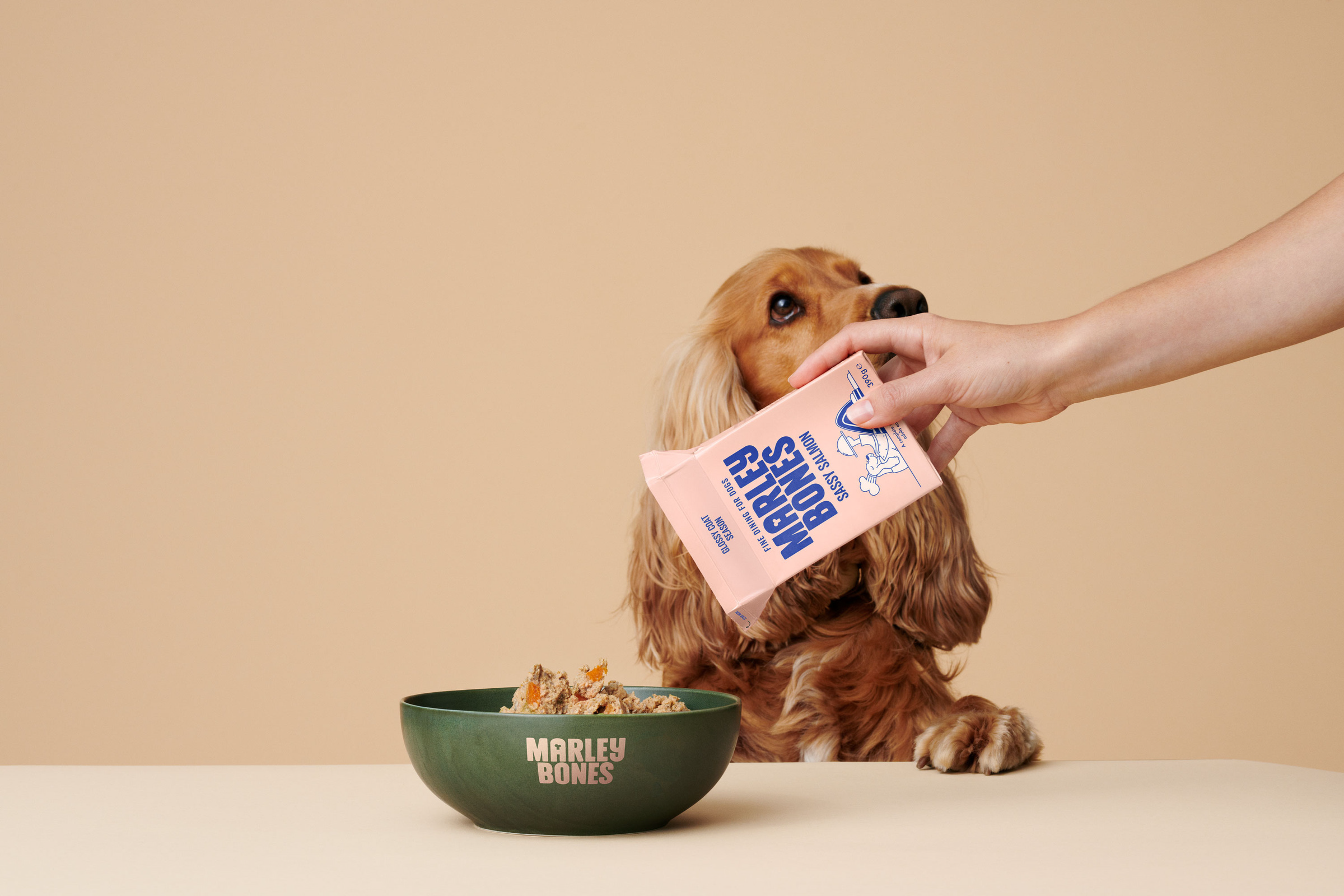
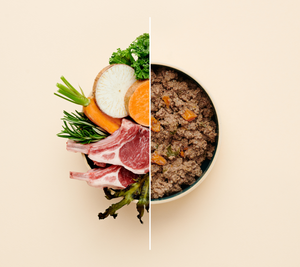
Fresh food with minimally processed, whole ingredients tends to have higher digestibility. Marleybones meals are freshly prepared and slow-cooked in-pack without preservatives or fillers, which supports efficient calorie absorption. That matters when you are trying to hit a target calorie range rather than simply filling a bowl.
If your dog's weight is not tracking as expected despite following feeding guidelines, digestibility is worth considering before assuming the guidelines are wrong. And if there is an underlying condition affecting appetite or nutrient absorption, consult your vet before adjusting calories significantly.
How should you apply this when feeding your dog?
Start with your dog's current healthy weight, not their actual weight if they are over or underweight. Use the life stage multiplier relevant to where they are now — growing, adult maintenance, senior, or a specific condition like pregnancy or working. Then adjust based on what you actually see: body condition score is a better guide than weight alone.
Check your dog's ribs. You should be able to feel them easily without pressing hard, but not see them from across the room. A visible waist from above and a slight tuck behind the ribcage are signs of a healthy weight. No visible waist and ribs you cannot feel without firm pressure means it is time to cut back.
Every dog is different — build your personalised Marleybones feeding and health plan tailored to your dog's age, size, and health requirements.
The table below shows approximate life stage multipliers applied to resting energy requirement. These are widely used reference ranges in veterinary nutrition.
| Life stage or status | Multiplier applied to RER |
|---|---|
| Neutered adult | 1.6 |
| Intact adult | 1.8 |
| Active or working dog | 2.0–5.0 |
| Puppy (weaning to 50% adult weight) | 3.0 |
| Puppy (50–80% adult weight) | 2.5 |
| Late-stage puppy (80–100% adult weight) | 2.0 |
| Last trimester of pregnancy | 3.0 |
| Peak lactation | 4.0–8.0 |
| Senior dog | 1.4 |
These multipliers are starting points. Individual dogs vary, and body condition monitoring over two to four weeks will tell you whether a given intake is right. Marleybones meals are complete for all life stages including puppies, with FEDIAF-compliant recipes developed by vets to meet the different nutritional profiles these life stages require.

“Such a relief to see her enjoying her food”
Frequently asked questions
Do small dogs really need more calories per kilogram than large dogs?
Yes. Smaller dogs have a higher metabolic rate relative to their body weight because of their greater surface-area-to-volume ratio. A 5 kg dog needs proportionally more calories per kilogram than a 30 kg dog to maintain body temperature and organ function at rest.
Why do puppies need so many more calories than adult dogs?
Puppies are building body tissue from scratch. Bone growth, muscle development, and organ maturation all require energy on top of basic maintenance needs. During the first half of growth, that roughly doubles calorie requirements per kilogram compared to an adult of the same eventual size.
Does neutering change how many calories my dog needs?
Neutering reduces daily energy requirements by around 20–30%. Hormonal changes after neutering lower metabolic rate and reduce the drive to be active. Most owners need to reduce portion sizes after neutering to prevent gradual weight gain.
Can I use the same feeding guide for my dog at every life stage?
No. Feeding guides are specific to life stage because energy requirements change significantly as dogs age, reproduce, or become less active. A puppy guide will overfeed a senior dog. A senior guide will underfeed a growing puppy. Always use the guide matched to your dog's current life stage.
What is the best way to check if my dog is getting the right number of calories?
Body condition scoring is more reliable than weight alone. You should be able to feel your dog's ribs without pressing hard, see a waist from above, and notice a slight abdominal tuck behind the ribcage. If the ribs are hidden under fat or the waist has disappeared, calorie intake is too high. Recheck every two to four weeks when adjusting portions.
“A complete game changer!!”


 Give your dog the quality nutrition they deserve
Real meat, wholesome veggies and functional superfoods.
Get 40% OFF today