



 Vet-Written
Why Is My Dog Always Hungry?

- Certain breeds, like Labrador Retriever, are genetically predisposed to food motivation and will always appear hungry regardless of how much they are fed
- A diet low in protein, fat, or fibre can leave dogs genuinely under-satisfied after meals, causing them to seek more food throughout the day
- Medical causes of increased appetite include diabetes, Cushing's disease, exocrine pancreatic insufficiency, and intestinal parasites — persistent hunger alongside weight loss always warrants a vet check
- Inconsistent mealtimes reinforce food-seeking behaviour and can make a dog appear permanently hungry even when calorie intake is adequate
Is it normal for dogs to always seem hungry?
It depends on the dog. Some breeds have a genuine genetic predisposition to food motivation that makes them appear perpetually hungry regardless of how much they eat. Labradors are the most well-documented example: research has identified a specific gene variant (POMC) associated with impaired satiety signalling in a significant proportion of the breed.
For these dogs, appearing hungry is largely a behavioural baseline rather than a signal that something is wrong. The practical challenge is managing weight in dogs that will eat as much as they are given without self-regulating — and getting the feeding routine right across a dog's life stages matters far more for food-motivated breeds than it does for dogs that naturally self-regulate. For dogs that have not historically shown strong food motivation and have recently become noticeably hungrier, investigating the cause is worth prioritising.
Can diet cause a dog to feel constantly hungry?
Yes. Satiety in dogs is driven primarily by protein and fat content, as well as fibre content. Soluble fibre slows gastric emptying and extends the feeling of fullness after a meal. Diets low in fibre can leave dogs feeling hungry again within a couple of hours of eating.
A diet that is genuinely too low in calories for a dog's size and activity level is a straightforward cause of persistent hunger. Active dogs, working dogs, and growing puppies have significantly higher calorie requirements than adult dogs with a sedentary lifestyle, and underfeeding relative to actual need is a cause of constant food-seeking behaviour. If you are unsure whether your dog's current food is the right match for their needs, a tailored food recommendation based on your dog's profile is a useful starting point.
"Satiety is one of the most important but overlooked outcomes of a diet. Protein, fibre and energy density all influence how long a dog feels satisfied after eating."
— Dr. Davide Stefanutti, DVM, PhD, Veterinarian Nutritionist
What medical conditions cause increased appetite in dogs?
Several health conditions produce polyphagia, the medical term for an abnormally increased appetite. Common medical causes include diabetes mellitus, where glucose cannot enter cells effectively and the body signals hunger despite adequate food intake; Cushing's disease (hyperadrenocorticism), where excess cortisol increases appetite alongside causing weight gain, increased drinking, and a pot-bellied appearance; exocrine pancreatic insufficiency (EPI), where the pancreas fails to produce enough digestive enzymes and food passes through largely undigested; and intestinal parasites, which compete with the dog for nutrients and can cause apparent hunger alongside weight loss despite normal or increased eating.
The distinguishing feature of medically driven increased appetite is that it tends to appear alongside other changes: weight loss despite eating well, increased thirst and urination, changes in stool consistency. A dog that has become noticeably hungrier and is also losing weight, drinking more, or producing unusually large or frequent stools should be assessed by a vet promptly. Dogs with weight changes linked to appetite shifts may also benefit from a dietary review once any medical cause has been ruled out.
Can feeding routine affect how hungry a dog seems?
Yes. Feeding from the table, regularly offering food outside mealtimes, or consistently responding to begging with treats trains dogs to seek food at all times because experience has shown that persistence is rewarded. This is a learned behaviour rather than genuine hunger, but it can be difficult to distinguish from the outside.
Every dog is different — build your personalised Marleybones feeding and health plan tailored to your dog's age, size, and health requirements.

“Such a relief to see her enjoying her food”
FAQs
Is it cruel to ignore a dog begging for food?
No, provided the dog is receiving adequate calories for its size and activity level. Responding to begging reinforces the behaviour and creates a cycle that is difficult to break. Consistently ignoring food-seeking behaviour between mealtimes, while ensuring portion sizes are correct for the dog's weight and activity level, is the most effective approach for behaviourally driven food motivation.
Can hunger cause aggression in dogs?
Genuine food guarding and resource aggression are distinct from hunger-driven behaviour and are primarily a training and temperament issue rather than a feeding one. However, a dog that is consistently underfed may show increased resource guarding around food.
Should I feed my dog more if they always seem hungry?
Not necessarily. The right response depends on the cause. If the dog is at a healthy weight and showing no other symptoms, increasing food is likely to cause weight gain without resolving the underlying behaviour. If the dog is underweight or losing weight despite eating, increasing food and a vet check are both warranted. Checking that the current portion is correct for the dog's weight and activity level using the feeding guide is always the sensible first step — meals formulated with correct energy density and protein levels make it easier to feed accurate portions without leaving dogs unsatisfied.
Which dog breeds are most prone to always seeming hungry?
Labradors are the most well-studied, with a specific gene variant linked to impaired satiety signalling identified in a significant proportion of the breed. Other breeds commonly associated with strong food motivation include Beagles, Pugs, Dachshunds, Golden Retrievers and Cocker Spaniels. For these breeds, managing correct portion sizes as dogs age and avoiding free feeding is more important than for less food-motivated breeds.
“A complete game changer!!”
References
- Raffan, E., Dennis, R. J., O'Donovan, C. J., Becker, J. M., Scott, R. A., Smith, S. P., et al., & O'Rahilly, S. (2016). A deletion in the canine POMC gene is associated with weight and appetite in obesity-prone labrador retriever dogs. Cell Metabolism, 23(5), 893-900.
- Weber, M., Bissot, T., Servet, E., Sergheraert, R., Biourge, V., & German, A. J. (2007). A high-protein, high-fiber diet designed for weight loss improves satiety in dogs. Journal of Veterinary Internal Medicine, 21(6), 1203-1208.
- Do, S., Phungviwatnikul, T., de Godoy, M. R., & Swanson, K. S. (2021). Nutrient digestibility and fecal characteristics, microbiota, and metabolites in dogs fed human-grade foods. Journal of Animal Science, 99(2), skab028.
- Sires, R., Yamka, R., & Wakshlag, J. (2025). Feeding fresh food and providing water ad libitum is clinically proven to exceed calculated daily water requirements and impact urine relative supersaturation in dogs. Frontiers in Veterinary Science, 12, 1675990.


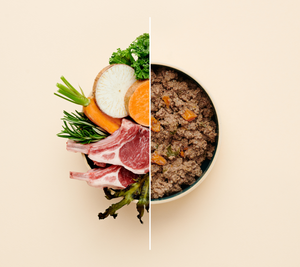 Give your dog the quality nutrition they deserve
Real meat, wholesome veggies and functional superfoods.
Get 40% OFF today