

What to feed a large breed puppy — and why it's different

At a glance
- Large breed puppies — those with an adult weight above 25 kg — need lower calcium and phosphorus than small breeds to prevent bones growing too fast.
- The ideal calcium level for large breed puppies is 1.0–1.8% of dry matter, compared to up to 3% for small breeds.
- Overfeeding is one of the biggest risks — excess calories accelerate growth and increase the load on developing joints.
- A food labelled "complete for all life stages" covers puppies only if it also states it meets the nutritional needs of large breed puppies specifically.
- Large breeds are not fully grown until 18–24 months, so puppy-specific nutrition matters for much longer than most owners realise.
Why does a large breed puppy need different food?
Large breed puppies need food formulated specifically for their size because their skeletal development is uniquely vulnerable. Feed them too much calcium, too many calories, or too much protein, and their bones grow faster than their joints can handle. That mismatch is the root cause of conditions like hip dysplasia, osteochondrosis, and hypertrophic osteodystrophy — all of which are more common and more severe in large breeds fed the wrong diet in puppyhood.
The science here is well established. A landmark study in Great Danes found that puppies fed excess calcium developed skeletal abnormalities even when overall diet quality was otherwise high. The calcium didn't just affect bone density — it disrupted the hormonal signals that regulate how quickly cartilage converts to bone. That's why feeding the right food at the right life stage is one of the most important decisions you'll make for a large breed dog.
Standard puppy foods are often formulated for all breeds and set calcium and phosphorus at levels that are safe for small breeds but too high for large ones. If the bag doesn't explicitly say it's suitable for large breed puppies, assume it isn't.
What are the right nutrients for a large breed puppy?
The priority nutrients are calcium, phosphorus, calories, and protein — and all four need to be in the right range, not just adequate.
Calcium and phosphorus: FEDIAF guidelines recommend 1.0–1.8% calcium on a dry matter basis for large breed puppies, with a calcium-to-phosphorus ratio of 1:1 to 2:1. Too much calcium, even from a high-quality source, is harmful. Supplementing calcium on top of a complete food is one of the most common mistakes large breed puppy owners make — and one of the most damaging.
Calories: Large breed puppies need enough energy to grow, but not so much that they grow too fast. Aim for a food with moderate calorie density and follow portion guidelines closely. An overweight large breed puppy puts extra stress on soft, still-developing joints every single day.
Protein: High-quality protein is essential for muscle development and immune function. The concern isn't high protein per se — it's the total calorie and calcium load that often comes with high-protein foods designed for performance or small breeds. Look for a food where protein comes from named meat sources rather than plant-based fillers.
Fat: Moderate fat levels support brain development and coat health without pushing calories too high. Omega-3 fatty acids, particularly DHA, are especially important for cognitive development in puppies under 12 months.
| Nutrient | Why it matters for large breeds | Target range (dry matter) |
|---|---|---|
| Calcium | Controls bone growth rate | 1.0–1.8% |
| Phosphorus | Works with calcium on skeletal development | 0.8–1.6% |
| Protein | Muscle and immune development | 22–32% |
| Fat | Energy, brain and coat health | 8–20% |
| DHA (omega-3) | Brain and eye development | 0.05% minimum |
How do you know if a puppy food is actually suitable for large breeds?
Check the label carefully. A food that says "complete and balanced for all life stages" is not automatically suitable for large breed puppies. Under FEDIAF rules, a manufacturer must state that the food meets the specific nutritional profile for large breed growth — either on the label or in published documentation. If it only says "puppies" without specifying large breeds, contact the manufacturer and ask directly.
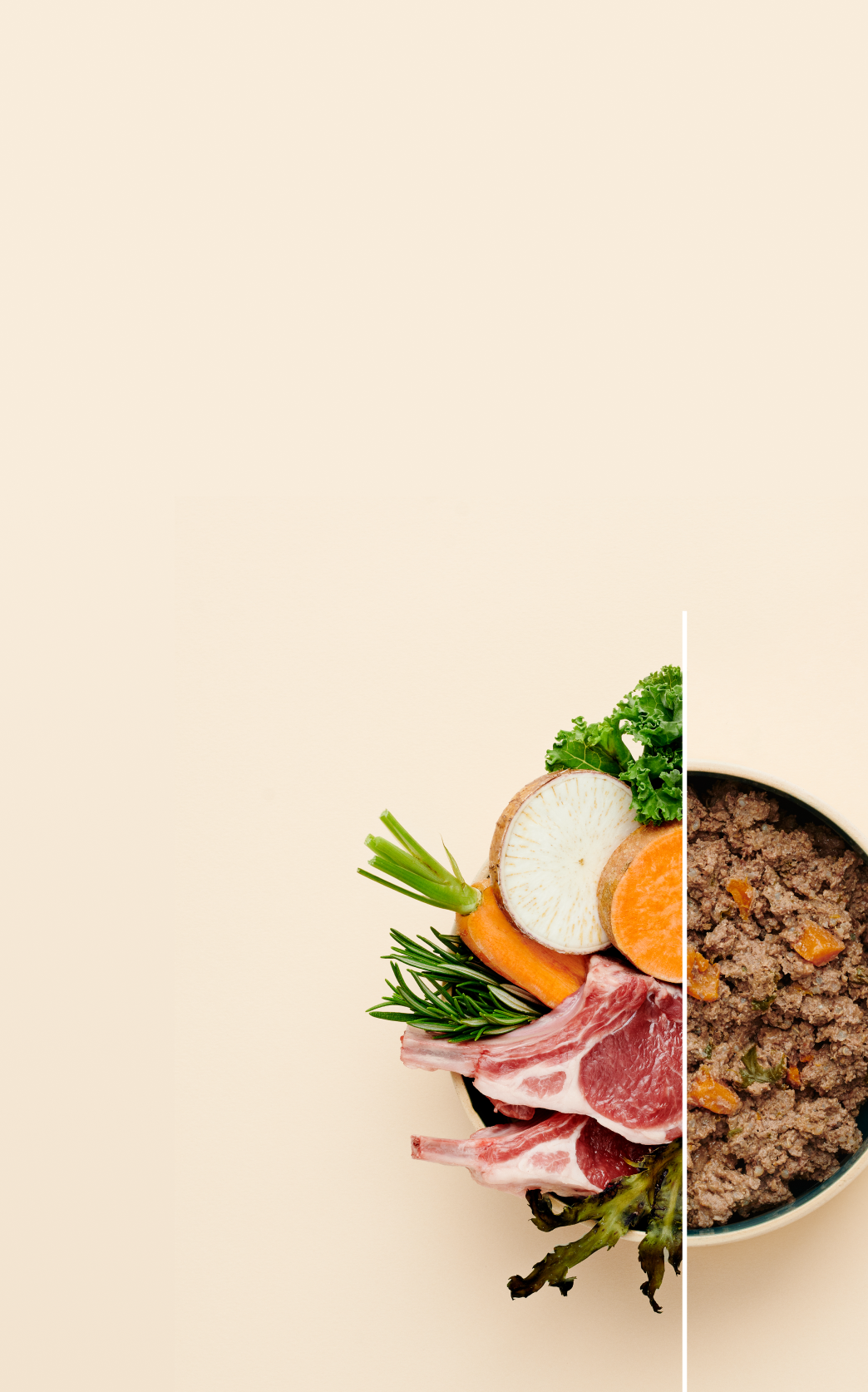
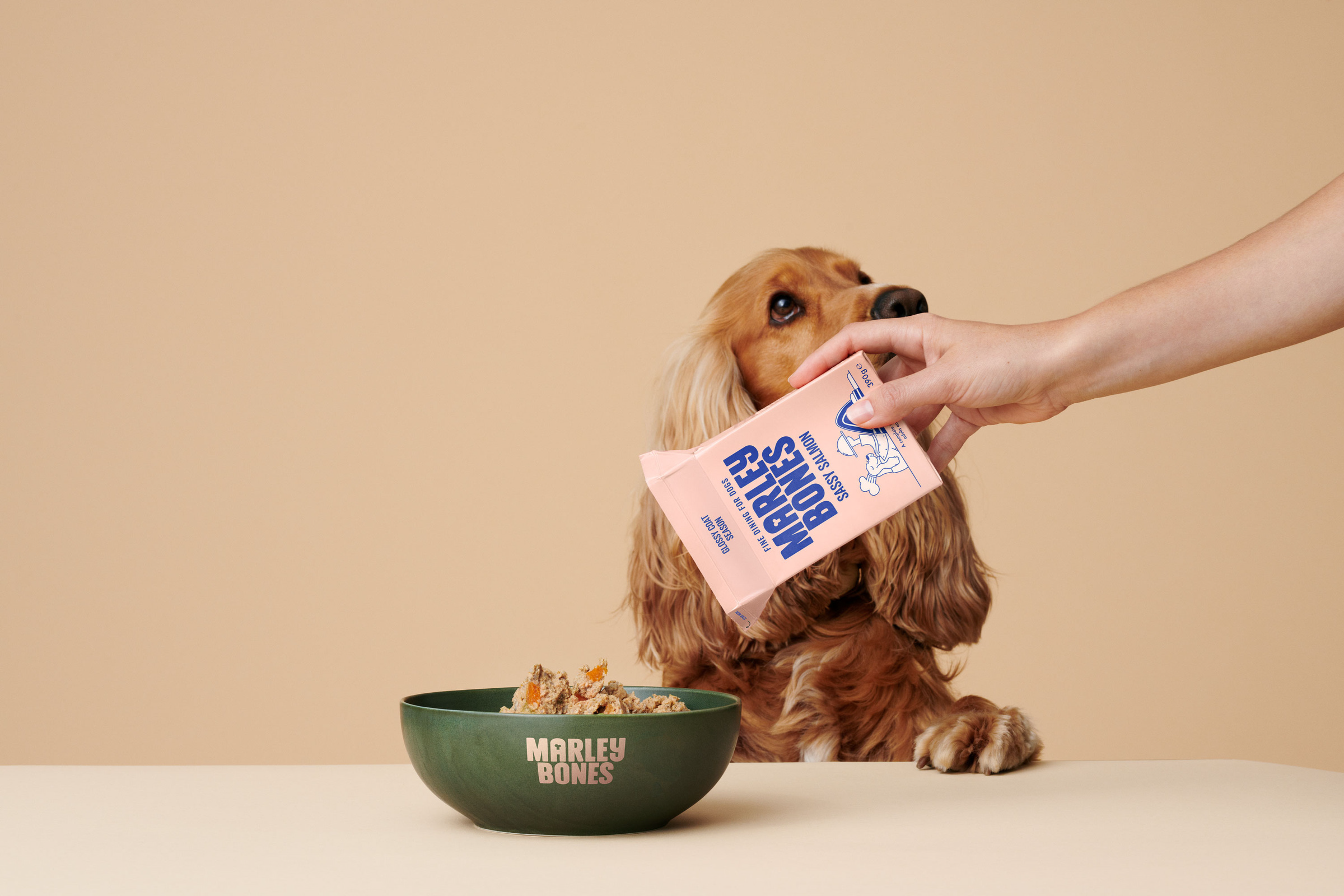
Fresh food formulated to FEDIAF standards and developed by vets is one of the more reliable options for large breed puppies, because ingredient quality and nutrient precision tend to be higher than in budget dry foods. Marleybones meals are vet-developed and FEDIAF compliant, covering all life stages including puppies — the recipes use named meat as the primary protein source and include DHA-supporting ingredients like chia seeds and linseeds.
If you are at all uncertain about whether a food is right for your puppy's breed size or rate of growth, speak to your vet. This is especially important for giant breeds like Great Danes, Mastiffs, and Newfoundlands, where skeletal development is the longest and the risks are highest.
How often and how much should you feed a large breed puppy?
Large breed puppies need more frequent meals than adults because their stomachs are smaller relative to their energy needs. The standard guidance is three meals a day up to around 6 months, then moving to two meals a day. Portion sizes for puppies shift significantly as they grow, so reviewing quantities every few weeks is sensible rather than sticking rigidly to one feeding amount for months.
Use your puppy's body condition rather than age alone to guide portions. You should be able to feel the ribs easily but not see them. A large breed puppy that looks slightly lean is in a far better position than one that looks chunky — excess weight during growth is a joint health risk that compounds over time.
Every dog is different — build your personalised Marleybones feeding and health plan tailored to your dog's age, size, and health requirements.
Treats count toward daily calorie intake. Keep them below 10% of total daily calories and choose single-ingredient options where possible. Marleybones meals are available alongside single-ingredient treats, making it easier to keep the full diet balanced.

“Such a relief to see her enjoying her food”
FAQs
Can I feed a large breed puppy adult dog food?
No. Adult dog food is not formulated to support skeletal development. It typically has the wrong calcium-to-phosphorus ratio for a growing puppy and does not provide the DHA levels needed for brain development. Always use a food labelled as complete for large breed puppies until your dog reaches physical maturity at around 18–24 months.
When should a large breed puppy switch to adult food?
Most large breeds transition to adult food between 18 and 24 months, when skeletal growth is complete. Giant breeds (over 45 kg adult weight) should stay on large breed puppy food until 24 months. Switching too early cuts off important nutritional support during the final stages of bone and joint development.
Is raw or fresh food suitable for large breed puppies?
Yes, provided the food is complete, FEDIAF compliant, and specifically formulated for large breed growth. The same rules about calcium, phosphorus, and calorie density apply regardless of food format. Raw diets that are not nutritionally complete or that have been supplemented incorrectly carry a real risk of skeletal problems in large breed puppies.
Should I add calcium supplements to my large breed puppy's food?
No. Adding calcium supplements to a complete puppy food is one of the most common causes of skeletal disease in large breeds. A complete food already contains the correct level. Adding more pushes calcium above safe limits and disrupts normal bone development. Only supplement under direct veterinary supervision.
Why does breed size affect puppy nutrition so much?
Large breeds grow at a much faster absolute rate than small breeds, and their bones stay in a soft, cartilaginous state for longer. That extended window of vulnerability means that nutritional imbalances, particularly calcium excess and overfeeding, have more time to cause damage. Small breeds reach skeletal maturity at around 10–12 months. Large breeds take up to twice as long, which is why their nutritional requirements remain distinct throughout puppyhood.
“A complete game changer!!”


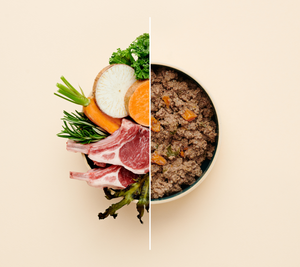 Give your dog the quality nutrition they deserve
Real meat, wholesome veggies and functional superfoods.
Get 40% OFF today