


What is colitis in dogs — and how does diet help manage it?

At a glance
- Colitis means inflammation of the large intestine — it causes loose or bloody stools, urgency, and mucus in the poo
- It can be acute (sudden, short-lived) or chronic (recurring over weeks or months)
- Common triggers include dietary changes, stress, infections, parasites, and inflammatory bowel conditions
- Diet is a frontline management tool — fibre type, protein quality, and food format all directly affect colon health
- Most dogs with colitis respond well to dietary changes within 2 to 4 weeks
What is colitis in dogs, and how do you know if your dog has it?
Colitis is inflammation of the colon — the final section of a dog's large intestine. Its job is to absorb water and electrolytes from digested food. When it becomes inflamed, that process breaks down. The result is frequent, urgent, loose stools that are often coated in mucus or streaked with fresh blood.
The key signs of colitis are different from small intestinal diarrhoea. Dogs with colitis strain to go, go frequently (sometimes more than six times a day), and produce small amounts each time. Vomiting is less common than with other gut conditions. Weight loss is also uncommon unless the colitis is severe or chronic.
Colitis can be acute — triggered by something specific, resolving within a few days — or chronic, meaning it recurs regularly or persists for more than two to three weeks. Chronic colitis almost always needs a vet investigation to rule out underlying conditions like inflammatory bowel disease (IBD), parasites, or food intolerance. Always consult your vet if symptoms are severe, include significant blood, or last longer than 48 to 72 hours.
For a broader look at how gut health connects to your dog's overall wellbeing, the complete guide to sensitive stomachs and gut health covers the full picture.
What causes colitis in dogs?
Colitis has several possible triggers, and identifying the cause shapes the treatment. The most common are:
- Dietary indiscretion — eating something they shouldn't, such as rubbish, grass, or rich human food
- Sudden food changes — switching foods too quickly disrupts the gut microbiome
- Food sensitivity or intolerance — a reaction to a specific protein, additive, or ingredient
- Stress — known as stress colitis, this is common after kennelling, fireworks, or changes in routine
- Parasites — whipworm in particular is closely associated with colitis in dogs
- Bacterial infections — Campylobacter and Clostridium are frequent culprits
- Inflammatory bowel disease — chronic immune-mediated inflammation of the gut lining
Stress colitis and dietary colitis are the most common forms seen in otherwise healthy dogs. They resolve quickly with the right food approach. IBD and parasite-related colitis need veterinary diagnosis and targeted treatment alongside dietary support.
How does diet help manage colitis in dogs?
Diet works on colitis in three ways: it reduces the inflammatory load on the colon, it supports the beneficial bacteria that keep the gut lining healthy, and it helps regulate how quickly food moves through the gut. Get those three things right and you remove the conditions that allow inflammation to take hold.
The most important dietary levers are:
Fibre — the right kind in the right amount. Soluble fibre (found in ingredients like chicory root and linseeds) ferments slowly in the colon, feeding beneficial bacteria and producing short-chain fatty acids. Those fatty acids directly repair the colon lining. Insoluble fibre adds bulk and regulates transit time. Dogs with colitis need both, but in balance — too much insoluble fibre speeds gut transit and worsens loose stools. Understanding how different fibre types work in dog food helps explain why ingredient choices matter so much here.
High-quality, digestible protein. Poor-quality protein that reaches the colon undigested becomes a food source for the wrong bacteria. That drives fermentation, gas, and inflammation. Clean, single-source proteins from named meat ingredients are digested higher up in the gut, leaving less residue to cause problems lower down.
No unnecessary additives. Artificial colours, flavours, and some preservatives are associated with gut irritation. Eliminating them removes one source of ongoing inflammation. Marleybones meals contain no artificial preservatives and no fillers — the vet-developed recipes are built around named whole ingredients, which matters specifically for dogs whose colitis is driven by ingredient sensitivity.
Hydration and moisture content. Dry kibble absorbs water in the gut, which can worsen the dehydration associated with loose stools. Wet or fresh food delivers moisture with every meal, helping the colon function more effectively.
What is the best food for a dog with colitis?
There is no single food that works for every dog with colitis, because the cause varies. But the evidence consistently points in the same direction: minimally processed food with identifiable ingredients, appropriate fibre, and a single quality protein source outperforms heavily processed options with long ingredient lists.
| Food characteristic | Why it matters for colitis |
|---|---|
| Named single protein source | Reduces risk of sensitivity reactions; easier to identify and eliminate triggers |
| Soluble fibre (chicory, linseeds) | Feeds beneficial gut bacteria; supports colon lining repair |
| No artificial additives | Removes a potential source of ongoing gut irritation |
| High moisture content | Supports colon hydration and normal stool formation |
| Minimal processing | Preserves protein digestibility; reduces fermentable residue reaching the colon |
For dogs with recurring colitis, a novel protein trial is often recommended by vets — this means switching to a protein the dog has never eaten before (such as lamb or salmon) for six to eight weeks, to rule out food sensitivity as a driver. Marleybones Lush Lamb uses lamb as its primary protein alongside gut-supporting ingredients including chicory root and linseeds — both directly relevant to colitis management.
Every dog is different — build your personalised Marleybones feeding and health plan tailored to your dog's age, size, and health requirements.
When transitioning food for a dog with colitis, go slowly — more slowly than you would with a healthy dog. A 10-day transition (starting at 10% new food and increasing gradually) reduces the risk of triggering a flare. If your dog is currently symptomatic, wait until the acute episode has settled before switching.

“Such a relief to see her enjoying her food”
FAQs
How long does colitis last in dogs?
Acute colitis typically resolves within 3 to 5 days with appropriate dietary management. If symptoms persist beyond 72 hours, worsen, or include significant blood, contact your vet. Chronic colitis is defined as recurring or persisting beyond 3 weeks and needs veterinary investigation.
Can stress cause colitis in dogs?
Yes. Stress colitis is a well-recognised form of acute colitis triggered by changes in routine, kennelling, loud events like fireworks, or separation anxiety. The gut and brain are directly connected via the gut-brain axis. Managing the stressor alongside diet gives the fastest resolution.
Is colitis the same as IBD in dogs?
No, though they overlap. IBD (inflammatory bowel disease) is a chronic immune-mediated condition that can affect the small or large intestine. Colitis specifically refers to inflammation of the large intestine (colon) and can be caused by many things, including IBD, parasites, infection, or diet. IBD is diagnosed by biopsy, not by symptoms alone.
Should I withhold food if my dog has colitis?
Short-term fasting (12 to 24 hours) used to be standard advice for acute colitis, but current veterinary guidance favours continuing to feed with a bland, easily digestible diet. Withholding food can disrupt the gut microbiome and slow recovery. A plain, low-fat, high-digestibility meal is better than nothing.
Can colitis in dogs be cured permanently?
Acute colitis caused by a specific trigger — a dietary indiscretion, a temporary infection, or a stressful event — resolves completely once the cause is removed. Chronic colitis linked to IBD or food intolerance is managed rather than cured, but many dogs achieve long-term remission through consistent dietary control and, where needed, veterinary treatment.
“A complete game changer!!”


 Give your dog the quality nutrition they deserve
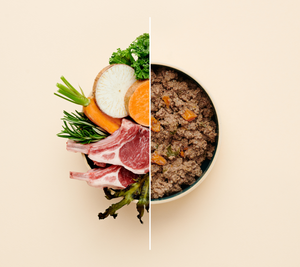
Real meat, wholesome veggies and functional superfoods.
Get 40% OFF today