



What Causes Wind in Dogs After Eating - and How to Fix It

At a glance
- Swallowing air while eating too fast is one of the most common causes of dog flatulence
- Fermentable ingredients — including certain fibres, fillers, and legumes — produce gas as they break down in the gut
- Low-quality or hard-to-digest protein leaves more undigested material for gut bacteria to ferment
- Switching food too quickly disrupts gut bacteria and causes a temporary spike in wind
- Persistent or foul-smelling flatulence can signal an underlying digestive condition
Why does my dog get so gassy after eating?
Wind in dogs after eating is caused by gas building up in the digestive tract — either from air swallowed during eating or from fermentation happening further down in the gut. Both are common, and both are usually fixable.
When dogs eat too fast, they gulp air along with their food. That air has to go somewhere. Some is absorbed into the bloodstream, but most passes through the gut and exits as flatulence. Greedy eaters, anxious dogs, and flat-faced breeds like Bulldogs and Pugs are especially prone to this because of their anatomy and eating behaviour.
The other main cause is fermentation. The large intestine is home to billions of bacteria that break down undigested food. When a lot of material arrives there undigested — because the food was hard to break down in the first place — those bacteria produce gas as a byproduct. The more fermentation, the more wind.
Most dog flatulence sits within the scope of common gut health challenges that respond well to dietary and lifestyle changes. It becomes a vet issue when it is severe, persistent, or accompanied by other symptoms like bloating, loose stools, or a change in appetite.
Which ingredients in dog food cause the most wind?
Certain ingredients are far more likely to cause gas than others. The main culprits are fermentable carbohydrates and poorly digestible proteins.
Legumes — including peas, lentils, and soya — are high in oligosaccharides. These are complex sugars that dogs cannot fully digest. They pass into the large intestine mostly intact and feed gas-producing bacteria. Many budget dry foods use these ingredients in large quantities as cheap protein and carbohydrate sources.
Fillers like corn, wheat, and rice bran are similar. They add bulk to a food but contribute little nutritional value and a lot of fermentable material. Artificial additives and preservatives can also disrupt the gut bacteria balance, increasing gas production.
Protein quality matters too. Low-grade protein — from unnamed meat meals, by-products, or plant sources with poor amino acid profiles — is harder for dogs to absorb. More of it ends up in the large intestine undigested, giving bacteria more to work with. Higher-quality, fresh protein is absorbed earlier in the digestive process, leaving less residue to ferment.
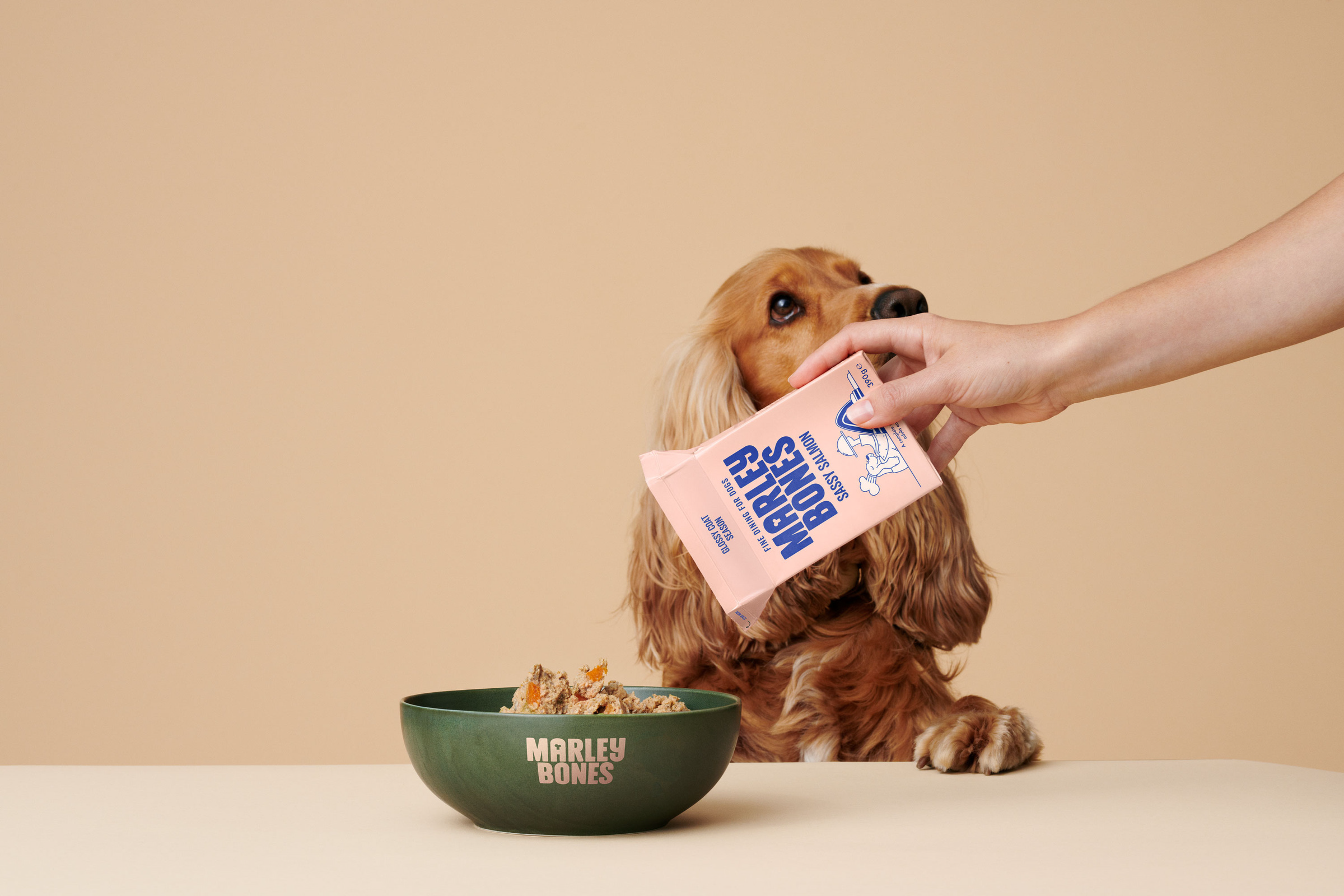
Marleybones meals use freshly prepared meat and fish with no fillers, which means less undigested material reaching the large intestine where fermentation happens. The Sassy Salmon recipe, for example, uses whole salmon as the primary ingredient — a highly digestible protein source that leaves minimal residue.
What feeding habits make flatulence worse?
Food is only half the picture. How a dog eats matters as much as what they eat.
Eating too fast is the single biggest behavioural cause of excess wind. Dogs that bolt their food inhale air with every mouthful. A slow feeder bowl or a snuffle mat forces them to work for each piece, cutting eating speed by around 50% and significantly reducing air intake.
Feeding one large meal a day means the gut has to process a large volume of food at once. Splitting the daily portion into two smaller meals keeps digestion more manageable and reduces the amount of fermentable material hitting the large intestine in one go.
Switching foods too quickly is another common trigger. The gut microbiome — the community of bacteria living in your dog's digestive system — needs time to adapt to a new food. Changing diet over 7 to 10 days, rather than all at once, prevents the temporary spike in gas that comes with a sudden shift. The right balance of dietary fibre plays a central role in this process — understanding how fibre works in dog food helps you choose ingredients that support gut bacteria rather than destabilise them.
Exercise after eating also slows digestion in large breeds and can contribute to bloating. A short rest after meals is sensible, particularly for deep-chested dogs.
When should I take my dog to the vet about flatulence?
Most cases of dog wind are harmless. But some are a sign of something that needs professional attention.
See a vet if your dog's flatulence is severe, has appeared suddenly, or is accompanied by any of the following:
- Visible bloating or a distended abdomen
- Vomiting or diarrhoea alongside the wind
- A significant change in appetite or energy
- Weight loss without a change in food intake
- Wind that smells unusually foul and has not improved with dietary changes
Conditions like exocrine pancreatic insufficiency (EPI) — where the pancreas does not produce enough digestive enzymes — cause severe gas because food passes through undigested. Inflammatory bowel disease (IBD) and food intolerances can produce the same result. These require diagnosis and targeted treatment, not just a food swap.
Every dog is different — build your personalised Marleybones feeding and health plan tailored to your dog's age, size, and health requirements.

“Such a relief to see her enjoying her food”
Frequently asked questions about wind in dogs
Is it normal for dogs to fart every day?
Some flatulence is normal. Dogs produce gas as a natural byproduct of digestion. Daily wind in small amounts is not a concern. Frequent, foul-smelling, or disruptive flatulence is worth investigating.
Can switching to fresh food reduce my dog's wind?
Yes, in most cases. Fresh food uses whole, recognisable ingredients with higher digestibility. More of the food gets absorbed before it reaches the large intestine, which means less material available for fermentation and less gas produced. The change is not instant — allow 2 to 3 weeks for the gut to adjust fully.
Do certain dog breeds fart more than others?
Flat-faced breeds — Bulldogs, Pugs, Boxers, French Bulldogs — fart more because their anatomy makes it harder to eat without swallowing air. Large, deep-chested breeds like Great Danes and German Shepherds are also more prone to gas and bloating. Feeding habits and food quality still matter regardless of breed.
Can dog treats cause wind?
Yes. Treats made with soya, wheat, or artificial additives contribute the same way poor-quality food does. High-meat treats with a short, clean ingredients list are far less likely to cause gas. Watch out for rawhide chews too — they are difficult to digest and a common cause of bloating and wind.
Should I give my dog a probiotic for flatulence?
A probiotic can help by rebalancing the gut bacteria that drive fermentation. It works best alongside a dietary change rather than as a standalone fix. Prebiotic ingredients in the food — like chicory root, which feeds beneficial bacteria directly — support the same process from the inside out.
“A complete game changer!!”


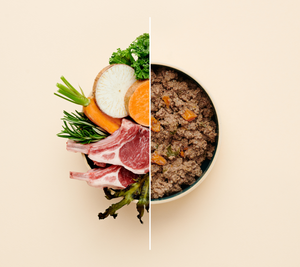 Give your dog the quality nutrition they deserve
Real meat, wholesome veggies and functional superfoods.
Get 40% OFF today