
Should you feed your dog before or after exercise?

At a glance
- Feed your dog after exercise — not immediately before
- Wait at least 2 hours after a large meal before vigorous exercise
- Wait at least 30 minutes after exercise before feeding
- Feeding before exercise raises the risk of bloat (gastric dilatation-volvulus), which can be fatal
- Deep-chested breeds — Great Danes, Weimaraners, German Shepherds — are at highest risk
Should you feed your dog before or after exercise?
Feed your dog after exercise. Giving a full meal before vigorous activity increases the risk of gastric dilatation-volvulus (GDV), commonly called bloat. This is a condition where the stomach fills with gas and can twist on itself. It is a veterinary emergency with a fatality rate of up to 30% even with treatment.
The standard guidance from veterinary professionals is to wait at least two hours after a large meal before exercising your dog. After exercise, wait a minimum of 30 minutes before feeding. This gives the digestive system time to settle before food arrives.
Feeding your dog after exercise, rather than before, is one of the simplest ways to reduce the risk of bloat and support healthy digestion. Getting meal timing right sits alongside portion size and food quality as a core part of feeding your dog well.
Why is feeding before exercise dangerous?
When a dog exercises on a full stomach, the movement causes gas and food to shift around inside the stomach. In some dogs, this leads to the stomach expanding rapidly (dilatation) and then rotating (volvulus). Once the stomach twists, blood supply is cut off. Without emergency surgery, a dog can die within hours.
Bloat is more common in large and giant breeds with deep, narrow chests. Breeds at elevated risk include Great Danes, Standard Poodles, Weimaraners, German Shepherds, and Dobermanns. However, any dog can develop GDV, and there are documented cases in smaller breeds too.
Eating rapidly, drinking large amounts of water immediately after exercise, and exercising within an hour of a meal are all established risk factors. Splitting daily food into two smaller meals also reduces risk compared to one large daily meal.
How long should you wait before and after exercise?
The waiting times vary depending on the size of the meal and the intensity of the exercise.
| Situation | Recommended wait time |
|---|---|
| Large meal before vigorous exercise | At least 2 hours |
| Small snack or treat before a short walk | 30 minutes |
| After vigorous exercise before feeding | At least 30 minutes |
| After a short, calm walk before feeding | 15–20 minutes |
A gentle stroll around the block after a meal is generally fine. The risk comes from high-intensity activity: running, fetch, agility, or rough play. If you are unsure about the right routine for your dog's size and health, speak to your vet. This is especially important for deep-chested breeds or dogs that have had previous digestive issues.
Does the type of food affect how long you should wait?
Yes. Highly processed foods with fillers and low moisture content can sit heavier in the stomach and take longer to begin moving through the digestive system. Fresh food made from whole ingredients is generally digested more efficiently, which matters when you are timing meals around activity.
The quality of protein in your dog's food also affects how the body handles exercise recovery. After a run or an active session, dogs use protein to repair muscle tissue. Food with high-quality, named meat protein — chicken, beef, lamb, salmon — delivers more of what the body needs for that repair process compared to food built around low-grade by-products or plant protein fillers.
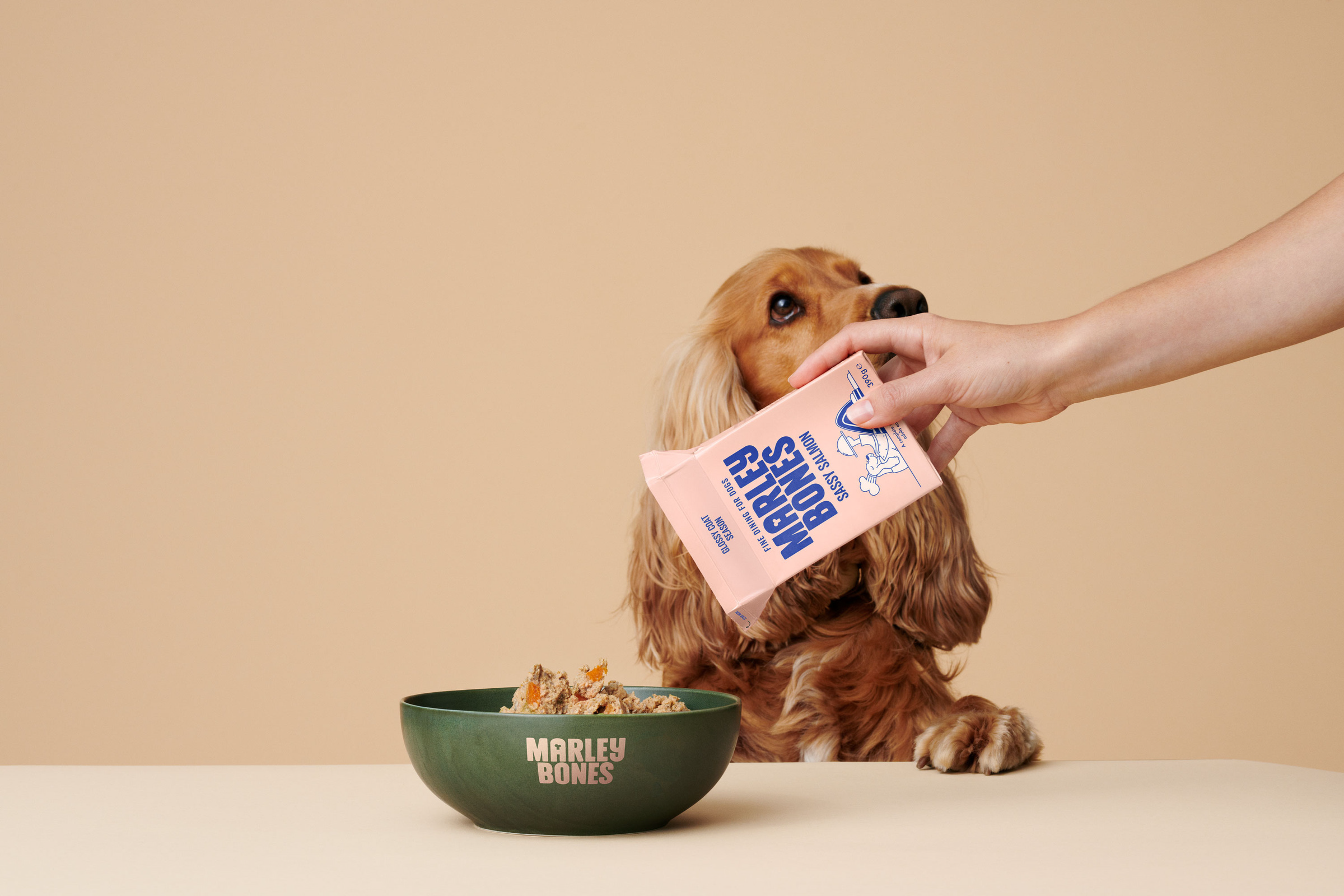
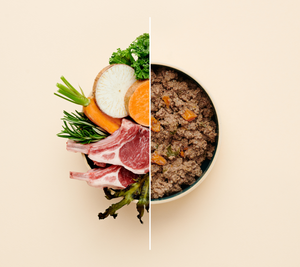
Marleybones Pantry Fresh meals are made from freshly prepared whole ingredients, slow-cooked in-pack with no preservatives or fillers. The vet-developed recipes are designed to be nutritionally complete for all life stages, which means they support both everyday feeding and active dogs that need reliable nutrition around exercise. See the full range of Marleybones meals if you want to explore options.
Every dog is different — build your personalised Marleybones feeding and health plan tailored to your dog's age, size, and health requirements.
Are there any dogs that need a different approach?
Puppies, senior dogs, and dogs recovering from illness all have specific needs that can affect meal timing around exercise.
- Puppies — have smaller stomachs and higher energy demands. They eat more frequently (3–4 times daily) and need shorter, less intense exercise sessions. Apply the same before/after rules, scaled to their meal size.
- Senior dogs — are often less active but can have slower digestion. Stick to the standard waiting times and avoid vigorous exercise after meals.
- Dogs with digestive conditions — if your dog has a history of bloat, IBD, or other gastrointestinal problems, timing becomes even more critical. Work with your vet to set a specific routine.
- Highly active or working dogs — dogs doing sustained high-intensity work (agility, hunting, canicross) benefit from smaller meals spread across the day rather than one or two large meals.
For more on building the right feeding schedule across your dog's life, the new dog owner's guide to feeding covers portion sizing and meal frequency in detail.

“Such a relief to see her enjoying her food”
Frequently asked questions
Can I take my dog for a short walk straight after eating?
A calm, short walk is generally fine after eating. The risk of bloat comes from vigorous, high-intensity activity. Save running, fetch, and energetic play for at least two hours after a full meal.
What are the signs of bloat in dogs?
Signs of bloat include a visibly swollen abdomen, unproductive retching (trying to vomit but bringing nothing up), restlessness, drooling, and signs of pain or distress. Bloat is a life-threatening emergency. Get to a vet immediately if you notice these symptoms.
Should I feed my dog before or after a morning walk?
Feed after the walk. A short morning walk on an empty stomach is safe and avoids any digestive risk. Offer the meal once you are back home and your dog has settled for 15–20 minutes.
Does it matter if I feed my dog before agility or training classes?
Yes. Do not feed a full meal within two hours of an agility session or intensive training class. A small, light treat as reward during training is fine. Save the main meal for afterwards, once your dog has rested.
Is it safe to give treats before exercise?
Small treats before or during light exercise are safe. Avoid giving large quantities immediately before vigorous activity. Treats used during training sessions are generally given in small enough amounts that they do not pose a meaningful bloat risk.
“A complete game changer!!”


 Give your dog the quality nutrition they deserve
Real meat, wholesome veggies and functional superfoods.
Get 40% OFF today