






Reactive Dog on the Lead: What It Means and How to Help

At a glance
- Lead reactivity means a dog overreacts to a trigger — barking, lunging, or freezing — in a way that is out of proportion to the situation
- The most common cause is fear or frustration, not dominance or aggression
- Reactivity is almost always made worse by tension in the lead
- Desensitisation and counter-conditioning are the two most evidence-backed training approaches
- Diet and overall physical health can influence a dog's baseline stress levels and capacity to learn
What does it mean when a dog is reactive on the lead?
A reactive dog on the lead is one that responds to a trigger — another dog, a jogger, a cyclist, a loud noise — with behaviour that is intense and hard to redirect. That might be barking, lunging, spinning, snapping at the air, or freezing completely. The key word is disproportionate. A dog that glances at another dog and moves on is not reactive. A dog that erupts every time one comes into view is.
Reactivity is not a personality flaw and it is not a sign of a dangerous dog. It is a sign of a dog that is struggling emotionally. Most reactive dogs are either frightened of the trigger or deeply frustrated that they cannot get to it. The lead amplifies both feelings. It removes the dog's ability to flee or approach, which are the two natural responses to a perceived threat or exciting stimulus. That restriction is why behaviour that rarely appears off-lead can become overwhelming on it.
Reactivity is extremely common. Research suggests that fear-related behaviours affect a significant proportion of the domestic dog population, with some studies estimating that over 70% of dogs show fearful behaviour in at least one context. If your dog is reactive, you are not alone and it is not your fault.
Why do some dogs become reactive on the lead?
The roots of lead reactivity are nearly always a combination of genetics, early experience, and learning history. Understanding the cause does not fix the problem, but it shapes how you approach the solution.
Insufficient socialisation during the critical developmental window — roughly 3 to 12 weeks of age — is one of the most common contributing factors. Dogs that were not exposed to a wide variety of people, animals, sounds, and environments during this period are more likely to find the world threatening as adults. This is particularly relevant for dogs that came from understimulating environments or were separated from their litter very early.
A single traumatic event can also trigger reactivity. One bad encounter with an aggressive dog, a fall, or a frightening noise at the wrong moment can create a lasting association that generalises to a whole category of triggers.
Breed also plays a role. Some breeds were developed with heightened alertness, strong prey drive, or territorial instincts. These traits make reactivity more likely to emerge — especially when combined with under-socialisation or an inconsistent early environment.
Finally, a dog's physical state affects its threshold. A dog that is in pain, sleep-deprived, poorly nourished, or chronically stressed has a lower tolerance for triggers. This is where day-to-day management and overall health become part of the picture. Understanding how your dog's life stage affects their nutritional needs is one of the things that supports a calmer, more resilient dog overall.
How do you actually help a reactive dog on the lead?
There is no quick fix. What works is systematic, calm, and consistent work — ideally with the guidance of a qualified force-free behaviourist or trainer.
The two approaches with the strongest evidence base are desensitisation and counter-conditioning. Desensitisation means gradually exposing the dog to its trigger at a low enough intensity that it does not react — starting far away, at a low level, and building up extremely slowly. Counter-conditioning means pairing the trigger with something the dog loves (usually high-value food) so the emotional response changes from fear or frustration to anticipation of something good.
The most common mistake owners make is progressing too quickly. If your dog is reacting, you are too close or the trigger is too intense. Every reaction reinforces the pattern. Every calm moment at distance starts to undo it.
Practical steps that support progress:
- Work at distance — find your dog's threshold and stay below it
- Use a front-clip harness or head collar to reduce pulling without causing pain
- Keep your own body language calm — a tight lead communicates your tension directly to the dog
- Mark and reward the moment your dog notices the trigger but stays calm — this is the behaviour you want to build
- Avoid flooding, which means forcing the dog to face the trigger until it stops reacting. This causes harm, not improvement
If your dog's reactivity is severe, worsening, or has led to a bite, consult a vet before starting a behaviour programme. Pain and underlying medical conditions are a genuine driver of reactivity in some dogs, and a vet check rules that out.
Does diet or nutrition have any role in a reactive dog's behaviour?
Nutrition does not cure reactivity. But the link between diet and behaviour is more direct than most owners realise. A dog's gut and brain communicate through what is known as the gut-brain axis. Gut health influences the production of neurotransmitters — the chemical signals that regulate mood and stress response. A dog with chronic digestive discomfort or poor nutritional intake is operating under constant low-level physical stress, which lowers the threshold at which it reacts to triggers.
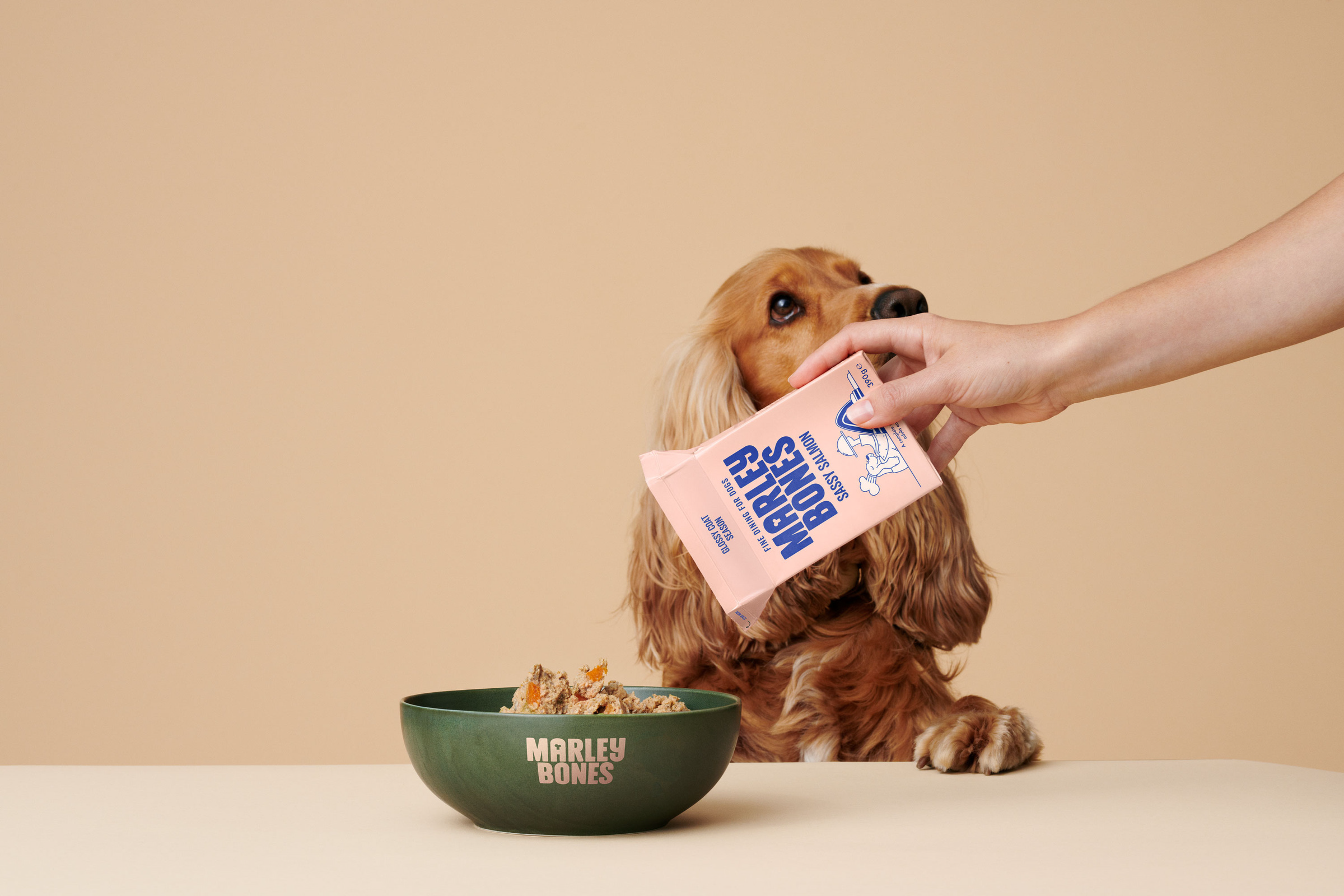
High-quality, complete nutrition supports steady energy, stable mood, and better capacity for learning. Marleybones meals are vet-developed and FEDIAF compliant, meaning they meet the nutritional standards required for every life stage — including dogs in active training. The recipes include chicory root, a natural prebiotic that feeds the beneficial bacteria that help keep digestion and mood-related gut signals stable.
Treats matter too. High-value food rewards are central to counter-conditioning work. Soft, smelly, single-ingredient treats work best because they are easy to eat quickly and dogs find them highly motivating. Every dog is different — build your personalised Marleybones feeding and health plan tailored to your dog's age, size, and health requirements.
What you feed your dog is one of the few things you can control completely. It will not resolve reactivity on its own, but it puts your dog in the best possible position to learn. You can explore Marleybones meals if you are looking for a complete, preservative-free option to support your dog's overall health during training.

“Such a relief to see her enjoying her food”
FAQs
Is a reactive dog dangerous?
Not necessarily. The vast majority of reactive dogs are frightened or frustrated, not aggressive. Reactivity describes an emotional state and the behaviours that come from it — barking, lunging, and spinning are usually displacement behaviours rather than predatory or offensive aggression. That said, a reactive dog that has escalated to biting should be assessed by a vet and a qualified behaviourist as a priority.
Can reactivity be cured completely?
For most dogs, reactivity can be significantly reduced. Some dogs reach a point where they pass triggers calmly with no visible stress. Others always have a lower threshold than the average dog and need ongoing management. Progress depends on the dog's history, the severity of the reactivity, and the consistency of the training approach. Improvement is the realistic goal, not a guarantee of a complete cure.
What breed of dog is most reactive on the lead?
No single breed is universally most reactive, but herding breeds (Border Collies, Australian Shepherds), working breeds with strong guarding instincts (German Shepherds, Rottweilers), and high-prey-drive terriers tend to have higher rates of lead reactivity. That is because reactivity is linked to traits like heightened alertness and drive, which are exactly what those breeds were selected for. Individual variation within breeds is enormous.
Should I use a muzzle on a reactive dog?
A properly fitted basket muzzle is a sensible safety tool for dogs that have snapped or bitten. It does not solve reactivity, but it allows safe training to continue in environments where a bite is a real risk. Muzzles should always be introduced gradually using positive association — never put on a dog without prior conditioning, as that creates its own fear response.
How long does it take to see improvement in a reactive dog?
Most owners working consistently with a qualified trainer begin to see meaningful improvement within 8 to 12 weeks. Full progress often takes several months to over a year, depending on the dog's history and the frequency of training sessions. The single most important variable is consistency — irregular training produces irregular results.
“A complete game changer!!”


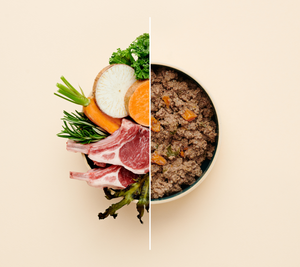 Give your dog the quality nutrition they deserve
Real meat, wholesome veggies and functional superfoods.
Get 40% OFF today