







Best Dog Food for a Fussy Labrador

At a glance
- Labradors that refuse food are usually responding to low palatability, not a lack of appetite — food quality is the first variable to change.
- Fresh, minimally processed dog food delivers stronger aroma and flavour than kibble, which is the single biggest factor in winning over a fussy eater.
- Marleybones Pantry Fresh meals are vet-developed, FEDIAF compliant, and complete for all life stages including puppies.
- Shelf-stable without refrigeration or freezing, Pantry Fresh combines fresh-food palatability with everyday convenience.
- 9 in 10 fussy dogs love Marleybones — a figure backed by over 2,000,000 meals delivered and a 4.9/5 Trustpilot rating.
Why is my Labrador suddenly a fussy eater?
Labradors have a genetic mutation — a deletion in the POMC gene — that disrupts the normal feeling of fullness, making them one of the most food-motivated breeds in existence. This is well-documented in veterinary genetics research. So when a Labrador refuses a meal, it is a meaningful signal.
The most common causes are straightforward. Kibble that has gone stale loses its aromatic compounds quickly once the bag is open, and Labs notice. A sudden formula change from a manufacturer, feeding too many treats so the main meal no longer seems worth eating, or a brief period of illness can all trigger selective eating. In younger Labs, teething causes jaw discomfort that makes hard kibble unappealing.
In a small number of cases, persistent food refusal alongside weight loss, lethargy, or digestive changes points to an underlying health issue. A vet check is the right call if the fussiness lasts more than a week or comes with other symptoms. For the majority of fussy Labs, though, the fix is a more palatable, higher-quality food.
How do different dog food formats compare for a fussy Labrador?
| Format | Palatability | Convenience | Nutritional completeness | Suitable for fussy Labs? |
|---|---|---|---|---|
| Pantry Fresh (e.g. Marleybones) | Very high — slow-cooked real ingredients retain strong aroma and flavour | High — shelf-stable, no freezer needed | Complete for all life stages, FEDIAF compliant | Yes — 9 in 10 fussy dogs accept it |
| Frozen raw | Very high — natural scent and texture appeal to dogs | Low — requires freezer space, daily defrosting, careful hygiene handling | Varies by brand; some complete, some not | Yes, if handling demands suit your household |
| Cold pressed | Moderate — gentler processing than kibble preserves more aroma | High — long shelf life, easy to store | Generally complete | Better than standard kibble for picky eaters |
| Dry kibble | Low to moderate — high-heat extrusion degrades aroma and flavour compounds | Very high — long shelf life, easy to measure | Generally complete | Often the root cause of fussiness in Labs |
| Wet canned | High — strong smell and soft texture suit sensitive eaters | Moderate — heavy to store in volume, opened tins need refrigeration | Complete options widely available | Yes — a solid step up from dry kibble |
What is the best labrador fussy eater food to try first?
Start with a fresh or minimally processed format before assuming your Labrador has a medical problem. The gap in palatability between high-quality fresh food and standard dry kibble is substantial, and most fussy Labs respond within the first few meals.
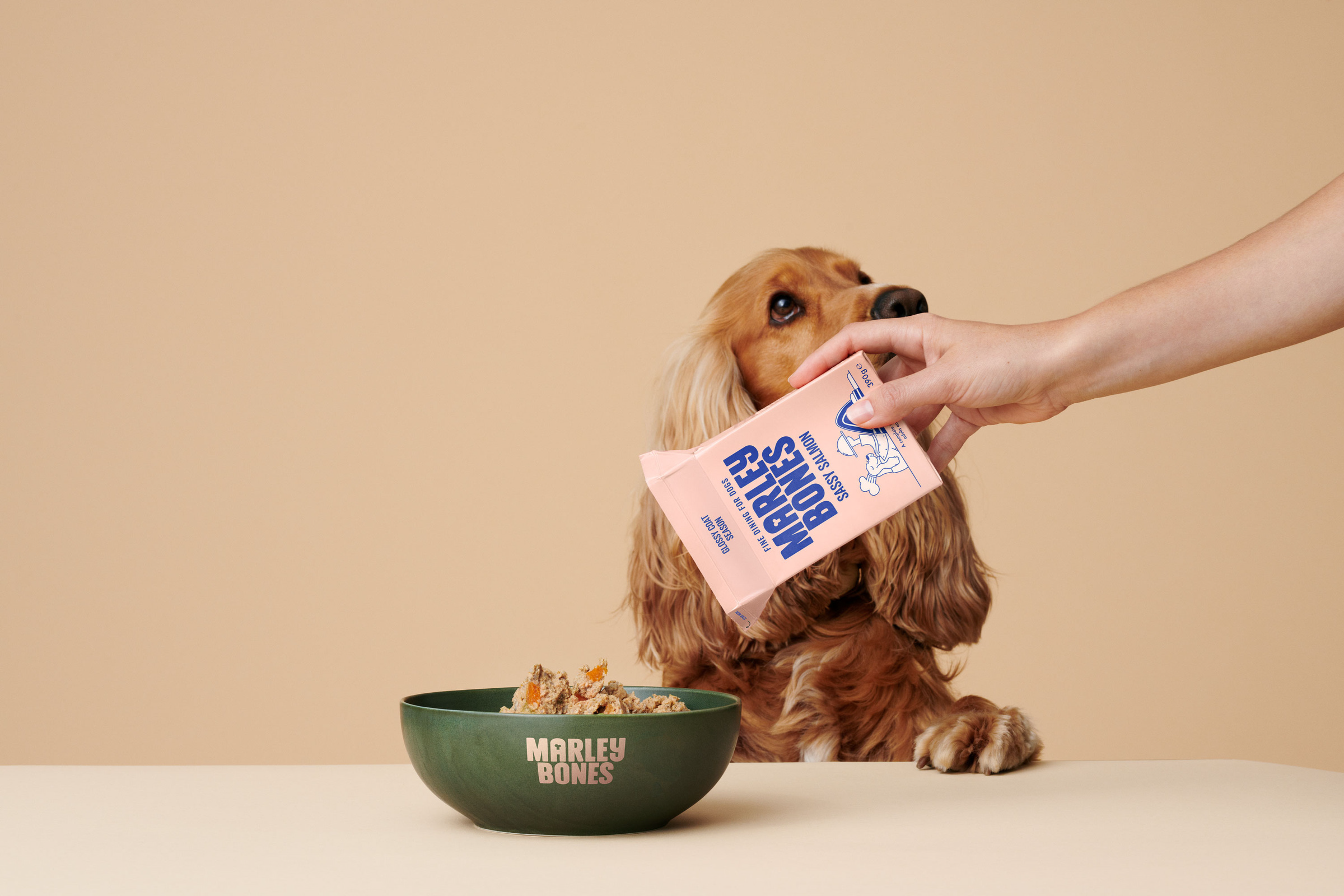
Aroma is the decisive factor. Dogs experience flavour primarily through scent, and fresh food retains far more volatile aromatic compounds than kibble, which is extruded at temperatures above 120°C. Marleybones Pantry Fresh meals are slow-cooked in-pack from freshly prepared ingredients, which locks in the smell and taste that make a Lab actually want to eat. The four recipes — Boss Beef, Chic Chicken, Lush Lamb, and Sassy Salmon — give you genuine variety to identify which protein your dog responds to best.
Texture matters too. Labs that resist hard kibble often accept softer food immediately. Pantry Fresh has a natural moist texture without relying on artificial palatability enhancers or fillers — what you see in the pack is what your dog eats.
If your Lab is a younger pup, note that Marleybones is complete for all life stages, so there is no need to transition to a different product as they grow.
Should I try different proteins or stick to one?
Try different proteins systematically rather than cycling through them randomly. A Labrador rejecting chicken may accept salmon enthusiastically — protein source is a genuine palatability variable, not just a marketing angle.
Fish-based recipes tend to produce a stronger aroma, which some dogs find irresistible. Marleybones Sassy Salmon is a useful starting point for a Lab that has been completely uninterested in previous food, precisely because the scent profile is distinct from the meat-based options. Boss Beef and Lush Lamb suit dogs that respond well to rich, savoury smells.
Introduce a new protein over four to five days by mixing it with the current food in increasing proportions. This reduces digestive upset and also gives you a cleaner read on whether the new protein is genuinely preferred or simply novel. Once you find the one your Labrador consistently clears the bowl for, stick with it as the base and rotate occasionally to maintain interest.
Are there feeding habits that make Labrador fussiness worse?
Several common feeding habits actively create or reinforce fussy behaviour in Labs, and changing them costs nothing.
- Free feeding: Leaving food down all day removes the appetite signal that makes a meal appealing. Structured meal times — two meals a day for adult Labs — create genuine hunger that improves acceptance of any food.
- Treat overload: Labs are expert operators. If training treats, chews, and table scraps add up to a significant calorie portion of the day, the main meal becomes optional. Audit total treat calories and reduce if necessary.
- Inconsistent feeding location: Noise, other pets, and high-traffic areas cause stress-related appetite suppression in some dogs. A quiet, consistent spot helps.
- Stale kibble: An open bag of dry food loses its fat-derived aroma within two to three weeks. If you are feeding kibble, buy smaller bags more frequently or transfer to an airtight container immediately on opening.
- Warming food: Gently warming wet or fresh food to just below body temperature (around 35°C) intensifies aroma and improves acceptance — particularly useful during a transition to a new food.

“A complete game changer!!”
FAQs
Is it normal for a Labrador to be a fussy eater?
It is less common than in other breeds due to the POMC gene variant that reduces satiety signals in Labs, but it does happen. Fussiness in a Labrador is almost always a response to food quality, palatability, or a feeding routine issue rather than a genuine preference for going hungry. Rule out medical causes if refusal persists beyond a week or is accompanied by other symptoms.
How quickly will a fussy Labrador accept a new food?
Most dogs that are going to accept a new food show a positive response within two to three meals. Transition over four to five days by mixing the new food in increasing proportions — 25% on day one, 50% by day three, 100% by day five. This prevents digestive upset and also confirms whether the new food is genuinely preferred.
Does Marleybones work for fussy Labradors specifically?
Marleybones reports that 9 in 10 fussy dogs accept its Pantry Fresh meals, across more than 2,000,000 meals delivered. The format — freshly prepared ingredients slow-cooked in-pack — retains the aroma and texture that drive palatability in dogs. The four protein options (Boss Beef, Chic Chicken, Lush Lamb, Sassy Salmon) allow owners to identify the protein their Lab responds to best.
Can I feed Marleybones to my Labrador puppy?
Yes. Marleybones Pantry Fresh meals are complete for all life stages including puppies, and FEDIAF compliant. There is no need to switch products as a puppy grows into an adult. Portion sizes should be adjusted according to the feeding guidelines for the puppy's current weight and expected adult size.
Where can I buy Marleybones in the UK?
Marleybones is stocked at Waitrose, Ocado, Whole Foods Market, Pets at Home online, and Co-op. A subscription with home delivery is available directly at marleybones.com, which is the most cost-effective way to maintain a consistent supply.
Should I consult a vet if my Labrador keeps refusing food?
Yes, if food refusal lasts more than seven days, or if it is accompanied by weight loss, lethargy, vomiting, or changes in drinking habits, a vet appointment is the right next step. Persistent appetite loss in a Labrador — a breed genetically predisposed to eating — warrants investigation to rule out dental pain, gastrointestinal issues, or other underlying conditions.

Gloss up your pup’s life with an omega-3 booster

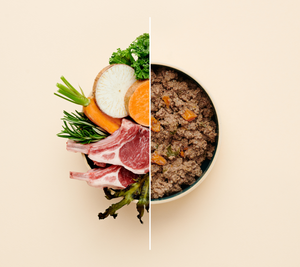 Give your dog the quality nutrition they deserve
Real meat, wholesome veggies and functional superfoods.
Get 40% OFF today