



Can Dogs Eat Turkey? The Do's and Don'ts

At a glance
- Plain cooked turkey is safe for dogs and a good source of lean protein — the preparation matters more than the meat itself
- Turkey must be served without seasonings, garlic, onions, or sauces, all of which are harmful to dogs
- Turkey skin should always be removed — the high fat content is a direct risk factor for pancreatitis
- Cooked turkey bones are dangerous and must never be given to dogs — they splinter easily and can cause choking, mouth injuries, or intestinal obstruction
- Turkey allergies in dogs are rare, but reactions do occur — introduce it gradually and monitor for any signs of intolerance
Is turkey safe for dogs?
Yes — plain cooked turkey is safe for dogs and a genuinely good source of lean protein. It is rich in protein and low in fat when served skinless, and provides useful nutrients including vitamins B3, B6, and B12, phosphorus, selenium, and zinc. The preparation is what determines whether turkey is beneficial or harmful. Served plain, it is a healthy addition to a dogs diet. Served as it typically appears in human cooking — seasoned, basted, or accompanied by onion-heavy stuffing — it is not.
The most important rules are straightforward: cook it thoroughly, remove the skin and any visible fat, strip any bones, and serve it plain with no added herbs, oils, or sauces. Turkey ham and deli meats are not appropriate — they are processed, high in sodium, and often contain preservatives that offer no nutritional value and cause digestive problems. Understanding what preservatives in dog food actually mean puts the difference between fresh meat and processed deli products into context.
Is turkey good for dogs?
Skinless cooked turkey breast or thigh is one of the better human foods to share with a dog. The protein quality is high, the fat content is low without the skin, and dogs generally find it palatable. For dogs that need a lean protein source — those managing weight, recovering from illness, or on a low-fat diet — turkey is a practical option that most dogs eat readily.
Turkey is also a useful novel protein for dogs that have developed sensitivities to more commonly used meats like beef or chicken, since it is less frequently used in commercial dog food and therefore less likely to have triggered a prior reaction.
How much turkey can a dog eat?
Turkey as an occasional treat or food topper should make up no more than 10% of a dog's daily calorie intake — the same limit that applies to all treats and additions outside the main diet. As a rough guide, a small dog can manage one to two small slices per sitting, a medium dog two to three, and a large dog three to four. These are upper limits rather than targets — turkey has no nutritional properties that make more better, and overfeeding any single protein disrupts the balance of a complete diet.
Introduce turkey gradually if it is new to the dog's diet, particularly for dogs with sensitive stomachs. A small amount on the first occasion, monitored for any digestive response, is more sensible than a full portion straight away.
Can dogs eat cooked turkey bones?
No. Cooked turkey bones are one of the more common causes of serious digestive injury in dogs and must never be given. Cooking makes bones brittle — they splinter under pressure rather than bending, producing sharp fragments that can lacerate the mouth, throat, oesophagus, and intestinal wall. The risks include choking, internal bleeding, and intestinal obstruction, all of which can require emergency surgery.
This applies to all cooked bones, not just turkey. Raw bones carry a different risk profile — lower splintering risk but a bacterial load consideration — and should only be given under veterinary guidance. If a dog needs something to chew, purpose-designed chew toys or dental treats are the safe option.
Is turkey skin safe for dogs?
No. Turkey skin is high in fat and should always be removed before giving turkey to a dog. The fat content in skin is difficult for dogs to digest and is a well-established trigger for pancreatitis — a painful and potentially serious inflammation of the pancreas. This is particularly relevant for dogs that have already had a pancreatitis episode, but the risk applies to all dogs given large amounts of fatty food.
Once the skin is removed, lean cuts like breast and thigh are safe. Dogs managing pancreatitis or other conditions requiring a low-fat diet can eat skinless turkey in moderation — it is one of the leaner protein options available.
Can dogs be allergic to turkey?
Yes, though turkey allergies in dogs are uncommon. Symptoms include itchy or irritated skin, rashes, and gastrointestinal upset. It is worth noting that reactions attributed to turkey are often caused by other ingredients in the same food rather than the turkey itself — heavily processed turkey products, for example, contain additives that are more likely to trigger a reaction than the meat. If you want to understand what is actually in your dog's food, reading the ingredients list properly is the most reliable way to identify what might be causing a reaction. If a dog reacts to plain, cooked, skinless turkey specifically, a genuine protein sensitivity is possible and worth investigating with a vet.

“Such a relief to see her enjoying her food”
FAQs
Can dogs eat turkey mince?
Yes, provided it is plain cooked turkey mince with no added seasoning, salt, or flavourings. Turkey mince is a convenient format — easy to portion, easy to mix into food, and well-tolerated by most dogs. Check the fat content on the packaging: higher-fat mince retains more of the pancreatitis risk associated with turkey skin and should be avoided for dogs on low-fat diets.
Can dogs eat leftover roast turkey?
Only if it was cooked plain. Roast turkey prepared for human consumption is almost always seasoned, basted, or cooked with garlic and onions — all of which are harmful to dogs. The turkey itself is not the problem; the preparation is. If a portion was set aside before seasoning and cooked separately, that is safe. Picking meat off the Sunday roast joint is not.
Is turkey better for dogs than chicken?
Neither is significantly better than the other nutritionally — both are lean, high-quality protein sources with a similar nutritional profile. Turkey is slightly lower in fat than chicken in equivalent cuts, which makes it marginally preferable for dogs on low-fat diets. The more relevant distinction is whether the dog has an existing sensitivity to one or the other. Dogs that react to chicken may tolerate turkey well, since it is a less commonly used protein in commercial dog food. Understanding what high meat content means on a dog food label helps when comparing products that use turkey as a primary protein.
Can puppies eat turkey?
Yes, in small amounts, plain and cooked, with the same rules that apply to adult dogs. Turkey is not a nutritional requirement for puppies and should not replace any part of a complete puppy food — their developmental requirements for protein, calcium, phosphorus, and DHA are best met by a food specifically formulated for growth. Turkey as an occasional treat alongside a complete puppy diet is fine.
Can puppies eat turkey?


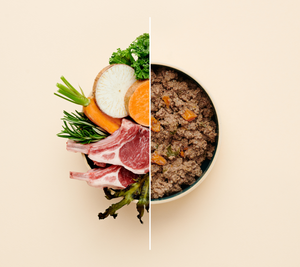 Give your dog the quality nutrition they deserve
Real meat, wholesome veggies and functional superfoods.
Get 40% OFF today