

What Does High Meat Content Actually Mean on a Dog Food Label?

At a glance
- Meat percentage claims on labels are usually calculated before cooking — the actual protein in the finished food is lower
- "Meat and animal derivatives" is a catch-all phrase that can include very low-quality parts — named meats are always preferable
- Fresh meat is heavy with water, so a "70% fresh chicken" claim doesn't mean 70% protein — it mostly means 70% wet weight before processing
- Ingredient splitting is a common trick used to push meat higher up the ingredients list
- The analytical constituents panel — the percentages of protein, fat, and fibre — tells you more about nutritional value than the headline meat claim
So what does "high meat content" actually mean?
High meat content means that animal-derived ingredients make up a substantial portion of the food — but the number brands advertise is almost never what you'd expect it to be.
The core problem is how the percentage is calculated. When a brand says "70% chicken," they're usually referring to the weight of the chicken before cooking. Fresh chicken is roughly 70-75% water. Once that water is driven off during processing, the actual contribution to the finished food is dramatically smaller. A food claiming 70% fresh chicken might deliver closer to 20-25% dry matter from chicken by the time it reaches your dog's bowl.
That's not necessarily dishonest — it's a real ingredient at a real weight. But it does mean that comparing a "70% fresh meat" claim on one bag with a "40% dried meat" claim on another is comparing apples with oranges. The dried meat claim, because most of the moisture has already been removed, may actually represent more protein in the finished food.
The number that tells you what's genuinely in the food is the analytical constituents panel — the breakdown of crude protein, crude fat, crude fibre, and moisture. That's calculated on the finished product. A food with 28% crude protein in the final analysis almost certainly delivers more protein to your dog than one with 20%, regardless of what the headline meat claim says.
What's actually in "meat and animal derivatives"?
This is where labels get genuinely murky. "Meat and animal derivatives" is a legal category under UK pet food regulations — it covers any part of a slaughtered warm-blooded land animal. That includes muscle meat, but it also includes offal, connective tissue, bone, fat trimmings, and other by-products.
None of that is automatically bad. Offal is nutritious. Bone contributes calcium. But the category gives brands enormous flexibility to use whatever's cheapest on any given production run. You have no way of knowing the split from one bag to the next.
Named meats are different. "Chicken," "lamb," or "salmon" refers to a specific species and, under UK law, must be that species. Named meats also tend to appear alongside a percentage — "45% chicken" — which gives you something concrete to work with. When you can see a named meat with a declared percentage, you're looking at a more transparent label.
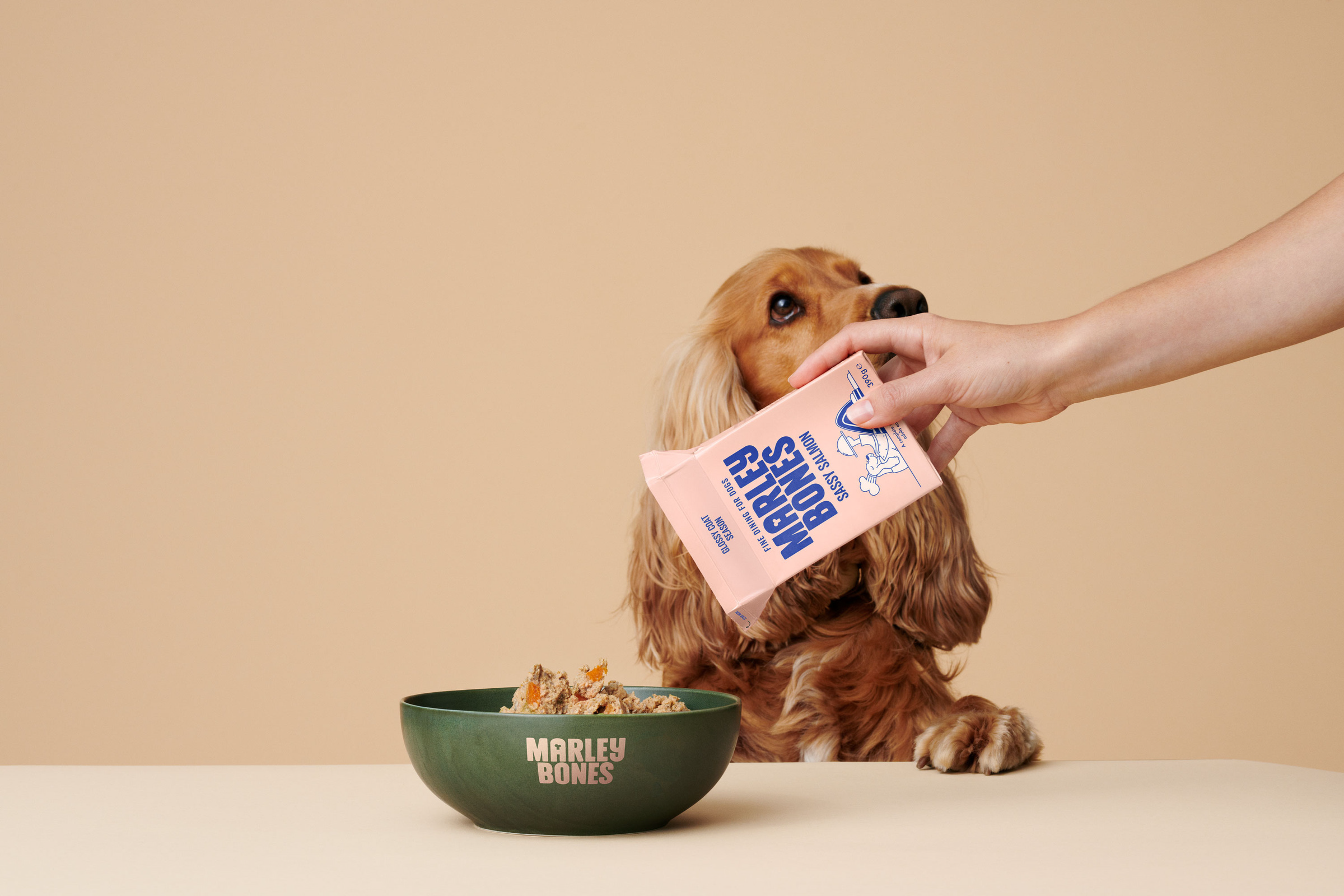
Marleybones lists its meat sources by name and species in every recipe — Boss Beef uses named British beef, Chic Chicken uses named chicken — so you're never left guessing what animal you're actually feeding.
What is ingredient splitting and why does it matter?
Ingredients lists are written in descending order by weight. Brands know this, and some exploit it through a technique called ingredient splitting.
Say a food is primarily made of rice, but also contains chicken. The manufacturer might list rice as a single ingredient and split the chicken into "chicken," "dried chicken," and "chicken liver" as separate entries. Each chicken component sits lower on the list individually — but added together, chicken might actually outweigh the rice. The label creates the impression of a meat-first food when the reality is different.
The honest way to read a dog food label is to look at the ingredients list sceptically, check for splitting, and then cross-reference with the analytical constituents panel. If crude protein is low despite a bold meat claim on the front, something doesn't add up.
Does higher meat content mean better food for your dog?
Generally, yes — but only if it's the right kind of meat, and only if the protein is actually digestible.
Dogs are omnivores with a strong physiological preference for animal protein. Amino acids — the building blocks proteins are made of — are more bioavailable (meaning more easily absorbed and used by the body) from animal sources than from plant sources. A food that genuinely delivers high-quality, named animal protein supports muscle maintenance, immune function, coat condition, and energy levels more effectively than one padded with plant-based protein or fillers.
The difference between fresh or gently cooked meat and the heavily rendered proteins used in some dry foods also matters. Meat meal and fresh meat are processed very differently, and that affects how much of the protein a dog can actually absorb. High heat during rendering can degrade certain amino acids, reducing the nutritional value even when the protein percentage looks good on paper.
Marleybones Pantry Fresh meals are slow-cooked in-pack at lower temperatures, which preserves more of the natural protein structure than high-heat extrusion — the process used to make most dry kibble.
One thing worth noting: higher meat content isn't always appropriate for every dog. Dogs with certain kidney conditions may need restricted protein. If your dog has a diagnosed health condition affecting how they process protein, talk to your vet before prioritising high-meat foods. Different protein sources also suit different dogs — species, digestibility, and allergen history all play a role.

“Such a relief to see her enjoying her food”
FAQs
Is 70% meat content good for dogs?
It depends entirely on how that figure is calculated. If it refers to fresh meat weight before cooking, the actual protein contribution is much lower. Check the crude protein figure in the analytical constituents panel — that's the number that reflects what's actually in the finished food.
What's the difference between "chicken" and "chicken meal" on a label?
"Chicken" refers to fresh or frozen whole chicken, including its natural moisture. "Chicken meal" is chicken that has been rendered — cooked down and dried — removing most of the water. Chicken meal has a higher protein concentration by weight, but the quality depends heavily on the rendering process and the parts used.
Why do some foods say "60% meat" but have low crude protein?
Because the meat percentage is declared on a pre-cooking wet weight basis. Fresh meat is mostly water. Once processed, the actual protein content in the finished food can be considerably lower than the headline claim suggests. The analytical constituents panel always gives a more accurate picture.
Is "meat and animal derivatives" always bad?
Not necessarily — offal and by-products can be nutritious. The issue is transparency. The category allows the exact ingredients to vary between batches, which makes consistent quality harder to guarantee. Named meats with declared percentages give you a clearer picture of what you're feeding.
How do Marleybones meals handle meat content?
Marleybones recipes use named meat sources — beef, chicken, lamb, or salmon depending on the meal — with each ingredient listed transparently. The meals are vet-developed, FEDIAF compliant, and slow-cooked in-pack to preserve the natural protein structure without the need for freezing or artificial preservatives.
“A complete game changer!!”


 Give your dog the quality nutrition they deserve
Real meat, wholesome veggies and functional superfoods.
Get 40% OFF today