

How to Read a Dog Food Ingredients List

At a glance
- Ingredients are listed in descending order by pre-cooked weight — the first ingredient is present in the largest amount
- Named meat sources (e.g. "chicken" or "beef") are more transparent than vague terms like "meat and animal derivatives"
- "Meat meal" is a concentrated dried protein — not inherently bad, but less transparent than fresh or dried named meat
- Fillers like maize, wheat, and soy bulk up food cheaply but contribute little nutritional value for dogs
- A complete food must meet FEDIAF nutritional guidelines — "complementary" foods do not, and cannot be fed alone
What does the order of ingredients actually mean?
Ingredients are listed by weight before cooking. The first ingredient is the one present in the largest amount. The last ingredient is present in the smallest amount. That simple rule is the single most useful thing to know when reading any dog food label.
So if a food lists "chicken" first, chicken makes up more of the recipe than anything else — before any moisture is removed during cooking. If "maize" or "cereals" appears first, the food is largely grain-based, not protein-based.
The pre-cooking weight point matters because moisture-rich ingredients like fresh meat are heavy. Once cooked, they shrink significantly. A food that lists "fresh chicken (40%)" first may actually contain less chicken protein per gram of finished product than a food listing "dried chicken (25%)" — because the dried version has already had the water removed. Neither is automatically better, but knowing this stops the first ingredient being misleading.
What ingredient names should I actually look for?
Named, specific ingredients are a sign of a more transparent recipe. There is a clear difference between vague and specific labelling.
Vague terms to know:
- Meat and animal derivatives — a catch-all term that can include almost any part of almost any animal. Legal, but tells you nothing about quality or source.
- Cereals — could mean wheat, maize, rice, or a rotating mixture depending on cost and availability.
- Oils and fats — could be plant or animal, fresh or rancid. No way to tell from that label.
Specific terms to look for:
- Chicken (30%) or beef (25%) — you know exactly what protein you're getting and roughly how much
- Salmon oil or sunflower oil — named fat sources you can evaluate
- Dried chicken (15%) — concentrated named protein, useful once you account for moisture removal
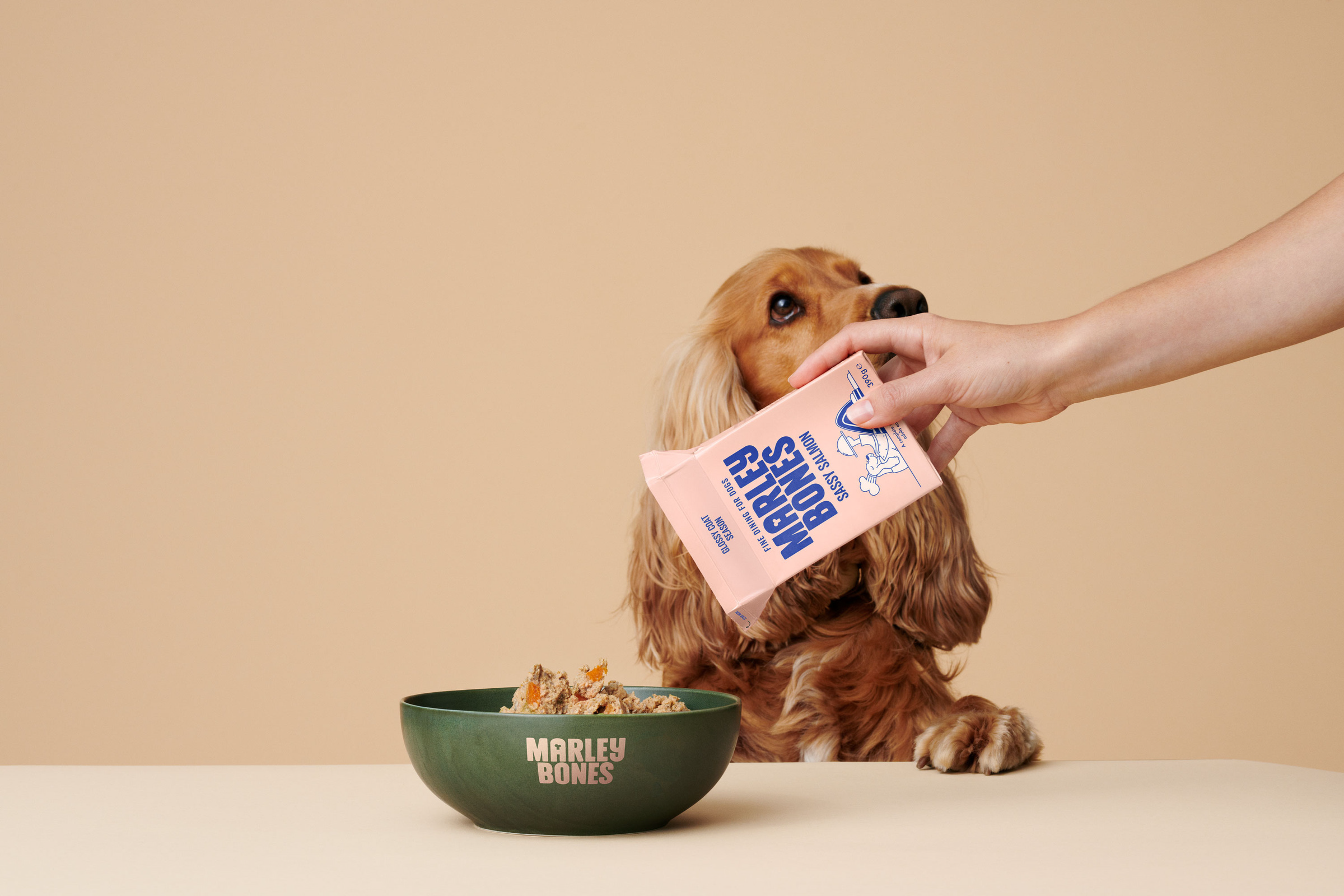
Marleybones lists every ingredient by name and percentage. Their vet-developed recipes are built on named meat proteins with no vague "meat and animal derivatives" in sight, which makes it straightforward to see what your dog is actually eating.
What are fillers and why do they matter?
A filler is any ingredient that adds bulk and calories without contributing meaningful nutrition. Dogs are not designed to thrive on grain-heavy diets. They can digest some carbohydrate, but it should not be the foundation of their food.
Common fillers include maize, wheat, soy, rice husks, and sugar beet pulp (in large quantities). None of these are toxic. But when they appear high on the ingredients list, it often means the food is cheaper to produce rather than better for your dog.
Carbohydrates used well — brown rice, sweet potato, oats — can provide useful energy and fibre. The question is always: how high on the list do they appear, and what are they replacing?
Fibre is worth understanding separately. Some fibres genuinely support gut health — chicory root, for example, acts as a prebiotic, feeding the beneficial bacteria in your dog's gut. Others simply add bulk. The source matters as much as the presence.
What do additives and preservatives on the label mean?
All dog food contains additives of some kind. The question is which ones, and why they're there.
Some additives are nutritional — added vitamins and minerals that complete the recipe. These are necessary, not suspicious. A complete dog food without them would leave your dog deficient in key nutrients.
Preservatives are more varied. Natural preservatives include vitamin E (listed as mixed tocopherols) and rosemary extract. Artificial preservatives include BHA, BHT, and ethoxyquin — these are legal in pet food but have raised enough questions that many owners choose to avoid them.
Colourings serve no purpose in dog food. Dogs do not respond to food colour the way humans do. If a food contains colourings, they are there to appeal to the person buying it, not the dog eating it.
Marleybones Pantry Fresh meals use no artificial preservatives. The meals are slow-cooked in-pack and sealed, which preserves the food without needing chemical additives. That is a processing decision, not just a marketing claim — it is why the meals are shelf-stable without a freezer.
How do I know if a food is nutritionally complete?
Look for the words "complete" or "complementary" on the packaging. This is a legal distinction, not a marketing term.
A complete food meets FEDIAF nutritional guidelines — the European framework for pet food nutrition. It covers everything your dog needs. You can feed it as a sole diet.
A complementary food does not meet those standards alone. It needs to be combined with other foods to be nutritionally adequate. Many wet pouches, mixers, and toppers are complementary. That is not a problem, as long as you know what you are buying.
Also check whether the food is complete for your dog's life stage. Some foods are complete for adults but not formulated for puppies, who have different requirements. Portion sizes and nutrient needs shift significantly as a puppy grows, so the label should specify which life stages the food is complete for.
If you are switching your dog to a new food, checking completeness before you start is the most important step. Feeding a complementary food as a sole diet for weeks can create deficiencies that build slowly and are not always obvious until they cause a problem.

“Such a relief to see her enjoying her food”
FAQs
Is "meat meal" bad for dogs?
Not necessarily. Meat meal is rendered, dried meat — it has had most of the moisture removed, which concentrates the protein. The key question is whether it is named (e.g. "chicken meal") or unnamed ("meat meal"). Named meal from a single species is a usable protein source. Generic meat meal offers no transparency about source or quality.
Why do some ingredients have percentages and others do not?
EU pet food labelling law requires a percentage to be declared when an ingredient is highlighted in the product name or marketing. If a food is called "chicken and rice," both chicken and rice must show percentages. Other ingredients do not legally require one, though transparent brands often declare them anyway.
What does "derivatives" mean on a dog food label?
"Animal derivatives" is a legal term covering processed animal by-products — organs, cartilage, blood, bone. These are not inherently harmful; liver and kidney are nutritious. The problem is the term tells you nothing specific. It can change batch to batch depending on what is cheapest. Named organ ingredients (e.g. "chicken liver") are far more informative.
Are grain-free foods better for dogs?
Not automatically. Grain-free does not mean low-carb — many grain-free foods replace grains with potato, tapioca, or legumes, which can be equally high in starch. The more useful question is whether the carbohydrate content is appropriate and what it replaces. Some dogs with specific grain sensitivities benefit from grain-free; most dogs do not need it as a default. Check the full ingredients list rather than focusing on one label claim.
How do I compare two dog foods using the ingredients list?
Start with the first three ingredients. They make up the bulk of the food. Named meat as the first ingredient is a good sign. Then look at where carbohydrates appear and what type they are. Check for any artificial preservatives or unnamed derivatives. Finally, confirm whether the food is complete for your dog's life stage. That four-step scan gives you a reliable comparison without needing to read every line.
“A complete game changer!!”


 Give your dog the quality nutrition they deserve
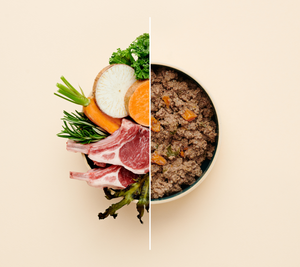
Real meat, wholesome veggies and functional superfoods.
Get 40% OFF today