



 Vet reviewed
Can Dogs Eat Bananas?

At a glance
- Yes, bananas are safe for dogs in moderation - they are non-toxic and provide useful nutrients including potassium, vitamin B6, and dietary fibre
- The sugar content is the main consideration - bananas are higher in natural sugar than most dog-safe fruits, so portion size matters
- Banana peel is not toxic but is difficult to digest and should always be removed before feeding
- Small dogs should have no more than a few slices at a time; larger dogs can have up to half a banana as an occasional treat
- Dogs with diabetes, weight issues, or pancreatitis should not be given banana without veterinary guidance
Are bananas safe for dogs?
Yes - bananas are safe for dogs and are one of the more nutritious fruit options you can offer as an occasional treat. They are non-toxic, easy to prepare, and most dogs find them palatable. The main thing to manage is quantity, because the natural sugar content is meaningfully higher than in lower-sugar fruits like blueberries or watermelon.
A few slices as a treat is fine for most healthy adult dogs. A whole banana eaten regularly is where the sugar load starts to add up. Keeping bananas as an occasional addition rather than a daily fixture is the simplest way to enjoy the nutritional upside without the sugar becoming a problem.

What are the nutritional benefits of bananas for dogs?
Bananas offer a useful mix of nutrients that genuinely support canine health, which is what separates them from treats that are simply palatable without adding much.
Potassium. Bananas are one of the better dietary sources of potassium, which supports muscle function, nerve signalling, and heart health. Most complete dog foods provide adequate potassium, but a banana slice as a treat contributes to that total in a useful way.
Vitamin B6. B6 is involved in protein metabolism, red blood cell production, and nervous system function. Bananas are a reasonable source, though the quantities in a single treat portion are modest.
Dietary fibre. The fibre in bananas supports healthy digestion and helps regulate bowel movements. For dogs that tend toward loose stools, the soluble fibre in banana can have a mild firming effect in small amounts. In large amounts, the opposite can occur.
Vitamin C. Dogs produce their own vitamin C, so it is not a dietary requirement in the same way it is for humans. As an antioxidant it still has value, but it is not the primary reason to offer banana.
Magnesium. Important for bone development and muscle function. Present in bananas in useful quantities, though complete dog foods will typically cover magnesium requirements independently.

“Such a relief to see her enjoying her food”
How much banana can a dog eat?
Portion size should be proportional to the dog's size and overall daily calorie intake. Treats of any kind, including fruit, should not exceed 10% of a dog's daily caloric intake - the remaining 90% should come from a complete, balanced food.
Small dogs (under 10kg) - two to three small slices at a time, no more than a few times per week.
Medium dogs (10-25kg) - up to a quarter of a banana at a time as an occasional treat.
Large dogs (over 25kg) - up to half a banana at a time, given occasionally rather than daily.
These are upper limits rather than targets. A dog does not need banana in their diet - it is a treat, and less is fine. If your dog is on a calorie-controlled diet or is prone to weight gain, err toward the lower end of these ranges or skip banana in favour of lower-sugar alternatives like cucumber or blueberries.

Can dogs eat banana peel?
Banana peel is not toxic to dogs, but it is difficult to digest and should not be fed intentionally. The tough fibrous texture resists breakdown in the digestive system and can cause gastrointestinal upset, and in smaller dogs there is a genuine risk of obstruction. Always remove the peel before offering banana to your dog, and dispose of it somewhere they cannot access it independently.
Which fruits are safe for dogs - and which aren't?
Banana is one of several fruits that are safe for dogs in moderation. A few are genuinely harmful and worth knowing, particularly because some are found in common human foods that dogs might access.
| Fruit | Safe for dogs? | Notes |
|---|---|---|
| Banana | Yes - in moderation | Remove peel; monitor sugar intake |
| Blueberries | Yes | Low sugar, high antioxidants - one of the better fruit treats |
| Watermelon | Yes - seedless only | Remove seeds and rind; high moisture, low sugar |
| Apple | Yes - core and seeds removed | Apple seeds contain cyanogenic compounds; core can cause choking |
| Strawberries | Yes - in moderation | Higher sugar; remove tops |
| Mango | Yes - flesh only | Remove skin and stone; high sugar, feed sparingly |
| Grapes and raisins | No - toxic | Can cause acute kidney failure even in small amounts |
| Cherries | No - toxic | Pits, leaves, and stems contain cyanide; flesh alone is low risk but not worth it |
| Avocado | No - toxic | Contains persin, which causes vomiting and diarrhoea; the stone is also a serious obstruction risk |
| Citrus (lemon, lime, grapefruit) | Avoid | Not acutely toxic but the citric acid and essential oils cause digestive upset in most dogs |
Are there any dogs that should not eat banana?
Healthy adult dogs can eat banana in the portions described above without issue. A few situations warrant more caution or a conversation with a vet first.
Dogs with diabetes. The natural sugar content in bananas makes them unsuitable as a regular treat for diabetic dogs. Even in small amounts, fruit sugars affect blood glucose levels. If your dog is diabetic, get veterinary guidance before offering any fruit.
Dogs with weight problems. Banana is calorie-dense relative to lower-sugar fruit options. For dogs on a calorie-restricted diet, cucumber, carrot, or blueberries are better treat choices.
Dogs with pancreatitis. While banana is low in fat, the sugar content can still be a consideration for dogs managing pancreatic conditions. Check with a vet before including it.
Puppies. A small piece of banana is not harmful to a puppy, but their digestive systems are more sensitive and their calorie requirements are more specifically managed. Keep portions very small and introduce gradually.
“A complete game changer!!”
FAQs
Can dogs eat frozen banana?
Yes - frozen banana slices are safe and many dogs enjoy the texture, particularly in warmer weather. Slice before freezing rather than offering a whole frozen banana, which is harder to bite through and poses more of a choking risk. The nutritional content and sugar considerations are the same as for fresh banana.
Can dogs eat dried banana or banana chips?
Dried banana and banana chips should be avoided or given very sparingly. Dehydration concentrates the sugar significantly - a small amount of dried banana contains considerably more sugar than the same weight of fresh fruit. Many commercial banana chips are also fried and salted, which adds fat and sodium that dogs do not need. Fresh banana is a meaningfully better option.
My dog ate a whole banana - should I be worried?
A single whole banana is unlikely to cause serious harm in a medium or large dog, but may cause temporary digestive upset - loose stools or a gassy stomach for 24 to 48 hours. In a small dog, a whole banana is a larger relative portion and more likely to cause digestive symptoms. Monitor for vomiting, diarrhoea, or discomfort, and contact a vet if symptoms are persistent or severe. One-off incidents are generally not a cause for major concern.
Can dogs eat banana bread or banana-flavoured foods?
No. Banana bread and baked goods contain ingredients that are problematic for dogs - sugar, butter, and often xylitol, an artificial sweetener that is acutely toxic to dogs even in small quantities. Always check the ingredients of any human food before sharing it. Plain, fresh banana prepared without additives is the only safe form.
Is banana a good treat for training?
Banana works as an occasional training reward but is not ideal as a primary training treat. The soft texture makes it messier to handle in quantity than small dry treats, and the sugar content adds up quickly if you are working through multiple repetitions. Small pieces of air-dried meat - chicken, lamb, or beef - are better suited to high-frequency training sessions where you need a treat that is low in sugar, easy to handle, and highly motivating.
How should I prepare banana for my dog?
Peel the banana, slice into pieces appropriate for your dog's size, and serve fresh. Small dogs do better with thin slices; larger dogs can handle slightly bigger pieces. Mashed banana can be mixed into food or used to stuff a Kong-style toy for longer-lasting enrichment. Freeze slices for a warm-weather treat. There is no cooking required and no preparation beyond removing the peel.


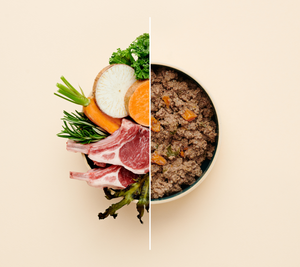 Give your dog the quality nutrition they deserve
Real meat, wholesome veggies and functional superfoods.
Get 40% OFF today