


Feeding a small breed dog: how their needs differ

At a glance
- Small breeds have faster metabolisms and need more calories per kilogram of body weight than large breeds
- Their small stomachs mean they do better with 2-3 smaller meals per day rather than one large one
- Small breeds are more prone to dental disease, obesity, and hypoglycaemia — all of which diet directly influences
- Many small breeds live 12-16 years, so nutritional needs shift across a longer lifespan than most large breeds
- Protein quality matters more than quantity — small dogs need highly digestible protein to meet their energy demands efficiently
Why do small breed dogs have different nutritional needs?
Small breed dogs need more calories per kilogram of body weight than large breeds. A Chihuahua or Yorkshire Terrier burns through energy far faster relative to their size than a Labrador or German Shepherd. This is because smaller bodies lose heat more quickly and their organs work at a higher rate to keep up. The result is a dog with a big appetite relative to their frame and a real risk of energy crashes if meals are spaced too far apart.
This metabolic difference is the starting point for everything else. It affects how much food a small dog needs, how often they should eat, what that food should contain, and how easily they gain or lose weight. Feeding a small dog the same food as a large dog, just in a reduced amount, often falls short of meeting these specific demands.
Understanding how life stage shapes feeding requirements is especially important for small breeds, because their nutritional needs shift more dramatically across their longer lives than many owners realise.
How does calorie density and meal frequency work for small dogs?
Small dogs need calorie-dense food because they cannot eat large volumes in one sitting. Their stomachs are tiny relative to their energy requirements. A food that delivers more energy per gram means they can meet their daily needs without overfilling at each meal.
Meal frequency matters too. Small breeds, particularly puppies, are vulnerable to hypoglycaemia — a dangerous drop in blood sugar. Puppies under six months should eat three to four times daily. Adult small breeds do well on two to three meals a day. One large meal is not appropriate for most small dogs.
The table below shows how calorie needs differ by size as a rough guide. These are approximate daily maintenance figures for adult dogs at a healthy weight.
| Dog size | Typical weight range | Approximate daily calories | Calories per kg body weight |
|---|---|---|---|
| Toy/small breed | 1-10 kg | 200-400 kcal | ~100-130 kcal/kg |
| Medium breed | 10-25 kg | 400-900 kcal | ~70-90 kcal/kg |
| Large breed | 25-45 kg | 900-1,500 kcal | ~55-70 kcal/kg |
Calorie needs vary with activity level, neuter status, and age, so always follow the feeding guidelines on your dog's food and adjust based on body condition.
What specific nutrients do small breed dogs need more of?
Protein and fat are both proportionally more important for small breeds. Protein supports muscle maintenance and immune function. Fat is the most calorie-dense macronutrient, making it easier to meet energy needs in a small volume of food. Aim for food where quality meat is the primary ingredient, not cereals or fillers.
Small breeds are also prone to dental disease. Up to 80% of dogs show signs of dental problems by age three, and small breeds are disproportionately affected because their teeth are crowded into smaller jaws. While food alone does not prevent dental disease, avoiding high-sugar, starchy foods reduces the build-up of plaque-feeding bacteria.
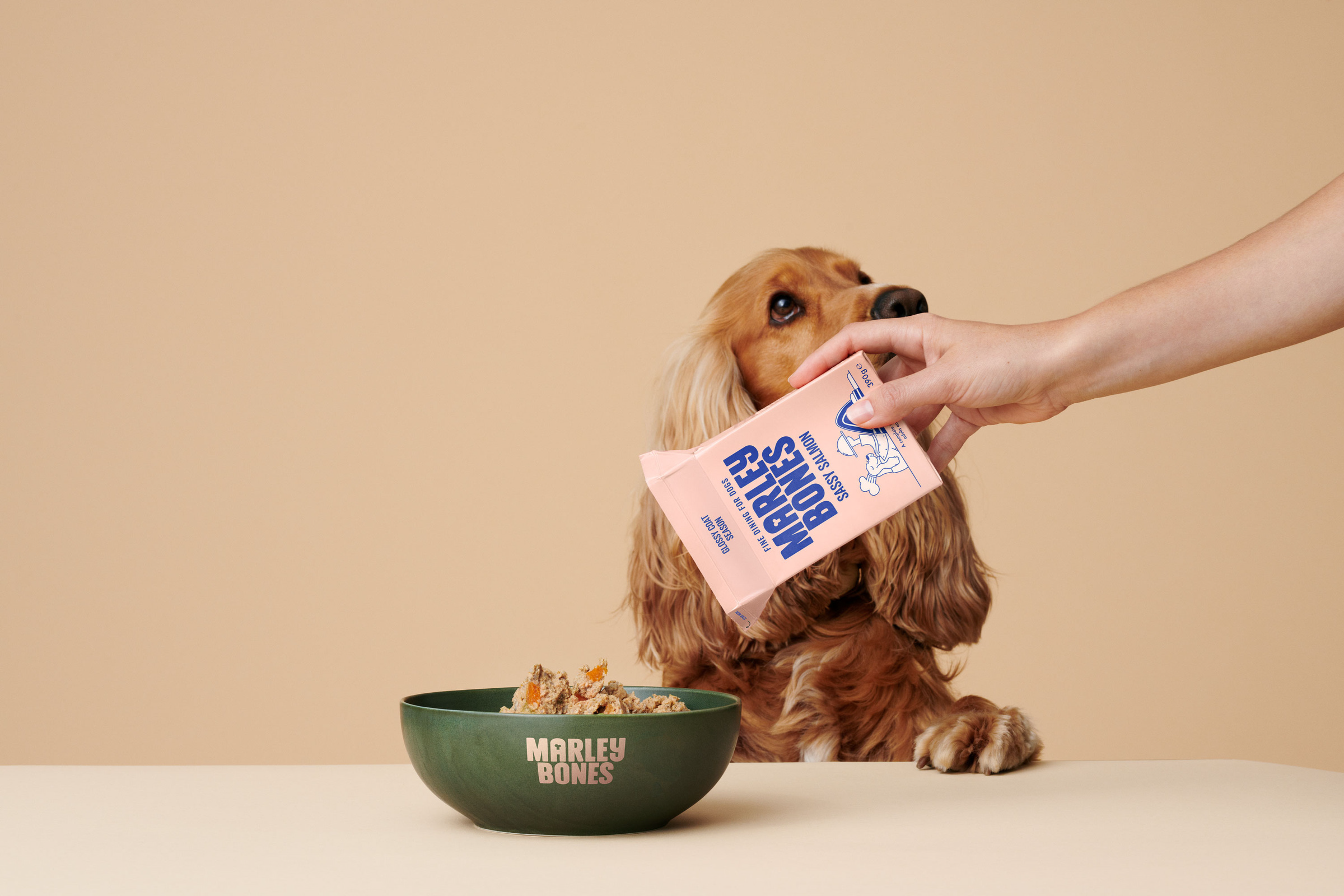
Omega-3 fatty acids, particularly from oily fish, support skin, coat, and joint health. Small breeds tend to live longer and joint support becomes relevant earlier than most owners expect. Marleybones Sassy Salmon includes salmon as the primary protein, making it a natural source of omega-3s for small dogs who benefit from regular fish in their diet.
Fibre also plays a role. A moderate level of soluble fibre, such as from chicory root or linseeds, supports digestive health without adding unnecessary bulk. For small dogs who eat less overall, every gram of food should count nutritionally, which is why filler-heavy foods are a poor fit — knowing how to read a dog food label helps you spot when fillers are taking up space that real nutrition should occupy.
How do small breed needs change across life stages?
Small breed puppies grow quickly but finish growing sooner than large breeds, usually by 9-12 months. During this period they need higher protein and fat to support rapid development. Their small stomachs and hypoglycaemia risk make frequent, small meals essential.
Adult small breeds need stable, calorie-dense nutrition with consistent meal timing. Weight gain creeps up easily because even a small amount of overfeeding adds up proportionally. A small dog who is 10% overweight carries the equivalent health burden of a much larger dog carrying significant extra weight. If your dog is consistently leaving food or gaining weight without explanation, consult your vet to rule out underlying health issues before adjusting their diet.
Senior small breeds, from around 8-10 years depending on the breed, benefit from slightly reduced calories alongside maintained protein. Muscle mass reduces with age and adequate protein helps preserve it. Joint support becomes increasingly relevant. Marleybones recipes are FEDIAF compliant and complete for all life stages, so they cover small breeds from puppyhood through to their senior years without needing a separate formula.
Every dog is different — build your personalised Marleybones feeding and health plan tailored to your dog's age, size, and health requirements.
Are small breeds fussier eaters, and does food format matter?
Small breeds have a reputation for being fussy, and there is some truth to it. They have a proportionally higher number of taste receptors relative to mouth size, and they are more sensitive to palatability. Dry kibble with low moisture content is often less appealing to small dogs than fresher, more aromatic food.
Food format affects digestibility too. Fresh or lightly cooked food retains more of its natural nutrients and moisture than heavily processed dry food. For small dogs where every calorie needs to be used efficiently, food quality genuinely makes a difference. Marleybones Pantry Fresh meals are slow-cooked in-pack and contain no artificial preservatives, which preserves palatability and nutrient integrity without requiring freezing. For owners of small breeds who have struggled with finding food a fussy small dog will actually eat, a fresh format is often the turning point.

“Such a relief to see her enjoying her food”
Frequently asked questions
Do small dogs need special small breed dog food?
Not necessarily, but they do need food that is calorie-dense, high in quality protein, and low in fillers. Some small breed-specific foods are formulated to meet these needs, but any complete food that meets those criteria can work well. The format and ingredient quality matter more than whether the label says


 Give your dog the quality nutrition they deserve
Real meat, wholesome veggies and functional superfoods.
Get 40% OFF today