


How Does a Dog's Nutritional Needs Change After Being Neutered or Spayed?

At a glance
- Neutering and spaying reduce a dog's resting metabolic rate by around 20–30%
- The risk of obesity roughly doubles after neutering, particularly in females
- Protein needs stay high — or increase — to protect muscle mass after the procedure
- Calorie reduction should happen quickly, ideally within weeks of surgery, not months later
- Fibre and satiety matter more after neutering, as appetite often increases while energy needs fall
What actually happens to a dog's metabolism after neutering or spaying?
Neutering and spaying lower the production of sex hormones, and those hormones play a direct role in regulating metabolism and body composition. Once they drop, a dog's resting metabolic rate falls by roughly 20–30%. They burn fewer calories at rest, store fat more easily, and feel hungrier more often. The procedure does not change how active a dog is — that stays the same. But the calories they need to stay in a healthy shape drop significantly.
This shift happens fast. Research shows the metabolic change begins within weeks of surgery, which is why adjusting food intake before weight gain appears on the scales is the right approach. Waiting until your dog looks heavier is waiting too long.
Understanding how life stage affects what your dog needs at the bowl is a useful foundation here — feeding across different life stages covers the broader picture of how nutritional requirements shift at key moments.
How many fewer calories does a neutered dog need?
Most neutered dogs need around 20–30% fewer calories than an intact dog of the same size, age, and activity level. For a 10kg dog requiring 700 kcal per day before neutering, that translates to cutting roughly 140–210 kcal daily. That is a meaningful reduction, and it needs to come from the total diet — not just treats.
Calories from treats count. If a dog is getting 10% of their daily intake from snacks, those need to be factored into the new total. Keeping treat calories to under 10% of daily intake is the standard recommendation, and choosing lower-calorie options makes that easier to manage.
A practical approach is to weigh food portions rather than scoop them. Volume-based measuring is imprecise, and even small daily overestimates compound quickly into meaningful weight gain over weeks and months.
| Dog size | Approximate pre-neuter daily kcal | Approximate post-neuter daily kcal |
|---|---|---|
| Small (up to 10kg) | 400–700 kcal | 300–560 kcal |
| Medium (10–25kg) | 700–1,200 kcal | 560–960 kcal |
| Large (25–40kg) | 1,200–1,800 kcal | 960–1,440 kcal |
| Giant (40kg+) | 1,800–2,500 kcal | 1,440–2,000 kcal |
These are starting estimates. Individual dogs vary, and a vet or veterinary nutritionist can give a more precise target based on body condition score rather than weight alone.
Does protein intake need to change after neutering?
Protein needs do not go down after neutering — if anything, they go up relative to overall calories. Neutering reduces anabolic hormone levels, which makes maintaining lean muscle mass harder. A diet with generous, high-quality protein helps offset that. Muscle tissue keeps metabolism active, supports mobility, and reduces the risk of the dog becoming overfat while losing muscle at the same time — a pattern called sarcopenic obesity.
The key is choosing protein from real, identifiable meat sources. Protein from named meat ingredients is more bioavailable than protein from by-product meal or plant-based fillers. Higher digestibility means more of the protein actually reaches the muscles and tissues that need it.
Marleybones meals are built around named fresh meat as the primary ingredient, with recipes developed to meet FEDIAF nutritional standards across all life stages. That high protein foundation remains appropriate after neutering — the adjustment needed is in total portion size, not in switching to a lower-protein food.
What role does fibre play in a neutered dog's diet?
Fibre becomes more important after neutering because appetite increases while calorie allowance falls. That gap — wanting more food but needing less of it — is where fibre helps. It slows digestion, extends the feeling of fullness, and supports a stable gut environment without adding significant calories.
Soluble fibre, such as chicory root, acts as a prebiotic — it feeds the beneficial bacteria in the gut rather than being digested by the dog directly. Fibre does more than aid digestion — it also helps regulate blood sugar and supports consistent energy levels throughout the day.
For neutered dogs prone to weight gain, a diet that includes both soluble and insoluble fibre from whole food sources is more effective than simply cutting portion sizes alone. Keeping a dog satisfied on fewer calories is easier when the food is genuinely filling.
If your dog has put on weight since neutering and you are unsure where to start, speak to your vet. They can assess body condition score, rule out any underlying issues such as hypothyroidism, and advise on a target weight and calorie intake specific to your dog.
Every dog is different — build your personalised Marleybones feeding and health plan tailored to your dog's age, size, and health requirements.
For dogs who have gained weight after neutering, choosing the right food for an overweight dog covers what to look for in a diet and how to approach weight loss safely.

“Such a relief to see her enjoying her food”
FAQs
Should I switch to a 'light' or 'neutered' dog food after spaying?
Not necessarily. Many 'light' foods reduce protein alongside calories, which is the opposite of what a neutered dog needs. A better approach is to feed a high-quality, high-protein food in a reduced portion. If a specific neutered formula has strong protein levels and quality ingredients, it can work — but the label needs checking, not just the marketing claim.
How soon after neutering should I reduce my dog's food intake?
Reduce portion size within two to four weeks of surgery. The metabolic shift begins quickly, and waiting until weight gain is visible means playing catch-up. A 20–25% reduction in daily calories is a reasonable starting point, with adjustments based on how your dog's body condition changes over the following weeks.
Will my dog always be hungrier after neutering?
Increased appetite is common after neutering and is linked to changes in the hormones that regulate hunger signalling. For many dogs, this settles over several months, but some remain food-motivated long term. Structured mealtimes, measured portions, and a diet with enough fibre to promote fullness all help manage this.
Does neutering affect male and female dogs differently in terms of nutrition?
The metabolic changes are similar in both sexes, but research suggests females experience a slightly greater increase in obesity risk after spaying than males do after castration. The dietary principles are the same for both: fewer total calories, high protein, adequate fibre, and careful portion control.
Can I use the same food but just feed less of it?
Yes, in most cases. If your dog is already on a nutritious, meat-first diet with no fillers, reducing the portion size is the primary adjustment needed. Where the current food is low in protein or high in refined carbohydrates, switching to a better-quality food — and adjusting portion size — produces a better outcome for body composition and long-term health.
“A complete game changer!!”


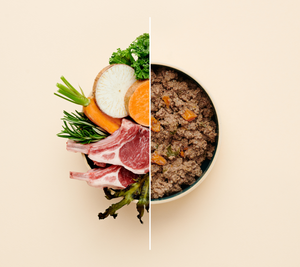 Give your dog the quality nutrition they deserve
Real meat, wholesome veggies and functional superfoods.
Get 40% OFF today