

Dog Food Ingredients: A Complete Guide to Nutrition and Labels

At a glance
- Dog food labels are designed to be read quickly and trusted — most of the information that actually matters is either absent, buried, or expressed in ways that obscure more than they reveal
- The format of the food — how it is made, at what temperature, and what that does to the ingredients — matters as much as what the ingredients list says
- Meat content claims are the most commonly misunderstood figures on a dog food label; the same number can mean very different things depending on how it is calculated
- Complete and balanced is a regulatory floor, not a quality ceiling — it tells you a food meets minimum nutritional requirements, not that it is nutritionally optimal
- A short, recognisable ingredient list is a more reliable quality signal than any front-of-pack claim
In this guide
- How to read a dog food label
- What meat content actually means
- Key ingredients worth knowing about
- What is fresh dog food
- Fresh vs kibble
- Complete and balanced
- Preservatives and additives
- Sustainability claims
Dog food labels are built to be trusted, not read. The front of the pack reassures, suggests quality, and uses words that feel meaningful without requiring much scrutiny. Turn it around and the ingredient list is a different story: unfamiliar terms, processing derivatives, and percentages that only make sense if you know which basis they are calculated on. Most people do not, and the industry knows it. This page covers what actually matters — how food is made, what the numbers mean, which ingredients do something useful and which are filler.
How do you actually read a dog food label?
Ingredients are listed in descending order by weight before processing. The first ingredient is present in the highest quantity, the last in the lowest. A food where named meat appears first is built around that protein. A food where meat meal, cereals, or derivatives appear before the named protein is built around something cheaper.
Front-of-pack claims are where it gets complicated. "Natural", "premium", and "artisan" have no legal definitions in pet food and can appear on any product regardless of what is in it. A food can legally carry a "with chicken" claim when chicken makes up as little as 4% of the recipe. Most owners never check the ingredients list against what the front of pack implies, which is exactly what brands rely on.
The simplest test: if you can picture every ingredient on the list, the food is probably what it claims to be. If the list reads like a chemistry experiment, that is worth paying attention to.
What does meat content actually mean on a dog food label?
Meat content is the figure most owners use to compare dog foods and the one most often misunderstood. The same food can show very different percentages depending on which calculation is used — as-fed, includes-water, or dry-matter — and labels rarely tell you which one they are using. Fresh food with 60% named meat and 70% moisture is expressing something different to a dry food claiming 60% meat on a dry-matter basis, but both say "60%".
The includes-water basis is how most fresh food meat content is calculated. It counts the water naturally present in the raw meat as part of the percentage. A kibble claiming 60% meat on a dry-matter basis strips out that moisture before calculating. Neither is dishonest, but they are not directly comparable, which makes the front-of-pack percentage a poor basis for choosing between products on its own.
Named meat sources — chicken, lamb, salmon — are more meaningful than category terms like "poultry meal" or "meat and animal derivatives", which can cover lower-grade materials from multiple species without specifying what. The first few ingredients tell you most of what you need to know about what a food actually is.

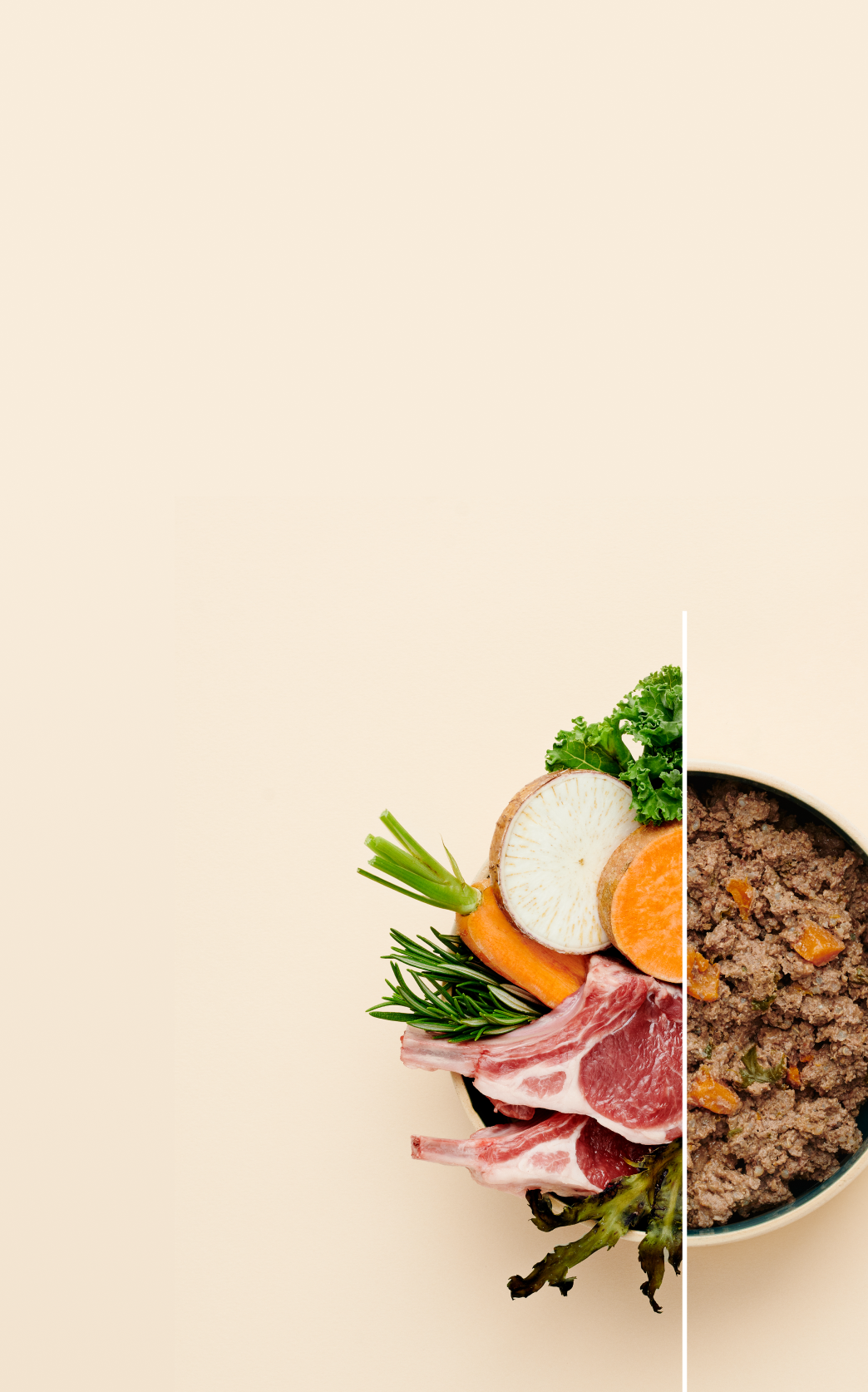
Freshly prepared British chicken, veggies & superfoods
Which dog food ingredients are actually worth knowing about?
Beyond the protein source, the ingredients that make the most consistent difference are the ones that support gut health, reduce inflammation, and fill micronutrient gaps a single-protein diet might not cover. Chicory root is one of the most well-evidenced — a natural source of inulin, a prebiotic fibre that feeds the beneficial bacteria in the gut rather than being digested directly. A healthier gut microbiome supports digestion, nutrient absorption, immune function, and coat condition, which is why it appears in every Marleybones recipe.
The functional ingredients that genuinely earn the superfood label — chia seeds, hemp seeds, quinoa, linseeds — each address a specific nutritional gap: omega-3 fatty acids, essential fatty acid balance, amino acid completeness, additional fibre. They are not marketing additions. Every Marleybones recipe includes seven of them alongside the named protein and vegetables.
The useful question to ask of any ingredient is whether it is there for the dog or for the manufacturer. Whole vegetables, named oils, and functional plant ingredients are doing something for the dog. Cereal derivatives, unnamed fats, and artificial colours are doing something for the manufacturer.
What is fresh dog food?
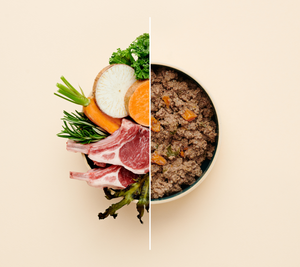
Fresh dog food is made from whole, recognisable ingredients with minimal processing. Every item on the ingredient list is something you could picture in a kitchen. Because it has not been through the high-temperature, high-pressure processing that dry kibble requires, the nutritional profile stays closer to the ingredient's natural state. Moisture content is significantly higher — typically 65-75% — which matters for hydration and digestibility.
Within the fresh dog food category there are important format differences. Frozen preserves ingredients without preservatives but requires freezer space and daily defrosting. Shelf-stable fresh food achieves the same nutritional result through a different method: ingredients are sealed raw and cooked inside the pack, making it safe to store at room temperature without any preservatives. The storage method says nothing about the quality of what is inside.
What separates genuinely fresh food from food that uses fresh-sounding language is the ingredient list. Named whole ingredients — chicken, lamb, sweet potato, spinach — is fresh food. Meat derivatives, cereals, and sugars near the top of the list is not, regardless of what the front of the pack says.
How does fresh dog food compare to dry kibble?
The biggest difference between fresh food and dry kibble is not the ingredient list — it is what the manufacturing process does to those ingredients. Dry kibble is made through extrusion: ingredients are ground, mixed with water, forced through a die under high heat and pressure, then cut into pellets. That process degrades proteins, destroys heat-sensitive nutrients, and requires starch levels of 40-60% to hold the pellet together — starch that is not there for nutritional reasons.
Those differences show up in how satisfied a dog feels after eating. Protein that has been through high-temperature processing is less bioavailable — the body extracts less usable nutrition per gram, which is part of why dogs on kibble can seem hungry even after a full bowl. The high starch content contributes to blood sugar swings that encourage fat storage. Fresh food's higher moisture content — roughly ten times that of kibble — also supports kidney function and hydration.
Kibble can sustain a healthy dog — millions of dogs eat it and do fine. Fresh food is more digestible and more satiating, and those differences matter more for some dogs than others.

“Such a relief to see her enjoying her food”
What does complete and balanced actually mean?
Complete and balanced means the food meets minimum nutritional requirements across protein, fat, vitamins, and minerals — set by bodies like FEDIAF in Europe — so it can serve as a dog's sole diet without causing deficiencies. Every food sold as a complete meal must meet this standard. It tells you the food clears the floor. It does not tell you how far above it the food sits.
It is also a formulation target, not a measure of what the dog actually absorbs. A food can meet the complete and balanced threshold while using protein sources or processing methods that significantly reduce the bioavailability of those nutrients. The guaranteed analysis panel shows what is present — not how much of it the dog's body can use.
FEDIAF compliance is a meaningful baseline. It is just not the quality ceiling most owners assume it to be.
What are artificial preservatives doing in dog food?
Artificial preservatives — BHA, BHT, ethoxyquin, and sodium nitrite among the most common — stop fats going rancid and prevent bacterial growth. They do that job reliably, which is why they have been standard in commercial pet food for decades. They are also associated with inflammatory responses in sensitive dogs, and there is no legal requirement to use them given that alternative methods exist.
Sealing ingredients in an airtight pack and cooking them inside it creates a sterile environment that needs no preservatives to stay safe on a shelf — the same approach used in premium human food. The trade-off is a more complex manufacturing process, which is why cheaper dog food still relies on additives.
When a label says no artificial preservatives, it is worth checking what it uses instead. Natural preservatives like tocopherols and citric acid are a different and more benign category. Using the production method to remove the need entirely is different again — and not the same thing even when the front-of-pack claim looks identical.
What do sustainability claims in dog food actually mean?
Sustainability claims range from meaningful to entirely cosmetic. Terms like "eco-friendly" and "sustainable" have no regulatory definition in pet food and can appear on any product. Recyclable packaging is more concrete — the material either goes through standard household recycling or it does not.
Ingredient sourcing is the sustainability dimension that receives less attention but arguably matters more. Where meat comes from, whether fish is certified sustainable, and how far ingredients have travelled all have a bigger environmental footprint than whether the packaging is recyclable. British-sourced ingredients typically come with higher welfare and traceability standards than imported equivalents, though labels do not always reflect this.
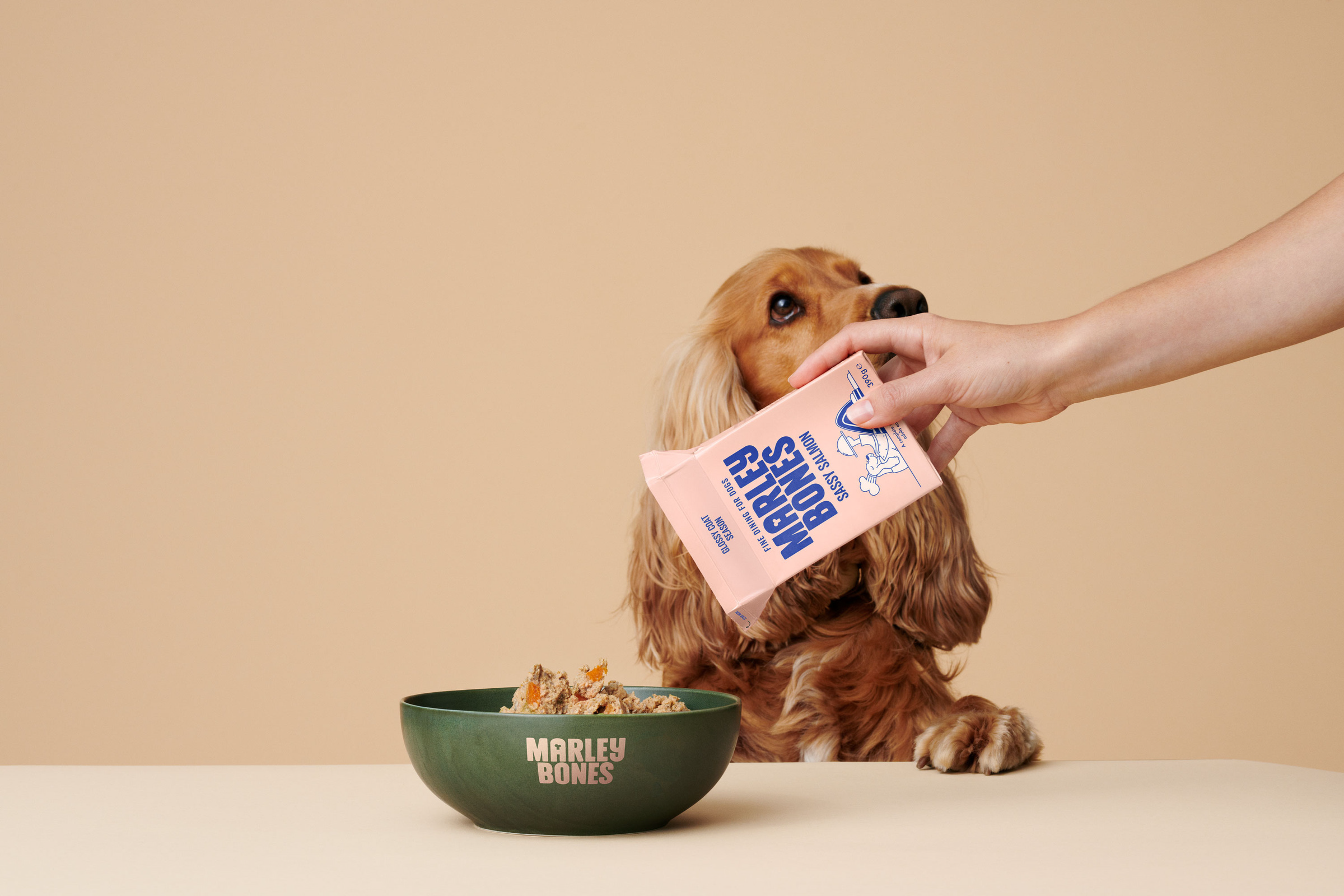
Marleybones uses fully recyclable cartons and is plastic-neutral certified — meaning any plastic put into circulation is offset through accredited recovery programmes. Both are independently verified commitments rather than self-declared claims.

Gloss up your pup’s life with an omega-3 booster
FAQs
What is the healthiest dog food?
Fresh food made from whole, named ingredients is more digestible and more satiating than heavily processed alternatives, and retains more of the nutrition in its ingredients. The best food for a specific dog also depends on their protein tolerance, life stage, activity level, and any existing health conditions.
What does 60% meat content mean in dog food?
It depends on which basis the percentage is calculated on. Fresh food expressing 60% meat on an includes-water basis is counting the water naturally present in the raw meat as part of that figure. A dry food claiming 60% on a dry-matter basis strips moisture out before calculating. The same number can describe very different products — which is why the full ingredient list matters more than the front-of-pack percentage.
Is fresh dog food more digestible than dry?
Yes. Protein in minimally processed food is more bioavailable than protein that has been through high-temperature extrusion — the dog's body gets more usable nutrition per gram. The higher moisture content also supports digestion directly. The difference is most noticeable in dogs with existing digestive sensitivity, but it shows up across healthy dogs too.
What are superfoods in dog food?
In a dog food context, superfoods are ingredients with a specific functional role beyond basic nutrition — chia seeds for omega-3 fatty acids, hemp seeds for essential fatty acid balance, quinoa for amino acid completeness, chicory root as a prebiotic. They address nutritional gaps that a meat and vegetable base does not always cover on its own. Whether a food's use of the term is genuine is visible in the ingredient list — named functional ingredients with a known purpose versus a vague front-of-pack claim are very different things.
What does complete and balanced mean on dog food?
It means the food meets the minimum nutritional requirements set by regulatory bodies — enough protein, fat, vitamins, and minerals to serve as a dog's sole diet without causing deficiencies. It is a regulatory floor, not a quality signal. It says nothing about the bioavailability of those nutrients or the quality of the ingredients used to meet the standard.
 Give your dog the quality nutrition they deserve
Real meat, wholesome veggies and functional superfoods.
Get 40% OFF today