


 Vet-Written
Can You Mix Kibble and Fresh Dog Food?

At A Glance
- Mixing kibble and fresh dog food is safe and nutritionally sound, provided total daily calorie and nutrient intake is calculated across both foods
- Mixed feeding is a practical middle ground for owners who want the benefits of fresh food without the full cost of a complete fresh diet
- Introduce fresh food gradually over 7 to 10 days to allow the gut microbiome to adjust and avoid digestive upset
- Both foods should be nutritionally complete in their own right
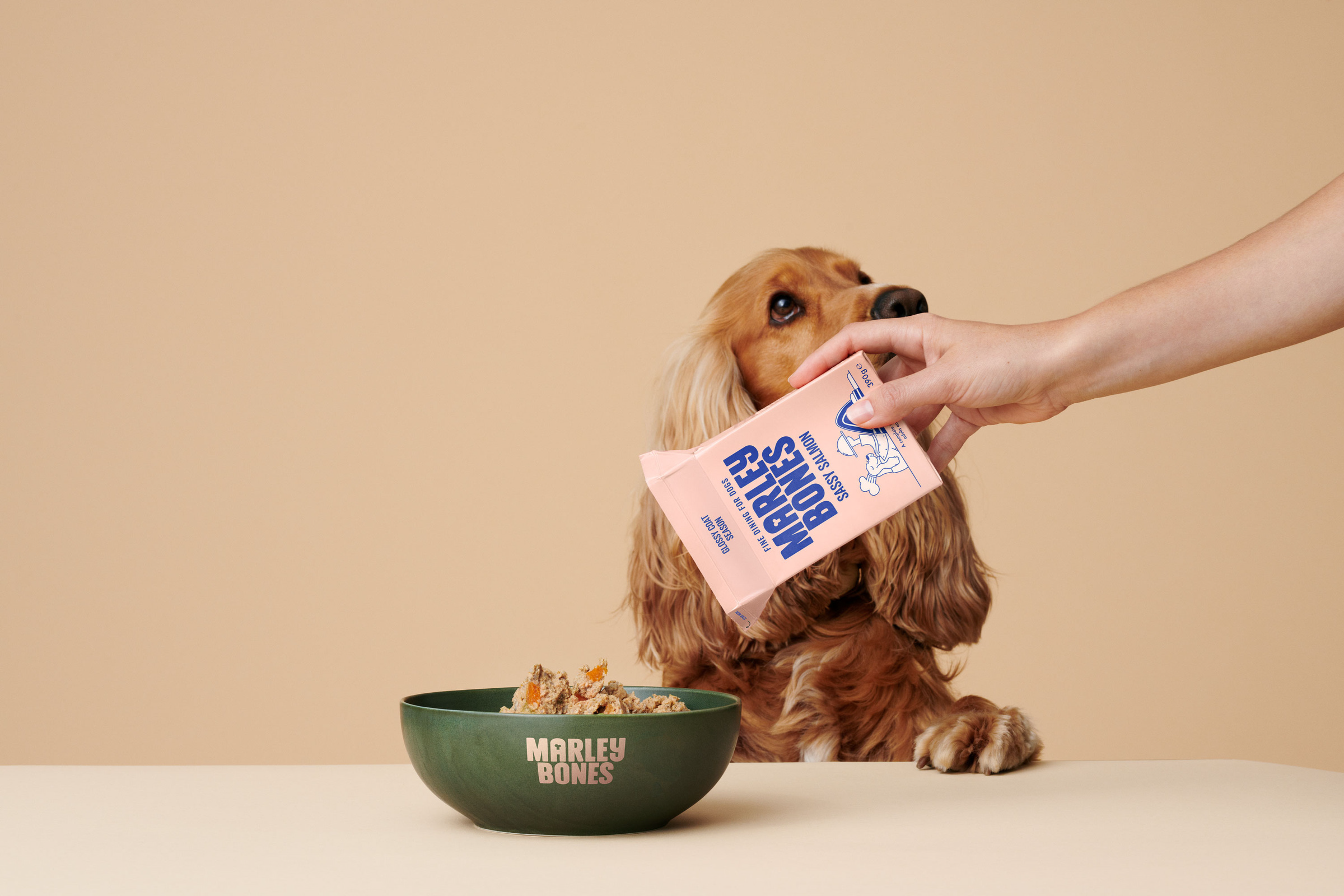
- Marleybones half plans are designed for mixed feeding, providing correctly portioned Pantry Fresh® meals to combine with kibble
Is it safe to mix kibble and fresh dog food?
Yes. There is a persistent myth that mixing wet or fresh food with dry kibble causes digestive problems because the two formats digest at different rates. This is not supported by evidence. Dogs have highly adaptable digestive systems that handle mixed diets without difficulty, and the idea that mixing formats causes bloat or digestive upset is not backed by veterinary research. The actual risk in mixed feeding is not the combination itself but overfeeding, which happens when owners serve full portions of both foods without accounting for the total calorie intake across both.
Both the kibble and the fresh food should be nutritionally complete products in their own right, meaning each carries a nutritional adequacy statement for the dog's life stage. Mixing two complete foods in controlled proportions is more straightforward than mixing a complete food with a complementary product (treats, toppers, mixer biscuits), which requires more careful calculations to ensure the dog's overall nutritional needs are met.
How do you calculate portions when mixing kibble and fresh food?
The simplest approach is to decide what proportion of the dog's daily calories will come from each food, then calculate the serving size of each accordingly. A 50/50 split, for example, means feeding half the recommended daily calories from kibble and half from fresh food. Most dog food packaging provides a daily calorie target or feeding guide based on the dog's weight, which gives you the starting figures.
In practice, a 50/50 split by calories means serving roughly half the portion you would give if feeding either food exclusively. Serving the full recommended portion of both is the most common mistake in mixed feeding and leads to weight gain over time. Marleybones half plans provide correctly portioned Pantry Fresh® meals calibrated for a dog receiving the other half of its daily calories from kibble.
Adjust portions based on the dog's weight and body condition over time. A dog that is gaining weight on a mixed diet needs a reduction in total calorie intake across both foods; a dog that is losing weight needs an increase. The target is a body condition where the ribs are easily felt but not visible, with a visible waist when viewed from above.
"With mixed feeding, the most important nutritional principle is energy and nutrient balance. Two complete foods can fit together well, but the total daily calories and nutrients still need to match the dog's specific requirements."
— Dr. Davide Stefanutti, DVM, PhD, Veterinarian Nutritionist
What are the benefits of mixed feeding?
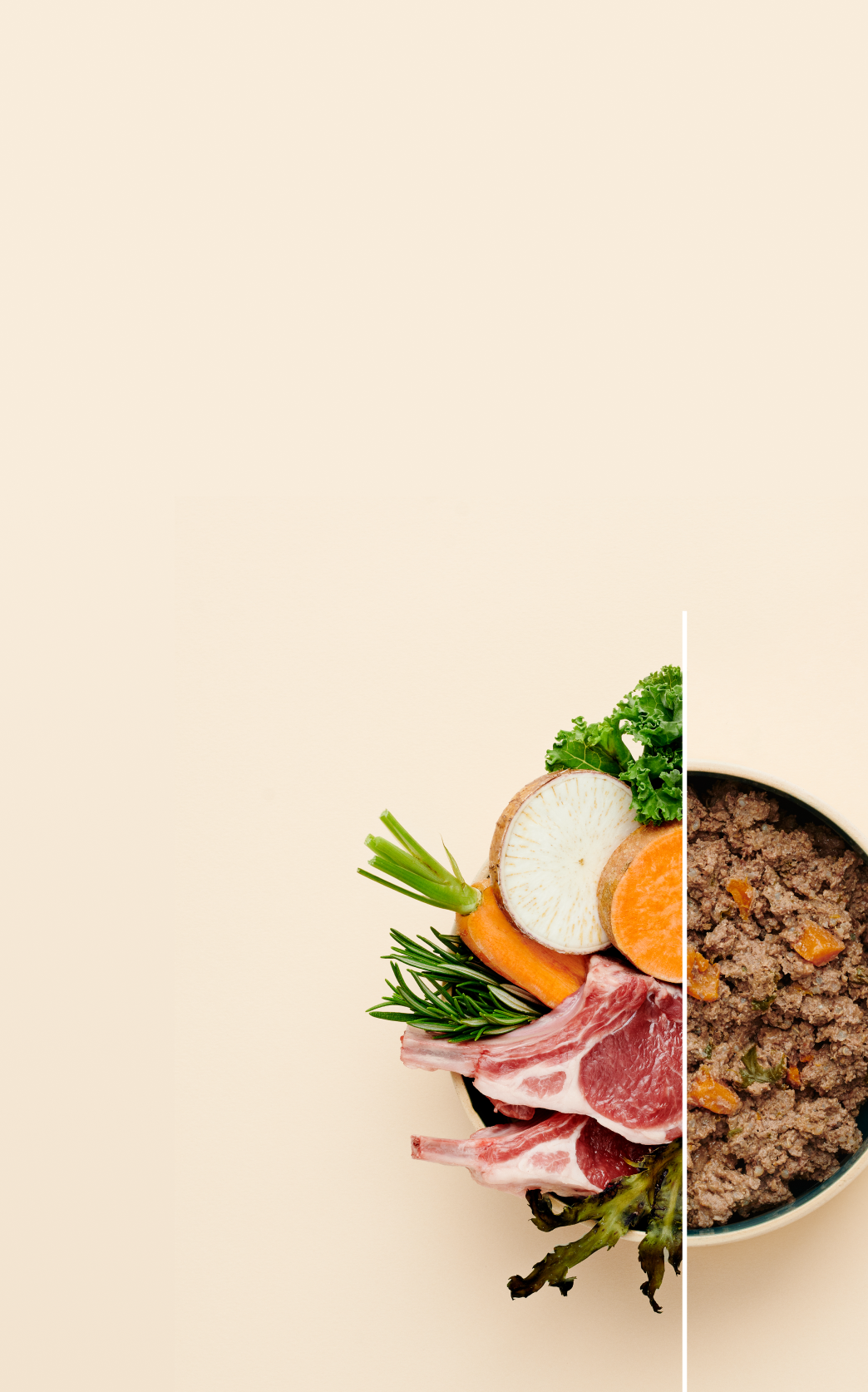
Fresh dog food is more digestible than kibble, delivers a higher moisture content, and uses whole ingredients that provide nutrients in a more bioavailable form.
Cost is another practical benefit. A complete fresh diet costs more per day than kibble for most dog sizes. Mixed feeding allows owners to access the benefits of fresh food at roughly half the cost, making it a sustainable long-term approach for households where a full fresh diet is not feasible. For a 5kg dog, Marleybones Pantry Fresh® on a half plan starts from under £1 per day for the fresh food component.
Mixed feeding also provides dietary variety, which some dogs respond to positively in terms of mealtime enthusiasm. Every dog is different — build your personalised Marleybones feeding and health plan tailored to your dog's age, size, and health requirements.
Are there any downsides to mixed feeding?
The main practical challenge is portioning. It requires more attention than feeding a single food exclusively, and the consequences of getting it wrong consistently (overfeeding or underfeeding) accumulate over time. Using a half plan from Marleybones removes most of this complexity.
Some dogs with sensitive digestion do better on a consistent single-format diet because introducing two different food types can make it harder to identify which food is causing a reaction if digestive issues arise. For dogs with known food sensitivities or a history of digestive problems, speaking to a vet before starting mixed feeding is worth doing to establish a clear baseline.
How do you introduce fresh food into a kibble diet?
Gradually, over 7 to 10 days. Start by replacing around 25% of the kibble portion with fresh food and hold at that ratio for two to three days before increasing. A reliable schedule is 25% fresh food for days 1 to 3, 50% for days 4 to 5, and then settling at whatever target ratio you have chosen from day 6 onwards. For dogs with sensitive digestion, a slower two-week introduction at smaller increments is more comfortable.
Monitor stool consistency throughout. Firm, well-formed stools indicate the transition is going well. Loose stools in the first few days are common and usually resolve as the gut adjusts. Persistent loose stools beyond the first week are a signal to slow the pace of introduction rather than abandon the process.
Can you mix different brands of fresh food with kibble?
Yes, provided both are nutritionally complete for the dog's life stage and you are calculating portions by calorie content rather than volume. The brand combination matters less than ensuring both foods are complete and that the total daily calorie intake is appropriate for the dog's weight and activity level. If mixing two fresh foods rather than a fresh food and kibble, the same principles apply.

“Such a relief to see her enjoying her food”
FAQs
Can mixing kibble and wet food cause bloat?
The claim that mixing dry and wet food causes bloat (gastric dilatation-volvulus) is not supported by veterinary evidence. Bloat is associated with eating very quickly, exercising immediately after meals, and genetic predisposition. Feeding from a slow feeder and avoiding vigorous exercise for an hour after meals are practical measures to reduce the risk of bloat.
Is it better to feed kibble and fresh food in the same bowl or separately?
Either works. Mixing both in the same bowl at each mealtime is simpler and ensures the dog eats both rather than picking out a preferred component. Feeding them separately at different mealtimes is also fine. The important thing is that the total daily calorie intake across both meals is correct, not the order or presentation.
How much fresh food should I add to kibble?
It depends on your goal. A 50/50 split by calories is a practical starting point that delivers meaningful nutritional benefits from the fresh food while keeping cost comparable to a premium kibble diet.
Will my dog prefer fresh food over kibble once they have tried it?
Many dogs do show a clear preference for fresh food over kibble once they have been introduced to it, because fresh food has a stronger natural aroma and softer texture. This is not a problem in mixed feeding as long as the dog continues to eat both components. If a dog starts refusing the kibble portion and only eating the fresh food, adjusting the ratio or transitioning to a full fresh diet may be a simpler long-term solution than managing selective eating.
Does Marleybones offer a mixed feeding plan?
Yes. Marleybones half plans are designed specifically for mixed feeding, providing correctly portioned Pantry Fresh® meals to combine with your dog's existing kibble. The plan is personalised to your dog's weight and the proportion of daily calories you want to come from fresh food. Half plan subscribers receive the same subscription benefits as full plan customers, including up to 25% savings on their plan.
“A complete game changer!!”
References
- Liao, P., Yang, K., Huang, H., Xin, Z., Jian, S., Wen, C., et al., & Deng, B. (2023). Abrupt dietary change and gradual dietary transition impact diarrheal symptoms, fecal fermentation characteristics, microbiota, and metabolic profile in healthy puppies. Animals, 13(8), 1300.
- Do, S., Phungviwatnikul, T., de Godoy, M. R., & Swanson, K. S. (2021). Nutrient digestibility and fecal characteristics, microbiota, and metabolites in dogs fed human-grade foods. Journal of Animal Science, 99(2), skab028.
- Sires, R., Yamka, R., & Wakshlag, J. (2025). Feeding fresh food and providing water ad libitum is clinically proven to exceed calculated daily water requirements and impact urine relative supersaturation in dogs. Frontiers in Veterinary Science, 12, 1675990.
- Laflamme, D. R. P. C. (1997). Development and validation of a body condition score system for dogs.


 Give your dog the quality nutrition they deserve
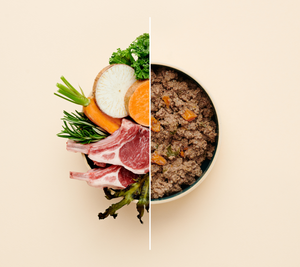
Real meat, wholesome veggies and functional superfoods.
Get 40% OFF today