



Best dog food for a senior Bernese Mountain Dog

At a glance
- Bernese Mountain Dogs are considered senior from around 7 years old — earlier than many breeds due to their shorter lifespan.
- Joint disease, including hip and elbow dysplasia, affects a significant proportion of the breed and becomes more pressing in old age.
- Senior Berners need high-quality protein to preserve muscle mass, even if overall calorie intake drops.
- Omega-3 fatty acids (EPA and DHA) from fish sources actively reduce joint inflammation.
- Weight gain in later life accelerates joint deterioration — portion control matters as much as ingredient quality.
What should you feed a senior Bernese Mountain Dog?
A senior Bernese Mountain Dog needs food built around three things: enough protein to hold onto muscle, omega-3s to protect the joints, and controlled calories to keep weight in check. Get those three right and you are doing the most important nutritional work you can for an ageing Berner.
Berners are a giant breed with a lifespan of roughly 7 to 10 years. That means they hit their senior years earlier than smaller dogs — most vets consider them senior from around 7. Their bodies are already working harder than a Labrador's just to carry their frame, so the gap between a good diet and a poor one shows up faster.
The feeding changes that matter most in the senior years are not dramatic overhauls. They are adjustments: more protein per calorie, better fat quality, and closer attention to portion size.
If your Berner has specific health conditions — thyroid issues, heart disease, or advanced joint disease — talk to your vet before changing their food. Generic senior advice does not always apply to dogs with diagnosed conditions.
Why do joints matter so much for senior Bernese Mountain Dogs?
Joint disease is the defining health challenge for this breed. Studies show that hip dysplasia affects around 20% of Bernese Mountain Dogs, and elbow dysplasia rates are similarly elevated. By the time a Berner is seven or eight, most owners are already managing some degree of stiffness or reduced mobility.
Diet cannot reverse joint damage, but it can meaningfully slow its progression and reduce day-to-day discomfort. The key nutrients are omega-3 fatty acids — specifically EPA and DHA from marine sources like salmon. These reduce the inflammatory response in joint tissue. Research shows that dogs supplemented with EPA and DHA show measurable reductions in joint pain scores within 12 weeks.
Glucosamine and chondroitin are also worth considering. They are the building blocks of cartilage. Some complete senior foods include them; others do not. If your Berner's food does not list them, a joint health supplement added to their daily meal is a practical way to fill that gap.
Weight is the other joint factor. Every extra kilogram of body weight puts roughly five times that force through the joints during movement. Keeping a senior Berner lean is one of the most effective things you can do for their comfort and mobility.
How much protein does a senior Bernese Mountain Dog actually need?
More than most people assume. The old idea that senior dogs need less protein is outdated. Older dogs actually absorb protein less efficiently, so they need the same amount — or more — to achieve the same result in the body.
Protein does three things for an ageing Berner: it maintains muscle mass, supports immune function, and helps the body repair tissue. When muscle mass drops, dogs become weaker, less mobile, and more prone to injury. Preserving it is a genuine health priority.
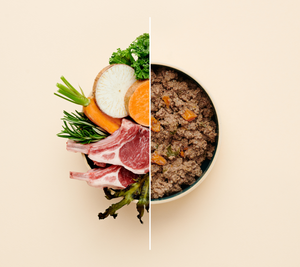
The source of protein matters as much as the quantity. Whole named meat — chicken, beef, lamb, salmon — provides a complete amino acid profile and is far more usable by the body than meat meal or derivatives. Fresh food naturally delivers higher moisture content too, which supports kidney function. That matters for older dogs whose kidneys are working less efficiently than they once were.
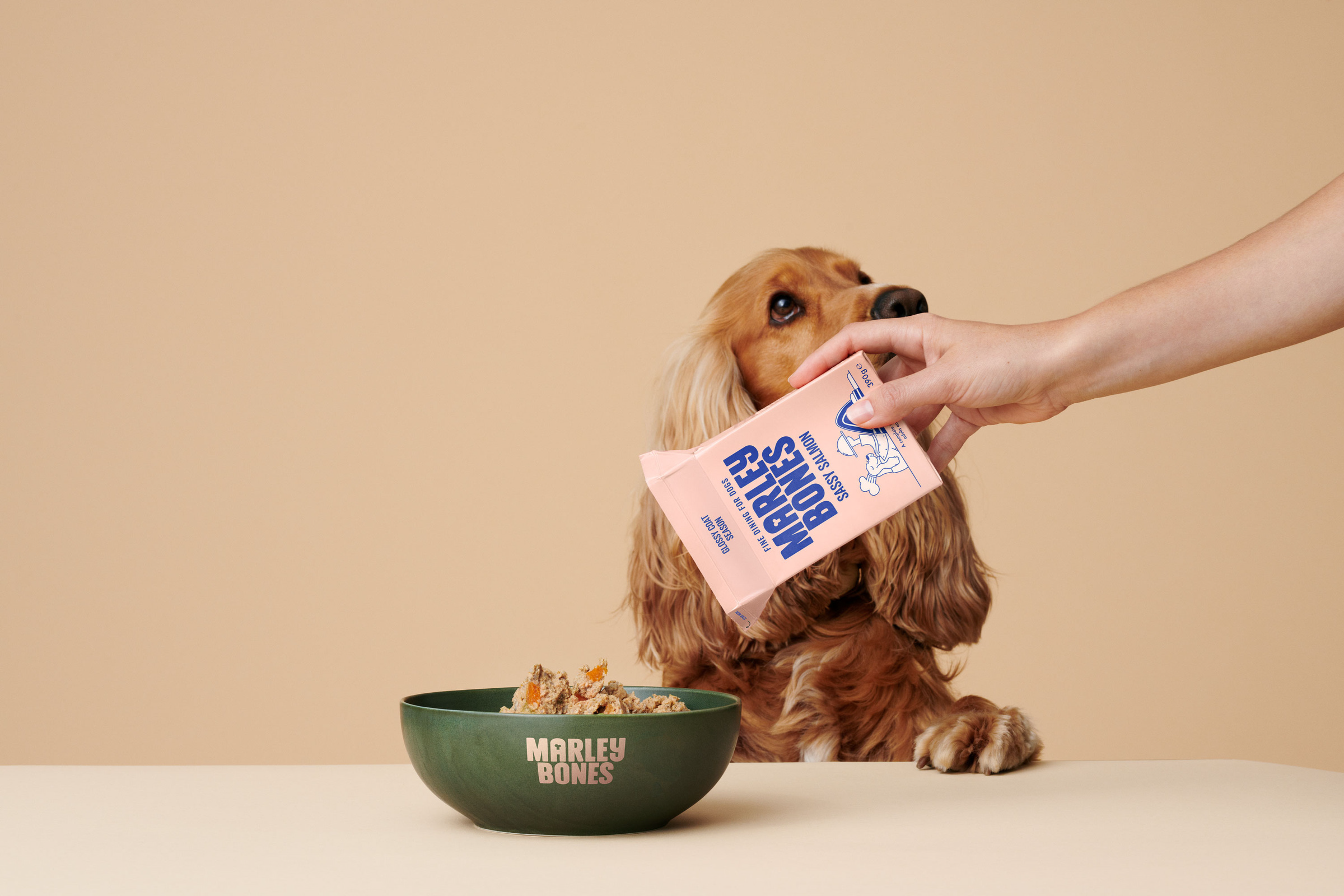
Marleybones Pantry Fresh meals are built on whole named meats with no fillers, developed to FEDIAF nutritional standards, and complete for all life stages — including seniors. The Sassy Salmon recipe combines a high-quality protein source with naturally occurring omega-3s, which makes it a practical choice for a senior Berner with joint concerns.
For a broader look at how Bernese Mountain Dogs eat across all life stages, the nutritional priorities shift from growth support in puppyhood to joint and weight management in the senior years — but the need for quality protein runs throughout.
What about weight management for senior Berners?
Weight gain in later life is common in large breeds, and Berners are not immune. Activity levels drop, metabolism slows, and if portions stay the same, the weight creeps up. Obesity in a giant breed is serious — it compounds joint stress, strains the heart, and shortens lifespan.
The practical approach is to reduce calorie density rather than reduce meal volume dramatically. Dogs that get less food often become anxious or beg more. Choosing food with a higher moisture content and good fibre naturally creates satiety without excess calories. Feeding guidelines for senior dogs are a useful starting point, but individual adjustment based on body condition score is the most accurate method.
Aim for a visible waist when viewed from above and ribs you can feel but not see. Weigh your Berner every four to six weeks. If they are gaining, reduce portions by 10% and reassess.
Every dog is different — build your personalised Marleybones feeding and health plan tailored to your dog's age, size, and health requirements.

“Such a relief to see her enjoying her food”
FAQs: feeding a senior Bernese Mountain Dog
When is a Bernese Mountain Dog considered senior?
Most vets consider Berners senior from around 7 years old. Giant breeds age faster than small ones, and Berners have a typical lifespan of 7 to 10 years, so the senior stage represents a significant portion of their life.
Should I switch to a senior-specific dog food formula?
Not necessarily. Many senior-labelled foods simply reduce protein, which is the opposite of what most older dogs need. What matters is the quality and source of the ingredients — not the label. Look for whole named meats, marine omega-3s, and a complete nutritional profile rather than relying on the word 'senior' on the packaging.
How do I know if my senior Berner is a healthy weight?
Run your hands along their sides. You should feel the ribs without pressing hard, but not see them clearly. Viewed from above, there should be a visible waist. If the waist has disappeared or the ribs are buried, they are carrying too much weight. Weigh them regularly and adjust portions accordingly.
Can diet help with joint problems in older Berners?
Diet cannot reverse existing joint damage, but it can reduce inflammation and slow further deterioration. Omega-3 fatty acids from fish sources and adequate protein to maintain muscle are the two most impactful dietary interventions. If joint issues are severe, speak to your vet about additional support alongside dietary changes.
Does Marleybones work for senior Bernese Mountain Dogs?
Marleybones meals are complete for all life stages, including seniors, and are developed to FEDIAF nutritional standards. The recipes use whole named meats and contain no fillers or artificial preservatives. For a senior Berner with joint concerns, the Sassy Salmon recipe provides both quality protein and naturally occurring omega-3s in a single meal.
“A complete game changer!!”


 Give your dog the quality nutrition they deserve
Real meat, wholesome veggies and functional superfoods.
Get 30% off: Take the quiz