


Best dog food for a Chinese Shar Pei puppy

At a glance
- Chinese Shar Pei puppies are a medium breed — they reach adult weight around 12 months
- The breed is genetically predisposed to food sensitivities, skin inflammation, and gut issues
- High-quality named protein sources and a short, recognisable ingredient list reduce the risk of reactions
- Puppies need 3-4 meals per day up to 12 weeks, dropping to 3 meals until 6 months, then twice daily
- A complete recipe — meeting FEDIAF or AAFCO nutritional standards — is essential, not optional
What is the best dog food for a Chinese Shar Pei puppy?
The best dog food for a Chinese Shar Pei puppy is a complete recipe built on a single, high-quality named protein source, with no unnecessary fillers, artificial additives, or vague ingredient listings. Shar Peis are one of the breeds most commonly affected by food sensitivities, and those sensitivities frequently show up in puppyhood, making ingredient quality critical from day one.
Chinese Shar Pei puppies need a diet that delivers adequate protein for muscle development, enough fat for energy and coat health, and the right calcium-to-phosphorus ratio to support bone growth without overloading developing joints. Fresh and lightly processed foods tend to retain more of their natural nutrients than heavily extruded kibble, which matters when the goal is bioavailability, meaning how much of each nutrient the body can actually absorb and use.
Marleybones Pantry Fresh meals are vet-developed, FEDIAF compliant, and complete for all life stages including puppies. The recipes use freshly prepared ingredients sealed raw and slow-cooked in-pack, without preservatives or freezing, which preserves nutritional quality in a format that requires no freezer. Understanding how feeding needs shift at each life stage is especially useful in the first year, when nutritional requirements change faster than at any other point in a dog's life.
Why are Chinese Shar Pei puppies more sensitive than other breeds?
Shar Peis carry a genetic mutation associated with elevated hyaluronan — a naturally occurring substance that contributes to their distinctive wrinkled skin. That same mutation is linked to a condition called Familial Shar-Pei Fever, and more broadly to heightened inflammatory responses in the skin and gut. This means the breed reacts more strongly to dietary triggers that other dogs would tolerate without issue.
Food allergies in dogs most commonly involve beef, dairy, wheat, and chicken, in that order. Shar Peis are not immune to these triggers — and because their immune and skin systems are already running hotter than average, reactions tend to present more visibly. Red, itchy skin around the face and folds, loose stools, and recurring ear infections are the most common early signs that a dietary ingredient is causing inflammation.
The practical response is to start with a simple diet and introduce variety gradually. A single-protein recipe with a short ingredient list gives you a clear baseline. If symptoms appear, you know what you are working with. The connection between diet and itchy skin in dogs is well established — and for Shar Peis, it is one of the most important reasons to take ingredient quality seriously from the start. If your puppy develops persistent skin irritation or digestive symptoms, speak to your vet before making significant dietary changes.
What should you look for on the label when choosing a Shar Pei puppy food?
Start with the protein source. It should be named — chicken, lamb, salmon, beef — not described as meat meal or animal derivatives. Named proteins are more traceable, more consistent batch to batch, and less likely to cause unexpected reactions in a sensitive breed.
Next, check completeness. The label should state the food is complete and balanced for puppies or all life stages, and ideally reference FEDIAF or AAFCO standards. These are the nutritional frameworks that confirm essential vitamins, minerals, and amino acids are present in the right amounts for a growing dog.
Look at the carbohydrate sources too. Sweet potato, brown rice, and oats are gentler on digestion than wheat or corn. For a Shar Pei puppy, avoiding gluten-containing grains is a sensible precaution given the breed's inflammatory tendencies, even if a formal allergy has not been diagnosed.
| What to look for | What to avoid |
|---|---|
| Named protein source (e.g. chicken, lamb) | Meat meal or animal derivatives |
| Complete for puppies or all life stages | Complementary food labelled as a main meal |
| Short, recognisable ingredient list | Long lists with multiple additives and preservatives |
| Gentle carbohydrates (sweet potato, oats) | Wheat, corn, soy — common inflammatory triggers |
| Omega-3 fatty acids (salmon oil, linseeds) | High vegetable oil content with no omega-3 source |
How much should you feed a Chinese Shar Pei puppy, and how often?
Shar Peis are a medium breed. Most reach adult weight between 20 and 30kg, typically by 12 months. Portion sizes should reflect the puppy's current weight, projected adult weight, and feeding frequency — all three matter, not just one.
Feed 3 to 4 meals per day up to 12 weeks of age, then drop to 3 meals until 6 months. After that, twice daily feeds work well for most Shar Pei puppies through to adulthood. Overfeeding at this stage puts pressure on fast-growing joints and can contribute to the kind of low-grade inflammation the breed is already prone to. Age-appropriate puppy portions vary more than most owners expect — always use the feeding guide on your chosen food as a starting point and adjust based on body condition, not just weight.
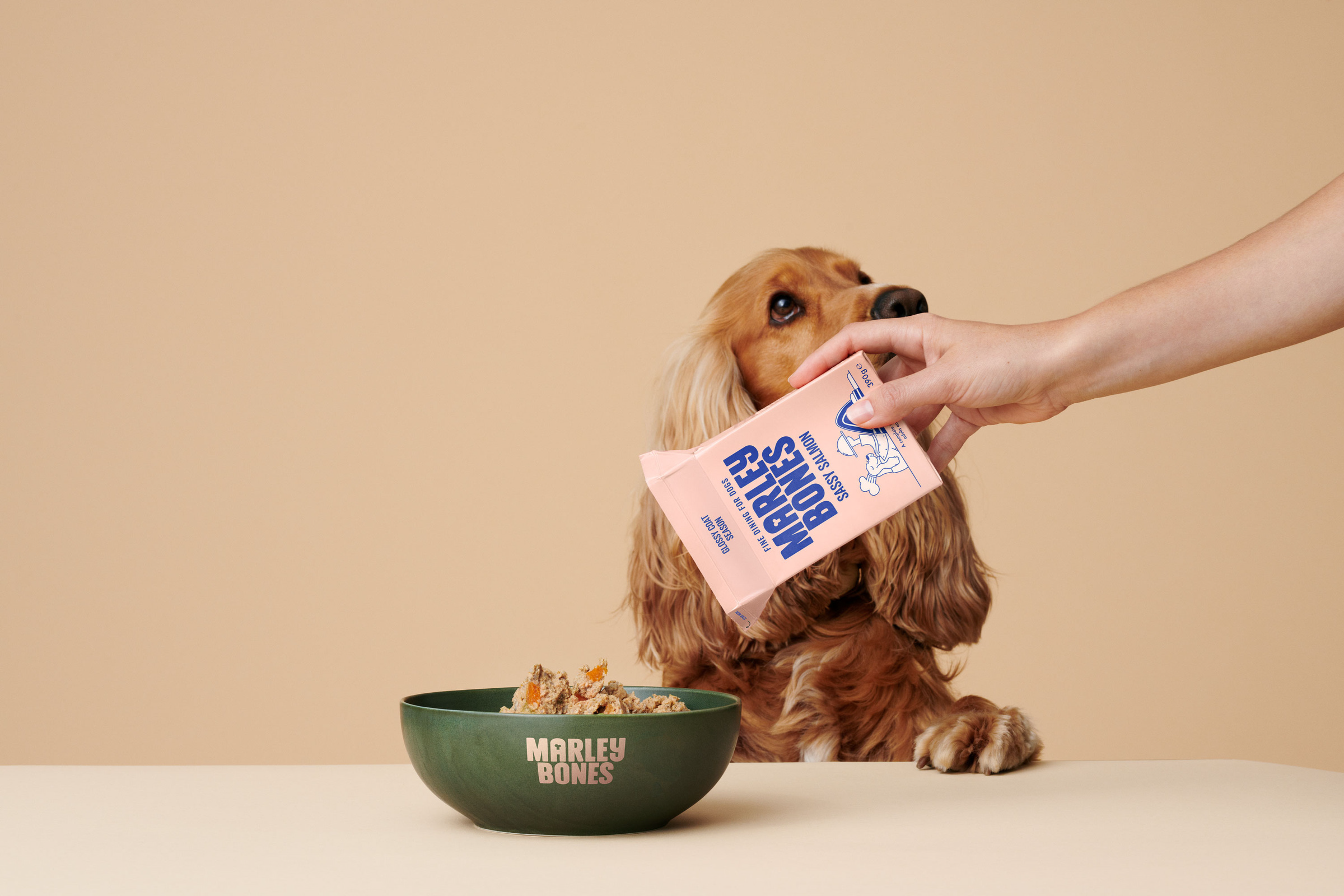
Shar Pei puppies benefit from omega-3 fatty acids, particularly EPA and DHA from fish oil sources. These support skin barrier function, reduce baseline inflammation, and contribute to brain development. Marleybones Sassy Salmon provides both high-quality protein and a natural omega-3 source in a single complete recipe — a practical choice for a breed where skin health is a consistent concern.
Every dog is different — build your personalised Marleybones feeding and health plan tailored to your dog's age, size, and health requirements.

“Such a relief to see her enjoying her food”
FAQs
Can Chinese Shar Pei puppies eat adult dog food?
No. Adult dog food does not meet the higher protein, fat, and calcium requirements of a growing puppy. Shar Pei puppies grow quickly and need a food labelled complete for puppies or all life stages. Feeding adult food through puppyhood risks nutritional gaps at exactly the stage when development is most demanding.
What protein is best for a Shar Pei puppy with sensitive skin?
Salmon and lamb are good first choices for Shar Peis with skin sensitivity. Both are less commonly associated with food reactions than beef or chicken, and salmon provides omega-3 fatty acids that actively support skin barrier function. If a specific allergy has been diagnosed, your vet will advise on an appropriate elimination or hydrolysed protein diet.
How do I know if my Shar Pei puppy has a food intolerance?
The most common signs are itchy, red, or inflamed skin, particularly around the face, ears, and folds, recurring loose stools, and frequent ear infections. These symptoms can also have non-dietary causes, so a vet assessment is the right starting point. If food is suspected, a proper elimination diet — one novel protein for 8 to 12 weeks — is the most reliable way to identify a trigger.
Is fresh food better than kibble for a Shar Pei puppy?
Fresh food prepared from whole ingredients retains more natural nutrients than kibble, which is extruded at high heat and pressure. For a breed prone to skin and digestive sensitivity, the ingredient transparency and lower processing of fresh food is a practical advantage. Marleybones Pantry Fresh meals are slowly cooked in-pack from freshly prepared ingredients, complete for all life stages, and available without a subscription at Waitrose, Ocado, Pets at Home, and Whole Foods Market.
When does a Chinese Shar Pei stop being a puppy?
Shar Peis are a medium breed and are generally considered adult dogs from around 12 months of age. Some individuals continue to fill out slightly until 18 months, but nutritional needs shift to adult maintenance from the 12-month mark. Switching to an adult recipe, or continuing on a recipe complete for all life stages, is appropriate at that point.


 Give your dog the quality nutrition they deserve
Real meat, wholesome veggies and functional superfoods.
Get 30% off: Take the quiz