



 Vet reviewed
What is the best dog food for Borzois?

At a glance
- Borzois do best on fresh, whole-ingredient food built around a lean, high-quality protein - the breed's deep-chested build, sensitive digestion, and low body fat make ingredient quality and feeding practice both critical to their long-term health.
- Bloat (gastric dilatation-volvulus) is a serious risk in Borzois - small, frequent meals rather than one large feed, and avoiding exercise around mealtimes, are the two most practical dietary habits that reduce it.
- Despite their size, Borzois have a lean, efficient metabolism and burn fewer calories than their frame suggests - overfeeding is a genuine risk that shows up slowly on a frame that naturally carries little fat.
- Omega-3 fatty acids from oily fish support the Borzoi's long, silky coat from the inside, where no amount of brushing can compensate for a nutritional gap in dietary fat quality.
- Borzois have a notably low tolerance for anaesthesia, which makes maintaining a healthy weight through precise portion control more important for this breed than for barrel-chested or higher-fat breeds.
What is the best diet for a Borzoi?
Fresh dog food built around a single, lean, high-quality protein is the most appropriate diet for most Borzois. The breed's anatomy - a deep, narrow chest, low body fat, and a digestive system that handles large volumes of food poorly - means that what you feed and how you feed it both matter in equal measure.
Heavily processed dry kibble is calorie-dense, low in moisture, and places a higher digestive load on a gut that already tends toward sensitivity in sighthounds. Fresh food cooked at lower temperatures retains more of its natural protein structure and nutritional integrity, and the 65-75% moisture content makes it significantly easier on the Borzoi's lean, reactive digestive system than the 10% moisture found in dry kibble.
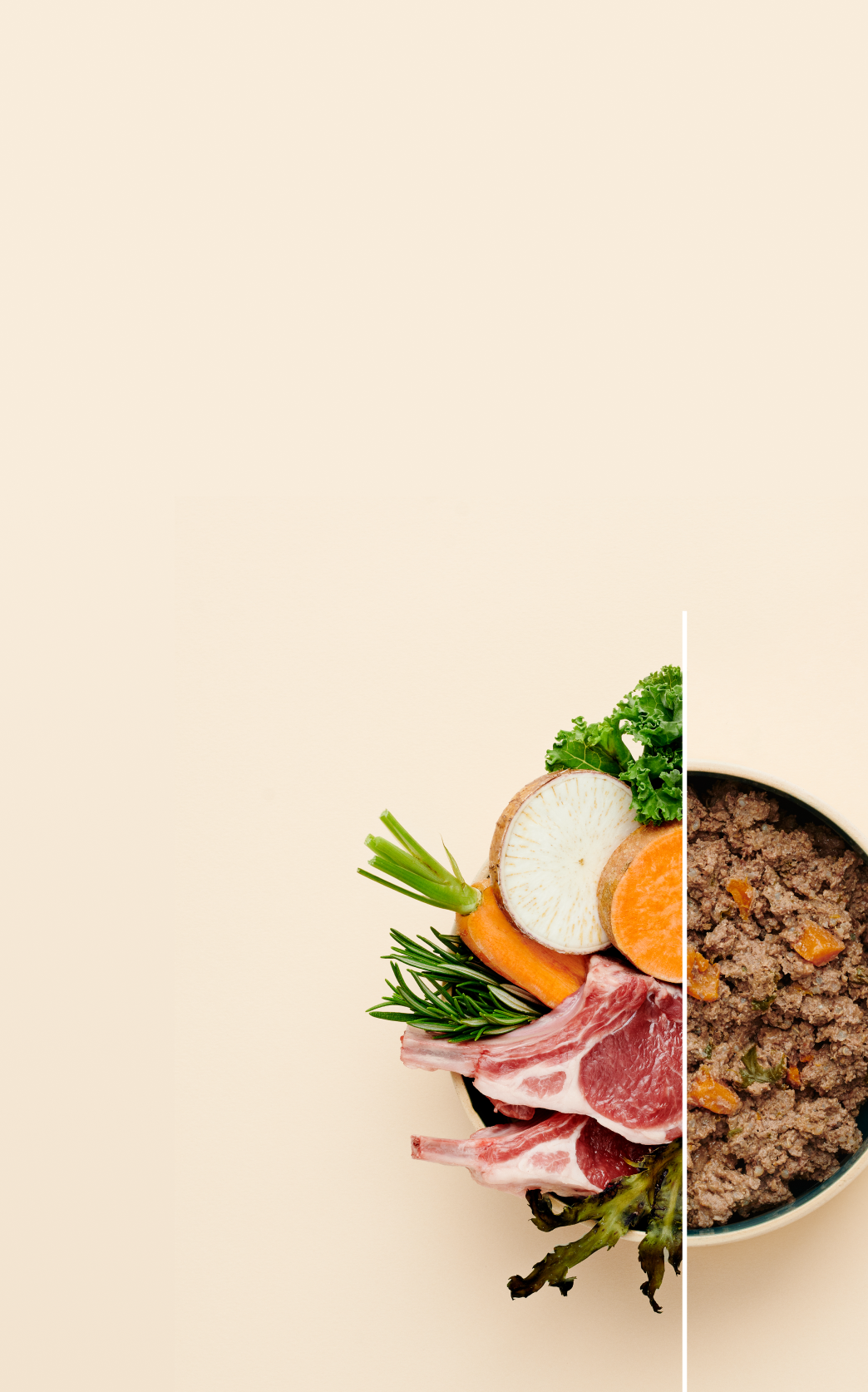
The practical checklist for a good Borzoi food is: a named lean protein you can read on the label, omega-3 fatty acids for coat support, no artificial preservatives or cheap fillers, and controlled portions split across at least two meals a day. Marleybones Pantry Fresh meals are vet-developed, single-protein recipes slow-cooked from whole ingredients with no artificial additives - a format well-suited to a breed where digestive sensitivity and coat condition are both closely tied to ingredient quality.
Do Borzois have sensitive stomachs?
Yes, and the sensitivity is structural as much as dietary. Sighthounds as a group have a leaner gut with less fatty insulation around the digestive organs, which means they process food differently to heavier, more muscular breeds. Borzois fed large single meals, high-starch kibble, or foods with artificial additives tend to show it quickly - loose stools, wind, or visible discomfort after eating are common presentations.
The most practical dietary adjustments for a Borzoi with a reactive gut are splitting the daily portion across two meals, choosing a food with a single, identifiable protein source, and eliminating artificial additives and bulk fillers. High-starch fillers ferment in the lower digestive tract, producing gas and contributing to the kind of bloating that is uncomfortable in most breeds and dangerous in a deep-chested sighthound.
If digestive symptoms persist beyond four weeks of a dietary change, or include blood in stools, significant weight loss, or repeated vomiting, see a vet before continuing to adjust the food.
Why does feeding practice matter so much for Borzois?
Gastric dilatation-volvulus (GDV), commonly called bloat, is one of the most serious health risks in large, deep-chested breeds, and Borzois are among the most anatomically susceptible. The condition occurs when the stomach fills with gas and twists on itself - it is a veterinary emergency with a high fatality rate if not treated immediately. Diet and feeding practice are the two areas where owners have the most meaningful influence over risk.
The practical steps are straightforward: feed two smaller meals rather than one large daily feed, avoid vigorous exercise for at least an hour before and after meals, and use a standard-height bowl rather than a raised feeder (current evidence does not support raised feeders reducing bloat risk and some studies suggest the opposite). Avoid foods that ferment readily in the gut - high-starch, low-quality kibble with cheap grain fillers is a particular concern. A fresh, minimally processed food with controlled starch and no bulk fillers reduces the fermentation load that contributes to gas build-up.
What protein is best for a Borzoi?
Lean proteins are the right foundation for Borzois - the breed's naturally low body fat and efficient metabolism mean that high-fat cuts or rich protein sources add unnecessary caloric density without improving nutritional value. Lamb and salmon are strong starting points, particularly for dogs with a history of digestive sensitivity or those currently eating chicken or beef.
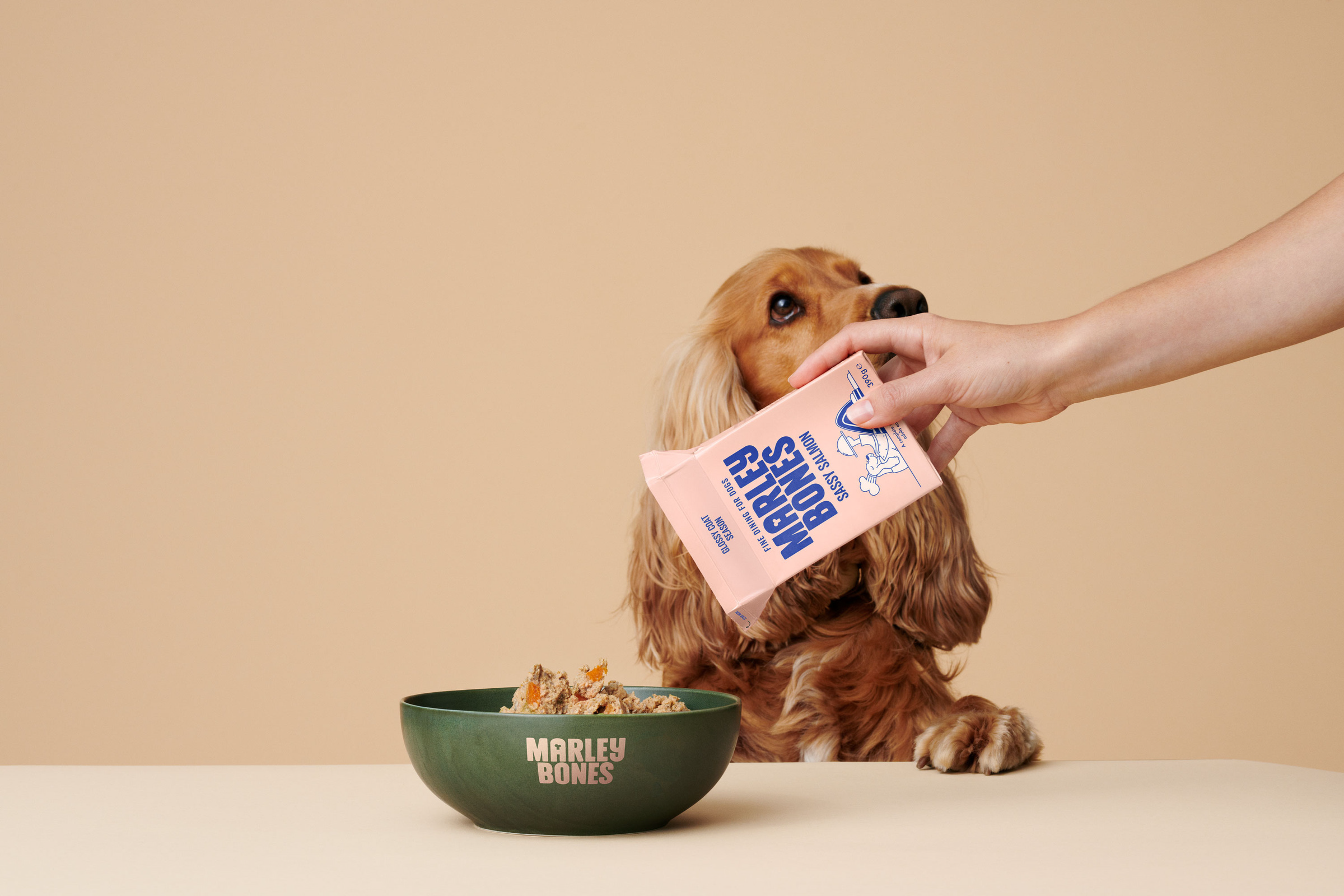
Salmon provides clean, lean protein alongside EPA and DHA omega-3 fatty acids that directly support the Borzoi's long, silky coat - addressing two of the breed's key nutritional priorities in a single ingredient. Marleybones Sassy Salmon is a single-protein recipe built around whole salmon with chicory root as a natural prebiotic - a useful addition for a breed whose gut benefits from consistent microbiome support. Lamb is the stronger choice for dogs that need a red meat option or have already eaten fish regularly; it is lower allergenicity than beef and sits well with reactive digestive systems.
Single-protein meals are the most reliable choice for Borzois with any history of sensitivity, making it straightforward to identify what the dog tolerates and to rotate proteins deliberately rather than by accident.
How much should I feed a Borzoi?
Adult Borzois typically weigh between 27 and 47kg, but weight alone is a poor guide for this breed because their naturally lean frame means even a well-nourished Borzoi looks and feels lighter than a dog of equivalent height from a heavier breed. Body condition scoring is a more reliable tool: you should be able to feel the ribs easily and see the last two or three with the coat flattened, and there should be a visible waist tuck from above and a clear abdominal tuck from the side. Visible hip bones or a sharp spine indicate underfeeding.
Fresh food is more satiating per calorie than dry kibble because the higher moisture content occupies more volume in the stomach. Most owners switching from kibble to fresh food find the nominal calorie count can be reduced without the dog appearing hungry. Split the daily portion across two meals as a minimum - this is not optional for a breed with this level of bloat risk - and treat feeding guides as a starting point rather than a fixed prescription. Adjust over six to eight weeks based on body condition, and account for treats in the daily total.
Every dog is different - build your personalised Marleybones feeding and health plan tailored to your dog's age, size, and health requirements.How do different dog food formats compare for Borzois?
| Format | Moisture content | Processing level | Verdict for Borzois |
|---|---|---|---|
| Fresh (Pantry Fresh) | 65-75% | Minimal - slow low-temperature cooking | Best option - lean whole ingredients, low fermentation load, supports coat and sensitive digestion |
| Raw | 65-75% | None | Works for some - bacterial load and bone content require careful management in a breed with a sensitive gut |
| Wet / canned | 75-85% | Moderate | Better than kibble - ingredient quality varies widely, check protein source and starch content carefully |
| Cold pressed | Around 12% | Low - below extrusion temperatures | Reasonable middle ground - lower starch than kibble, gentler processing, but moisture remains low |
| Dry kibble | Around 10% | High - high-temperature extrusion | Poorest option for Borzois - high starch, low moisture, and fermentation risk make it a poor match for this breed's anatomy |
FAQs
How often should I feed a Borzoi?
Twice daily is the minimum for adult Borzois, with the daily portion split into two roughly equal meals. Some owners of large, deep-chested sighthounds prefer three smaller meals to further reduce the volume hitting the stomach at any one time. One large daily feed is not appropriate for this breed given the elevated bloat risk that comes with large meal volumes.
Can diet help reduce the risk of bloat in a Borzoi?
Diet alone cannot eliminate the risk, but it influences two of the contributing factors: meal volume and gut fermentation. Splitting meals reduces the volume of food in the stomach at any one time. Choosing a food with low starch content and no bulk grain fillers reduces the fermentation that produces gas. A fresh, minimally processed food addresses both more reliably than high-starch dry kibble.
Why does my Borzoi look thin even when eating well?
Borzois are naturally lean - a visible last rib or two and prominent hip bones are within normal range for the breed. The concern is not thinness by human standards but whether the dog's body condition is stable, energy levels are consistent, and coat condition is good. If weight is dropping, energy is low, or the coat is deteriorating, a vet assessment and review of daily calorie intake are the right next steps.
Is grain-free food better for Borzois?
Not automatically. The problem in most sensitive sighthounds is not grain itself but the quantity of cheap, high-starch grain used as filler in heavily processed food. Whole oats or brown rice in a fresh, minimally processed meal are handled differently to the refined starches in extruded kibble. Grain-free foods that replace grain with large quantities of legumes or peas have their own nutritional considerations and are not automatically better for digestion or bloat risk.
Does a Borzoi's coat benefit from dietary supplements?
A fresh diet built around oily fish delivers EPA and DHA omega-3 fatty acids naturally, which is the most effective dietary support for coat quality. If the main protein is not fish-based, an omega oil supplement is worth considering - Marleybones Omega Boosting Oil can be added directly to meals and provides a concentrated source of the fatty acids the Borzoi's coat depends on. Supplements are most useful when the base diet is already clean and complete.
Is Marleybones Pantry Fresh good for Borzois?
Yes. Marleybones Pantry Fresh meals are vet-developed, single-protein recipes with no artificial additives, no fillers, and a low starch load that suits a breed with a sensitive, lean digestive system. Sassy Salmon is the strongest choice for Borzois, delivering lean protein alongside natural EPA and DHA omega-3 fatty acids for coat support. With a 4.9/5 Trustpilot rating and over 2,000,000 meals delivered, it is a practical, well-evidenced choice for a breed where both feeding format and ingredient quality genuinely matter.
How long before I see a difference after switching my Borzoi's food?
Digestive changes - firmer stools, less wind, reduced discomfort after meals - are the most common first improvement, typically within two to four weeks. Coat condition takes longer, usually six to eight weeks before meaningful improvement is visible. Weight and body condition changes take eight to twelve weeks to assess reliably. If there is no improvement after four weeks on a consistent diet, a vet assessment is the right next step before making further changes.


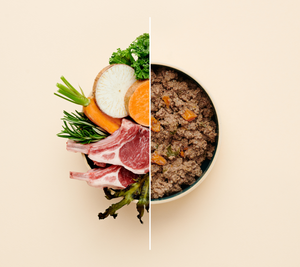 Give your dog the quality nutrition they deserve
Real meat, wholesome veggies and functional superfoods.
Get 30% off: Take the quiz