
What to Feed a Puppy: A Complete Guide for New Owners

At a glance
- Puppies need food that meets FEDIAF nutritional standards for growth — not adult dog food, which has different nutrient ratios
- Protein, calcium, phosphorus, and DHA (an omega-3 fatty acid that supports brain development) are the key nutrients to look for
- Meal frequency matters as much as food quality — puppies need 3-4 meals a day until around 6 months old
- Transitioning to a new food slowly over 7-10 days prevents digestive upset
- Large and giant breeds have specific calcium requirements — getting this wrong affects bone development
What should I actually feed my puppy?
Feed your puppy a complete food that is nutritionally balanced and formulated for growth. That means it must meet FEDIAF guidelines — the nutritional standards set by the European pet food industry that ensure a food contains everything a young dog needs to develop properly.
The food you choose should be high in quality protein. Protein provides the amino acids (the building blocks your puppy's body uses to grow muscle, repair tissue, and support the immune system). It should also contain the right balance of calcium and phosphorus for bone development, and DHA, an omega-3 fatty acid found in fish and fish oil that supports healthy brain and eye development in young dogs.
In terms of format, puppies do well on fresh food, wet food, or a well-formulated dry kibble, as long as the food carries a "complete" label and meets the standards above. Fresh food tends to have higher moisture content, which helps with hydration, and uses minimally processed ingredients that are easier to digest. how a puppy's gut handles fresh food versus heavily processed kibble is worth understanding before you commit to a feeding routine.
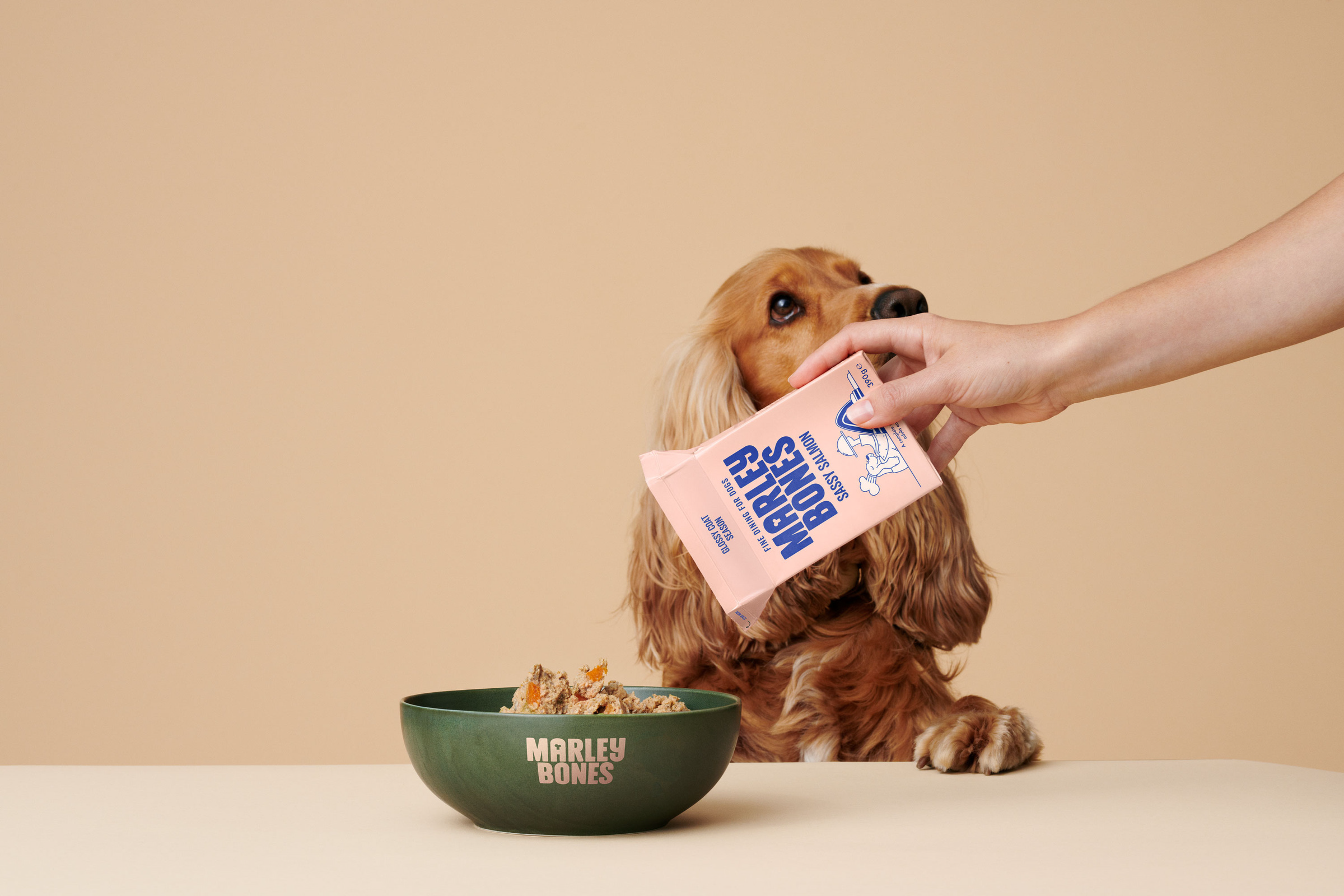
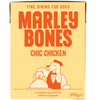
Marleybones Pantry Fresh meals are vet-developed, FEDIAF compliant, and complete for all life stages including puppies. They're made from freshly prepared ingredients, slow-cooked in-pack, and shelf-stable without preservatives or freezing.
How much should I feed my puppy, and how often?
Puppies need to eat more frequently than adult dogs because their stomachs are small and their energy demands are high. Up to 6 months old, feed 3-4 meals a day. From 6 months, move to 3 meals. From around 12 months (or 18-24 months for large breeds), most dogs transition to 2 meals a day.
For portion size, follow the feeding guide on your chosen food's packaging as a starting point. These guides are based on your puppy's current weight and expected adult weight. Adjust if your puppy is leaving food or gaining weight too quickly. Age-appropriate portion guidance for puppies varies more than most people expect, particularly across breed sizes.
Keep an eye on body condition. You should be able to feel your puppy's ribs without pressing hard, but not see them. A visible waist from above and a slight tuck behind the ribcage are signs of a healthy weight.
Does my puppy's breed size change what they need?
Yes, significantly. Large and giant breed puppies (think Labradors, German Shepherds, Great Danes) need food with carefully controlled calcium and phosphorus levels. Too much calcium during rapid growth contributes to developmental bone conditions like osteochondrosis. This is why large breed puppies should ideally eat food specifically formulated for large breed growth, or a food that clearly states it is complete and balanced for all life stages including large breed puppies.
Small breed puppies have the opposite challenge. They have fast metabolisms and smaller stomachs, so they need energy-dense food in smaller, more frequent portions. They are also more prone to hypoglycaemia (low blood sugar) if they go too long without eating, so regular meal times matter.
If you have a breed with known sensitivities — Cocker Spaniels with skin issues, French Bulldogs with digestive sensitivity — it's worth looking at food options with those specific needs in mind early on.
How do I switch my puppy to a new food?
Slowly. A puppy's digestive system is still developing, which means sudden food changes cause loose stools, stomach cramps, or vomiting. The standard advice is a 7-10 day transition: start with roughly 25% new food and 75% old, then shift the ratio gradually each day until you're fully on the new food by day 10.
If your puppy shows signs of digestive upset during the switch — loose stools, excess wind, or reduced appetite — slow the transition down rather than pushing through. There's no need to rush. Switching to a new food goes smoothly for most puppies when the change is gradual.
If your puppy is refusing food entirely for more than 24-48 hours, or showing signs of illness alongside not eating, speak to your vet. Healthy puppies are motivated to eat. A puppy that won't eat is sometimes a sign of stress from a new environment, but persistent refusal warrants professional advice.
What foods are off-limits for puppies?
Some everyday human foods are genuinely toxic to dogs at any age. These include:
- Grapes and raisins — can cause acute kidney failure
- Onions and garlic — damage red blood cells
- Xylitol (an artificial sweetener found in sugar-free gum and some peanut butters) — causes severe hypoglycaemia
- Chocolate — contains theobromine, which dogs cannot metabolise
- Macadamia nuts — cause neurological symptoms
- Cooked bones — splinter and cause internal injury
Beyond the toxic list, avoid feeding your puppy raw meat unless you have a clear understanding of how to manage bacterial contamination safely. Raw feeding is not inherently harmful, but it carries real risks if not handled correctly, particularly for puppies whose immune systems are still maturing.
Marleybones meals avoid all of the above by design. The ingredients are clearly listed, the recipes contain no fillers, and the slow cooking process eliminates bacterial risk while retaining nutritional quality. If you want to explore the range, all four meals are available to browse here.
Every dog is different — build your personalised Marleybones feeding and health plan tailored to your dog's age, size, and health requirements.

“Such a relief to see her enjoying her food”
FAQs
At what age can a puppy start eating solid food?
Most puppies begin weaning onto solid food between 3 and 4 weeks of age. By 7-8 weeks, when they typically go to their new home, they should be eating solid food fully. If you're collecting a puppy younger than 8 weeks, speak to your vet about appropriate weaning support.
Can puppies eat adult dog food?
No. Adult dog food does not meet the higher protein, calcium, and DHA requirements of a growing puppy. Feeding adult food to a puppy long-term risks nutritional deficiencies that affect bone development, muscle growth, and brain development. Always use a food that states it is complete for growth or all life stages.
How long is a dog considered a puppy for feeding purposes?
Small breeds mature faster and can transition to adult feeding routines from around 12 months. Medium breeds typically from 12-15 months. Large and giant breeds are still developing until 18-24 months and should stay on puppy or all life stages food for the full duration.
Is fresh food suitable for puppies?
Yes, provided the food is complete and balanced for growth. Marleybones meals are FEDIAF compliant and complete for all life stages, including puppies. The vet-developed recipes provide the protein, DHA, and mineral balance growing dogs need, with no preservatives or fillers.
Should I give my puppy supplements?
If your puppy is eating a complete, balanced food, they do not need additional supplements. Supplementing calcium in particular can cause more harm than good in growing dogs. The exception is if a vet identifies a specific deficiency or health condition that requires targeted support.
“A complete game changer!!”

 Give your dog the quality nutrition they deserve
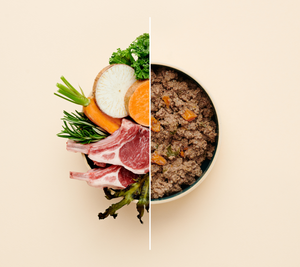
Real meat, wholesome veggies and functional superfoods.
Get 40% OFF today