






Best Supplements for Labradors: What Actually Works

At a glance
- Glucosamine and chondroitin are the most evidence-backed supplements for Labrador joint health, with clinical studies showing measurable improvements in mobility in osteoarthritic dogs.
- Omega-3 fatty acids (EPA and DHA from marine sources) reduce inflammatory markers and support coat condition, brain function, and cardiovascular health in dogs.
- Labradors carry a genetic mutation affecting the POMC gene that disrupts satiety signalling, making calorie management and gut health supplementation particularly relevant for the breed.
- Prebiotic fibre from chicory root and digestive enzymes support the gut microbiome, which directly influences immune function, weight regulation, and stool quality.
- A genuinely complete fresh diet with whole-food ingredients delivers many supplement-equivalent nutrients naturally, reducing reliance on standalone powders or capsules.
Why do Labradors need specific nutritional support?
Labradors are one of the most popular dog breeds in the UK and consistently among the most presented breeds at veterinary clinics for three specific issues: joint disease, obesity, and skin problems. These are not coincidences — they are connected to the breed's genetics, build, and energy requirements.
Around 25% of Labradors carry a deletion in the POMC gene, which prevents the brain from registering fullness correctly. This drives persistent food-seeking behaviour and makes the breed significantly more prone to obesity than most others. Excess weight then accelerates joint deterioration, creating a compounding problem.
Labradors are also large, athletic dogs with substantial muscle mass and dense bone structure. Their joints — particularly hips and elbows — bear considerable load, and the breed has high rates of both hip dysplasia and elbow dysplasia. Skin and ear issues are additionally common, often linked to dietary sensitivities or insufficient fatty acid intake.
Supplementation is most effective when it addresses these breed-specific vulnerabilities directly, rather than following a generic dog supplement routine.
How do different food formats support a Labrador's nutritional needs?
| Format | Joint-support nutrients | Omega-3 content | Gut health | Weight management | Convenience | Verdict |
|---|---|---|---|---|---|---|
| Pantry Fresh (e.g. Marleybones) | High — whole-food superfoods retained through gentle cooking | High — hemp seeds, linseeds, salmon meal options | Strong — chicory root, chia seeds as prebiotics | Accurate portioning, no fillers inflating volume | Shelf-stable, no freezer needed, subscription available | Excellent baseline, minimal additional supplementation needed |
| Frozen raw | Good — raw bone and cartilage sources natural glucosamine | Good if oily fish included | Variable — depends on recipe | Accurate if correctly portioned | Requires freezer, careful handling for food safety | Good nutrient profile but demands more from owner |
| Cold pressed | Moderate — lower temperatures preserve more than kibble | Moderate — oils degrade faster once bag is open | Moderate — some prebiotic inclusion | Calorie-dense, requires careful measuring | Easy to store and serve | Better than standard kibble, still benefits from omega-3 topping |
| Dry kibble | Low to moderate — high-heat processing destroys heat-sensitive nutrients | Low — fats oxidise during processing and storage | Variable — many formulas include fibre sources | High starch content can contribute to weight gain | Very convenient, long shelf life | Supplement-dependent for joint and skin health |
| Wet canned | Moderate — higher moisture, some nutrient retention | Moderate if fish-based | Moderate | Lower calorie density aids weight control | Easy to serve, no prep | Useful as part of a mixed diet, check complete vs complementary labelling |
Which supplements for Labradors are backed by evidence?
Four categories of supplementation have the strongest evidence base for Labradors specifically.
Glucosamine and chondroitin
Glucosamine sulphate and chondroitin sulphate are the building blocks of cartilage. In dogs with osteoarthritis, supplementation at therapeutic doses (typically 20mg/kg glucosamine daily for a 30kg Labrador) improves weight-bearing, reduces lameness scores, and slows cartilage degradation. Results typically show within 4 to 8 weeks of consistent supplementation. These are best introduced from middle age, around 5 to 6 years, though higher-risk dogs — those with confirmed hip or elbow dysplasia — benefit from earlier intervention.
Omega-3 fatty acids (EPA and DHA)
Marine-sourced omega-3s, specifically EPA and DHA from fish oil or krill oil, are the most bioavailable form for dogs. Plant-sourced ALA (from flaxseed or hemp) converts to EPA and DHA at low efficiency in dogs. Omega-3s reduce prostaglandin-driven inflammation, support skin barrier function, improve coat condition, and have documented cardiovascular and cognitive benefits. A typical therapeutic dose for a Labrador is 50 to 75mg combined EPA and DHA per kilogram of body weight. Marleybones' Sassy Salmon meal and the inclusion of linseeds and hemp seeds across the range contribute meaningful omega-3 content from within the food.
Probiotics and digestive enzymes
The gut microbiome regulates immune function, influences weight and appetite hormones, and affects stool consistency. Labradors — given their voracious eating habits — are prone to digestive upsets and loose stools. Probiotic strains with dog-specific evidence include Lactobacillus acidophilus, Bifidobacterium animalis, and Enterococcus faecium. Digestive enzymes (protease, lipase, amylase) support nutrient absorption, particularly in dogs eating processed diets. Marleybones meals include chicory root as a prebiotic, which feeds beneficial bacteria and supports microbiome diversity without requiring a separate supplement.
Vitamin E and antioxidants
Vitamin E protects cell membranes from oxidative damage and supports immune function. It works synergistically with omega-3 supplementation, as increased PUFA intake raises oxidative demand. Selenium, vitamin C (synthesised by dogs but supplementable at times of stress or illness), and polyphenols from whole-food sources all contribute to antioxidant status. Chia seeds and quinoa, both included in Marleybones recipes, provide natural antioxidant compounds alongside their fibre and protein contribution.
How do you manage weight in a Labrador through diet and supplementation?
Weight management in Labradors is a nutritional issue first and a supplementation question second. No supplement replaces portion control and calorie accuracy.
The POMC gene mutation means a significant proportion of Labradors will always feel hungry regardless of how much they have eaten. Owners frequently interpret this as underfeeding and overfeed as a result. A body condition score assessment — where ribs should be easily felt but not seen, with a visible waist from above — is more reliable than relying on the dog's appetite cues.
L-carnitine is the one supplement with reasonable evidence for supporting fat metabolism and lean muscle maintenance in overweight dogs. It facilitates the transport of long-chain fatty acids into cells for energy use. Dose ranges from 50 to 100mg per day for a 30kg dog, though results are modest and only meaningful alongside genuine calorie restriction.
Prebiotic fibre, particularly from chicory root and inulin, supports satiety by slowing gastric emptying and feeding gut bacteria that influence appetite hormones. This is a gentler, food-first approach that complements rather than replaces calorie management. Marleybones meals contain no fillers, which means calorie content comes from functional ingredients rather than cheap carbohydrate padding.
If a Labrador is gaining weight despite appropriate portions, or if joint pain is limiting activity, consult a vet to rule out hypothyroidism and assess the appropriate intervention.
What supplements support Labrador skin and coat health?
Labradors are prone to seasonal and food-triggered skin reactions, hot spots, and dull or brittle coats. The root cause is frequently inadequate omega-3 intake combined with excess omega-6, which tips the inflammatory balance.
The omega-6 to omega-3 ratio in most commercial dog foods skews heavily towards omega-6 — sometimes 15:1 or higher. An optimal ratio for skin and coat health sits closer to 5:1 or lower. Topping a complete diet with a marine fish oil supplement is the most direct way to correct this imbalance. Krill oil has slightly better bioavailability than standard fish oil due to its phospholipid structure.
Biotin (vitamin B7) supports keratin production and is sometimes low in dogs with persistent skin or coat issues. Zinc is another common deficiency to consider, particularly in dogs on high-phytate diets, as it is essential for skin integrity and immune response.
Evening primrose oil provides gamma-linolenic acid (GLA), which has an anti-inflammatory effect on skin independently of the omega-3 pathway. It is particularly useful for dogs with atopic dermatitis or recurrent hot spots.
Marleybones' inclusion of hemp seeds — naturally rich in GLA and the optimal 3:1 omega-6 to omega-3 ratio — means dogs eating their recipes start from a better baseline than those on standard kibble. For Labradors with persistent skin issues despite a good diet, a vet assessment is worthwhile to identify whether an underlying allergy or sensitivity is driving the symptoms.

“A complete game changer!!”
FAQs
Do Labradors need joint supplements from puppyhood?
Most Labradors do not require joint supplements as puppies. The exception is dogs diagnosed early with hip or elbow dysplasia, where veterinary guidance on glucosamine timing is appropriate. For the general Labrador population, joint supplementation is most relevant from 5 to 6 years of age, or earlier if stiffness or reduced mobility is observed.
Can I get enough omega-3 from food alone without adding fish oil?
It depends on the food. Standard dry kibble contains very little bioavailable omega-3 by the time it reaches the bowl, making a separate fish oil supplement close to essential for Labradors on that format. Diets containing whole oily fish, linseeds, hemp seeds, or chia seeds deliver meaningful omega-3 content from within the food. Marleybones Sassy Salmon meals and the hemp and linseed inclusion across the range reduce, though for therapeutic joint or skin support, an additional marine omega-3 top-up remains worthwhile.
What is the best probiotic for a Labrador?
Look for dog-specific probiotic products containing Lactobacillus acidophilus, Bifidobacterium animalis, or Enterococcus faecium at a guaranteed CFU (colony-forming unit) count of at least 1 billion per dose. Human probiotics are not formulated for canine gut pH and are far less effective. Probiotic supplements work best when the diet also includes prebiotic fibre to sustain the bacteria introduced.
Is glucosamine safe for Labradors long-term?
Glucosamine sulphate has a strong long-term safety record in dogs with no significant adverse effects reported in peer-reviewed studies at recommended doses. It is not a drug and does not require cycling. Dogs on blood thinners should be monitored by a vet, as glucosamine has mild anticoagulant properties at high doses. Otherwise, consistent daily supplementation is the approach that delivers results — intermittent use produces minimal benefit.
How do I know if my Labrador needs supplements at all?
A Labrador eating a genuinely complete, nutritionally balanced diet with high-quality whole-food ingredients needs fewer standalone supplements than one eating a heavily processed food. Key signs that supplementation is worth adding: stiff or slow movement on walks, dull or flaky coat, recurrent loose stools, persistent skin itching, or unexplained weight gain. These are pointers to specific nutritional gaps rather than a reason to reach for a broad-spectrum supplement that addresses nothing precisely.
Does Marleybones count as a complete food for Labradors?
Yes. Marleybones Pantry Fresh meals are FEDIAF compliant and complete for all life stages, including puppies. The recipes are vet-developed and contain no fillers, no preservatives, and no ingredients that simply pad out volume. The inclusion of chicory root, chia seeds, hemp seeds, linseeds, and quinoa means many supplement-equivalent nutrients are delivered through the food itself, which is a more bioavailable and digestively appropriate route than isolated powders for most healthy dogs.

Gloss up your pup’s life with an omega-3 booster

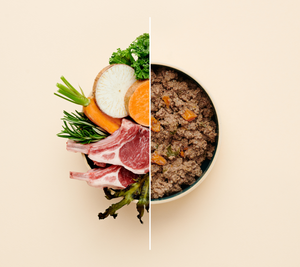 Give your dog the quality nutrition they deserve
Real meat, wholesome veggies and functional superfoods.
Get 40% OFF today