




Signs Your Dog Has a Food Intolerance

At a glance
- Recurring loose stools, itchy skin, vomiting, and flatulence are the most common signs of a food intolerance in dogs
- Food intolerance is not the same as a food allergy — it does not involve the immune system and tends to build gradually
- The most frequently implicated ingredients are beef, dairy, wheat, chicken, and soy
- An elimination diet is the only reliable way to identify which ingredient is causing the problem
- Switching to a simpler, single-protein food often brings noticeable improvement within 6-8 weeks
What does a food intolerance actually look like in a dog?
Food intolerances in dogs produce a specific set of recurring symptoms that tend to persist regardless of how otherwise healthy the dog appears. Unlike a sudden illness, the signs keep coming back — often daily or several times a week — and they tend to be linked to mealtimes rather than random episodes.
The most common signs are:
- Loose stools or diarrhoea that comes and goes without a clear cause
- Itchy skin, particularly around the paws, ears, belly, and face
- Excessive wind or a noticeably gurgling stomach
- Vomiting that is not linked to eating too fast or eating grass
- Skin redness or recurring ear infections
- Poor coat condition — dull, dry, or flaky
The key word here is recurring. One episode of an upset stomach is rarely meaningful. It is when the same symptoms keep reappearing, week after week, that food intolerance becomes a serious possibility.
It is worth knowing that food intolerance is not the same as a food allergy. An allergy involves the immune system and can cause rapid, sometimes severe reactions. An intolerance is a digestive sensitivity — the body struggles to process a particular ingredient, and symptoms build over time. Many dogs tolerate a food perfectly well for months or years before a reaction develops. Diet plays a central role in a wide range of canine health conditions, and understanding the distinction between intolerance and allergy is a useful starting point.
Which ingredients are most likely to cause a problem?
Any ingredient can trigger an intolerance, but some come up far more often than others. The most common culprits in dogs are beef, dairy, wheat, chicken, and soy. Beef and dairy together account for a significant proportion of diagnosed cases.
This does not mean your dog cannot eat chicken or beef — it means those ingredients appear most frequently in processed dog food and are therefore the ones dogs are most commonly exposed to over time. Repeated, long-term exposure to the same proteins is thought to be part of what drives sensitivity in the first place.
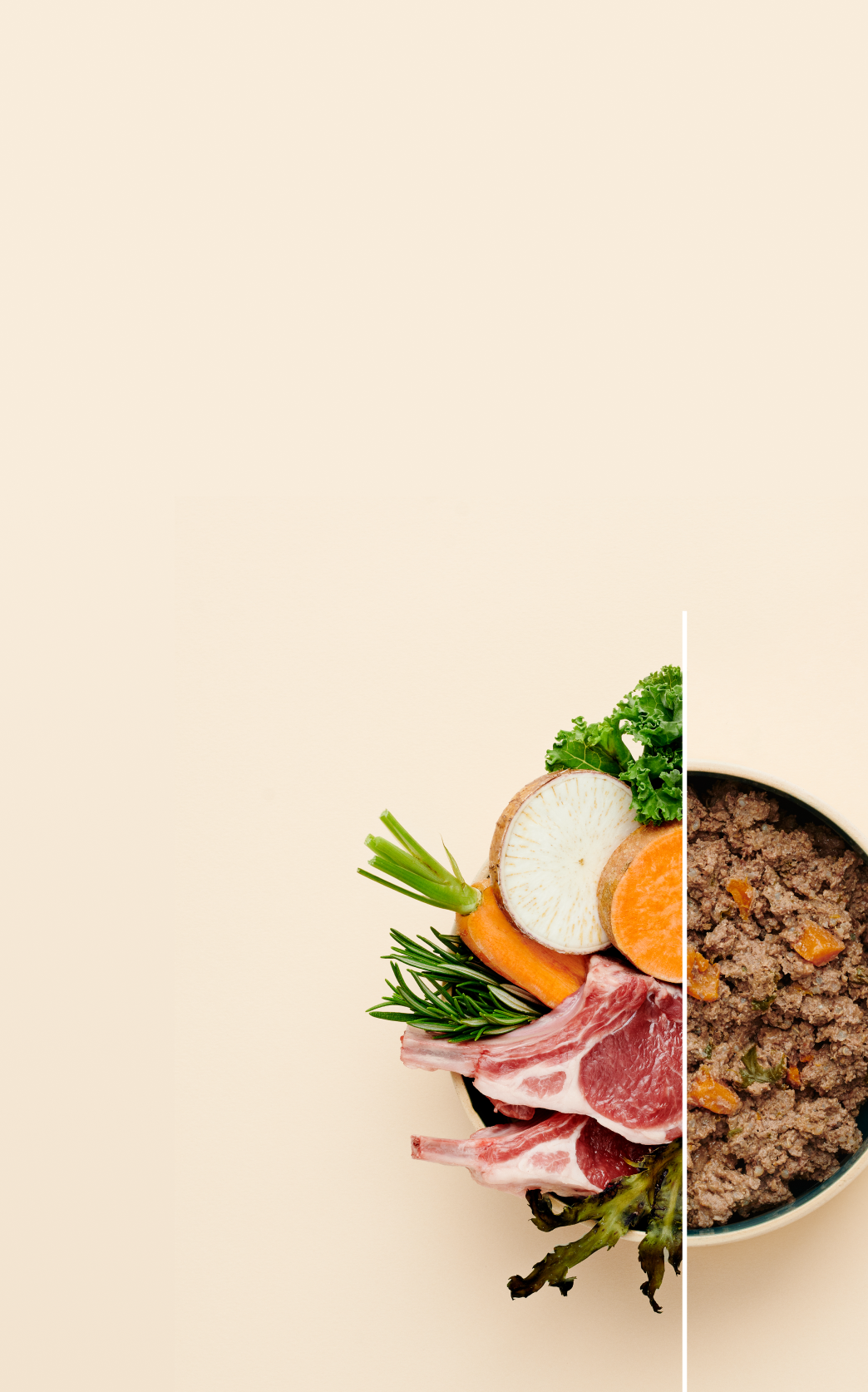
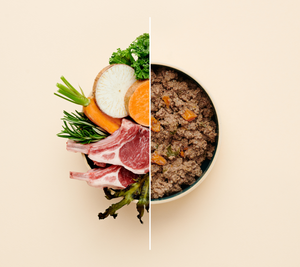
Highly processed foods can make things worse. When ingredients are rendered at high temperatures or mixed with a long list of additives, they become harder for the gut to handle. Dogs fed gently cooked whole ingredients tend to show fewer digestive complaints than those on heavily processed diets — the difference in how the gut handles each format matters.
If your dog is showing persistent symptoms, it is worth looking at what their food actually contains. A long ingredients list with multiple protein sources makes it very hard to pinpoint what is causing the problem.
How do you actually work out what is causing it?
The gold standard for identifying a food intolerance is an elimination diet. This means feeding your dog a single novel protein source — one they have never eaten before — and a single carbohydrate source, with nothing else added, for a minimum of 8 weeks. If symptoms clear up, you reintroduce ingredients one at a time to find the trigger.
Novel proteins worth trying include lamb, venison, or salmon, depending on what your dog has eaten previously. A lamb-based meal is a popular starting point for elimination trials because lamb is less commonly found in standard dog foods, making it genuinely novel for most dogs.
If your dog's symptoms are severe, worsening, or include significant weight loss, blood in the stool, or repeated vomiting, speak to your vet before starting an elimination diet. A vet can also rule out parasites, infections, or inflammatory bowel disease, which can produce similar symptoms.
During any elimination trial, treats, supplements, and flavoured medications all count. Even a small amount of the offending ingredient is enough to reset the clock. This is where most owners unknowingly derail the process.
Marleybones meals are built around single named proteins with a short, transparent ingredients list — which makes them practical for an elimination approach. The salmon recipe, for example, uses salmon as its sole protein source, making it straightforward to use as a starting point if your dog has not eaten fish before.
What should you do once you have identified the trigger?
Once you know which ingredient is causing the problem, the solution is straightforward: remove it from the diet entirely. Read every label, every time. Ingredients in commercial dog food are not always obvious — chicken fat, beef derivatives, and wheat starch can appear in foods not primarily marketed as chicken, beef, or wheat-based.
Some dogs benefit from additional digestive support during and after a transition. A healthy gut microbiome — the community of bacteria in the digestive system — plays a direct role in how well dogs tolerate different foods. Prebiotics and probiotics can help restore balance, particularly after a prolonged period of digestive upset. A targeted gut health supplement is one way to support this recovery alongside a dietary change.
When switching to a new food, do it gradually over 7 to 10 days. Even a food your dog tolerates well can cause temporary digestive upset if introduced too quickly. A slow transition is especially important for dogs with existing sensitivity.
Most dogs respond well once the offending ingredient is removed. Skin symptoms can take 6-8 weeks to fully resolve even after dietary changes — this is normal, and it does not mean the new food is not working.
Every dog is different — build your personalised Marleybones feeding and health plan tailored to your dog's age, size, and health requirements.

“Such a relief to see her enjoying her food”
FAQs
Can a dog develop a food intolerance to something they have eaten for years?
Yes. Food intolerances can develop at any point in a dog's life, including to ingredients they have eaten without issue for a long time. Repeated exposure to the same protein is thought to be a factor in why sensitivity develops.
Is itchy skin always a sign of food intolerance?
Not always. Itchy skin can be caused by environmental allergens, fleas, or skin conditions. However, if itching is year-round and accompanied by digestive symptoms, food is a more likely factor than seasonal environmental triggers.
How long does an elimination diet take?
At least 8 weeks. Shorter trials are not reliable because some symptoms — particularly skin reactions — take time to clear even after the trigger is removed. Consistency throughout is essential.
What is the difference between a food intolerance and a food allergy in dogs?
A food allergy involves an immune system response and can cause rapid or severe reactions. A food intolerance is a digestive sensitivity with no immune involvement — symptoms develop gradually and are usually gastrointestinal or skin-related.
Are some dog breeds more prone to food intolerances?
Some breeds do show higher rates of food sensitivity, including Cocker Spaniels, West Highland White Terriers, and Labrador Retrievers. That said, any dog can develop an intolerance regardless of breed.
“A complete game changer!!”


 Give your dog the quality nutrition they deserve
Real meat, wholesome veggies and functional superfoods.
Get 40% OFF today