




How a Dog's Nutritional Needs Change from Puppy to Adult

At a glance
- Puppies need more protein, fat, calcium, and phosphorus per kilogram of body weight than adult dogs
- Small breeds mature at 10–12 months; large and giant breeds can take up to 18–24 months
- Overfeeding calcium to large-breed puppies raises the risk of skeletal problems — more is not better
- Adult dogs need fewer calories per kilogram but still require high-quality protein to maintain muscle
- Feeding a life-stage-appropriate complete food is the most practical way to meet these shifting needs
Do puppies really need different food from adult dogs?
Yes, and the differences are meaningful. A dog's nutritional needs change from puppyhood to adulthood in ways that go far beyond portion size.
Puppies are building everything from scratch: muscle, bone, organs, and immune function. That takes a much higher intake of protein and fat relative to body weight than an adult dog in maintenance. FEDIAF guidelines — the European standard for pet food nutrition — set minimum crude protein at 25% of dry matter for puppies, compared to 18% for adult dogs. Fat requirements are similarly higher, supporting both energy demands and brain development.
Calcium and phosphorus matter just as much as protein. Puppies need both in higher quantities and, critically, in the right ratio. Too little calcium leads to weak bones. Too much — especially in large-breed puppies — can interfere with normal skeletal development and increase the risk of conditions like osteochondrosis, a joint disorder caused by abnormal cartilage growth. This is why large-breed puppy formulas typically moderate calcium rather than maximise it.
Calorie density matters too. Puppies eat smaller meals but need more energy per kilogram than adults. Getting portions right at each stage of puppyhood is just as important as choosing the right food.
When does a puppy become an adult — and does it vary by breed?
It varies considerably. Breed size is the main determining factor, and getting the timing wrong in either direction has consequences.
Small breeds (under 10kg as adults) reach physical maturity at around 10–12 months. Medium breeds typically mature between 12 and 15 months. Large breeds (over 25kg) take 15–18 months, and giant breeds like Great Danes or Newfoundlands can keep growing until 18–24 months.
Switching to adult food too early cuts off nutrients a puppy still needs. Switching too late means an adult dog is consuming a calorie and nutrient density designed for rapid growth — which contributes to excess weight gain over time.
If you are unsure where your dog sits, your vet can assess growth plates and body condition to give you a more precise answer than any chart.
It is also worth knowing that feeding schedules shift as dogs age — puppies typically eat three to four meals a day, while most adult dogs do well on two.
What changes in the diet when a dog reaches adulthood?
The priorities shift from building to maintaining. An adult dog still needs high-quality protein, but the focus moves to sustaining lean muscle mass rather than rapid tissue growth. Fat requirements decrease slightly, and total calorie needs drop.
Digestibility becomes more relevant here than it might seem. A dog eating a food where the protein is poorly absorbed is effectively getting less of it regardless of what the label says. Fresh, minimally processed ingredients are generally easier for a dog's digestive system to break down and use than heavily rendered alternatives. What fresh dog food actually means in terms of processing and ingredient quality is worth understanding when you are choosing an adult diet.
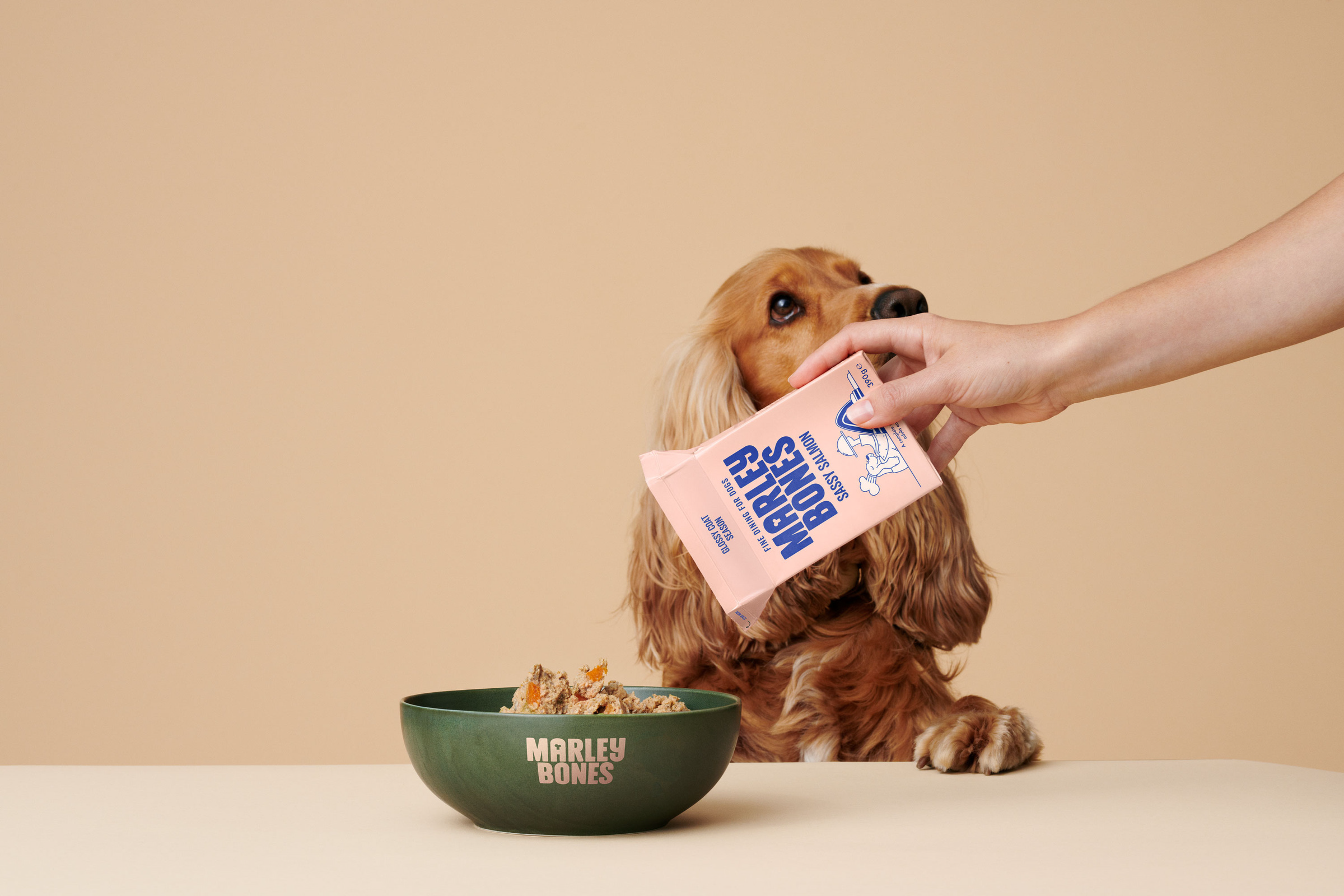
Marleybones meals are formulated to FEDIAF standards and are complete for all life stages, including puppies — so you are not having to switch between entirely different product lines as your dog matures. The recipes use freshly prepared ingredients sealed raw and slow-cooked in-pack, which means no preservatives and no compromise on ingredient quality at any age.
Fibre also plays a more prominent role in adult diets. A healthy gut microbiome — the community of bacteria living in the digestive tract — benefits from prebiotic fibre sources like chicory root. This supports digestion, stool consistency, and immune function in ways that become increasingly relevant as dogs move past the growth phase.
Are there any nutrients to watch more closely at specific life stages?
A few stand out.
Omega-3 fatty acids — particularly EPA and DHA, found in oily fish and certain seeds — matter at every stage but are especially important for puppies (brain and eye development) and again as dogs age (joint health and coat condition). Salmon-based complete meals are a natural way to keep omega-3 intake consistent without supplementing separately.
Calcium and phosphorus need careful management in puppyhood as discussed above, but remain important in adulthood for bone density. The ratio matters as much as the amount — a complete food formulated to current standards handles this automatically.
For dogs in the adult-to-senior transition (typically from age 7 in medium breeds, earlier in giant breeds), joint support and lean muscle maintenance become the headline nutritional goals. Marleybones includes superfoods like chia seeds, hemp seeds, and linseeds in its recipes — all of which contribute plant-based omega-3s and anti-inflammatory support as dogs move into their later years.
If your dog is showing signs of stiffness, weight change, or digestive changes at any life stage, it is worth talking to your vet rather than adjusting the diet alone.
Every dog is different — build your personalised Marleybones feeding and health plan tailored to your dog's age, size, and health requirements.

“Such a relief to see her enjoying her food”
FAQs
Can I feed puppy food to an adult dog?
Not as a long-term diet. Puppy food is higher in calories and certain nutrients than an adult dog requires. Feeding it beyond the appropriate growth window contributes to weight gain and, in some cases, excessive intake of minerals like calcium. Once your dog has reached physical maturity for their breed size, switch to a complete adult formula.
Is it safe to feed one food across all life stages?
Yes, if the food is formulated and labelled as complete for all life stages. This means it meets the higher nutritional requirements of puppies as well as adults. Marleybones meals are FEDIAF compliant and complete for all life stages, so you can feed them from puppyhood without switching to a separate product range.
How do I know if my dog is getting the right nutrients at their current life stage?
The clearest signs are a healthy weight, good muscle tone, a shiny coat, firm stools, and consistent energy. If any of these are noticeably off — unexplained weight gain or loss, poor coat condition, low energy — it is worth reviewing the food and portion size, and checking in with your vet if things do not improve within a few weeks.
Do large-breed puppies need special food?
Yes. Large and giant breed puppies have different calcium and phosphorus requirements to small breeds, and their skeletal development is more sensitive to imbalances. A food formulated specifically for large-breed puppies, or one certified complete for all life stages with appropriate mineral levels, is the safer choice until they reach full maturity at 18–24 months.
When should I start thinking about senior nutrition?
For most medium-sized dogs, the shift towards senior nutrition is worth considering around age 7. Giant breeds often age faster and may benefit from senior-focused nutrition from around 5–6 years. Key considerations are joint support, maintaining lean muscle, and managing calorie intake as activity levels change. Feeding guidance for older dogs differs from adult maintenance in both portion size and nutritional priorities.
“A complete game changer!!”


 Give your dog the quality nutrition they deserve
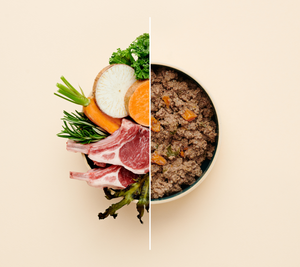
Real meat, wholesome veggies and functional superfoods.
Get 40% OFF today