

 Vet reviewed
Fresh Dog Food vs Air Dried Dog Food – Which is Better for Your Dog?

At a glance
- Air-dried dog food contains around 5–10% moisture; fresh dog food contains 65–75%, a significant difference for dogs' hydration
- Air drying removes moisture at low temperatures (typically 50–70°C) over several hours, preserving nutrients reasonably well but producing a dry, concentrated product
- Air-dried products are well suited as treats and meal toppers; as a sole complete diet, they require careful rehydration and portion management
- Marleybones makes both: Pantry Fresh® fresh meals for complete daily nutrition, and air-dried treats (Chicken, Lamb, Beef) as complements to that diet
Fresh dog food vs air-dried dog food: comparison
|
|
Fresh dog food (Marleybones Pantry Fresh®) |
Air-dried dog food |
|
Format |
Moist, complete fresh meal |
Dry, dehydrated; jerky-like texture |
|
Moisture content |
65–75%, supports hydration and digestion |
5–10%, very low; dogs require more water intake |
|
Processing temperature |
~89°C, gentle in-pack steam cooking |
Typically 50–70°C over several hours of dehydration |
|
Nutrient retention |
High: gentle cooking preserves vitamins and protein structure |
Good: lower temperatures than kibble, but extended heat exposure during drying affects some nutrients |
|
Main ingredients |
60%+ real meat, whole vegetables, superfoods: chicory root, chia seeds, quinoa, hemp seeds |
Typically single or limited proteins; concentrated after moisture removal |
|
Preservatives |
None |
Typically none; low moisture provides natural shelf stability |
|
Storage |
Room temperature, up to 18 months unopened |
Room temperature, typically up to 18 months |
|
Texture |
Soft, well suited to puppies, seniors, and dogs with dental issues |
Chewy to hard; less suited to dogs with chewing difficulties |
|
Digestibility |
High: whole ingredients, gentle cooking, natural prebiotics |
Moderate: concentrated nutrition but low moisture can slow digestion |
|
Best use |
Complete daily meals for all life stages |
Treats, meal toppers, training rewards; check if complete before using as sole diet |
What is air-dried dog food?
Air drying is a preservation method that removes moisture from ingredients by exposing them to warm air at relatively low temperatures, typically between 50–70°C, over an extended period. The process is gentler than kibble extrusion and preserves more of the natural nutrient content of raw ingredients, though the extended heat exposure does affect some heat-sensitive vitamins.
The result is a dense, shelf-stable product with very low moisture content. Air-dried food is often made from single or limited protein sources, which suits dogs with food sensitivities who need a simple ingredient list. The concentrated nature of air-dried food means it is calorie-dense per gram, so portion sizes are typically much smaller than fresh food.
Air-dried products range from complete diets to treats and training aids. Not all air-dried products are nutritionally complete, so it is worth checking the label for a nutritional adequacy statement before using one as a sole diet.
How does air-dried compare to fresh dog food nutritionally?
Fresh dog food contains 65–75% moisture; air-dried contains around 5–10%. This matters because dogs evolved eating prey animals whose bodies delivered most of their daily hydration through food. Dogs on low-moisture diets must drink significantly more water to compensate, and research shows they consistently take in less total water than dogs on moist diets even when water is freely available. For dogs with urinary or kidney concerns, or those who are poor drinkers, this gap is clinically relevant.
On nutrient retention, air drying at lower temperatures does preserve more than high-heat kibble extrusion, but the extended drying time still affects some heat-sensitive vitamins. Gentle in-pack steam cooking, as used in Marleybones Pantry Fresh® meals, achieves a better balance: sufficient heat for food safety and shelf stability, but a shorter process that preserves more of the ingredient's natural nutritional profile. The natural prebiotics in Pantry Fresh® recipes, including chicory root rich in inulin, further support digestive health in a way an air-dried product cannot replicate.

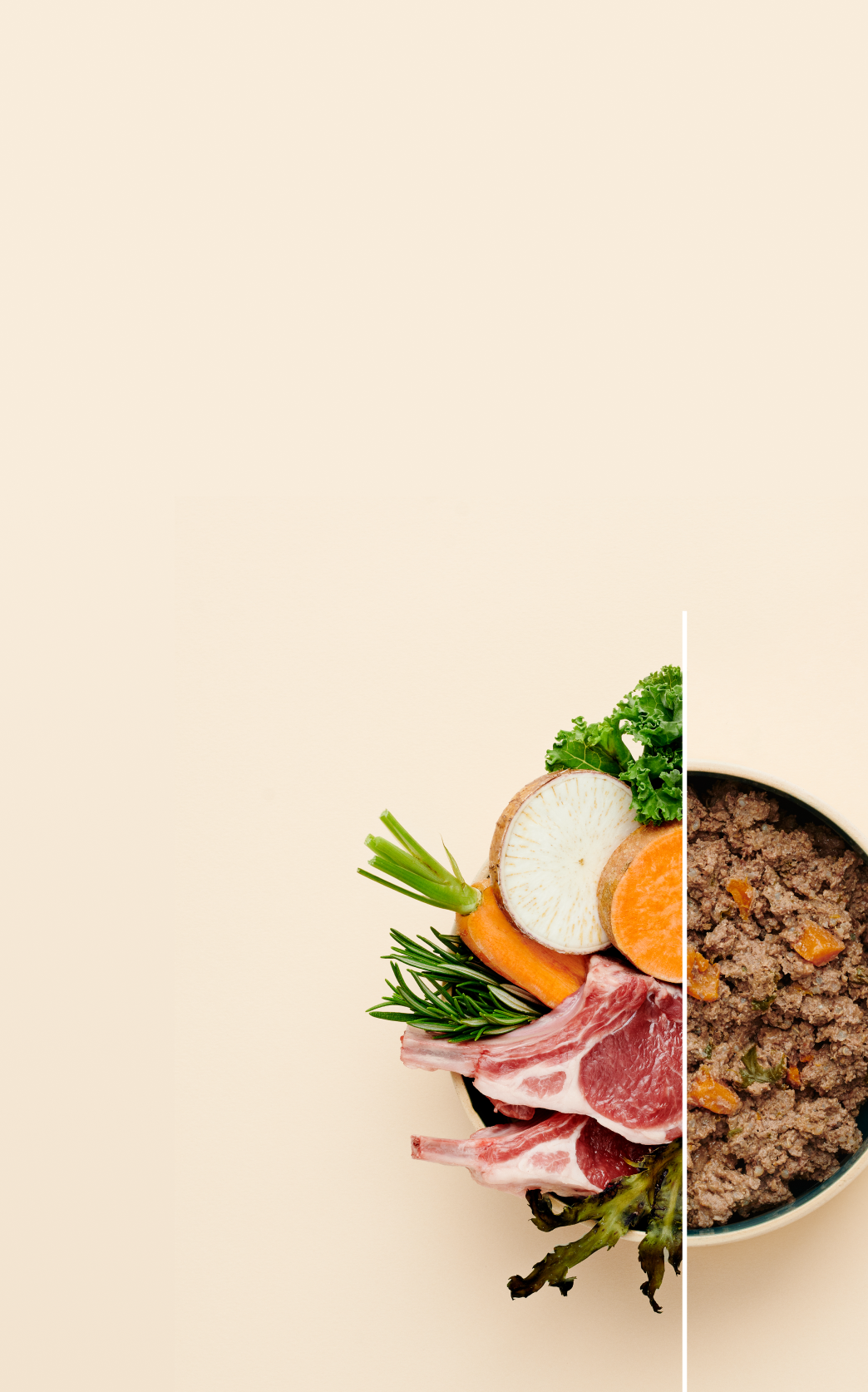
Freshly prepared British lamb, veggies & superfoods
Is air-dried dog food good for sensitive stomachs?
It depends on the dog. Some dogs with food sensitivities do well on limited-ingredient air-dried diets, particularly those that use a single novel protein the dog has not been exposed to before. The simple ingredient list makes it easier to identify and eliminate triggers.
That said, the low moisture content of air-dried food can be harder on digestion for dogs with sensitive stomachs, particularly if they are poor drinkers. Fresh food with natural prebiotics tends to produce better digestive outcomes across a broader range of sensitive dogs because it supports gut bacteria balance directly alongside providing easily digestible moist nutrition.
What is the difference between air-dried meals and air-dried treats?
This distinction matters. Air-dried complete meals are formulated to meet the full nutritional requirements of a dog as a sole diet. Chicken, Lamb, and Beef air-dried treats from Marleybones are single-ingredient or limited-ingredient products designed to complement a complete diet, not replace it. They are high in protein, minimal in additives, and well suited as training rewards or meal toppers, but they do not carry nutritional adequacy statements for use as a complete diet.
Marleybones' position is straightforward: Pantry Fresh® meals provide complete daily nutrition, and the air-dried treat range complements that diet without replacing it. Using air-dried treats alongside a complete fresh diet is a sensible combination.
Which dogs benefit most from fresh food over air-dried?
Fresh food is the stronger choice for most dogs as a complete daily diet. It is particularly well suited to puppies and seniors, whose developing or ageing digestive systems benefit from moist, easily digestible meals. Dogs with sensitive stomachs, urinary issues, or those who are poor drinkers also benefit more from a high-moisture format. Fussy eaters tend to find the natural aroma of gently cooked fresh food more appealing than the drier, more concentrated smell of an air-dried product.
Air-dried products are well suited as high-value treats and training rewards, where their concentrated flavour, long shelf life, and easy portability make them practical. A dog that eats Pantry Fresh® meals and receives Marleybones air-dried treats as rewards is getting the best of both formats.
Can you mix air-dried and fresh dog food?
Yes, with care on portions. If using an air-dried complete diet alongside fresh food, calculate total daily calorie intake across both, since air-dried food is calorie-dense and easy to overfeed. If using air-dried treats alongside fresh meals, account for the treats in the daily calorie total and reduce the main meal portion slightly.
Transition gradually over 7–10 days when introducing any new food format, monitoring stool consistency and appetite throughout.
Every dog is different — build your personalised Marleybones feeding and health plan tailored to your dog's age, size, and health requirements.

Treats with fresh British chicken as the #1 ingredient
FAQs
Is air-dried dog food better than kibble?
Air-dried dog food is less processed than standard kibble, made at lower temperatures that preserve more natural nutrients. For owners who want to move away from heavily processed dry food without switching to a moist format, air-dried is a genuine improvement. It remains a low-moisture, dry format, so the hydration and digestibility advantages of fresh food do not apply.
Does air-dried dog food need to be rehydrated?
Some air-dried complete diets recommend adding water before serving to improve palatability and help dogs meet their hydration needs. Air-dried treats do not require rehydration. If using an air-dried product as a complete meal, check the manufacturer's serving instructions, as the recommended portion size assumes the concentrated dry weight of the product.
Is fresh dog food more digestible than air-dried?
Generally yes. The higher moisture content of fresh food directly supports digestive function, and the gentle cooking process used in Marleybones Pantry Fresh® meals preserves nutrients in a highly bioavailable form. Air-dried food is more digestible than kibble but the low moisture content and extended drying process place it below fresh food on digestibility scores for most dogs.
Are Marleybones air-dried treats suitable as a complete diet?
No. Marleybones air-dried treats are single-ingredient treats designed to complement a complete diet, not replace it. They are well suited as training rewards and meal toppers alongside Pantry Fresh® meals, but they do not carry nutritional adequacy statements for use as a sole diet.
Does Marleybones Pantry Fresh® need to be refrigerated?
No. Pantry Fresh® meals are shelf-stable at room temperature for up to two years unopened, with no freezer or refrigeration required before opening. Once opened, refrigerate and use within 2–3 days.
How do I switch my dog from air-dried to fresh food?
Transition gradually over 7–10 days. Start by replacing 25% of the air-dried portion with fresh food on days 1–3, increasing to 50%, then 75%, then 100% by day 8–10. The shift from low-moisture to high-moisture food may initially produce softer stools as the gut adjusts, which is normal and typically settles within a week or two.

“A complete game changer!!”
Reviewed by Dr Davide Stefanutti DVM, PhD, Veterinarian Nutritionist
References
- Sires, R., Yamka, R., & Wakshlag, J. (2025). Feeding fresh food and providing water ad libitum is clinically proven to exceed calculated daily water requirements and impact urine relative supersaturation in dogs. Frontiers in Veterinary Science, 12, 1675990.
- Mediani, A., Hamezah, H. S., Jam, F. A., Mahadi, N. F., Chan, S. X. Y., Rohani, E. R., & Abas, F. (2022). A comprehensive review of drying meat products and the associated effects and changes. Frontiers in Nutrition, 9, 1057366.
- Cecere, B. G., Zatti, E., Bissacotti, B. F., Copetti, P. M., da Silveira, M. V., Schetinger, M. R. C., & da Silva, A. S. (2025). Dehydrated natural feed for dogs: influence on digestibility, immunity, and antioxidant response. Comparative Clinical Pathology, 34(2), 269–280.
 Give your dog the quality nutrition they deserve
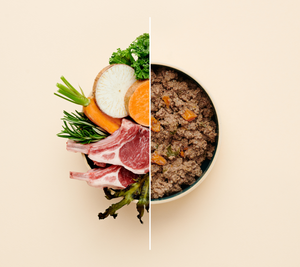
Real meat, wholesome veggies and functional superfoods.
Get 40% OFF today