




What is the difference between complete and complementary dog food?

At a glance
- Complete dog food meets 100% of a dog's nutritional needs on its own — no other food required
- Complementary dog food is missing one or more essential nutrients and must be combined with a complete food or other complementary foods to form a balanced diet
- UK law requires every dog food to be labelled clearly as either complete or complementary
- Feeding only complementary food long-term causes nutritional deficiencies
- Treats, toppers, and mixer biscuits are almost always complementary
What do complete and complementary actually mean on a dog food label?
Complete dog food contains all the protein, fat, carbohydrates, vitamins, and minerals a dog needs — in the right amounts and correct ratios — to thrive without anything added. Complementary dog food does not. It is intentionally incomplete and must be combined with other foods to form a balanced diet.
In the UK, this labelling is not optional. The rules governing dog food nutrition and labelling require every product to state clearly which category it falls into. You will find the word “complete” or “complementary” on the front or back of the pack, usually near the feeding guidelines.
The distinction matters far more than most owners realise. A dog eating only complementary food is not getting a balanced diet. Over time, that creates real gaps — in calcium, essential fatty acids, certain vitamins, or amino acids — depending on what the product is missing. Deficiencies like these build slowly and are easy to miss until symptoms appear.
How do you know if a dog food is nutritionally complete?
The label tells you. Look for the word “complete” and then check for a nutritional adequacy statement. This confirms the food has been formulated to meet an established nutrient profile — in Europe, that standard is set by FEDIAF, the European Pet Food Industry Federation.
A properly complete food will also specify which life stages it covers. Some complete foods are formulated for adult dogs only. Others cover all life stages, including puppies and seniors. That difference matters because puppies have significantly higher requirements for calcium, phosphorus, and certain amino acids than adult dogs. Feeding a food labelled for adults to a growing puppy creates a genuine risk of developmental problems.
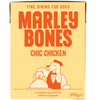
Marleybones meals are FEDIAF compliant and complete for all life stages, including puppies — a detail that is worth checking specifically on any food you are considering for a young dog.
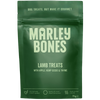
If the label says “complementary,” the food is designed to be part of something larger. Mixer biscuits are a classic example. So are most training treats, toppers, and many wet food pouches that are meant to be served alongside a dry complete food. None of these are wrong to use — they just cannot stand alone.
What foods are typically complementary rather than complete?
The following categories are almost always complementary:
- Training treats and dental chews
- Mixer biscuits and gravy toppers
- Many wet food pouches sold in multipacks at low price points
- Raw food sold as mince or single-ingredient products without added vitamins and minerals
- Home-cooked meals unless specifically formulated by a veterinary nutritionist
This does not make them bad products. A high-quality training treat or a tasty topper served over a complete food is fine. The problem comes when owners assume that because a food looks substantial — a meaty pouch, for example — it must be complete. That is not a safe assumption.
Understanding how to read a dog food label properly is the single most effective way to avoid this mistake. Brands are not always transparent about what their product is actually providing, and marketing language can make a complementary food look far more nutritious than its label warrants.
Can you mix complete and complementary foods together?
Yes, and many owners do this intentionally. A common approach is to use a complete dry or wet food as the base of the diet and add a complementary topper for variety, palatability, or extra protein. This works well as long as the complete food makes up the majority of the diet.
There is no fixed rule on the exact proportion, but a useful guide is that the complete food should account for at least 80 to 90 percent of your dog's daily caloric intake. The remaining 10 to 20 percent can come from treats, toppers, or complementary additions without creating meaningful nutritional gaps.
Where this goes wrong is when the balance tips. If a dog is eating mostly toppers or treats because they are more palatable, and only picking at the complete food, the diet is effectively incomplete. This is a common pattern with fussy eaters. If your dog regularly refuses their complete food in favour of extras, it is worth speaking to your vet to rule out an underlying reason before assuming it is just preference.
Every dog is different — build your personalised Marleybones feeding and health plan tailored to your dog's age, size, and health requirements.
For dogs who need a genuinely complete meal they will actually eat, Marleybones Pantry Fresh meals are vet-developed, FEDIAF compliant, and rated 4.8 out of 5 on Trustpilot — with 9 in 10 fussy dogs reported to enjoy them.

“Such a relief to see her enjoying her food”
FAQs
Does complete dog food mean it contains everything my dog needs?
Yes. A food labelled complete has been formulated to meet all of a dog's nutritional needs without any additions. It contains the correct levels of protein, fat, carbohydrates, vitamins, and minerals. You do not need to add anything to make it a balanced diet.
Is complementary dog food bad for dogs?
No, but it cannot be the only food a dog eats. Complementary foods are designed to be part of a diet, not the whole of it. Used alongside a complete food, they are perfectly fine. Fed alone long-term, they will cause nutritional deficiencies.
Are raw dog foods usually complete or complementary?
Most single-ingredient raw products — plain mince, raw meaty bones, organ meat portions — are complementary. Complete raw diets do exist, but they must include added vitamins, minerals, and the correct balance of macronutrients. Always check the label rather than assuming a raw product is complete.
How can I tell which life stage a complete food is suitable for?
The label should state clearly whether the food is formulated for puppies, adults, seniors, or all life stages. If it only says “adult,” do not feed it to a puppy. Puppies need higher levels of certain nutrients, and adult-only formulas do not provide them in adequate amounts.
Do I need to add supplements to a complete dog food?
Generally no. A properly complete food already contains the vitamins and minerals a dog needs. Adding supplements on top of a complete diet can actually cause problems — too much calcium, for example, interferes with bone development in large-breed puppies. Speak to your vet before adding any supplement to an already complete diet.
“A complete game changer!!”


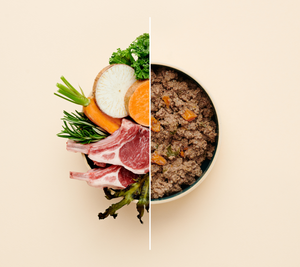 Give your dog the quality nutrition they deserve
Real meat, wholesome veggies and functional superfoods.
Get 40% OFF today